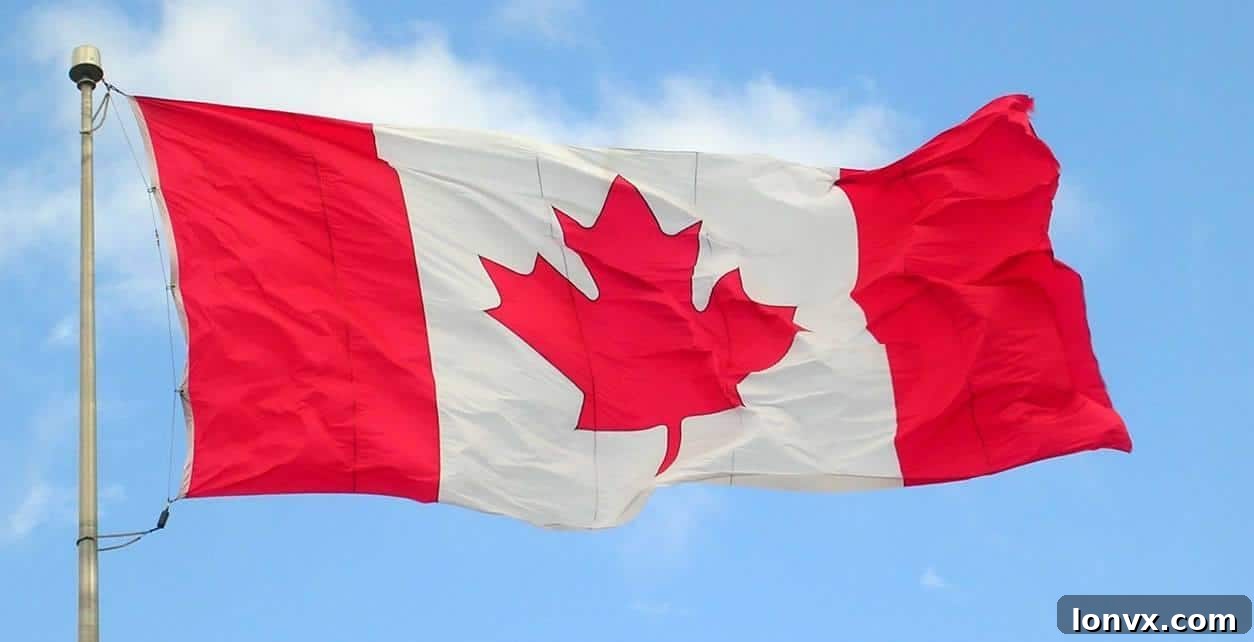
In 2003, I marked a significant milestone, celebrating five decades since I first set foot on Canadian soil. My journey as an immigrant began in 1953, a date etched deeply in my memory. For years, I’ve often spoken and written about this profound experience, perhaps even excessively, driven by a deep-seated gratitude for this nation. Canada offered me the opportunity to grow, to learn, and to truly experience life within its borders. I witnessed firsthand the immense potential and inherent goodness of this country. For me, even the word “greatness” feels insufficient to capture the extraordinary and exhilarating essence of being in Canada between 1953 and 2003.
A Half-Century of Canadian Life: A Journey of Gratitude
Arriving in 1953, I stepped into a Canada led by Prime Minister Louis St. Laurent, a country on the cusp of significant transformation. My early years here were filled with a sense of wonder and opportunity that only an immigrant can truly appreciate. From the moment I arrived, I felt a connection to this land and its people, a feeling that only deepened with each passing year. My family and I found a welcoming home, a place where we could build a new life and contribute to the vibrant tapestry of Canadian society. The gratitude I felt then, for the chance to forge a new destiny, remains as strong today, informing my perspective on what Canada truly represents.
The journey from a newly arrived immigrant to a proud Canadian citizen was not just a personal one; it was interwoven with the nation’s own evolution. I observed Canada mature, grow more confident on the world stage, and evolve its identity. This period was characterized by immense social and economic change, and I was fortunate enough to be a part of it. The opportunities afforded to me, the education I received, and the sense of community I found, all solidified my conviction that Canada was, and is, a land of unparalleled promise. This deep appreciation for the opportunities granted to me has always fuelled my desire to see Canada live up to its highest ideals.
Witnessing a Nation’s Evolution: Milestones and Memories
Political Landscapes and Cultural Shifts
My five decades in Canada allowed me to witness an incredible panorama of history unfold. I was here during the tenures of towering political figures such as John Diefenbaker, Lester B. Pearson, and Pierre Elliott Trudeau, each leaving an indelible mark on the country’s direction. I remember the excitement and national pride when the Toronto Maple Leafs, against all odds, captured the Stanley Cup not once, but four glorious times, a testament to Canadian passion for hockey. Beyond politics and sports, I experienced the seismic cultural shifts that swept across North America and, indeed, the world. The arrival of Elvis Presley’s electrifying performances, followed by the revolutionary sound of The Beatles, heralded an era of unprecedented musical and social change. These moments were not just entertainment; they were cultural touchstones that helped shape a generation and defined Canada’s evolving place in global popular culture. The subsequent string of great concerts and rock festivals further underscored the vibrancy and dynamism of Canadian society.
Defining Moments in Canadian Identity
Beyond the personal narrative, I vividly recall momentous global events and pivotal moments in Canadian history. The Cold War era cast a long shadow, and I remember Nikita Khrushchev’s defiant “We will bury you” shouted from a podium, a chilling reminder of global tensions that Canada, as a peace-keeping nation, actively defied. Domestically, I witnessed the proud unveiling of our new Canadian flag in 1965, a symbol that united a diverse nation under a single, iconic emblem. Two years later, in 1967, Canada celebrated its Centennial, a nationwide outpouring of pride where every community, including mine, embarked on a “centennial project,” collectively marking 100 years since Confederation. I remember the global awe as humanity achieved the impossible, watching a man walk on the moon, a moment of shared human triumph. Closer to home, the FLQ crisis tested the very fabric of Canadian unity, and I recall the long line of cars that transported the terrorists to the airport, a stark image of a nation grappling with domestic extremism. Amidst these grand events, I cherished personal adventures, including countless canoe trips into the serene Canadian North and numerous journeys by car across this magnificent, vast country. I also recall moments of profound struggle, such as being homeless in Calgary, and conversely, the kindness of strangers – the “real Angels” – who offered help when it was most needed. These varied experiences, both personal and national, shaped my understanding of Canada’s complexities and its enduring spirit.
Beyond Personal Gratitude: A Collective Immigrant Narrative
Looking back at these myriad experiences, I am filled with profound memories and an indescribable sense of gratitude. My deepest appreciation goes to that last immigration officer, the individual who stamped those “landed immigrant” documents, granting my mother, father, sister, and me entry into this incredible country. It was a single act that opened a world of possibilities. In 2003, as I reflected on my 50th year here, it occurred to me that my story was far from unique. There must have been thousands, perhaps even a million, individuals and families like mine, each with their own tales of hope, resilience, and gratitude, who found their home and built their lives in Canada. This collective immigrant narrative is a cornerstone of Canadian identity, continually enriching our society with diverse perspectives, talents, and traditions. It underscores the nation’s long-standing commitment to welcoming newcomers and integrating them into the national fabric, making Canada a vibrant mosaic rather than a melting pot.
Canada’s Sesquicentennial: A Time for Reflection and Redefinition
Fourteen years have passed since that personal 50-year anniversary. While I may not have a significant personal immigration anniversary to celebrate this year, my country certainly does. Canada is commemorating 150 years of its existence, a momentous occasion known as the Sesquicentennial. This anniversary provides a crucial opportunity for all Canadians to pause, reflect on our shared history, acknowledge our achievements, and confront the challenges that still lie ahead. It’s a time to consider not just where we’ve been, but where we aspire to go as a nation. While many recognize 1867 as Canada’s birth year, the true genesis of our nationhood can be debated, and indeed, should be.
The Roots of Canadian Sovereignty: The 1862 John Anderson Case
I wholeheartedly agree with those who argue that Canada’s true emergence as a distinct country occurred earlier, specifically in 1862. This pivotal year saw a legal battle involving John Anderson, a man who had escaped slavery in the United States and found refuge in Canada. He was relentlessly pursued by his former American owners, who appealed to British courts for the return of their “property.” What transpired in the legal proceedings was revolutionary for nascent Canada. In a landmark decision, it was successfully declared that Canada, not the United States or even Great Britain, held ultimate jurisdiction over its own citizens within its defined borders. This ruling fundamentally asserted Canadian sovereignty, establishing that Canada would henceforth determine what constituted legal property within its territory. Crucially, the court declared that people could never be considered property on Canadian soil. As a result, Mr. Anderson walked out of court a free man in a free country. From that day forward, Canada was recognized as a “separate legal entity,” distinct from its colonial past and asserting its own unique legal and moral framework. This event, more than any other preceding Confederation, laid the foundational stone of Canada’s independent identity and its commitment to fundamental human rights.
This 1862 declaration of Canada as a “separate legal entity” was a profound precursor to the Confederation of 1867. While Confederation formally united provinces under a federal government, the Anderson case established the critical principle of national autonomy and a distinct Canadian legal identity. It demonstrated Canada’s capacity to uphold its own laws and moral principles, even in defiance of powerful external pressures. This was a defining moment, illustrating that Canada was not merely a collection of British colonies, but a burgeoning nation with its own values, particularly regarding the inherent dignity and freedom of individuals. The spirit of that decision continues to resonate today, forming a core tenet of what it means to be Canadian.
The Unfinished Canvas: Pursuing True Human Dignity and Rights
The path to a fully equitable and just Canada has been a long and arduous one, requiring continuous effort and reform. Significant milestones have been achieved along the way, such as granting women the right to vote, a crucial step towards gender equality that transformed the political landscape. However, despite these advancements, there remains a substantial amount of work to be done to ensure human dignity and rights for all inhabitants of this land. We must critically examine our current societal structures and systemic inequalities. It is high time for a comprehensive and honest look at property rights for everyone, especially those whose rights have historically been overlooked or systematically eroded. True greatness for Canada can only be achieved when justice and equality are extended to every individual and community within its borders.
Addressing the Core Injustice: First Nations Property Rights
We cannot truly progress as a nation and fully uphold the principles of human dignity until we comprehensively address and resolve the long-standing issue of property rights for the First Nations of Canada. This is not merely a legal technicality; it is a fundamental question of justice, reconciliation, and the moral integrity of our country. For generations, Indigenous peoples have faced the dispossession of their ancestral lands and resources, leading to profound social, economic, and cultural disadvantages that persist to this day. The current system of land claims and negotiations, while well-intentioned, often falls short in achieving genuine self-determination and equitable resolution. To move forward, we must acknowledge this historical injustice and commit to innovative, transformative solutions that truly honour the rights and sovereignty of First Nations.
A Bold Vision: A Dedicated Province for First Nations
In this spirit of seeking innovative solutions, I firmly believe in the suggestion that a dignified and effective way for this process to proceed is through the creation of an additional province specifically for First Nations. Imagine a new, distinct jurisdiction – a “separate legal entity” much like Canada was declared in 1862 – where housing, education, healthcare, and all other provincial rights and services are provided by law and managed by and for its residents. Such a dedicated province would not only grant First Nations true self-governance and control over their destinies but would also create a legal body empowered to speak collectively and comprehensively for all First Nations. This would enable them to effectively address vital issues such as property rights, territorial rights, resource management, and social services on their own terms, fostering genuine reconciliation and economic prosperity.
This bold vision, while challenging to implement, draws a powerful parallel to the historic John Anderson case. Just as Canada asserted its sovereignty and defined its legal entity in 1862, a First Nations province would similarly establish a sovereign, self-determining entity within the Canadian confederation. It would provide the necessary legal and political framework for Indigenous peoples to rebuild their communities, revitalize their cultures, and secure their future, free from the systemic barriers they currently face. This approach respects the inherent rights of First Nations and acknowledges their unique status, moving beyond incremental reforms to a truly transformative model of partnership and self-determination. It is a pathway towards fulfilling the promise of a just and equitable Canada for all its peoples.
The Real Estate Community’s Pivotal Role in Shaping Canada’s Future
Canada has been incredibly generous to me over the decades, offering opportunities and a sense of belonging that I will forever cherish. However, it has taken me all this time to fully grasp the depth of what more needs to be done to truly achieve the greatness we aspire to as a nation. While the resolution of First Nations property rights may not immediately seem to fall under the direct purview of the real estate industry, upon closer examination, it absolutely does. Who better to lend their voice, their expertise, and their influence to advocate for equitable property rights for First Nations than the real estate community? This industry is inherently tied to land, property, development, and community building. Its members understand the intricacies of property law, value, and ownership like no other. Their collective voice can be a powerful catalyst for change, bridging the gap between historical injustices and a future where all Canadians, including First Nations, have secure and respected property rights.
The real estate industry, by its very nature, is a pillar of economic development and community shaping. Its involvement in advocating for First Nations property rights would not only be a profound act of social justice but also a strategic investment in Canada’s long-term stability and prosperity. Secure property rights are fundamental to economic growth, individual wealth creation, and community resilience. By championing this cause, the real estate community can demonstrate its commitment to ethical practice, reconciliation, and the foundational values of fairness and equality that Canada purports to uphold. It is not my place to speak on behalf of this entire industry, but I respectfully implore every individual within the business, whenever and wherever the opportunity arises, to please speak passionately and thoughtfully about property rights for First Nations. This advocacy is not just a gesture; it is a vital step towards building a truly inclusive and equitable Canada.
Celebrating Canada’s 150th: A Call to Action for Genuine Progress
As we commemorate Canada’s 150th year, let this be more than just a celebration of past achievements. Let it be a momentous occasion for critical reflection and courageous action. True celebration of our Sesquicentennial means confronting the unfinished business of our nation and striving towards a more perfect union. By actively engaging in the discourse and advocating for the fundamental human right of property ownership for First Nations, we can honor the spirit of fairness and justice that has defined some of our nation’s most pivotal moments, such as the John Anderson case. I can think of no better, more meaningful, or more transformative way to celebrate our 150 years as a nation than by collectively committing to this essential work, forging a future where true greatness and genuine reconciliation define the Canadian experience for all.