
Canada’s Population Boom: Navigating Unprecedented Growth, Challenges, and a Path to a Sustainable Future
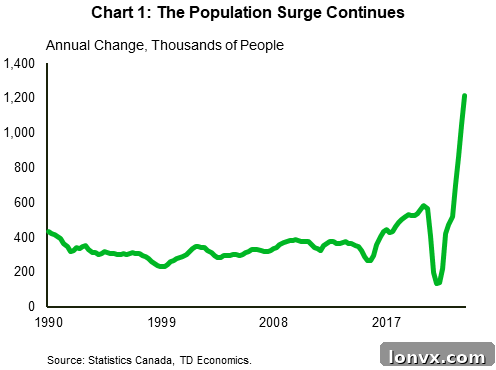
Canada is currently experiencing a demographic transformation unlike anything seen in recent history. Over the past 12 months, the nation’s population has surged by more than 1.2 million, a pace that significantly outstrips previous years’ growth. This rapid expansion, often referred to as the “Great Canadian Migration,” has prompted considerable discussion and analysis. A recent comprehensive report from TD Economics delves deep into this phenomenon, raising critical questions about whether the speed and scale of this population swing have pushed Canada too far, too fast.
This unprecedented influx stems from a convergence of factors, primarily driven by ambitious immigration targets set by the government and a substantial rise in non-permanent residents (NPRs). While this surge has undeniably provided a much-needed boost to Canada’s labour market, helping to alleviate critical shortages across various sectors, it has simultaneously cast a long shadow of challenges. Concerns are mounting regarding the mounting pressure on the country’s housing market, the already strained healthcare system, critical infrastructure, and the delicate balance of overall societal well-being. Understanding the multifaceted nature of this growth — its origins, its immediate impacts, and its long-term implications — is paramount for charting Canada’s future course.
Unprecedented Population Expansion: Understanding the Drivers
The sheer scale of Canada’s recent population growth has taken many by surprise, including seasoned economists. The government has set a target to welcome 500,000 new permanent immigrants annually by 2025, aiming to bolster the workforce and stimulate economic growth. However, the unexpected acceleration in population figures has been predominantly fueled not by permanent immigrants, but by the burgeoning number of non-permanent residents (NPRs).
The Surge in Non-Permanent Residents (NPRs)
Approximately 60 percent of the total population influx over the last year can be attributed to the NPR category, catching many observers off guard. This group includes a diverse range of individuals, such as international students, temporary foreign workers, and asylum seekers. These categories have seen exponential growth, driven by various factors including global events, Canada’s welcoming immigration policies, and the relative ease of obtaining certain temporary permits. While these individuals contribute significantly to various sectors of the Canadian economy and cultural landscape, their rapid increase introduces unique policy and infrastructure challenges. The sheer volume and pace of their arrival necessitate a re-evaluation of current planning and resource allocation to ensure both their successful integration and the sustained well-being of existing communities.
The Strains of Rapid Growth: Housing, Healthcare, and Infrastructure Under Pressure
The sudden and substantial increase in Canada’s population has created significant ripple effects across various critical sectors, exposing existing vulnerabilities and intensifying existing challenges. The most immediate and widely felt impacts are acutely visible in housing, healthcare, and infrastructure development.
Canada’s Intensifying Housing Crisis
Perhaps the most pressing concern arising from the population boom is its profound effect on the housing market. Canada was already grappling with an affordability crisis, with housing prices and rental costs soaring in major urban centers and increasingly in smaller communities. The influx of over a million new residents has exacerbated this issue dramatically. Even with concerted efforts by various levels of government to accelerate housing construction, TD economists estimate that maintaining a high-growth immigration strategy would widen the existing housing shortfall by approximately half a million units within just two years. This translates into increased competition for limited housing stock, further driving up prices and rents, pushing homeownership further out of reach for many, and creating immense pressure on rental markets. The lack of adequate, affordable housing doesn’t just impact new arrivals; it diminishes the quality of life for long-term residents and strains local economies.
Overburdened Healthcare Systems
Canada’s celebrated public healthcare system, a cornerstone of its social fabric, is also feeling immense strain. Even prior to this recent population boom, the country consistently ranked low among developed nations in terms of acute care hospital beds per capita. The addition of 1.2 million new residents without a proportional expansion of healthcare facilities and personnel has led to longer wait times for everything from family doctor appointments to specialized surgeries, overcrowded emergency rooms, and increased pressure on existing medical staff. The demand for mental health services, often overlooked, has also intensified. Addressing these healthcare infrastructure gaps requires not only significant financial investment but also strategic long-term planning for recruitment, training, and retention of healthcare professionals.
Infrastructure Lagging Behind
Beyond housing and healthcare, the rapid population surge has highlighted a broader deficit in public infrastructure. Roads, public transit systems, schools, childcare facilities, and even fundamental utilities like water and waste management are struggling to keep pace with the exponential growth. As the report’s authors succinctly put it, “While the right hand has been solving for labour market shortfalls, the left hand has not put in place the appropriate infrastructure to absorb this large influx of people, particularly if the intention is for a continuation on a longer-term basis.” This observation underscores a critical disconnect between immigration policy and comprehensive national planning. Sustainable growth demands a synchronized approach where infrastructure development anticipates and accommodates demographic shifts, rather than reacting to crises.
The Economic Tightrope: Benefits, Pitfalls, and the Productivity Paradox
Canada’s strategy of actively recruiting workers from around the globe has undeniably yielded positive results in the labour market. The influx of new talent has contributed to higher job growth rates and has played a significant role in keeping unemployment rates low, particularly in sectors struggling with shortages. This approach has allowed Canadian businesses to fill critical roles and maintain operational capacity, preventing potential economic slowdowns that might have resulted from an aging workforce and declining birth rates.
Labour Market Boost and Hidden Costs
However, this strategy is not without its potential drawbacks and complexities. There’s a growing concern that by continuously importing workers across various skill levels, employers might be inadvertently discouraged from making necessary investments in productivity-enhancing measures. Canada has historically lagged behind many of its G7 counterparts in areas like research and development (R&D) and overall labour productivity. A readily available supply of new labour, particularly for lower-paying jobs, could disincentivize companies from investing in automation, advanced technologies, or comprehensive training programs that would upskill the existing workforce. This “productivity paradox” suggests that while the immediate benefit of filling labour gaps is evident, the long-term consequence could be a stagnation in innovation and a perpetuation of lower productivity levels across the economy.
Economists are increasingly imploring policymakers to strike a delicate and crucial balance. Decisions must effectively address immediate labour availability needs while simultaneously incentivizing sustained investments in measures that genuinely enhance productivity. This involves fostering an environment where innovation thrives, businesses are encouraged to adopt cutting-edge technologies, and the workforce is continually equipped with advanced skills. Without such a balanced approach, Canada risks becoming overly reliant on population growth as its primary economic engine, potentially undermining its long-term competitiveness and prosperity on the global stage.

Bank of Canada’s Dilemma: Navigating a “Textbook Demand Shock”
The rapid population surge has created a unique and complex challenge for the Bank of Canada, shaping its monetary policy decisions. The report’s authors aptly describe this phenomenon as a “textbook demand shock.” This refers to a situation where a sudden, significant increase in the number of consumers and residents creates an immediate and widespread disconnect between demand and existing supply across the entire economy. As 1.2 million new individuals enter the country, they require housing, food, transportation, services, and consumer goods, instantly boosting overall demand.
While economic theory suggests that over time, the boost to industry profits, labour income, and government tax revenues helps realign priorities to what’s in high demand versus what’s in short supply, the critical phrase here is “over time.” The speed at which this demographic change has occurred is crucial; the economic and social factors simply haven’t had enough time to catch up. This lag directly fuels inflation, as more money chases a relatively static or slowly increasing supply of goods and services.
Consequently, economists suggest that the Bank of Canada may find itself compelled to address this persistent inflationary pressure through higher interest rates. Raising rates is a traditional tool to cool down an overheating economy by making borrowing more expensive, thereby reducing demand. However, this creates a delicate balancing act. Higher interest rates can dampen economic activity, increase the cost of living for existing homeowners and businesses, and potentially trigger a recession. Moreover, home price inflation becomes an exceptionally complex issue to tackle. Unlike other sectors, there isn’t an easy solution to cool housing prices without significant societal impacts. The housing market holds a unique position in the economy due to its long reach in directly influencing prices, wealth perception, and expectations of future inflation across various sectors. The Bank of Canada must carefully weigh these intertwined factors to steer the economy toward stability without triggering undue hardship.
Charting a Course for Sustainable Growth: Finding the Right Balance
Addressing the multifaceted challenges posed by Canada’s rapid population growth requires a comprehensive and balanced approach that extends beyond simple numbers. Economists widely agree that Canada needs to recalibrate its immigration policies and integrate them with robust, sustainable growth strategies that prioritize long-term national well-being.
Unleashing Domestic Potential and Targeted Immigration
A crucial aspect of this rebalancing involves looking inward to optimize the potential of Canada’s existing population. This means removing workplace barriers that hinder participation, investing in “right-skilling” individuals to address specific labour force shortages, and creating pathways for current residents to upgrade their skills and contribute more effectively to the economy. Furthermore, a more strategic approach to immigration is essential. The focus should shift from merely bringing in large numbers of people to carefully targeting immigrants whose skills and needs align with Canada’s economic priorities and its capacity to integrate them successfully.
As experts highlight, “A lot can be done to better integrate both new and existing Canadians so that people can reach their full potential.” This implies robust settlement services, recognition of foreign credentials, and support systems that facilitate genuine economic and social integration. It cannot simply be a matter of bringing in an unchecked amount of people to take the lower-paying jobs on offer, particularly if such an approach underutilizes the workforce and disincentivizes companies from investing in automation, innovation, and higher-value production. A sustainable immigration model empowers all residents to thrive, not just fill immediate gaps.
Strategic Infrastructure and Urban Planning
Beyond workforce development, long-term and proactive investment in critical infrastructure is non-negotiable. This includes not only building more housing units but also investing in public transit, expanding healthcare facilities, building new schools, and upgrading municipal services. Effective urban planning, which considers population projections and growth patterns, is vital to prevent future crises. This requires collaboration across federal, provincial, and municipal governments, as well as engaging the private sector, to ensure that social and physical infrastructure keeps pace with demographic realities.
Conclusion: Canada’s Moment of Choice
Canada stands at a critical juncture, facing both immense opportunities and significant challenges as a result of its recent population boom. The “Great Canadian Migration” has injected vitality into the labour market and diversified the nation’s cultural fabric, yet it has also intensified existing pressures on housing, healthcare, and infrastructure, while posing complex questions for economic policy. The decisions made today regarding immigration targets, infrastructure investment, and productivity enhancement will profoundly shape the country’s future prosperity, social cohesion, and environmental sustainability.
Moving forward, Canada must embrace a comprehensive, integrated strategy that balances its welcoming approach to newcomers with a commitment to sustainable growth. This involves not only addressing immediate labour needs but also fostering an environment where all residents—new and existing—can thrive. Prioritizing strategic investments in infrastructure, innovation, and skill development, coupled with thoughtful, adaptive immigration policies, will be crucial. By making informed choices and implementing cohesive strategies, Canada can successfully navigate this transformative period, ensuring a prosperous and equitable future for all its citizens.