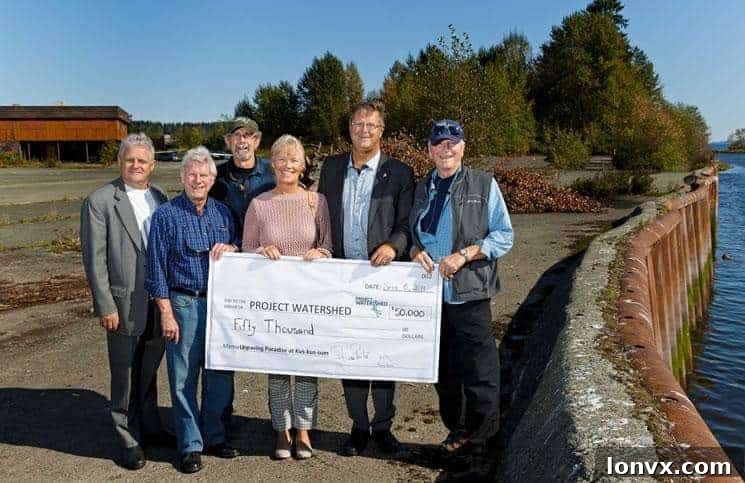
Comox Valley Champions: Dave Procter and Janine Martin Propel Kus-kus-sum Estuary Restoration with Generous $50,000 Donation
Comox, B.C. – In a powerful testament to local commitment and environmental stewardship, Dave Procter, the managing broker at Re/Max Ocean Pacific Realty in Comox, B.C., and his wife Janine Martin, have recently made a substantial donation of $50,000 to the Kus-kus-sum fundraising initiative. This significant contribution marks a pivotal moment, injecting crucial momentum into the ambitious project aimed at transforming a long-abandoned industrial sawmill site into a vibrant, biodiverse habitat for fish and wildlife.
The Vision Behind Kus-kus-sum: Restoring an Ecological Gem
The Kus-kus-sum project, led by the dedicated non-profit Project Watershed, embodies a profound commitment to ecological restoration. Its core mission is to unpave a 5.5-acre former sawmill site located at the confluence of the Courtenay River and the Comox Estuary, breathing new life into a landscape that has long been a casualty of industrialization. For decades, this critical waterfront property lay dormant, covered in concrete and asphalt, effectively isolating it from the dynamic tidal rhythms and rich biodiversity of the estuary.
The overarching goal is to meticulously deconstruct the industrial footprint, removing thousands of tons of impermeable surfaces and remediating contaminated soils. Following this extensive preparation, the site will be carefully re-engineered to its natural contours, allowing the tides to return and fostering the growth of native salt marsh plants, mudflats, and riparian vegetation. These restored habitats are indispensable, serving as vital nurseries for juvenile salmon, feeding grounds for migratory birds, and home to a myriad of marine invertebrates. By re-establishing these natural connections, Kus-kus-sum promises to significantly enhance the ecological health and resilience of the entire Comox Estuary system.
Caila Holbrook, Project Watershed’s manager of fundraising and outreach, underscored the immediate and tangible impact of Procter and Martin’s generosity. “The contribution from Janine and Dave, along with the other donations received in September and October, have put us 40 per cent of the way to reaching our next target of raising $35,000 by December 20,” Holbrook stated. This progress highlights how community support directly translates into accelerated action, moving the project closer to its immediate financial milestones and, ultimately, its ecological objectives.
Dave Procter and Janine Martin: A Legacy of Local Philanthropy
Dave Procter’s deep roots in Comox are foundational to his profound dedication to the community. Born and raised in this beautiful British Columbia region, his life’s journey has been interwoven with the fabric of the Comox Valley. With over 40 years of invaluable experience in the real estate industry, particularly at the helm of Re/Max Ocean Pacific Realty as its managing broker, Procter has not only observed but actively shaped the growth and development of the area. His extensive career has provided him with a unique perspective on the intricate balance between economic prosperity and environmental sustainability.
Alongside his wife, Janine Martin, their commitment to the community extends far beyond their professional lives. Their substantial donation to the Kus-kus-sum project is not an isolated act but rather a continuation of their consistent support for numerous local charities and initiatives. This enduring pattern of generosity underscores a shared belief in giving back and investing in the well-being of the place they call home. Their philanthropy reflects a deep understanding that a thriving community is built upon healthy ecosystems and robust social support systems.
In a compelling news release, Procter and Martin eloquently articulated the driving force behind their decision: “The many environmental challenges facing the world today can seem overwhelming. By committing to the Kus-kus-sum project, we feel empowered being a part of positive environmental changes in the heart of our community.” This powerful statement encapsulates the essence of effective local action. It acknowledges the daunting scale of global environmental crises but champions the profound impact that focused, community-level efforts can achieve. Their gift is thus more than monetary; it is an affirmation of hope and a call to action for others to join in making a tangible difference right where they live.
The Crucial Role of Estuaries and the Environmental Impact of Restoration
Estuaries are among the most productive and biologically diverse ecosystems on Earth, often referred to as the “nurseries of the sea.” The Comox Estuary, where the Kus-kus-sum site is located, exemplifies this vital role. These unique environments, where freshwater rivers meet the salty ocean, provide an unparalleled array of ecological services. They serve as critical feeding, breeding, and migratory staging grounds for countless species, particularly Pacific salmon.
Juvenile salmon – including iconic species like Coho, Chinook, Chum, and Pink – spend crucial stages of their life cycle in estuaries. Here, they find abundant food sources, shelter from predators, and acclimatize to saltwater before their arduous journey to the open ocean. The health of the estuary directly dictates the survival rates of these young fish, profoundly impacting the overall health of salmon populations in the entire watershed. By restoring the Kus-kus-sum site, the project will significantly expand and improve this indispensable salmon habitat, directly contributing to the recovery and resilience of these culturally and economically significant species.
Beyond salmon, a successfully restored estuary supports an incredible diversity of life. It provides crucial foraging and nesting grounds for numerous migratory and resident bird species, including waterfowl, shorebirds, and raptors, which rely on the Comox Estuary as a vital stopover along the Pacific Flyway. Shellfish, crabs, and a complex web of invertebrates also thrive in these nutrient-rich waters, forming the base of a healthy marine food chain. Furthermore, healthy estuaries act as natural filters, improving water quality, and provide critical protection against coastal erosion and storm surges, which are becoming increasingly important in the face of climate change and rising sea levels. The return of Kus-kus-sum to its natural state represents a holistic boost to the region’s ecological integrity.
Project Watershed: Leading the Charge for Comox Valley Conservation
Project Watershed stands as the unwavering force behind the Kus-kus-sum initiative, a testament to decades of dedicated environmental advocacy and conservation in the Comox Valley. As a respected non-profit organization, Project Watershed operates on a foundation of scientific research, community engagement, and public education. Their extensive portfolio of work includes stream restoration, shoreline protection, habitat enhancement, and comprehensive environmental monitoring programs, all aimed at fostering a healthier, more resilient local ecosystem.
The Kus-kus-sum project, however, represents their most ambitious and transformative undertaking to date. It embodies a multi-faceted approach to conservation, encompassing the complex processes of land acquisition, advanced engineering for site remediation, meticulous ecological restoration, and a continuous, robust fundraising effort. The organization’s transparent operations and commitment to involving the community at every stage have been instrumental in cultivating broad support, drawing in contributions from individual citizens, local businesses, and various levels of government. The diligent work of individuals like Caila Holbrook in fundraising and outreach is particularly critical, effectively converting public enthusiasm into tangible financial backing and vital volunteer engagement.
Project Watershed’s vision extends beyond the physical restoration of land. They aim to forge a deeper, more meaningful connection between the residents of the Comox Valley and their natural surroundings. By actively encouraging public participation through volunteer opportunities, educational workshops, and comprehensive awareness campaigns, Project Watershed ensures that the success of Kus-kus-sum is a shared triumph. This collective ownership instills a profound sense of pride and responsibility in the restored landscape, ensuring its long-term protection and appreciation for future generations.
The Ripple Effect of Philanthropy: Inspiring Community-Wide Action
The $50,000 donation from Dave Procter and Janine Martin is far more than a mere financial transaction; it is a powerful catalyst for broader community engagement and a potent symbol of confidence in the Kus-kus-sum vision. Such a substantial gift from prominent local figures often initiates a ripple effect, inspiring other individuals, businesses, and organizations within the community to reflect on their own capacity to contribute.
Local philanthropy plays an absolutely indispensable role in the successful execution of large-scale environmental projects. These initiatives frequently rely on a diverse funding mosaic, piecing together government grants, corporate sponsorships, and countless individual donations. When a highly respected business leader, like Dave Procter, with his decades of trusted experience in Comox real estate, and his partner Janine Martin, step forward with such a significant sum, it sends an unmistakable signal: this project is not only vital but also achievable, and it warrants widespread communal backing.
This act of generosity robustly reinforces the idea that local businesses are not simply engines of economic growth but are also essential community partners. By making a significant investment in the ecological health of the Comox Valley, Procter and Martin are directly contributing to the long-term sustainability, aesthetic appeal, and overall attractiveness of the region. This benefits not only the diverse array of flora and fauna but also the residents, local businesses, and the broader natural environment. Their stated feeling of empowerment, derived from witnessing a tangible positive impact unfold within their own community, is a sentiment that deeply resonates with many who aspire to make a meaningful difference.
Charting the Course Ahead: The Future of Kus-kus-sum and Opportunities for Involvement
While the $50,000 donation from Dave Procter and Janine Martin represents a monumental leap forward, the Kus-kus-sum initiative is a comprehensive, multi-phase undertaking with continuous and evolving fundraising requirements. The journey from a derelict sawmill site to a flourishing, self-sustaining estuary demands persistent financial investment. These funds are crucial for various critical stages, including land acquisition, the deployment of heavy machinery for site preparation, intricate soil remediation processes, the strategic planting of thousands of native species, and the vital long-term monitoring necessary to ensure the project’s ecological success. The immediate target of raising $35,000 by December 20, partially achieved through this recent gift, is just one of many financial and ecological milestones on the extensive path to full restoration.
Project Watershed remains actively engaged in seeking diverse forms of support from all segments of the community. Residents and stakeholders are earnestly encouraged to contribute in a multitude of ways. This can include direct financial donations, which directly fund crucial operational costs, or by volunteering their invaluable time for planting events, site clean-ups, and other hands-on activities. Participation in educational programs and simply spreading awareness about the profound importance of the Kus-kus-sum project are also vital contributions. Every single act of support, regardless of its scale, brings the vision of a fully restored Kus-kus-sum closer to its magnificent reality.
The ultimate aspiration for Kus-kus-sum is to cultivate a vibrant, resilient, and publicly accessible natural space that serves a dual purpose: an invaluable ecological sanctuary for wildlife and a cherished community asset for people. Envision a future where wild salmon confidently return to spawn in pristine, restored creeks, where a kaleidoscope of migratory birds find abundant, safe resting and feeding grounds, and where local residents can leisurely walk along improved trails, forging a deeper connection with the intrinsic natural beauty that so richly defines the Comox Valley. Thanks to the exemplary leadership and profound generosity of individuals like Dave Procter and Janine Martin, coupled with the tireless dedication of Project Watershed and the unwavering support of the broader Comox community, this inspiring and transformative vision is steadily progressing towards its breathtaking realization, setting an extraordinary precedent for environmental restoration not only in British Columbia but across the nation.