
The Greater Toronto Area (GTA) real estate market kicked off 2023 with an exceptionally slow start, marked by a significant downturn in transaction volumes and a noticeable shift in market dynamics. While January is historically a quieter month for real estate activity, the data released by the Toronto Regional Real Estate Board (TRREB) for January 2023 paints a picture of unprecedented sluggishness, trailing far behind the robust performance observed in January 2022. This stark contrast underscores the profound impact of evolving economic conditions and heightened buyer caution on one of North America’s most dynamic housing markets.
Industry observations and market anecdotes widely suggest that a substantial number of prospective buyers are currently adopting a wait-and-see approach. This sentiment was evidently a dominant factor last month, as many buyers opted to remain on the sidelines rather than engaging in purchases. This collective hesitation has led to a dramatic reduction in market activity, pushing transaction metrics to levels not seen in recent memory and setting a new tone for the year ahead.
A staggering $3.22 billion worth of real estate changed hands through TRREB’s Multiple Listing Service (MLS) in January 2023. To put this into perspective, this figure represents less than half of the $7 billion in real estate sales recorded during the same month last year. This sharp decline in transaction value highlights the severity of the market slowdown, affecting both the volume of properties sold and their aggregate price. The first quarter of 2022, characterized by near-mania market conditions and intense competition among buyers, creates an extreme benchmark. Consequently, year-over-year comparisons inevitably reveal exceptionally dramatic results, as clearly illustrated in TRREB’s detailed Market Watch report for January 2023.
The raw number of sales further emphasizes this contraction. Total home sales plunged by a substantial 44.6 per cent, falling from 5,594 transactions in January 2022 to a mere 3,100 in January 2023. This represents a steep and undeniable drop from what was an extraordinarily strong beginning to the previous year. Such a significant reduction in sales activity indicates a profound shift in buyer confidence and market momentum, moving away from the frenetic pace that defined early 2022 and settling into a more subdued environment that prioritizes caution over urgency.
Number of New Listings Relatively Unchanged: Disproving Low Inventory Assumptions
Beyond the headline figures, January 2023 stands out as an uncharacteristically weak period for the GTA real estate market. In fact, it ranks as the slowest January in the past five years, signaling a deeper trend than just a typical seasonal slowdown. The transaction volume was so remarkably low that the closest comparable month in terms of sales activity was April 2020, a period defined by the initial COVID-19 lockdown, which recorded 2,975 sales. This comparison starkly illustrates the exceptional nature of the current market contraction, placing it on par with a time of unprecedented external shock and uncertainty.
Interestingly, the number of new listings introduced to the market remained relatively stable. There was only a marginal decrease of 3.7 per cent compared to January of last year. This data point is crucial as it challenges a common perception that low sales volumes are primarily a consequence of insufficient housing inventory. For several months, many market observers and participants assumed that a scarcity of homes for sale was the main bottleneck preventing transactions. However, the consistent flow of new listings, coupled with a significant drop in sales and prices, appears to disprove this assumption. The current market dynamics suggest that the primary driver of the slowdown is not a lack of supply, but rather a substantial reduction in buyer demand and purchasing power, influenced by rising interest rates and broader economic uncertainties.
Market Shifts into Balanced Territory: Greater Choice and Less Urgency for Buyers
A key indicator of market health and balance is the sales-to-new-listings ratio, which measures the number of sales relative to the number of new properties listed. In January 2022, this ratio stood at a robust 70 per cent, unequivocally signaling a strong seller’s market where demand far outstripped supply. Sellers held significant leverage, often receiving multiple offers and selling above their asking prices. Fast forward to January 2023, and this ratio plummeted to just 47.6 per cent. This dramatic reduction signifies a fundamental shift, indicating that the market has cooled considerably and moved firmly into what is considered “balanced territory.”
In a balanced market, neither buyers nor sellers hold a distinct advantage, leading to more moderate price growth or stabilization, and a less frantic pace of transactions. This reduced absorption rate, where a smaller proportion of newly listed homes are sold, has directly led to a substantial increase in active listings. The number of active listings surged by an astounding 124.6 per cent, rising from 4,140 in January 2022 to 9,299 in January 2023. This expansion of available inventory provides buyers with significantly more choice and alleviates the intense pressure to act quickly that characterized the market a year ago. Consequently, properties are now taking considerably longer to sell. The average listing spent 29 days on the market in January 2023, more than double the 13 days recorded in January 2022. This extended time on market further empowers buyers, allowing them ample opportunity for due diligence, negotiation, and a more considered purchasing decision.
Sale-to-List Price Ratio: The End of Bidding Wars and Price Reductions
While average prices across the GTA have decreased by just over 16 per cent since last year, perhaps the most telling and potentially alarming trend highlighted in TRREB’s report pertains to the sale-to-list price ratio. In January 2022, amidst intense bidding wars and a highly competitive environment, this ratio consistently exceeded 115 per cent. This meant that, on average, properties were selling for more than 15 per cent above their initial asking prices, a clear testament to overwhelming buyer demand and limited supply. However, in January 2023, this dynamic has completely reversed, with the sale-to-list price ratio dropping to below 100 per cent. This critical threshold signifies that, on average, homes are now selling for less than their original asking price, or at best, exactly at the listed price. This shift marks the definitive end of the era of widespread bidding wars and reinforces the notion of a buyer-friendly market where negotiation is not only possible but often necessary.
This evolving pricing dynamic, characterized by properties selling at or below list price, combined with a sales-to-new-listings ratio indicative of a balanced market, has created the conditions for a slow but persistent downward price discovery. This phenomenon has been unfolding over the past few months, representing the lagging but potent impact of successive interest rate hikes by the Bank of Canada. Higher interest rates directly diminish buyer purchasing power, making mortgages more expensive and reducing the maximum amount individuals can borrow. As affordability challenges mount, buyers become more price-sensitive and less willing to overpay, forcing sellers to adjust their expectations and pricing strategies. This adjustment period, often characterized by gradual price corrections, is a natural consequence of a market reacting to significant shifts in monetary policy and a rebalancing of supply and demand. Understanding these intricate relationships between interest rates, buyer sentiment, and pricing behavior is essential for navigating the current and future landscape of the GTA real estate market, which continues to adapt to a new economic reality.
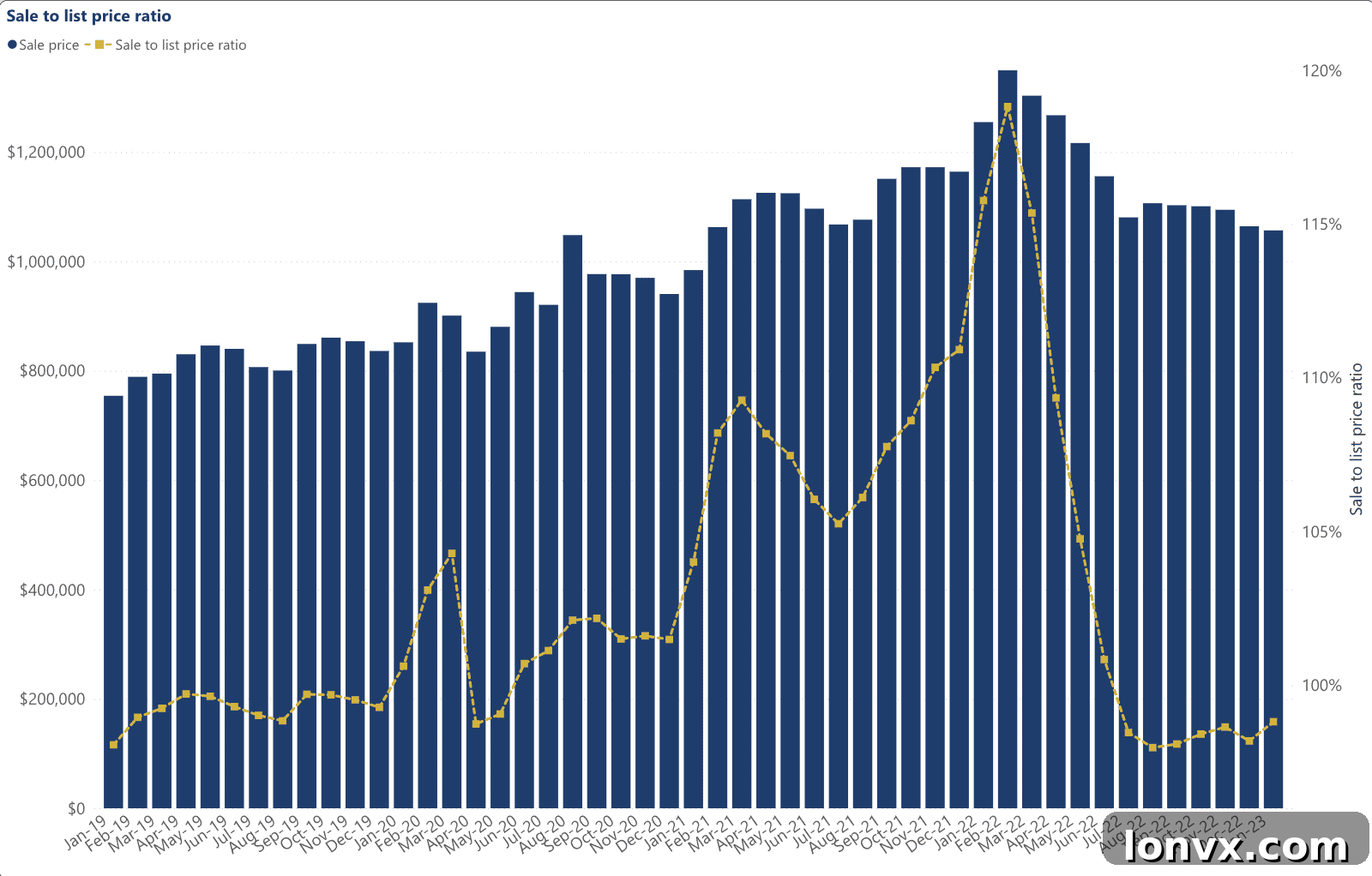
Source: Daniel Foch