The Evolving Landscape of Real Estate: Embracing Multi-Generational Family Teams for Sustainable Success
The real estate industry, dynamic and ever-evolving, has witnessed significant transformations over the past two decades. Among the most impactful shifts has been the dramatic proliferation of real estate teams. What once was a rarity has become a pervasive model, reshaping how agents operate, grow their businesses, and plan for their future.
A Veteran’s Perspective: Navigating the Team Phenomenon
David Weir, a distinguished veteran broker with nearly two decades of experience, has been a firsthand observer of these profound changes. As a top producer with Royal LePage ProAlliance Realty in Quinte West (Trenton) and Brighton, Ontario, Weir recalls a time when the team business model was virtually nonexistent. “This business model certainly wasn’t in vogue when I started in real estate almost 20 years ago – there were very few teams at all,” he reflects.
Weir, also a registered government relocation specialist and a retired Canadian Forces air traffic controller, has carved out a unique and successful niche. A significant portion of his clientele comprises federal government employees serving Canadian Forces Base Trenton. “That’s my niche,” he affirms, highlighting the importance of specialization in a competitive market.
Recognizing the potential for increased productivity and efficiency, Weir embraced the real estate team concept around 2005. “This seemed to be the way of the future,” he noted, acknowledging the industry’s inexorable march towards collaborative structures.
The Double-Edged Sword of Teamwork in Real Estate
While the team approach promised numerous advantages, Weir quickly discovered its inherent complexities. It presented a double-edged sword, offering both immense opportunities and considerable challenges.
The Undeniable Advantages of Real Estate Teams
On the positive side, forming a team can dramatically amplify an agent’s capabilities. “You can increase your income and/or minimize your time working, plus improve your bottom line via economies of scale,” Weir explains. This model allows agents to leverage collective efforts, delegate tasks, specialize in different areas, and serve a larger client base more efficiently. It offers the prospect of a more balanced work-life, a coveted goal for many in the demanding real estate profession.
Navigating the Pitfalls of Team Dynamics
However, the journey of team building is often fraught with potential pitfalls. Weir has witnessed numerous team breakdowns, leading him to conclude that the team approach is not universally suitable. One significant risk is inadvertently training future competitors. “You could be taking time and effort to train future competition and be giving business away without even realizing it,” he warns.
Furthermore, maintaining consistent quality and cohesion can be challenging. “You can lose control of quality and have people who in the long term aren’t going to stay. And you can have conflict amongst the team and fireworks will fly,” Weir cautions. These issues – from inconsistent service standards to interpersonal conflicts – can undermine the team’s reputation and financial viability.
The Innovative Solution: Multi-Generational Family Real Estate Teams
Faced with these observations, Weir believes he has identified a powerful solution that mitigates many of the common team challenges: multi-generational family teams. He posits that such teams are not merely a convenient arrangement but could be the pivotal “exit strategy” for seasoned real estate professionals contemplating slowing down or transitioning into retirement.
“There are more and more multi-generational teams in the industry – parents and their children forming teams,” Weir observes. This model offers a unique pathway for legacy building, allowing veteran agents to seamlessly transfer their accumulated knowledge, client relationships, and business goodwill to the next generation. “It’s nice to be able to take your kids forward and pass something over to them. Who better to continue the (team) and service so you haven’t invested all that time, energy and money for nothing?”
For this strategy to flourish, two fundamental conditions must be met: the business must generate sufficient income to support all involved parties, and crucially, the younger generation must possess a genuine interest and commitment to the real estate profession.
Building a Legacy: Why Family Teams Work for Succession Planning
The multi-generational team model addresses several critical needs within the real estate industry, fostering a more sustainable and fulfilling career path for both experienced and aspiring agents.
Seamless Succession and Business Continuity
Perhaps the most compelling advantage of a family real estate team is the inherent capacity for seamless succession planning. Unlike traditional retirement where an agent simply walks away, potentially leaving years of client goodwill and a robust database without a clear future, a family team ensures continuity. Clients, accustomed to a high level of service, are more likely to transition smoothly to a familiar face – the offspring of their trusted Realtor – rather than a complete stranger. This preserves the invaluable asset of client loyalty and the business’s established reputation, ensuring that the years of hard work and relationship building are not lost.
Invaluable Mentorship and Skill Transfer
For the younger generation, joining a family team offers an unparalleled learning environment. They gain instant credibility by aligning with a proven performer and benefit from extensive, hands-on training and mentorship. “Frank and open business discussions can certainly facilitate the process of bringing your children into the business,” Weir advises, albeit with a humorous caveat: “Of course, these discussions should probably not happen at the Sunday dinner table… or so my wife has told me,” he says with a laugh.
Weir emphasizes the importance of integrating children into the business well before the parents’ retirement. This early involvement allows the younger generation ample time to immerse themselves in all facets of the profession, become familiar with protocols, build rapport with existing clients, and establish vital connections with builders, lawyers, and other key business associates. This comprehensive preparation is crucial for developing the skills and network necessary for long-term success.
Economic Synergy and Sustainable Growth
In today’s challenging economic environment, where many young adults struggle to find sustainable employment, the multi-generational team approach offers a compelling solution. Entering real estate as part of an established family team helps new agents quickly get up to speed, meet the industry’s ever-increasing expenses, and overcome initial challenges. It provides a structured pathway into a demanding profession, mitigating some of the financial pressures and steep learning curves typically associated with starting an independent real estate career.
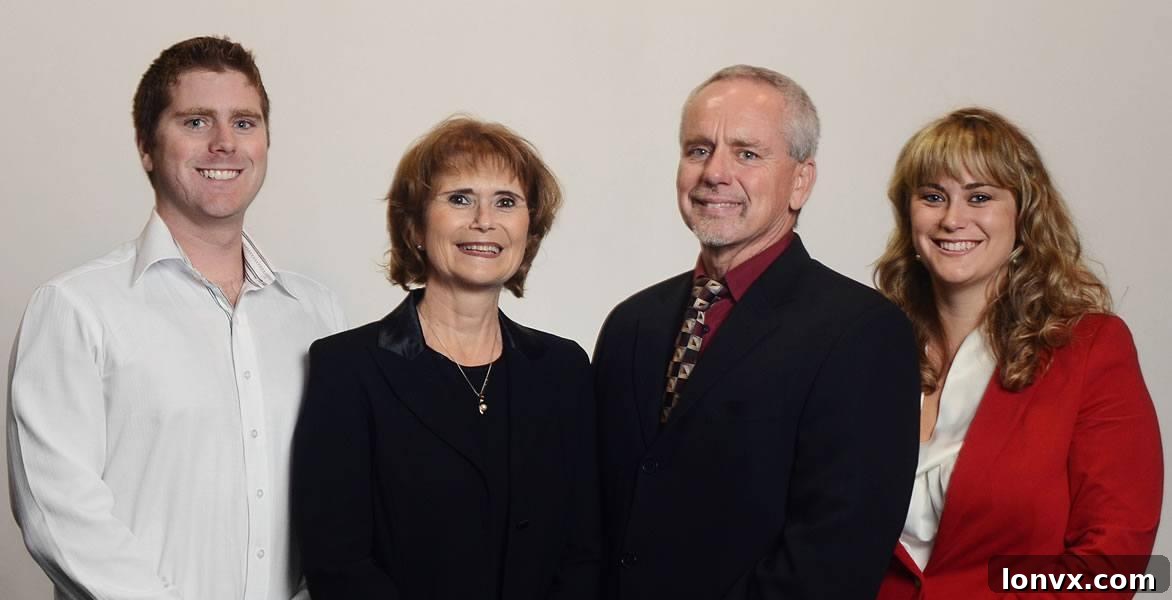
David Weir’s children Chelsea and Kyle. Weir jokes that he has given his children the nicknames “Exit” and “Strategy”.
Inside the Weir Family Team: A Model for Success
David Weir practices what he preaches. His own successful six-person team exemplifies the multi-generational model. It includes his wife, Donna, their two children, Kyle and Chelsea, and Victoria Parker, his son’s girlfriend. The team is further strengthened by salesperson Doug Bald, a non-family member, demonstrating the flexibility of this structure to incorporate diverse talents.
This composition allows for a rich blend of experience, fresh perspectives, and a shared commitment to the business’s longevity. The deliberate integration of family members ensures a strong foundation of trust and mutual investment in the team’s collective future.
Crafting Your Real Estate Exit Strategy: A New Path to Retirement
The real estate profession, unlike many corporate careers, rarely offers the comfort of a traditional pension. This reality underscores the critical need for agents to develop a robust exit strategy. Multi-generational family teams provide a tangible and viable solution for senior agents to transition to a slower pace of life without completely sacrificing their hard-earned income.
Diverse Transition Models for Financial Security
Weir outlines several practical mechanisms for facilitating this transition. The younger generation could purchase the business outright, providing the retiring agent with a substantial lump sum. Alternatively, a phased partnership arrangement could be established, where the children gradually assume leadership, and the parent receives ongoing referral fees or some other form of regular compensation based on the business’s performance. This ensures a steady income stream post-retirement, a crucial aspect of financial planning.
Furthermore, semi-retired parent-salespeople who wish to remain partially engaged can continue to contribute and earn income by providing specific services to the family team. This could involve lead generation, mentoring new team members, or working part of the year. This flexibility allows veterans to maintain a connection to the industry they love, leveraging their expertise while enjoying more leisure time.
From a business perspective, the peace of mind derived from knowing that “you aren’t going to leave the profession and not have some residual income for all your years of hard work and the goodwill you have created with your database of loyal clients” is invaluable. It transforms the concept of retirement from an abrupt cessation of income into a managed, financially secure transition.
Navigating the Nuances: Challenges and Best Practices for Family Teams
While the benefits are significant, Weir candidly admits that partnering with family members “doesn’t alleviate all issues within a team environment.” The delicate balance between professional demands and family dynamics requires careful navigation. It is paramount to establish clear roles, responsibilities, and professional boundaries to prevent business stress from souring familial relationships. Open communication, mutual respect, and a commitment to professional conduct are essential for maintaining harmony and productivity within a family-led enterprise.
The Future of Real Estate: Empowering the Next Generation
Weir views the multi-generational team model as a critical step towards securing the future of the real estate industry. “We represent an example of a possible future business model for our profession,” he states. He expresses concern about the aging demographic of Realtors in Ontario, noting that he and his wife, both in their mid-50s, represent the average age. “Unfortunately I would suggest that this doesn’t bode well for the future of our industry. Without younger, well-educated people entering and being successful, I think our profession may languish.”
Family teams offer a powerful solution to this demographic challenge, encouraging young, talented individuals to enter the profession with a built-in support system. They provide a stable platform for new agents to quickly gain experience and confidence, thereby injecting new vitality and innovation into the industry.
A similar succession strategy could potentially be worked out between unrelated salespeople. However, Weir suggests that the arrangement has a significantly higher chance of success when it involves a parent and child or other close relatives. This is primarily due to the inherent trust, shared values, and the strong likelihood that clients will prefer to deal with a successor connected to their trusted former agent.
David Weir’s Personal Journey: Transitioning with Purpose
Despite his visionary approach to an exit strategy, and his playful nicknames for his children – “Exit” and “Strategy” – Weir is in no particular rush to completely leave the business. “Except for boating I don’t have any hobbies,” he admits, adding, “I really like what I do but I want to take more time off.” He anticipates that he and his wife will be “going into transition mode in the next two years, throttling back and letting the kids go to the forefront.” This measured approach allows for a smooth handover, ensuring the business continues to thrive under the capable leadership of the next generation.
Ultimately, the desire for a comfortable and secure retirement is universal. For real estate professionals, where traditional pensions are rare, establishing a multi-generational family business can be the key to achieving this goal. It offers a rewarding path not only for retiring agents to maintain a residual income but also for their children to build successful, credible careers in a challenging yet lucrative industry.
As Weir humorously concludes, emphasizing the practical benefits for the retiring generation: “Just make sure the kids have lots of pre-signed cheques and self-addressed envelopes to your Florida address!”