
GTA Housing Market Insights: A Deep Dive into February 2024 Trends
The Greater Toronto Area (GTA) housing market, a perennial topic of discussion and often a barometer of economic sentiment, presented a complex picture in February 2024. While some segments radiated renewed optimism, hinting at a potential resurgence for both prospective buyers and eager sellers, a closer examination reveals a landscape still navigating the persistent undertows of high borrowing costs and evolving monetary policies. This month, often seen as the prelude to the vigorous spring market, offered a mix of encouraging statistics and cautionary signals, inviting a nuanced understanding of its current trajectory.
February 2024: Modest Gains in Sales and Listings Signal Evolving Market Dynamics
According to the most recent data released by the Toronto Regional Real Estate Board (TRREB), February witnessed a discernible uptick in both home sales and new listings. This movement, observed on both an annual and monthly basis, was accompanied by a shy but definite upward nudge in selling prices when compared to the preceding year. This collective performance is, at face value, a positive development, often attributed to sustained population growth across the GTA and the region’s seemingly resilient economic backbone. These factors are frequently cited as the bedrock supporting demand, even as individual households continue to grapple with the tangible realities of elevated borrowing costs – a direct consequence of the Bank of Canada’s aggressive rate-hiking cycle.
For many market participants, the anticipation of impending interest rate cuts had been a driving force behind rekindled interest and a sense of optimism. However, the Bank of Canada’s decision to hold its key interest rate steady, coupled with a decidedly hawkish tone from its governor during the accompanying press release, cast a shadow of doubt over these expectations. The central bank reiterated its concern that premature rate cuts could reignite inflationary pressures, particularly within the housing sector. This clear signal indicates that a significant easing of borrowing costs is not on the immediate horizon. The critical question then emerges: Can the momentum of the spring market endure and thrive without the previously anticipated tailwind of rate-cut optimism? To truly understand the market’s resilience and future direction, a closer look at the underlying data for demand, supply, and pricing is essential.
Demand Analysis: Home Sales Show Signs of Recovery
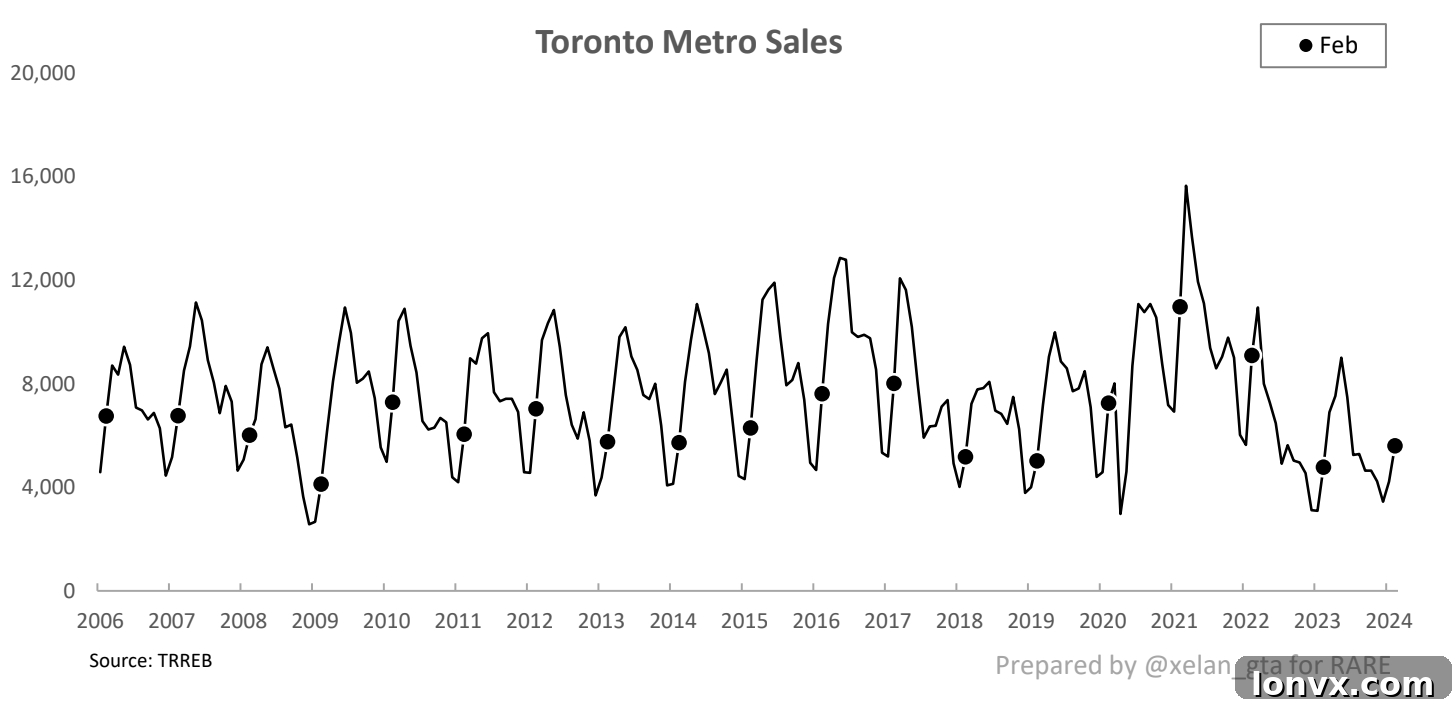
February 2024 saw a total of 5,607 homes change hands across the GTA via TRREB’s Multiple Listing Service (MLS) system. This figure represents a notable 17.9 per cent increase in sales volume compared to February of the previous year. This growth aligns almost precisely with TRREB’s own projections, which anticipated an 18 per cent jump in home sales volume for the year, moving from approximately 65,000 sales in 2023 to an estimated 77,000 sales in the current year. While impressive, it is important to contextualize this growth. The previous year marked a period of significantly subdued activity, meaning this increase, while strong, could be viewed as a rebound from a lower base rather than a return to pre-pandemic peaks.
The underlying patterns within this demand reveal interesting nuances. A significant portion of the revitalized interest is concentrated in properties priced under $1 million. This price point is particularly important as it typically represents the maximum threshold for mortgage insurance products offered by entities like the Canada Mortgage and Housing Corporation (CMHC). Mortgage insurance plays a crucial role for many first-time buyers or those with smaller down payments, allowing them to access the market. The strong demand in this segment suggests that CMHC insurance products are effectively cementing a price floor in many sub-markets, by concentrating the purchasing power of a substantial segment of buyers. This also highlights the ongoing affordability challenges for properties exceeding this threshold, where buyers face stricter lending criteria and often require larger down payments, making the impact of higher interest rates even more pronounced.
The consistent activity below the $1 million mark underscores the persistent aspirations of many to enter homeownership, despite the prevailing economic headwinds. While the broader market sentiment might be cautiously optimistic, this specific segment demonstrates a robust, foundational demand, driven partly by demographic shifts and the sheer necessity of housing. Understanding this segmentation is key to interpreting the overall health and future trajectory of the GTA housing market, as it reveals where demand is most resilient and where affordability remains a critical barrier.
Supply Dynamics: Listings Surge, Hinting at Market Rebalancing
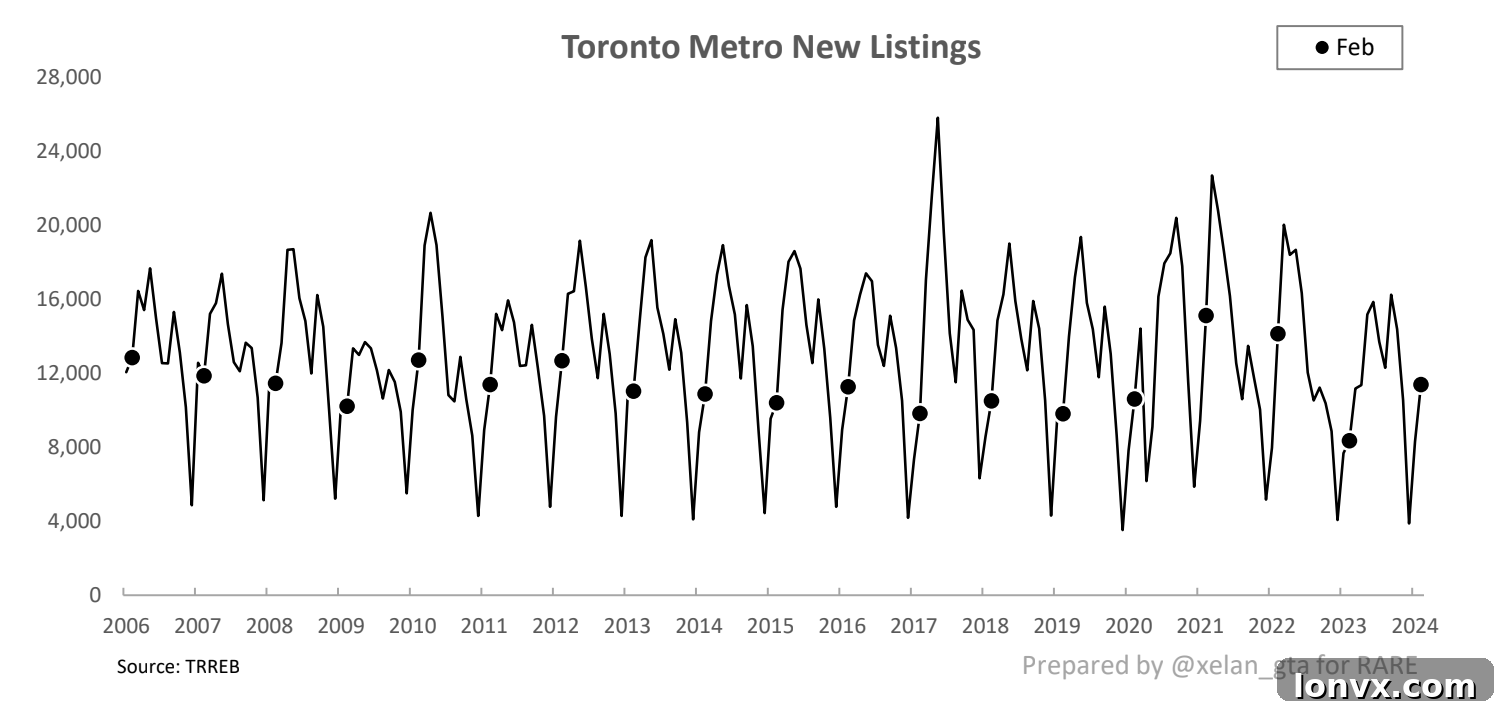
February typically ushers in an increase in new listings as sellers prepare for the spring market, and February 2024 was no exception, observing a larger-than-usual uptick. Historically, the transition from January to February sees a predictable surge in properties coming onto the market. This year’s jump in new listings was more pronounced than in February of last year, indicating a renewed confidence among sellers or perhaps a necessity to list due to changing personal circumstances or increased mortgage costs. However, it still fell short of the robust listing volumes seen during the exceptionally strong spring markets of 2021 and 2022, periods characterized by frenzied activity and rapidly escalating prices.
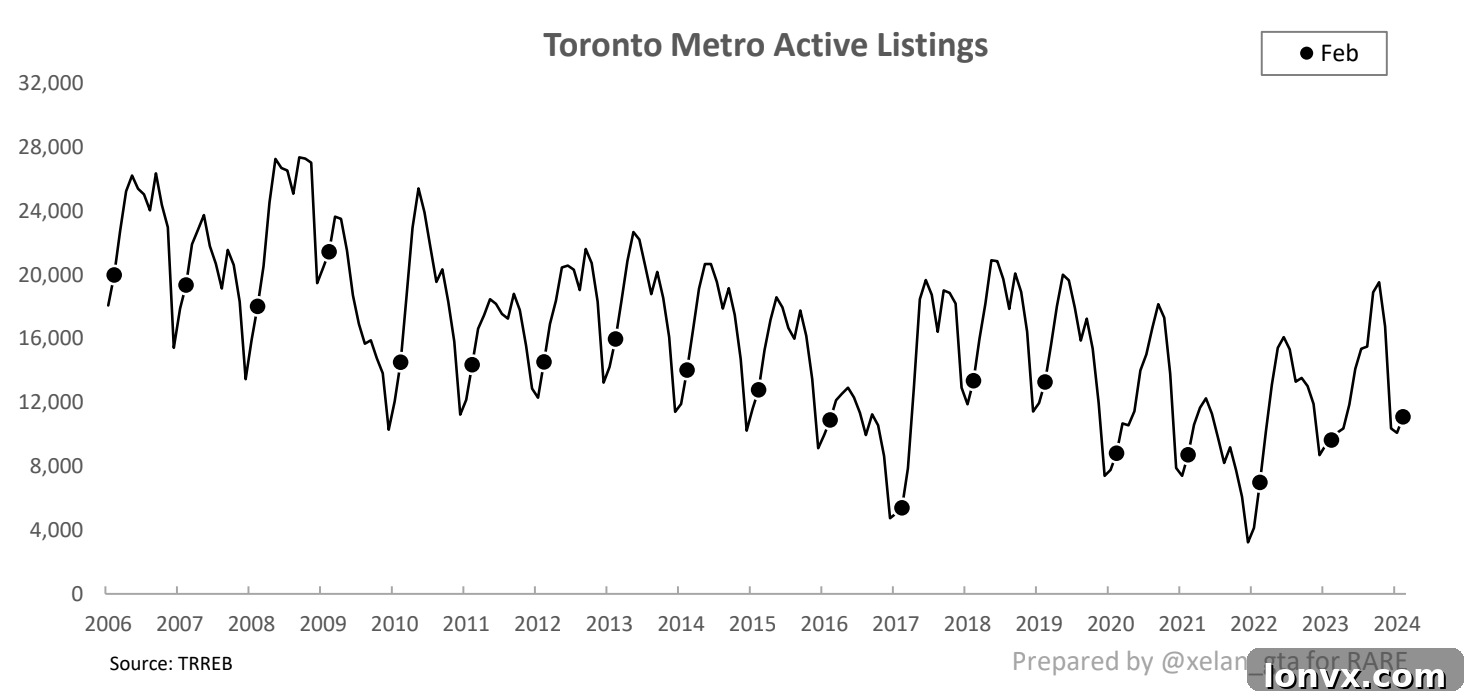
This increase in new listings is a crucial component of market dynamics, contributing significantly to the overall supply picture. When examined in conjunction with active listings – the total number of homes available for sale at any given time – the market presents a compelling narrative. February 2024 recorded the highest level of active listings seen since the onset of the pandemic. This significant accumulation of available homes suggests a potential shift towards a more balanced market environment, a welcome departure from the volatile and often severely imbalanced conditions that have characterized the GTA real estate scene over the past few years. During those periods, limited inventory often led to bidding wars and rapid price appreciation.
The growth in active listings provides buyers with more choice and potentially greater leverage, fostering a less frantic purchasing environment. For sellers, it means increased competition and a greater need for strategic pricing and presentation. A sustained increase in supply could help to temper price growth and contribute to a more sustainable market in the long term, moving away from the extreme seller’s market conditions that have often frustrated buyers. This trend towards greater equilibrium is a key indicator for the future, suggesting a potential normalization of market activity after several years of unprecedented fluctuations.
Price Performance: A Sharp Ascent in Anticipation of Spring
Mirroring the traditional seasonal patterns of the GTA real estate market, house prices experienced a sharp jump in February. This upward momentum is a common characteristic of the spring market, where prices typically begin to appreciate from January, reaching a peak around May, before often settling or gently declining through the summer months. What makes February 2024’s performance particularly noteworthy, however, is the intensity of this increase; it marks the steepest month-over-month surge in prices observed since the spring market of 2022. That period was a culmination of intense demand and limited supply, leading to record-breaking price levels before a subsequent correction driven by rising interest rates.
The current price appreciation suggests that, despite the Bank of Canada’s steadfast stance on interest rates, a segment of buyers remains eager and capable of entering the market. This could be attributed to pent-up demand from prospective buyers who paused their search during periods of higher uncertainty, or perhaps those who are less sensitive to incremental rate changes due to stronger financial positions. The concentration of demand in the under $1 million segment, as previously noted, may also be contributing to overall market buoyancy, as more accessible price points continue to attract significant buyer interest.
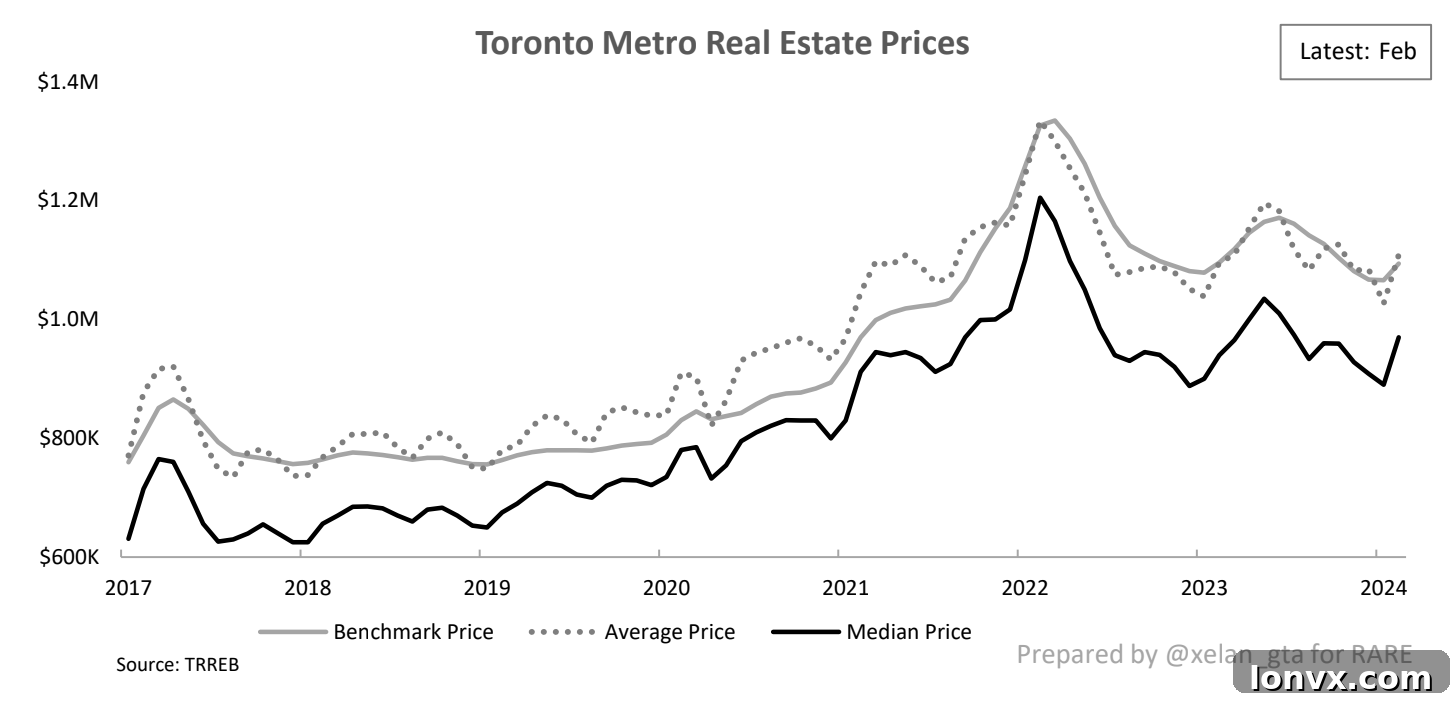
While the February price surge is a strong indicator of market confidence, its sustainability will be a critical factor to watch in the coming months. The interplay between ongoing high interest rates, the influx of new listings (which could eventually moderate price growth by increasing choice), and the underlying economic conditions will determine if this upward trajectory is a temporary rebound or the beginning of a more prolonged period of appreciation. Historically, sharp increases can sometimes precede periods of stabilization, especially if affordability thresholds are repeatedly tested. Monitoring how buyer sentiment and borrowing capacity evolve in the absence of imminent rate cuts will provide further clarity on the long-term outlook for GTA home prices.
Market Outlook and Future Projections: Navigating Uncertainty
The February 2024 data paints a picture of a GTA housing market that is dynamic and responsive, yet still profoundly influenced by macroeconomic forces. The increase in sales and listings, alongside a notable rise in prices, indicates a degree of resilience and renewed activity. However, the Bank of Canada’s firm stance on interest rates introduces a layer of complexity. The previously held widespread expectation of rate cuts was a significant psychological driver for both buyers and sellers, fostering a belief that affordability would soon improve. With this optimism dampened, the market must now rely on other fundamentals to sustain its momentum.
Population growth continues to be a cornerstone of demand in the GTA, providing a steady influx of potential homeowners and renters. Coupled with a generally robust regional economy, these factors provide a fundamental support system for the housing market. However, the question remains: Can these demographic and economic strengths fully offset the drag of elevated borrowing costs indefinitely? The answer is likely nuanced. While demand for housing remains strong due to population expansion, affordability constraints stemming from high rates could temper the pace of sales and lead to a more gradual, rather than rapid, increase in prices.
For buyers, the increase in active listings offers more choice and potentially reduces the pressure of intense bidding wars seen in past years. However, high mortgage rates mean purchasing power remains constrained, particularly for properties above the $1 million threshold. Strategic financial planning and pre-approval for mortgages become even more crucial in this environment. Sellers, on the other hand, might find that while demand is present, the market is becoming more discerning. Properties that are well-priced, well-maintained, and strategically marketed will likely perform best, as buyers have more options to consider.
Looking ahead, the spring market will be a critical test. Will the inherent demand, fueled by population growth, continue to drive activity despite the lack of rate-cut incentives? Or will the cumulative effect of prolonged high interest rates lead to a plateau or even a modest correction? The market is in a delicate balance. While TRREB’s predictions of increased sales volume for the year remain plausible, the trajectory of prices will likely be more sensitive to shifts in buyer confidence and the evolving global economic landscape. Continuous monitoring of economic indicators, particularly inflation and employment figures, will provide further clues as to when the Bank of Canada might eventually consider easing its monetary policy, which would undoubtedly provide a significant boost to the GTA housing market.