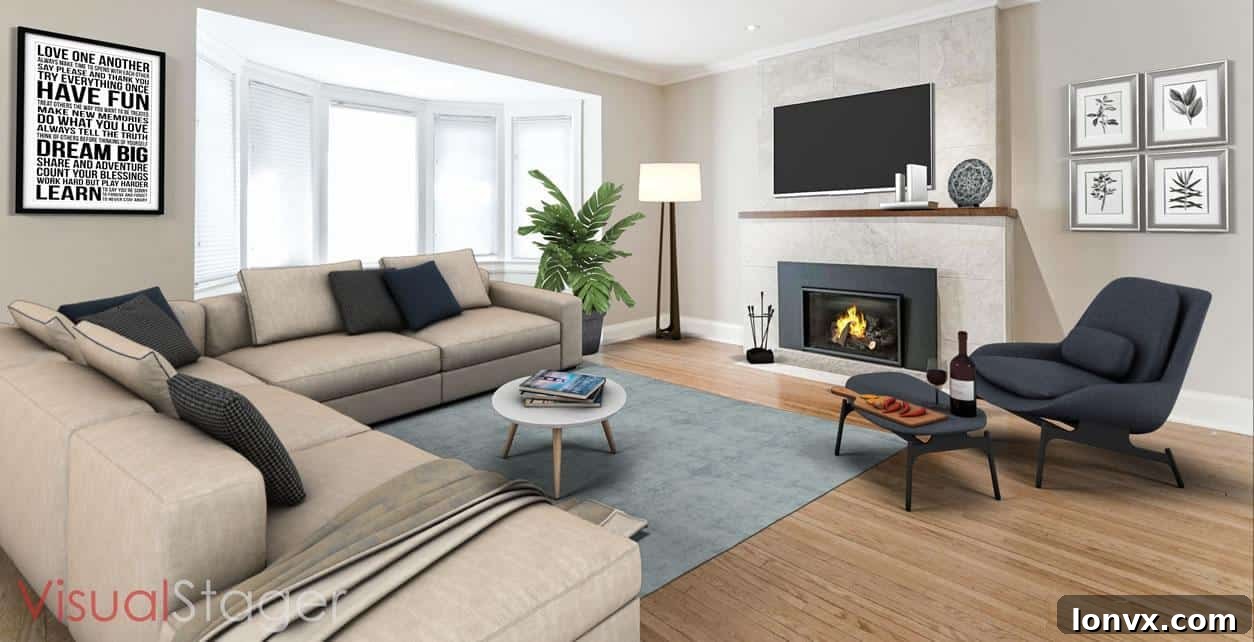
The Ultimate Guide to Virtual Staging: Transforming Properties for Modern Buyers
In today’s dynamic and increasingly competitive real estate market, presenting properties in their best light is not just an advantage—it’s a necessity. Virtual staging has rapidly emerged as a revolutionary tool, offering a powerful, cost-effective, and highly efficient way to showcase homes with unparalleled visual appeal. Whether you are a seasoned real estate agent, a homeowner looking to sell, or a property developer aiming to maximize market impact, understanding the nuances of virtual staging can significantly enhance your marketing efforts and accelerate sales.
To provide a comprehensive and actionable guide to mastering this transformative technique, we’ve gathered invaluable insights from leading industry experts. We’ll delve into the practical advice from Toronto graphic production artist and renowned virtual stager David Pearcey, whose technical expertise drives realistic digital transformations. Additionally, we’ll explore the strategic perspectives of Lynn Tribbling, a seasoned real estate agent with Right At Home Realty in Toronto, who has successfully leveraged virtual staging for years. Their combined wisdom offers a holistic view, guiding you through the essential steps to unlock the full potential of virtual staging for your properties.
Laying the Foundation: Essential Tips for High-Quality Virtual Staging
The success of any virtual staging project hinges significantly on the quality of its foundation – the original photographs of the property. David Pearcey, a leading virtual stager based in Toronto, emphasizes several critical factors that can make or break the final presentation of your property. Adhering to these fundamental guidelines ensures that the digital transformation is as realistic, appealing, and compelling as possible, setting the stage for buyer engagement.
1. Prioritize High-Resolution Photography for Unmatched Realism
The cardinal rule of virtual staging is simple yet profound: the better the quality of your initial photographs, the more stunning and realistic the finished product will be. High-resolution images provide the virtual stager with an abundance of intricate detail, allowing for the seamless integration of virtual furniture and decor. When working with crisp, clear, and well-exposed photos, the stager can accurately match textures, replicate natural lighting conditions, and cast realistic shadows, thereby creating an immersive experience for potential buyers.
In contemporary times, where considerations like physical distancing may limit access for professional photography, clients can still capture excellent high-resolution photos using modern cell phones. Encourage them to ensure optimal lighting – preferably natural daylight – stable shots to prevent blurring, and the highest resolution settings on their device. While a professional photographer utilizing a DSLR or mirrorless camera will always yield superior results due to advanced optics and sensor capabilities, a thoughtfully taken smartphone photo can serve as a strong base. Emphasize the importance of clean camera lenses, even composition, and avoiding pixelated or poorly lit images to give your virtual stager the best possible canvas to work with. Remember, the goal is to provide a clear, detailed starting point that minimizes guesswork and maximizes artistic potential.
2. Optimal Photo Coverage: One Strategic Shot Per Room (Usually)
For the majority of standard rooms, a single, well-composed photograph is often sufficient for effective and impactful virtual staging. This primary shot should be strategically captured to convey the essence, scale, and layout of the room, ideally taken from a vantage point such as a doorway or a corner that maximizes the visual space. Such an angle allows the stager to portray the room’s proportions accurately and showcase its potential effectively.
However, discretion and thoughtful consideration are key. For larger, multi-functional spaces like open-concept living/dining areas, master suites with distinct zones, or rooms featuring unique architectural elements such as a fireplace or bay window, providing additional angles can be profoundly beneficial. Different perspectives allow the virtual stager to explore and showcase various potential layouts, highlight specific selling points, and give prospective buyers a more comprehensive and nuanced understanding of the room’s versatility and possibilities. Always consult with your virtual staging provider to determine if multiple angles are necessary to best represent the unique attributes of your property.
3. Choose the Right Lens: Preserving Realism by Avoiding Distortion
The choice of lens used for capturing property photographs plays an absolutely crucial role in maintaining the integrity and realism of the final virtual staging. It is imperative to utilize a regular, non-distorting lens. Lenses such as fisheye, while providing an extremely wide field of view, inherently create a curved, distorted perspective that makes rooms appear unnaturally stretched, warped, or bulbous. This optical distortion significantly detracts from the realism of virtual staging, making furniture appear ill-fitting, disproportionate, and causing the overall space to feel unnatural and disorienting.
To ensure that the virtual staging integrates flawlessly with the room’s true dimensions and proportions, a standard wide-angle lens (typically ranging from 16-35mm on a full-frame camera or its equivalent on crop sensor cameras) is highly recommended. These lenses are capable of capturing ample space within a room without introducing undesirable distortion, preserving straight lines and natural perspectives. The aim is to present an accurate, true-to-life representation of the space, allowing the virtual staging to enhance rather than compromise the viewer’s perception of the property.
4. The Critical Role of Accurate Room Dimensions in Staging Accuracy
Accurate room dimensions are not merely helpful suggestions; they are an absolutely essential requirement for the success and authenticity of any virtual staging project. Providing precise measurements allows the virtual stager to select and scale 3D furniture models to perfectly fit the specific dimensions of the space, ensuring that the final rendering is proportionate, believable, and aesthetically harmonious. Without accurate dimensions, there’s a significant risk that virtual furniture might appear incongruously large or small, leading to an unrealistic and ultimately unappealing presentation that can confuse or deter potential buyers.
It is vital to provide comprehensive measurements including the length, width, and ceiling height of each room. Details such as the placement of windows, doors, and any built-in features (e.g., fireplaces, alcoves) can also be incredibly useful for optimal furniture placement. This meticulous attention to detail ensures that the staged environment feels authentic and helps potential buyers visualize themselves comfortably within the space. When furniture appears correctly scaled and placed, it significantly enhances a buyer’s connection to the property, allowing them to better appreciate its potential and functionality.
5. The Power of Expert Technical Skill and Advanced Software Mastery
Virtual staging is far more than just placing digital furniture into a picture; it is an art form that demands a sophisticated blend of technical prowess and an astute eye for interior design. When seeking a virtual staging provider, look for an experienced technical professional who possesses a deep understanding and mastery of advanced 3D rendering and graphic design software packages. These specialists utilize powerful tools to manipulate a vast and diverse library of 3D products – ranging from contemporary sofas and elegant dining sets to intricate decorative accessories.
The true expertise lies in their ability to precisely rotate, scale, and place these virtual elements within your property’s photographs, ensuring they complement the room’s architecture and lighting. Beyond mere placement, superior virtual staging involves meticulous post-production work, often in software like Adobe Photoshop. This includes expertly adjusting lighting to match the existing environment, casting realistic shadows to give depth, enhancing textures for tactile realism, and performing seamless integration. The goal is to make the virtual elements indistinguishable from physical decor. This refined ability to realistically “Photoshop” items into place elevates the entire presentation, creating an immersive, convincing, and utterly believable visual experience that captivates buyers.
6. Tailoring Virtual Staging to Vacant and Furnished Homes
Virtual staging truly shines brightest when applied to vacant properties, where it can effortlessly transform empty, cold spaces into warm, inviting homes that potential buyers can easily envision themselves living in. By populating these barren rooms with stylish furniture and decor, virtual staging breathes life into the property, helping buyers overcome the challenge of visualizing scale and purpose in an unadorned space.
However, its utility extends significantly beyond the vacant. For homes that are currently furnished but perhaps with outdated, overly personal, or simply unappealing decor, virtual staging offers an elegant and powerful solution: the capability to digitally edit out the existing furniture and then stage the now-empty space virtually. While this process, often termed “virtual decluttering” or “virtual renovation,” is more complex and thus generally more costly than staging an empty room from scratch, it offers immense value. By neutralizing personal tastes and removing clutter, it allows the property’s inherent features and true potential to shine through. Some advanced virtual staging software companies even specialize in services that digitally “empty” a furnished space, preparing it for a fresh virtual design. This remarkable flexibility ensures that virtual staging can effectively benefit almost any property on the market, regardless of its current state.
Unlocking Value: The Economic and Efficiency Advantages of Virtual Staging
Beyond its aesthetic appeal and innovative design capabilities, virtual staging offers compelling practical benefits that significantly outperform traditional physical staging in terms of cost-effectiveness, speed, and logistical simplicity. These advantages collectively make it an indispensable tool for modern real estate professionals and savvy property sellers.
Superior Cost-Efficiency: A Smart Investment
The financial disparity between virtual and physical staging is one of its most compelling advantages. A typical virtual staging project costs approximately $50 to $100 per room, making professional-grade staging accessible and affordable for almost any property. In stark contrast, physical staging can easily run upwards of $500 for the first month alone, often incurring additional monthly fees for furniture rental, moving services, and ongoing maintenance or insurance. This significant cost saving allows sellers to allocate their financial resources more strategically, perhaps investing in other essential property upgrades, enhanced marketing campaigns, or a more competitive pricing strategy.
The lower entry barrier and predictable pricing structure of virtual staging mean that even homes with modest price points or tighter budgets can benefit from an enhanced visual presentation that would otherwise be financially out of reach. This democratizes access to high-quality staging, ensuring that a wider range of properties can capture buyer attention and command better prices, ultimately maximizing the seller’s return on investment without prohibitive upfront costs or ongoing expenses.
Unmatched Speed and Convenience: Rapid Market Readiness
In the fast-paced world of real estate, time is often a critical factor that can significantly impact a property’s market performance. Virtual staging excels in delivering rapid results with unparalleled efficiency. The typical turnaround time for an entire project – whether it’s a single suite or a multi-room house – usually ranges from a mere 24 to 48 hours. This swift delivery is a game-changer when compared to physical staging, which involves a cumbersome and time-consuming logistical ballet of scheduling furniture delivery, managing professional installation, and coordinating eventual removal processes that can span several days or even weeks.
The quick provision of virtual staged images means properties can go to market faster, capture buyer attention sooner, and potentially reduce the overall time a home spends sitting on the market. Furthermore, virtual staging completely eliminates the logistical headaches associated with moving heavy furniture, coordinating access for multiple vendors, and ensuring the security and maintenance of rented items. It offers a truly hassle-free experience for sellers and real estate agents alike, minimizing disruption and maximizing efficiency from listing to sale.
Elevating Your Real Estate Strategy: Insights from an Industry Veteran
Lynn Tribbling, a highly respected and experienced real estate agent with Right At Home Realty in Toronto, has been a long-time advocate and user of virtual staging, collaborating with experts like David Pearcey to transform properties. Her invaluable experience on the front lines of property sales offers critical perspectives on how to maximize the impact of virtual staging and, crucially, how to choose the right partners for enduring success.
1. Prioritize Real Estate Experience in Your Virtual Staging Partner
When selecting a virtual staging company, it is absolutely imperative to choose one that possesses demonstrable real estate experience. This isn’t just about having technical skill in graphic design; it’s about a profound understanding of the psychology of homebuyers, an awareness of current market trends, and an insight into what truly resonates with specific demographics and property types. A company with genuine real estate acumen knows how to stage a room not just beautifully, but strategically. They understand that different types of properties—a suburban family home, a trendy downtown condo, a luxury estate, or a starter home—and their respective target buyers require distinctly unique staging approaches.
Always scrutinize their sample portfolios with a discerning eye. Look for consistency in quality, photorealism, and a diverse range of styles that reflect professional competence and an understanding of the multifaceted real estate landscape. A truly professional portfolio should showcase impeccable lighting, accurate scale and proportion, and a sophisticated aesthetic that consistently elevates the property, rather than merely filling a space. This expertise ensures that the staging is not just visually pleasing but strategically effective in attracting the right buyers.
2. Embrace Customization and Strategic Design Options, Beyond Mere Decoration
Be wary of virtual staging services that merely offer generic “stock renderings” populated with standard, interchangeable furnishings. This approach often leads to simply decorating a room rather than truly staging it. While decorating makes a room look aesthetically pleasing, professional virtual staging is a more profound art: it tells a compelling narrative and strategically targets a specific type of buyer. For instance, staging a property for a young family will differ significantly in style and functionality from staging a sleek, minimalist condo for a young professional, or a grand estate for a luxury market.
Top-quality real estate virtual staging involves a powerful and seamless combination of two distinct skill sets: exceptional software competence for realistic rendering and a profound market awareness of the likely purchaser and their lifestyle. The best providers will engage in a consultative process, understanding your target demographic. They should also be capable of rendering different design options for the same room, allowing you to appeal to a wider swath of potential buyers and tailor your marketing message to diverse demographics effectively. This strategic flexibility is a cornerstone of impactful property marketing, moving beyond superficial aesthetics to create genuine buyer connection.
3. Resist the Temptation of Amateur DIY Virtual Staging
While possessing computer savviness or having a personal background in interior design might tempt you to tackle virtual staging yourself, proceeding with extreme caution is paramount. The risk of creating an amateur or unconvincing result is significant, and such an outcome completely defeats the core purpose of showcasing your home in the best possible light. Professional virtual staging is not merely about dragging and dropping furniture; it requires highly specialized software, advanced technical skills in 3D modeling, rendering, photo manipulation, and an expert, trained eye for spatial design, intricate lighting, and achieving photorealism.
An amateur attempt might easily result in poorly scaled furniture, unnatural or inconsistent lighting, pixelated textures, incorrect perspectives, or an overall “fake” and unappealing appearance. Such shortcomings can actively deter potential buyers rather than attract them, undermining the property’s perceived value and slowing down the sales process. Investing in professional virtual staging is not an expense; it is a strategic investment in your property’s marketability and, ultimately, its sale price. Entrusting this crucial task to seasoned experts ensures a polished, professional, and highly persuasive presentation that truly highlights your home’s utmost potential and leaves a lasting positive impression.
The Future of Property Marketing is Virtual
Virtual staging has firmly established itself as an indispensable and transformative tool in modern real estate marketing. By seamlessly combining advanced digital technology with expert design sensibilities, it offers a powerful, cost-effective, and highly efficient method to transform any property into an aspirational dream home. From ensuring impeccable photo quality and understanding the intricate technical nuances of 3D rendering to strategically targeting specific buyer demographics with tailored designs, the collective insights from industry leaders like David Pearcey and Lynn Tribbling underscore the multifaceted and profound benefits of this innovative approach.
Embracing virtual staging not only enhances a property’s visual appeal and broadens its market reach but also significantly boosts its overall marketability, ensuring it stands out in an increasingly crowded and competitive market. It allows properties to capture the attention and hearts of discerning buyers, painting a clear and compelling picture of future possibilities. In a world that is increasingly reliant on compelling digital presentation and virtual experiences, virtual staging is no longer just an optional enhancement; it has become an essential necessity for achieving resounding success in the dynamic realm of real estate.