
British Columbia’s Housing Market Navigates Shifting Tides: A Deep Dive into Recent Trends
British Columbia’s real estate market experienced a significant shift last month, with residential sales demonstrating a notable decrease compared to the previous year. According to the latest figures from the British Columbia Real Estate Association (BCREA), a total of 8,075 residential sales were recorded across the province. This represents an 11.6 per cent decline when measured against the sales volume from the same period last year. This dip signals a recalibration in market dynamics, prompting a closer examination of what factors are influencing buyer and seller activity across BC’s diverse regions.
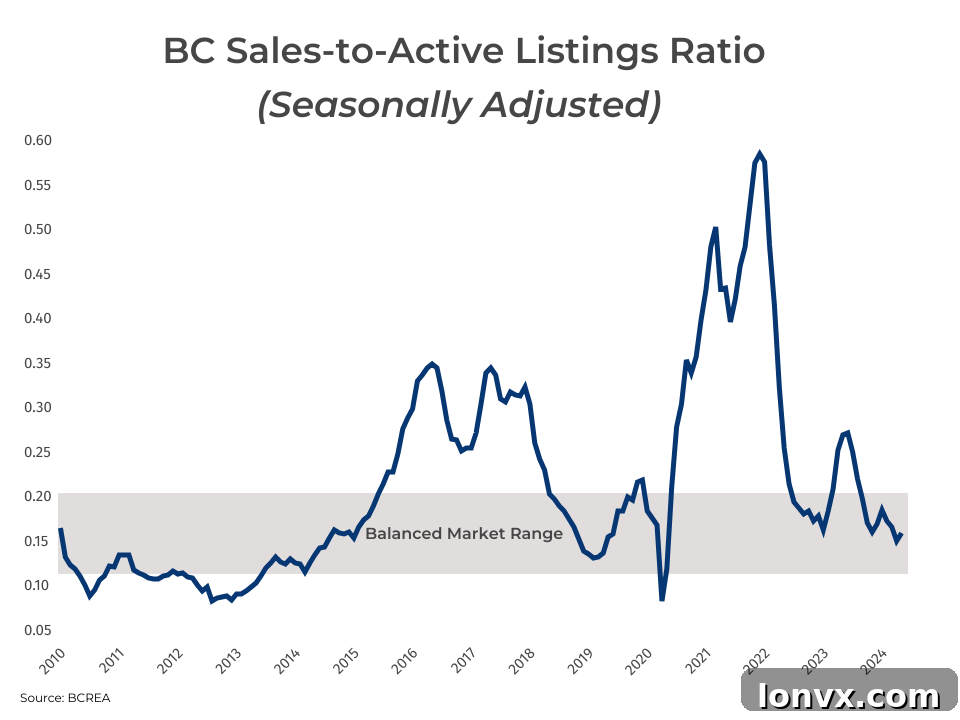
The performance of the housing market in British Columbia is often a bellwether for the broader economic health of the province. While a year-over-year decrease in sales might initially raise concerns, BCREA’s analysis suggests a more nuanced picture. The market is showing signs of transitioning towards a more balanced state, a development that could be welcomed by many who have witnessed the rapid fluctuations of recent years. Understanding these shifts requires a deeper look into average prices, total sales volumes, and the overarching economic factors at play.
Average Price and Total Sales Volume: A Closer Look at May’s Figures
In May, the average listing price for residential properties in British Columbia settled at $1 million. This marks a modest 1.5 per cent reduction compared to the average price of $1.02 million recorded in May 2023. While seemingly a small percentage, a decline in average price can have a considerable impact on buyer affordability and seller expectations. This slight retraction in prices could signal a cooling period, offering a degree of relief for prospective homeowners struggling with high entry costs, particularly in BC’s historically expensive urban centers.
Beyond individual property values, the total sales dollar volume for the same period also reflected a downturn. The cumulative value of all residential transactions reached $8.1 billion, representing a 13 per cent decrease from the previous year. This metric, which combines both the number of sales and their average value, provides a comprehensive view of the market’s overall activity and liquidity. A dip in total dollar volume indicates less capital flowing through the real estate sector, which can be attributed to fewer transactions, lower average prices, or a combination of both.
Brendon Ogmundson, Chief Economist at BCREA, offered valuable insights into these trends. “Markets could not match the surge in home sales that occurred this time last year,” he noted. This statement highlights the importance of historical context, suggesting that last year’s activity might have been an anomaly or peak that the current market is naturally unable to sustain. However, Ogmundson also pointed to positive developments: “We are starting to see a pickup in sales activity to more normal levels, which, combined with rising inventory, is helping to keep markets in balanced territory.” This indicates a return to sustainable transaction volumes rather than a precipitous decline, fostering a healthier environment for both buyers and sellers. A balanced market typically implies that neither buyers nor sellers have a significant advantage, promoting more stable price discovery.
Year-to-Date Performance: Resilience Amidst Monthly Fluctuations
While the monthly data for May points to a slowdown, the year-to-date performance of the British Columbia residential market reveals a picture of underlying resilience. As of the current reporting period, BC’s residential sales dollar volume has seen a positive uptick of 2.7 per cent, reaching a substantial $31.5 billion. This is a significant increase when compared to the same timeframe in 2023, suggesting that earlier months in the year might have experienced robust activity that helped offset more recent softness. The cumulative effect of these sales underscores the long-term investment appeal and fundamental demand within the province.
Further analysis of the year-to-date figures shows that residential unit sales have remained remarkably steady, holding flat at 31,573 units compared to the previous year. This stability in the number of units sold, despite monthly fluctuations, indicates a consistent level of transactional activity throughout the year. It suggests that while specific months may see variations, the overall flow of properties changing hands has maintained its pace. This consistency is a crucial indicator for developers, policymakers, and market participants, signaling that the demand for housing remains strong.
Moreover, the average listing price for the year-to-date period has also experienced growth, climbing 2.6 per cent to $997,899. This contrasts with the slight monthly dip observed in May, illustrating the difference between short-term market adjustments and longer-term trends. The year-to-date increase in average price reinforces the idea that property values in British Columbia are appreciating over time, even with periodic corrections. These combined year-to-date statistics paint a picture of a market that, while dynamic and subject to immediate economic pressures, retains its fundamental strength and growth trajectory.
Key Factors Influencing British Columbia’s Real Estate Landscape
The British Columbia housing market is influenced by a complex interplay of economic, demographic, and policy-driven factors. Understanding these elements is crucial for anyone looking to navigate the provincial real estate landscape.
Interest Rate Environment
One of the most significant drivers is the current interest rate environment. Decisions by the Bank of Canada directly impact mortgage rates, which in turn affect buyer affordability and borrowing capacity. Higher interest rates typically cool the market by making homeownership more expensive, leading to reduced sales volumes and potentially softening prices. Conversely, expectations of future rate cuts can stimulate buyer confidence and activity. The current market is particularly sensitive to these signals, with prospective buyers closely monitoring central bank announcements for any indication of monetary policy shifts.
Housing Supply and Inventory Levels
The availability of homes for sale, or housing inventory, plays a critical role in determining market conditions. A limited supply in the face of strong demand typically leads to competitive bidding and upward pressure on prices. Conversely, an increase in listings can help to balance the market, providing more choices for buyers and easing price escalation. Brendon Ogmundson’s mention of “rising inventory” suggests a welcome development, as it contributes to a more balanced market and potentially more sustainable price growth. New construction and the pace of new listings are constantly monitored to gauge supply-side pressures.
Population Growth and Migration
British Columbia, especially its major urban centers like Metro Vancouver and Victoria, continues to attract significant population growth, both from international immigration and inter-provincial migration. This continuous influx of new residents inherently fuels demand for housing across all segments of the market – from rental units to first-time buyer homes and luxury properties. Strong demographic growth acts as a fundamental underpinning for the market, providing sustained demand even during periods of economic uncertainty. Government immigration policies and provincial economic opportunities directly impact this demand.
Economic Health and Consumer Confidence
The broader economic outlook of British Columbia and Canada directly influences consumer confidence, which is a key determinant of real estate activity. Factors such as job growth, unemployment rates, wage inflation, and overall economic stability encourage or deter large financial commitments like purchasing a home. When the economy is robust and job prospects are strong, consumers are more likely to enter the market. Conversely, concerns about recessions or job security can lead to cautious spending and a wait-and-see approach among potential buyers and sellers.
Affordability Challenges and Government Policies
Affordability remains a persistent challenge in many parts of BC, particularly for first-time buyers and those with average incomes. The high cost of living, combined with elevated home prices, necessitates substantial down payments and significant mortgage obligations. Government policies, such as the mortgage stress test, foreign buyer tax, and provincial speculation and vacancy tax, are designed to manage demand, stabilize prices, and promote housing accessibility. The effectiveness and impact of these policies are continually debated and can significantly shape market behavior.
Future Outlook for British Columbia Real Estate
Looking ahead, the British Columbia real estate market is poised for continued evolution, with various indicators suggesting a path towards greater stability. Experts generally predict that while the rapid price escalation seen in past years may temper, the underlying demand driven by population growth and BC’s attractive lifestyle will prevent any dramatic downturns. The anticipation of potential interest rate cuts later in the year could serve as a significant catalyst, invigorating buyer confidence and unlocking purchasing power for many who have been on the sidelines. Such a move by the Bank of Canada would likely stimulate sales activity, particularly in the entry-level and mid-range segments of the market.
However, the market’s trajectory will also depend heavily on the sustained growth of housing inventory. A consistent supply of new listings, coupled with ongoing construction projects, is essential to keep pace with demand and prevent overheating. The BCREA’s observation of “rising inventory” is a positive sign, indicating a move towards a more balanced ecosystem where buyers have more choice and less pressure to engage in bidding wars. This equilibrium is crucial for fostering a healthy and sustainable market in the long term.
Ultimately, the British Columbia real estate market is navigating a period of adjustment, moving away from previous surges towards more normalized activity. While monthly data may show dips, the year-to-date performance and expert analyses suggest a resilient market underpinned by strong fundamentals. Prospective buyers and sellers are encouraged to stay informed of local market conditions and seek professional advice to make well-informed decisions in this dynamic environment. For the latest detailed reports and provincial statistics, the British Columbia Real Estate Association remains a valuable resource. You can get more details here.
Enjoying this article?
Get the latest REM articles in your inbox 3x week so you stay up to date on the latest in the Canadian real estate industry