
Canadian Housing Affordability: A Glimmer of Hope in Q1 2023 Amidst Persistent Challenges
The first quarter of 2023 brought a much-needed sigh of relief to prospective homebuyers across Canada. Following a period of aggressive monetary tightening, the Bank of Canada’s decision to pause its interest rate hikes had a tangible, albeit modest, impact on the housing market. This pause helped stabilize mortgage rates and contributed to a continued correction in home prices, collectively leading to an improvement in housing affordability, according to a comprehensive report by RBC Economist Robert Hogue.
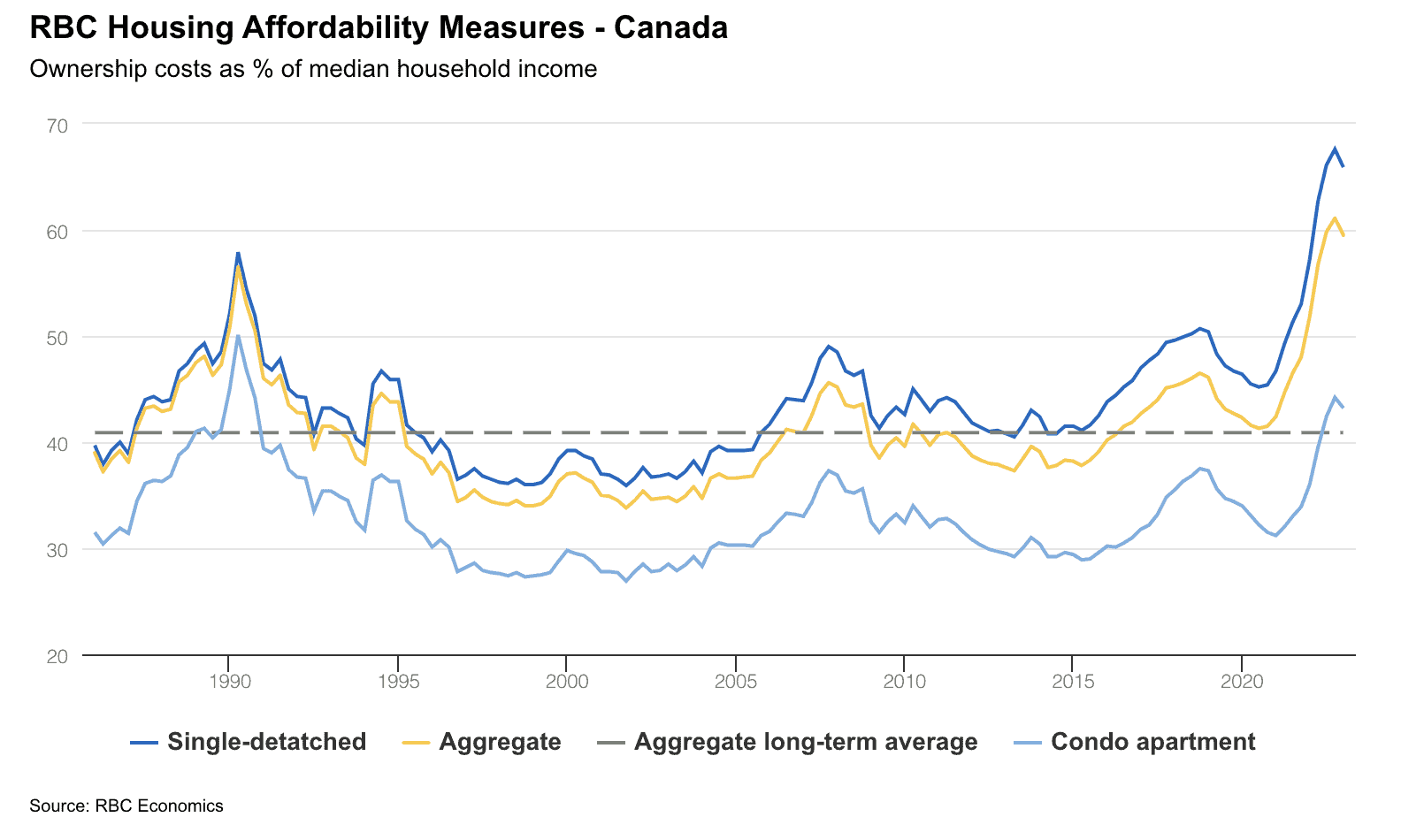
For the first time in nearly three years, RBC’s aggregate affordability measure for Canada experienced a decline, easing by 1.6 percentage points to reach 59.5 per cent. While a welcome change, this modest improvement underscores the deep-seated affordability challenges that continue to plague the nation’s real estate landscape.
Understanding the Shift: Mortgage Rates vs. Home Prices
The preceding two quarters had seen a relentless assault on affordability, as rapidly escalating mortgage rates negated any benefits derived from declining home prices. During this challenging period, mortgage rates alone contributed an average of 4.3 percentage points to RBC’s national aggregate measure, far outweighing the 2.1 percentage points subtracted by falling property values. The cost of borrowing had simply become too prohibitive, overshadowing any relief from a cooling market.
However, the first quarter of 2023 presented a different scenario. The improvement in affordability was primarily driven by the stabilization of mortgage rates. While home prices continued to decline, their rate of descent had slowed. This combination — flat mortgage rates alongside a more gradual decrease in prices — created a narrow window for affordability to improve, offering a temporary reprieve to buyers who had been on the sidelines.
This subtle shift highlights the delicate balance between interest rate policy and market dynamics. When mortgage rates stabilize, even if still historically high, it provides buyers with more predictable carrying costs, which can encourage activity and alleviate some financial pressure. The report vividly illustrates how crucial the Bank of Canada’s policy decisions are in shaping the immediate landscape for Canadian homebuyers.
Persistent Affordability Challenges: A Deeper Look
Despite this temporary and modest improvement, the RBC report makes it abundantly clear that the overall loss of affordability since mid-2020 remains largely unaddressed. The current ease in the aggregate measure represents only a “small dent” in the substantial deterioration of housing accessibility experienced over the past few years. For countless middle-income households, the dream of homeownership in Canada’s major urban centers remains a distant prospect.
Cities such as Vancouver, Victoria, Toronto, Montreal, Ottawa, and Halifax continue to pose significant hurdles for those aspiring to own a home. These metropolitan areas, often characterized by robust economies and high demand, have seen property values skyrocket in recent years, making entry into the market incredibly challenging. RBC’s local affordability measures consistently indicate that conditions in these regions, and indeed across the country, are considerably tougher than usual. This means that a larger portion of a typical household’s income is required to cover homeownership costs, pushing many potential buyers out of the market entirely.
The long-term implications of such persistent unaffordability are far-reaching, affecting not just individual households but also broader economic and social dynamics. It contributes to wealth inequality, impacts labor mobility, and can even influence urban development patterns as people are forced to consider more affordable, often peripheral, locations.
Market Rebound and Future Affordability Concerns
Adding another layer of complexity to the affordability narrative is the unexpected rebound observed in the Canadian housing market. Contrary to expectations that a prolonged recovery period would be necessary, Robert Hogue notes a surprising resurgence in demand and a tightening of supply across many parts of Canada, particularly in the historically active markets of Ontario and British Columbia.
This resurgence, fueled by factors such as pent-up demand, a pause in interest rate hikes that briefly restored buyer confidence, and perhaps a perception that prices had bottomed out, poses a significant risk to the nascent improvements in affordability. A strong rebound in demand coupled with limited supply inevitably puts upward pressure on prices. If this trend continues, it could swiftly reverse the modest affordability gains seen in Q1, pushing homeownership costs back into an upward trajectory.
The delicate interplay between demand, supply, and interest rates means that any sustained market recovery that leads to significant price appreciation without a corresponding increase in household incomes will only exacerbate the existing affordability crisis. This situation creates a precarious environment for policymakers aiming to stabilize the economy while also addressing housing accessibility.
Enjoying this article?
Get the latest REM articles in your inbox 3x week so you stay up to date on the latest in the Canadian real estate industry
Expert Outlook: A Challenging Road Ahead
“Buyers in all markets we track face a significantly worse situation than they did a year ago,” emphasizes Robert Hogue in his report. This stark assessment underscores the severity and widespread nature of the affordability crisis. He further elaborates, “And RBC’s local measures universally indicate tougher than usual conditions from coast to coast.” This means that regardless of where one looks in Canada, the cost of homeownership relative to income remains a formidable obstacle.
The report suggests that while some incremental improvements in affordability might be observed in the coming year, these are highly unlikely to fully reverse the massive affordability challenges that have accumulated over the past several years. The structural issues contributing to high housing costs—including supply shortages, strong demand, and high construction costs—are not easily remedied and require sustained, multi-faceted interventions.
Furthermore, Hogue cautions against more aggressive policy actions. “a more aggressive policy stance than we anticipate would likely put affordability on a more challenging course, at least initially,” he states. This refers to the Bank of Canada’s potential future interest rate decisions. While further rate hikes could theoretically cool demand and prices, they would simultaneously increase borrowing costs, thereby making homes less affordable in the short term. It’s a delicate balancing act for the central bank, navigating between inflation control and economic stability.
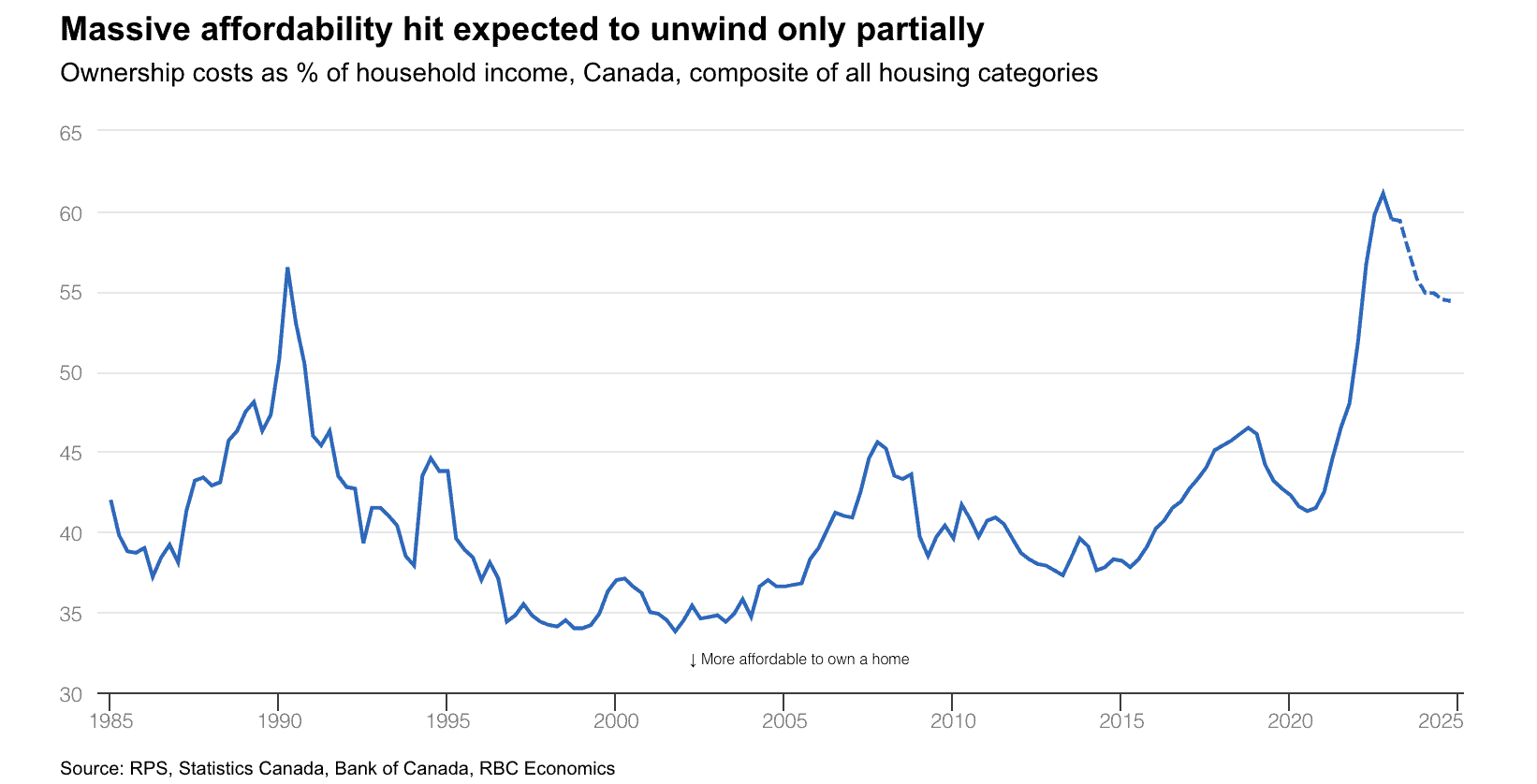
Indeed, the Bank of Canada’s subsequent decision to resume hiking interest rates after Q1 will undoubtedly impact affordability going forward. However, the report’s forecast suggests that a moderate increase could help temper demand sufficiently to prevent runaway price growth, thereby allowing affordability to remain on an improving, albeit slow, trajectory. The key lies in the “moderate” nature of these adjustments, ensuring that the cure does not worsen the ailment for aspiring homeowners.
Regional Insights: A Diverse Canadian Landscape
The Canadian housing market is not monolithic; affordability challenges and opportunities vary significantly from region to region. The RBC report offers granular insights into specific urban markets:
- Victoria: While experiencing a slight improvement in affordability during Q1, Victoria remains Canada’s third least affordable market. The recent uptick in prices suggests that further gains in affordability may be limited, keeping the market challenging for many.
- Vancouver: Despite a small improvement, Vancouver continues to be exceptionally unaffordable. Resale activity has picked up, signaling renewed buyer interest, but the extreme cost of entry will likely cap the extent of the market’s recovery and keep it out of reach for a large segment of the population.
- Calgary: Standing out from many other major cities, Calgary’s market has shown relative strength with higher resale activity and stable prices. Its enduring affordability advantage, compared to its coastal counterparts, continues to attract inter-provincial migration and buyers seeking better value.
- Edmonton: Affordability saw a minor improvement, but this was primarily due to price declines. Tighter demand-supply conditions could limit future improvements, although the city’s positive economic prospects and relatively lower housing costs compared to other major Canadian cities provide underlying support for its market.
- Saskatoon: Ownership costs dipped, leading to a noticeable rebound in market activity. Saskatoon maintains a relatively favourable affordability standing for buyers, offering a more accessible path to homeownership than many other urban centers.
- Regina: Affordability improved in the first quarter, but an increase in resale activity and prices suggests that future gains might be constrained. The market’s dynamism indicates growing interest, which could put pressure on affordability.
- Winnipeg: After a significant shift in market conditions, Winnipeg’s affordability showed signs of recovery. Further improvement and a more robust market recovery are anticipated in the near term, offering cautious optimism for local buyers.
- Toronto: Despite a marginal improvement in Q1, Toronto remains profoundly unaffordable. A surge in sales transactions has led to tighter demand-supply conditions and rising prices, which will likely slow down any meaningful restoration of affordability in Canada’s largest city.
- Ottawa: Affordability in the nation’s capital continues to be challenging, with only minimal improvement observed in the first quarter. For any significant impact on affordability to materialize, the recent recovery in market activity needs to be sustained and balanced against price growth.
For a more comprehensive understanding and detailed regional breakdowns, readers are encouraged to consult the full report from RBC.
Conclusion: A Fragile Balance
The first quarter of 2023 offered a brief respite for Canadian homebuyers, demonstrating how sensitive the market is to shifts in monetary policy. The Bank of Canada’s rate hike pause, by stabilizing mortgage rates, allowed a slight improvement in the nation’s housing affordability. However, this glimmer of hope is overshadowed by the deeply entrenched affordability challenges that persist across the country, especially in major urban centers. The unexpected rebound in market activity, while signaling renewed confidence, also threatens to reverse these modest gains if not managed carefully. As policymakers navigate the complex waters of inflation control and housing accessibility, the path to widespread, sustainable affordability in Canada remains long and fraught with potential headwinds. Buyers, policymakers, and industry stakeholders alike will continue to watch with keen interest as these dynamics unfold.