Ultimate Home Comfort: A Humorous Journey Through HVAC and Beyond
As the chill of the season begins to settle in, there’s a universal appreciation for the quiet hum of a furnace working efficiently, transforming cold air into a comforting warmth that permeates every corner of a home. For someone like me, who readily admits to a distinct lack of DIY prowess, this appreciation is particularly profound. The simple act of adjusting a thermostat and knowing that reliable heat will effortlessly stream through the vents, keeping both family and pets cozy and safe from the unseen dangers of carbon monoxide, is nothing short of a modern marvel. It’s more than just warmth; it’s peace of mind, a fundamental pillar of indoor comfort that we often take for granted until it’s challenged.
My Unlikely Journey into the World of HVAC
Despite my self-professed limitations when it comes to tools and tinkering, life has a curious way of placing you in the most ironic situations. There was a unique period in my life, a few fascinating years, during which I was actively involved in the commercial heating and ventilating business. I embarked on this unexpected career path as a budding apprentice sheet metal worker. While I may not have “bloomed” into a master craftsman, I consider it a significant personal victory that I emerged from the experience with all ten fingers intact, a testament to sheer luck more than any inherent skill. This era, though brief, provided me with an invaluable, albeit unorthodox, glimpse into the intricate world of HVAC systems and the dedicated professionals who keep our buildings warm in winter and cool in summer.
Reflecting on those years, it’s genuinely amusing to recall how I managed to navigate a career that demanded mechanical aptitude, a trait I conspicuously lacked. My approach often involved a good deal of bluffing and a quick learning curve, mostly through observation rather than hands-on expertise. I’m not entirely sure my former employers shared my amusement, but from my perspective, the entire experience was infused with a subtle, underlying humor. It highlighted the sheer complexity of the HVAC industry, from precise sheet metal fabrication to the meticulous installation of vast air duct networks that are essential for large commercial and residential buildings. My role, however, started far simpler.
The Apprentice Life: Sweeping, Deliveries, and Daydreams
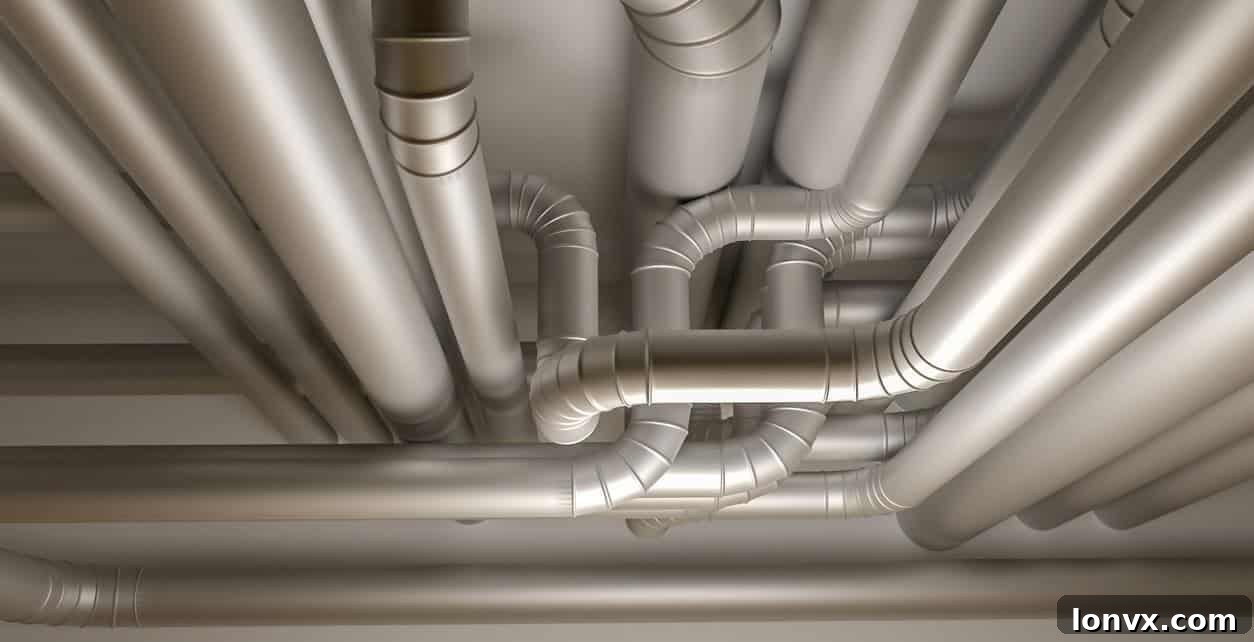
My initiation into the company began as a general helper, a foundational role that involved a variety of essential, yet often unglamorous, tasks. My days were typically spent sweeping the cavernous shop floors, ensuring a clean and safe working environment for the skilled tradesmen. I also handled numerous deliveries to various job sites across the city, transporting everything from raw materials to finished ductwork. Perhaps my most frequent assignment, and one I executed with surprising regularity, was dashing across the street to the local cafeteria to pick up lunches for the veteran sheet metal workers. From my humble post, broom in hand, I would often steal glances at these professionals, watching in awe as they skillfully transformed flat sheets of galvanized steel into complex, functional air ducts – a true display of engineering and craftsmanship that always felt like magic to my untrained eyes. They wielded their specialized tools with precision, bending, cutting, and shaping metal with an ease that belied the difficulty of the task, creating the very arteries through which conditioned air would flow.
The Sweat-Drenched Shop and My Pirate Alter-Ego
One of the most challenging aspects of the job, especially for someone working in a ventilation company, was the oppressive heat of the summer months. The irony was not lost on us: a business dedicated to creating comfortable indoor environments operated out of a shop that lacked air conditioning. As temperatures consistently soared past 40 degrees Celsius (over 100 degrees Fahrenheit), the shop became an oven. To combat the relentless perspiration, some of my more practical co-workers would fashion makeshift headbands from paper towels, hoping to stem the flow of sweat. I, however, opted for a more… creative solution. I would wrap my T-shirt around my head, tying the sleeves at the back, allowing the balance of the fabric to hang down. The effect was immediate and striking: I resembled a poor man’s pirate, a swashbuckler without a ship, navigating the choppy waters of industrial metalwork.
My self-styled buccaneer illusion was further enhanced by my smoking habit at the time – a pipe. The robust tobacco smoke curling around my face, combined with my dark, aviator-frame sunglasses and an often shirtless, profusely sweaty appearance, completed the ensemble. I looked less like a dedicated apprentice and more like the kind of hired pirate one might encounter at a truly economical Caribbean resort during a low-budget Happy Hour promotion. I was the archetypal poser pirate, the kind whose lack of genuine swagger would surely cause any self-respecting parrot to turn its beak in disdain. This persona, born of necessity and a touch of youthful rebellion against the heat, became my peculiar coping mechanism, a way to add a dash of theatricality to an otherwise gruelling work environment, making the long, hot days a little more bearable, if not significantly cooler.
The Unforgettable Job Site Fiasco
It was on one such sweltering summer day, dressed in my full, self-appointed pirate regalia, that I was tasked with delivering a load of metal fittings to a new apartment building construction site. I must confess, a defining characteristic of my personality has always been a preference for action over contemplation. The meticulous planning of a situation before diving in has never been my strong suit; I much prefer the exhilaration of immediate engagement. Eager to make a positive impression on the job site – perhaps to prove that even a “pirate” could be productive – I hoisted a substantial stack of gleaming ductwork onto my bare shoulder. I took a deep, theatrical puff from my pipe, squared my shoulders, and strode confidently into the front entrance of the brand-new apartment building, ready to face whatever lay ahead.
My confident stride, however, led me directly onto the freshly laid tile in the building’s foyer. This was no ordinary tile; it was part of an intricate, beautiful design, meticulously crafted by an Italian artisan who, at that very moment, was putting the delicate finishing touches on his exquisite work. The air was thick with the scent of grout and adhesive, a testament to the freshness of his labor. My considerable weight, even without the added burden, is not particularly light. But with several additional pounds of rigid sheet metal pressing down, the impact was immediate and catastrophic. The tiles beneath my feet protested audibly, shifting and grinding within their still-setting grout and adhesive beds. I felt a sickening lurch as my balance betrayed me, sending me tumbling to the pristine floor.
The fall itself was a blur of motion and sound. What my body didn’t manage to disturb or dislodge upon impact, the heavy stack of metal ductwork certainly did. It slid across the floor with an unceremonious scraping sound, rearranging a significant portion of the artisan’s intricate pattern into a chaotic mess. The scene unfolded in slow motion as I lay amidst the scattered metal and dishevelled tiles, a feeling of profound dread washing over me. Having had an Italian friend in elementary school, I possessed a rudimentary understanding of certain non-verbal cues. The craftsman’s immediate body language – the flailing arms, the incredulous stare, the rapid-fire string of phrases delivered with an intensity that transcended any language barrier – conveyed a message so clear it needed no translation. In that moment, it became unequivocally apparent that any further attempt to “help” or even assess the damage would be a grave error. A tactical retreat was the only logical course of action. Thus, with a hastily muttered apology and a deep flush of embarrassment, I executed a swift and decisive exit, stage left, leaving the disrupted ductwork where it lay, a testament to my epic failure and a monument to the artisan’s ruined masterpiece. It was a stark lesson in humility and the precise value of taking a moment to think before acting, especially when navigating the delicate artistry of skilled tradespeople.