
Elevating Toronto’s Skyline: The Demand for Quality and Sustainable Condominium Living
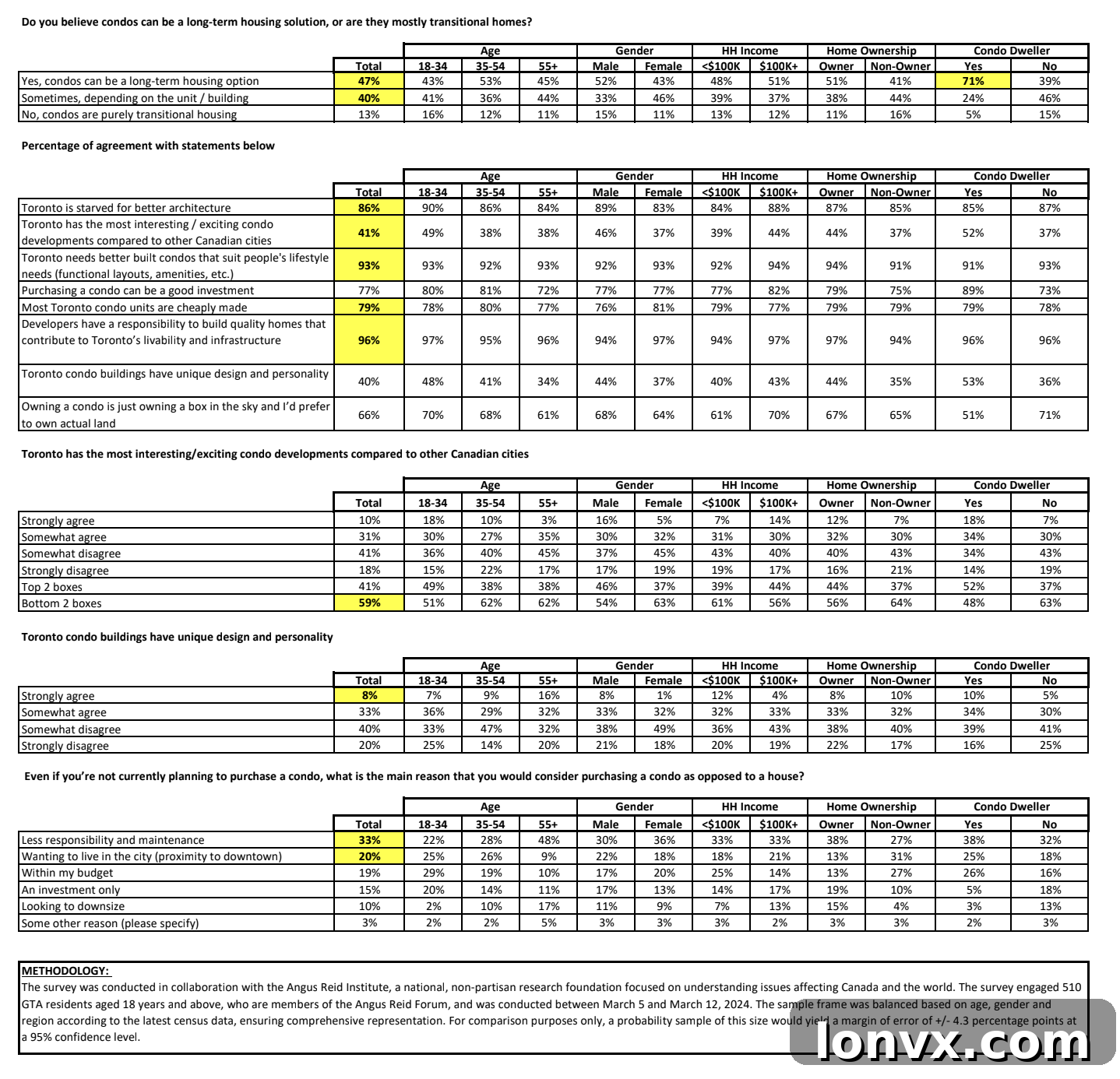
Toronto, a vibrant and rapidly expanding metropolis, faces an urgent need for sustainable housing solutions. Amidst this demand, condominiums have emerged as an increasingly popular and viable option for residents across the Greater Toronto Area (GTA). A recent comprehensive survey conducted by Devron, a prominent developer, sheds light on the evolving perceptions and strong desires of GTA residents regarding condominium living. The findings reveal a significant shift: nearly half (47%) of respondents now view condominiums not just as temporary dwellings, but as potential long-term homes capable of accommodating diverse life stages.
This sentiment is even stronger among current condominium dwellers, with an impressive 71% expressing confidence in long-term condo living. However, this optimism is tempered by a pervasive concern regarding quality. A striking 93% of respondents believe the city urgently needs better-built condominiums, and 79% feel that the majority of Toronto’s current units are cheaply made, lacking the robustness and thoughtful design required for enduring residency.
Pouyan Safapour, President of Devron, articulates this critical juncture: “The perception of condo living in Toronto is not ideal and, sadly, people have become used to low standards. We want to show Torontonians that condos can be beautiful, functional, and livable long-term homes that they can take pride in. We strive to challenge this status and change the narrative on condo living in Toronto.” This statement underscores a developer’s commitment to not just meet, but exceed, expectations, transforming the standard of urban residential architecture.
Torontonians Demand Distinctive Design and Architectural Appeal
Beyond structural integrity, the survey highlights a significant appetite for aesthetically pleasing and distinctive architecture. A considerable 59% of GTA residents feel that current condominiums in the city fall short in terms of interesting and exciting designs when compared to other major Canadian cities. Furthermore, 86% believe that Toronto’s skyline, while growing, often lacks truly captivating architecture that defines and elevates the urban landscape.
Only a small fraction—eight percent—strongly agree that Toronto’s condominium buildings offer unique designs and personalities, indicating a widespread desire for more creative and memorable structures. This collective voice emphasizes that buildings should not merely be functional enclosures but architectural statements that contribute positively to the city’s identity. Almost all GTA residents surveyed (96%) firmly believe that developers bear a crucial responsibility to construct high-quality homes that not only provide shelter but also significantly enhance Toronto’s overall liveability and bolster its vital infrastructure.
Safapour further elaborates on Devron’s vision: “The survey shows that condos can be a sustainable, long-term living option, and a home for people and families of all ages and life stages. Every building should offer a variety of suite sizes for growing families, not just one-bedrooms for transitory dwellers. The quality must go beyond just nice appliances and finishes — it’s often what is behind the walls that affects our life and comfort the most.” This perspective challenges the prevailing developer mindset, advocating for a holistic approach to home building that prioritizes comfort, longevity, and family-friendly environments.
To illustrate what true quality entails, Safapour provides concrete examples of essential comfort and experience features that suites should be designed with. These include superior noise insulation between individual suites, which is crucial for urban tranquility; high-performance windows offering both noise reduction and thermal protection, leading to greater energy efficiency and comfort; reliable, high-performance elevators for seamless vertical transportation; pressure-sealed doors for enhanced security and climate control; advanced leak detection systems to prevent costly damage and ensure peace of mind; strategically placed pot lights for even and inviting illumination; and generously sized windows that flood spaces with natural light, connecting residents with the outside world.
Key Considerations for Condominium Purchasing in a Dynamic Market
As the dream of owning a single-family home remains increasingly out of reach for many in the GTA due to escalating costs, a growing number of residents are decisively turning towards condominiums as their primary housing solution. This surge in interest is propelled by a confluence of compelling factors, with the foremost being the significant value placed on reduced maintenance and lessened homeowner responsibility (cited by 33% of respondents) that inherently comes with condominium living. This aspect frees up valuable time and resources, allowing residents to focus on their careers, hobbies, and personal lives without the constant demands of property upkeep.
Another powerful draw for condominium buyers is location. A substantial 20% of potential buyers express a strong desire to live near downtown Toronto. This preference is driven by the unparalleled convenience and accessibility it offers to a myriad of essential and lifestyle amenities. Proximity to downtown means easy access to an eclectic array of restaurants, world-class entertainment venues, crucial childcare facilities, reputable schools, and comprehensive medical services. This urban connectivity ensures a vibrant, active lifestyle where daily necessities and cultural experiences are just steps away, reducing reliance on personal vehicles and fostering a more sustainable, walkable existence.
Beyond these immediate benefits, condominiums often present an attractive value proposition due to their array of on-site amenities. Modern condo developments frequently boast state-of-the-art fitness centers, swimming pools, communal lounges, co-working spaces, and concierge services, all contributing to an enhanced living experience. These shared facilities foster a sense of community and provide luxurious conveniences that would be prohibitively expensive or impossible to maintain in a single-family home setting. The security features, such as controlled access and surveillance, also provide residents with peace of mind, knowing their homes and families are well-protected.
For many, particularly young professionals and growing families, condominiums offer a stepping stone into the competitive Toronto real estate market. While still a significant investment, the entry price for a condo unit is often more accessible than that of a detached house, allowing buyers to build equity and establish a foothold in one of Canada’s most dynamic urban centers. This allows for a more financially sustainable path to homeownership, even as the market continues to evolve.
Unveiling the Future of Toronto’s Urban Living: Survey Insights
The findings below graphically illustrate the detailed responses from the Devron survey, painting a clear picture of residents’ aspirations and concerns regarding condominium development in the GTA. These insights serve as a critical guide for developers, urban planners, and policymakers, highlighting areas where significant improvements are not just desired, but essential for fostering a truly sustainable and high-quality urban environment. The data underscores that the future of Toronto’s housing landscape hinges on a commitment to superior construction, innovative design, and a deep understanding of residents’ long-term needs, ensuring that condominiums become celebrated as homes of lasting value and comfort.
The collective voice of Torontonians is clear: the demand for better, more thoughtful, and architecturally inspiring condominiums is not merely a preference but a necessity for the city’s sustainable growth. Developers who embrace this challenge, prioritizing quality over quantity, and design over expediency, will not only meet a crucial market need but also contribute significantly to shaping a more liveable, beautiful, and resilient Toronto for generations to come. The opportunity exists to redefine urban living, transforming condos from perceived compromises into proud, long-term homes.
Enjoying this article?
Get the latest articles in your inbox 3x week so you stay up to date on the latest in the Canadian real estate industry.