The Enduring Legacy of West Coast Modern Architecture: From Luxury Icons to Accessible Design
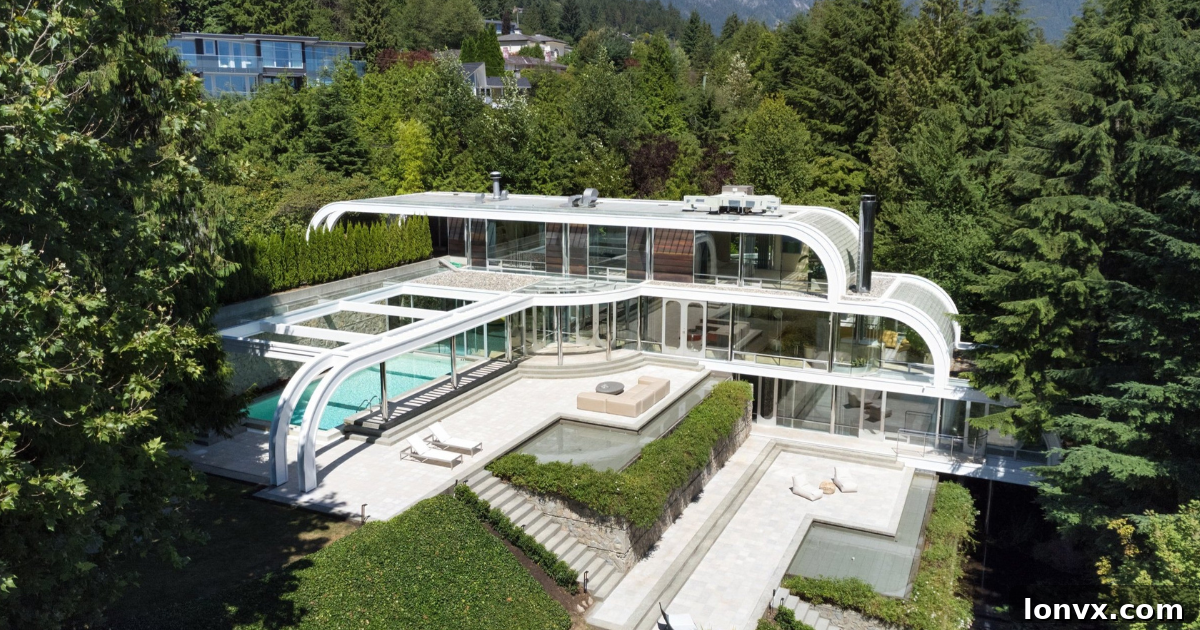
Photo courtesy Geoff Taylor
West Vancouver’s Eppich House II, a masterpiece conceived in 1988 by the legendary Canadian architect Arthur Erickson, recently garnered significant attention when listed by Realtor Geoff Taylor of Rennie for $6 million. This iconic property, far from an average home, exemplifies the timeless appeal of West Coast Modern architecture – a distinct style that continues to influence contemporary design and inspire awe.
Characterized by its profound connection to nature, the West Coast Modern style seamlessly integrates natural materials such as warm wood and rugged stone with expansive glass windows and striking structural elements. Its philosophy emphasizes harmony with the surrounding landscape, promoting open spaces, abundant natural light, and a fluid transition between indoor and outdoor environments. This architectural approach, born out of the Pacific Northwest, remains remarkably popular today, embodying a unique blend of elegance, functionality, and environmental sensitivity.
The Unique Challenges of Marketing Architecturally Significant Homes
Geoff Taylor emphasizes that representing a property of the caliber of Eppich House II demands a fundamentally different approach compared to conventional real estate listings. Unlike typical residential properties that often fit into established market categories, an architecturally significant home stands apart. “It’s a completely different product because it’s not commoditized the way that other residential real estate is,” Taylor explains. He highlights that architectural masterpieces transcend standard market metrics, requiring a bespoke marketing strategy that respects their artistic, historical, and cultural value, appealing to a highly specialized segment of buyers.
Selling such unique properties often defies typical timelines found in the broader real estate market. Taylor notes that the sales process can follow one of two extremes: an exceptionally swift transaction, sometimes with offers materializing even before comprehensive listing videos are completed, or a considerably prolonged period. This duality underscores the specialized nature of the market for architecturally significant homes, where finding the ‘right’ buyer—someone who not only appreciates but is also committed to preserving the home’s unique legacy—is paramount, rather than just securing ‘a’ buyer quickly.
As Taylor aptly puts it, “It’s not always a one-day sale. Sometimes it takes a year to find the right buyer.” This underscores the patience, specialized expertise, and global reach required when dealing with properties that are not merely homes, but also significant cultural and artistic assets, attracting a discerning clientele often seeking unique investments that transcend mere living spaces.
Marketing these homes involves storytelling, delving into the architect’s vision, the history of the property, and its place within the broader architectural narrative. It requires showcasing not just the features, but the experience and the legacy that come with owning such a distinctive residence. This often means leveraging international networks, engaging with architectural preservation societies, and producing high-quality multimedia content that truly captures the essence of these irreplaceable structures.
Balancing Architectural Beauty with Broader Accessibility
Rethinking Luxury for a Wider Audience
Dr. Michael Prokopow, an esteemed architectural historian and professor at the Ontario College of Art and Design in Toronto, and author of Reside, shared a close friendship with Arthur Erickson until the architect’s passing in 2009. Prokopow keenly understands the inherent tension between the captivating aesthetic allure of West Coast Modern homes and their perceived inaccessibility, especially against the backdrop of Canada’s ongoing housing crisis. He firmly believes there is a viable path to extend the core tenets of this revered architectural style to a more diverse spectrum of homeowners, challenging the notion that innovative design must always equate to exclusivity.
Prokopow posits that if there were a genuine commitment to democratizing the aesthetics of West Coast Modernism, condominium developers could play a pivotal role. He challenges them to “think beyond the 400-square-foot box in a condo that costs so much.” Instead, developers might inquire, “Could we reimagine this typology of mass housing that does not sacrifice the psychological benefit of beautiful space?” This question opens up a vital dialogue about how innovative design principles, traditionally reserved for high-end properties, could be adapted for more inclusive housing solutions, promoting mental well-being and quality of life for a larger population.
However, translating such visionary principles into a market-driven reality presents considerable hurdles. Vancouver, in particular, operates within a fiercely competitive real estate landscape, often prioritizing profit margins over design innovation at scale. Prokopow acknowledges this reality: “Now, Vancouver will always be a market-driven community. And therefore, I can see developers saying, ‘No, I need to get X number of dollars per square foot and I don’t have the luxury. I’m not willing to afford the luxury of creating something fantastic.’” Despite these economic pressures, Prokopow’s “utopian dreaming” persists, posing the fundamental question: “Why not?” This rhetorical query serves as a powerful call for innovation and a reconsideration of priorities in urban development, suggesting that aesthetic value and quality of life should not be exclusively reserved for the ultra-wealthy.
The Economic Imperative for Design Innovation
The conversation around making West Coast Modern design more accessible isn’t just about idealism; it also touches upon economic sustainability and market diversification. By broadening the appeal of this style beyond the luxury segment, developers could tap into a wider demographic, potentially fostering more resilient, vibrant, and inclusive communities. This would involve architects and urban planners collaborating to create designs that are both cost-effective and aesthetically resonant, utilizing innovative construction techniques such as prefabrication or modular building, and smart material sourcing to reduce expenses without compromising on the signature elements of West Coast Modernism, such as natural light, integrated outdoor spaces, and a harmonious connection to the landscape.
Such initiatives could also lead to a renewed focus on community planning, where public spaces and shared amenities are designed with the same thoughtful aesthetic principles typically applied to private residences. Imagine a future where the principles of natural materials, expansive views, and seamless indoor-outdoor transitions are not just found in multi-million dollar estates, but also in vibrant, affordable housing complexes, townhouses, and even public buildings. This vision would truly embed the West Coast Modern ethos into the fabric of daily life for a broader population, moving beyond isolated luxury statements to a more pervasive cultural influence and enhancing the overall urban experience for everyone.
Influence Beyond High-Priced Properties: Democratizing Design
From Runway to Main Street: The Trickle-Down Effect of Style
The concept of extending sophisticated architectural styles to a broader demographic is not without precedent. Successful models already demonstrate how the spirit of West Coast Modern architecture can transcend its luxury origins. A prime example is Cates Landing in North Vancouver, a striking waterfront townhouse and apartment complex developed by Polygon Homes. Designed by Rositch Hemphill Architects, Cates Landing skillfully incorporates West Coast Modern-inspired architecture, proving that these esteemed design principles can be effectively applied to more accessible, multi-family housing projects without diluting their essence.
Geoff Taylor cleverly uses a popular cultural analogy from the 2006 film The Devil Wears Prada to illustrate this “trickle-down” effect of design inspiration. He recounts the memorable scene where Anne Hathaway’s character dismisses her “frumpy blue sweater,” only for Meryl Streep’s character to meticulously trace the sweater’s color lineage back two years to a specific haute couture fashion show in Paris. Taylor draws a compelling parallel to real estate: “I think it’s the same thing with real estate. It really pulls to the core of what we love in the West Coast Modern style that translates from a $19-million waterfront property all the way down to a $350,000 studio apartment.”
This analogy powerfully captures how high-end design trends often influence mainstream aesthetics. What begins as a bold, innovative statement in luxury architecture—be it the pioneering use of particular materials, an innovative approach to spatial organization, or a profound philosophy of connecting with the environment—gradually permeates and inspires more affordable developments. This process allows the fundamental appeal of West Coast Modernism to become accessible to a wider market, ensuring its continued relevance, evolution, and a broader appreciation for well-designed living spaces.
Broadening the Appeal: Design for Every Price Point
The adaptability of West Coast Modern design elements is key to its potential for widespread application. Features like large windows that maximize natural light, open-concept layouts that foster a sense of spaciousness, and the integration of natural elements such as wood paneling or stone accents can be scaled and modified for diverse budgets. For instance, while a luxury home might feature custom-milled, sustainably harvested cedar and bespoke stonework, an affordable counterpart could utilize responsibly sourced, engineered wood products and locally available aggregate materials that achieve a similar aesthetic and connection to nature, demonstrating thoughtful design without exorbitant costs.
Furthermore, the focus on sustainable design, which is often inherent in West Coast Modernism through its emphasis on natural ventilation, passive solar gain, and durable materials, can be a significant selling point across all price ranges. As environmental consciousness grows globally, homeowners at every income level are increasingly seeking properties that are not only beautiful but also energy-efficient, cost-effective to operate, and environmentally responsible. By thoughtfully applying these principles, developers can create housing that resonates with a broad demographic, offering both aesthetic appeal and practical benefits, thereby cementing West Coast Modernism as a versatile and enduring architectural language capable of meeting future demands for responsible living.
Integrating Reconciliation into Modern Architectural Practice
Architecture on Unceded Territories
The imperative to broaden accessibility for West Coast Modern architecture inevitably converges with Canada’s deepening national conversation around Indigenous land rights and reconciliation. This intersection raises profound questions about how contemporary design and development can respectfully coexist with, and indeed contribute to, the ongoing process of reconciliation with Indigenous peoples, particularly in regions built on unceded territories.
Dr. Michael Prokopow often grapples with these ethical considerations, stating, “I often ask myself, how can I reconcile an interest in an architect’s creative solutions to a problem?” He highlights a critical, often overlooked fact about the geography of British Columbia: “Ninety-seven per cent of what we call British Columbia is unceded. So that’s the vast majority of what we call the province and every land transaction.” This staggering statistic underscores the moral and legal complexities inherent in land development in the region. Prokopow reveals his persistent inquiry, which extends to the earliest stages of property development: “I was always aware of this question: Do architects do title searches and ask, ‘What’s the history of the land before settler history?’”
This question is not merely academic; it demands a fundamental shift in perspective for architects, developers, and real estate professionals. It calls for acknowledging the deep historical layers of the land, understanding traditional Indigenous territories, and considering the implications of building on lands that have never been formally surrendered or treaty-settled. Integrating reconciliation into modern architectural practice would mean moving beyond superficial gestures to genuine, proactive engagement with Indigenous communities, incorporating Indigenous perspectives into design processes, and potentially developing projects that actively benefit or are co-created with First Nations, fostering true partnership and respect.
Towards a More Inclusive and Respectful Design Ethic
True reconciliation in architecture could involve several proactive and transformative steps. First, extensive and meaningful consultation with local Indigenous groups should become a standard practice from the earliest stages of project conception, informing everything from site selection and building orientation to material choices and even programmatic elements. This ensures new structures resonate with the land’s original stewards and reflect local Indigenous knowledge systems.
Second, architects could draw inspiration from Indigenous architectural principles, which often emphasize harmony with nature, sustainable resource use, multi-generational living, and community-centric design. While not directly imitating traditional forms, a deeper understanding of these principles could enrich modern interpretations of West Coast Modernism, fostering designs that are more deeply rooted, ecologically sensitive, and respectful of the local environment and its profound history. This approach moves beyond aesthetics to embody a holistic worldview.
Finally, there’s an unparalleled opportunity to create spaces that actively educate and commemorate Indigenous histories and cultures. This could take the form of interpretive installations, public art, land-based learning programs, or even the naming of buildings and developments in consultation with Indigenous elders and knowledge keepers. By engaging with these profound questions and embracing a more inclusive design ethic, West Coast Modern architecture can evolve into a practice that is not only aesthetically pleasing but also ethically grounded, socially responsible, and a beacon for reconciliation within the built environment, shaping a more equitable future for all.
The Stewardship of Icons: Owning an Architecturally Significant Home
Beyond Purchase: The Ongoing Commitment to Preservation
For real estate professionals guiding clients interested in acquiring architecturally unique homes, or for prospective buyers themselves, Geoff Taylor offers a crucial piece of advice: the purchase price is merely the beginning of the financial commitment. The monthly and ongoing maintenance involved with such properties should never be underestimated or overlooked. Owning an architectural icon like Eppich House II is less like buying a standard house and more akin to becoming a steward of a living work of art—a responsibility that comes with its own set of dedicated obligations.
“You have to maintain it; you have to spend money to keep it the way it is,” Taylor asserts. He vividly illustrates this point with a compelling analogy: “You can’t just buy it and throw it on the wall like a Picasso… there needs to be a relationship that you have with the piece of art that you purchased as a home in order for it to maintain its value.” This perspective underscores that these homes are not static investments; they are dynamic entities that require constant care, specialized maintenance, and a deep appreciation for their original design intent, demanding a proactive approach to their upkeep and conservation.
Preserving the integrity of an Arthur Erickson home, for instance, often means sourcing specific materials—some of which may be rare or custom-fabricated—engaging artisans with specialized skills in historical restoration, and adhering to strict architectural guidelines or heritage designations. This commitment extends far beyond routine repairs to proactive conservation efforts, ensuring that the building’s aesthetic and structural qualities, its very essence and historical significance, endure for future generations. The value of such a property is intrinsically linked to its pristine condition and faithful adherence to its original vision, making ongoing preservation an economic necessity as much as a profound cultural duty.
The Long-Term Value of Architectural Preservation
The investment in preserving an architecturally significant home yields substantial long-term benefits that extend beyond mere financial returns. Beyond maintaining monetary value, it contributes significantly to the cultural heritage of a region, safeguarding important examples of design, innovation, and historical periods. These homes often serve as living educational tools, inspiring new generations of architects, designers, and homeowners, and their careful preservation ensures that the legacy of masters like Arthur Erickson continues to be tangible and accessible, rather than fading into memory.
Moreover, properties with a strong provenance and a history of meticulous care tend to appreciate uniquely in value, often outperforming the general real estate market. While broader economic conditions certainly influence all real estate, iconic architectural pieces often command a premium due to their rarity, artistic merit, historical significance, and the discerning nature of their potential buyers who seek unique, irreplaceable assets. The careful stewardship demonstrated by an owner can become a significant part of the home’s narrative, enhancing its desirability and securing its place as a coveted, blue-chip asset in the global luxury market. Thus, the cost of preservation is not merely an expense, but a strategic and invaluable investment in maintaining and enhancing an irreplaceable piece of architectural history and cultural identity.
The Future Trajectory of West Coast Modern Architecture in Canada
An Enduring Aesthetic and Ideology
As we look to the horizon, what does the future hold for West Coast Modern architecture within Canada’s dynamic real estate market? Dr. Michael Prokopow offers an optimistic yet nuanced prognosis. “There’s a sort of sensibility, aesthetic, and ideology that will continue,” he confidently states. This enduring quality stems from the style’s fundamental principles: a deep reverence for natural landscapes, an emphasis on light and space, and a commitment to materials that age gracefully and connect occupants to their surroundings – tenets that remain universally appealing.
These core tenets are not fleeting trends but rather timeless aspirations that resonate deeply with the human desire for harmony, well-being, and a profound connection to nature within the built environment. As urban centers become denser and individuals increasingly seek refuge and connection in their living spaces, the emphasis on natural integration, thoughtful design, and sustainable practices inherent in West Coast Modernism will only grow in importance. It offers a compelling antidote to generic, mass-produced structures, providing unique, soulful, and responsive spaces that genuinely enrich daily life and foster a sense of place.
Prokopow further encapsulates the cyclical nature of architectural evolution, stating, “In the end, given the challenges of site and architecture, you have your own personal choice about what type of house you want: then the cycles of building and unbuilding and rebuilding, and building, will continue.” This observation highlights the constant interplay between environmental constraints, evolving human preferences, technological advancements, and the relentless march of development. West Coast Modernism, with its inherent adaptability and timeless appeal, is exceptionally well-positioned to navigate these cycles, continually inspiring new interpretations and applications that keep it relevant and vibrant.
Adaptation and Innovation for Future Generations
The future of West Coast Modern architecture will likely involve a continuous process of adaptation and innovation, ensuring its relevance in an ever-changing world. This includes integrating cutting-edge technologies for enhanced sustainability, exploring novel eco-friendly materials that align with its aesthetic, and boldly reinterpreting its principles for diverse scales and increasingly dense urban contexts. We may see an even greater focus on passive house standards, net-zero energy designs, smart home technologies seamlessly integrated into the natural forms that define the style, all while maintaining its characteristic warmth and organic feel.
Furthermore, as communities become more diverse and multicultural, West Coast Modernism has the potential to absorb and reflect a broader range of cultural influences, enriching its vocabulary while maintaining its core identity rooted in place. The crucial dialogue around reconciliation, as discussed earlier, will undoubtedly shape how future designs interact with the land and its history, fostering architectural expressions that are both beautiful and profoundly respectful. This constant evolution ensures that West Coast Modern architecture remains not just a historical style, but a living, breathing tradition that continues to shape the Canadian landscape, offering both aspirational luxury and inspiring blueprints for accessible, sustainable, and culturally resonant living spaces for generations to come, embodying the spirit of innovation and harmony.
Enjoying this article?
Stay up to date on the latest in the Canadian real estate industry by subscribing to our newsletter for exclusive articles delivered to your inbox three times a week.