
The Resilient Canadian Housing Market: Defying Expectations Amidst Shifting Tides
In a surprising turn of events that has baffled many economic observers, the Canadian housing market has staged a remarkable comeback, steadfastly defying earlier predictions of a significant downturn. According to the comprehensive Desjardins Canadian Residential Real Estate Outlook, the sector has demonstrated an unexpected resilience, pushing back against the prevailing sentiment of an impending correction.
At the forefront of this analysis are Randall Bartlett, Senior Director of Canadian Economics, and Helene Begin, Principal Economist at Desjardins. Their in-depth research attributes this resurgence to a complex interplay of factors, painting a nuanced picture of a market navigating both inflationary pressures and robust demand.
Market Dynamics: From Anticipated Slowdown to Unexpected Surge
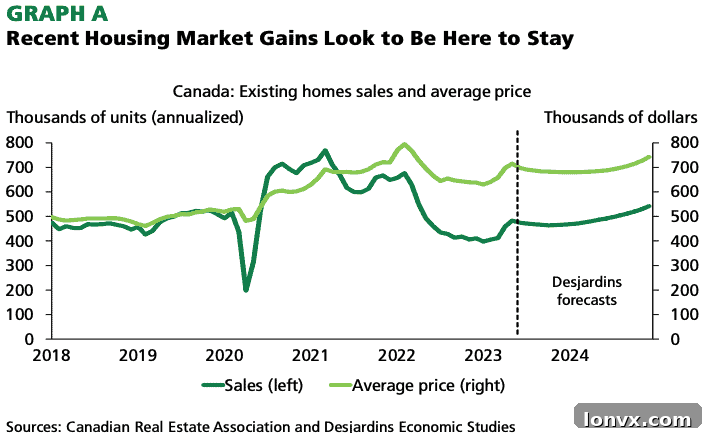
Historically, an environment of rising interest rates has been a reliable indicator of an impending slowdown in the housing market. Conventional economic wisdom suggests that higher borrowing costs would inevitably dampen buyer enthusiasm and reduce transaction volumes. However, the Canadian market began to stabilize in early 2023, coinciding with the Bank of Canada’s decision to temporarily pause its aggressive series of rate hikes. This pause acted as a crucial psychological and financial pivot point for many prospective homeowners.
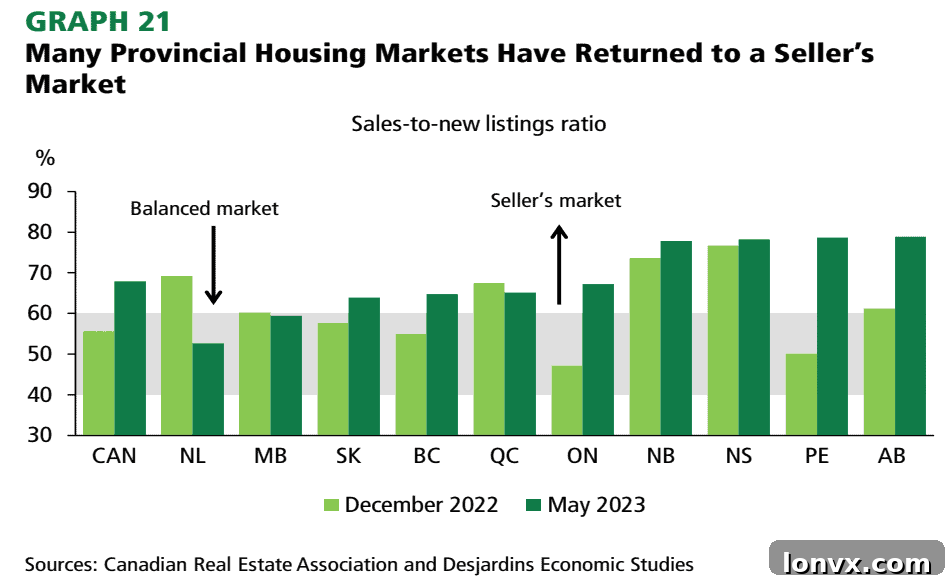
The turning point became evident in April, when existing home sales experienced a sharp and unexpected increase. This upward trajectory continued robustly through May, signaling a decisive shift in market direction. This surge in sales activity, coupled with a notable decline in the number of new property listings, quickly propelled the Canadian housing market back into “seller’s territory.” This dynamic has, in turn, exerted significant upward pressure on home prices, a trend particularly pronounced in Canada’s major urban centers where demand often outstrips supply.
Key Drivers Behind the Resurgence
The Desjardins report meticulously identifies several powerful forces fueling this unexpected market strength, suggesting that the recent spike in home sales and prices possesses considerable staying power. Understanding these drivers is crucial to grasping the unique nature of the current market.
1. Explosive Population Growth
One of the most significant contributors to the heightened housing demand is Canada’s unprecedented population growth. This growth is largely fueled by a substantial influx of immigrants and non-permanent residents, a demographic strategy aimed at bolstering the nation’s workforce and economy. Research conducted by Statistics Canada underscores the outsized role immigrants play in shaping Canada’s housing landscape. They are often more inclined to own specific types of properties, such as condominium apartments, row houses, and semi-detached houses, sometimes even more so than Canadian-born homeowners. This targeted demand puts particular pressure on these segments of the market, which are often concentrated in urban and suburban areas.
2. A Robust Canadian Job Market
The strength of the Canadian job market is another vital ingredient in the recipe for increased home sales. Sustained employment figures and consistent income gains have collectively placed Canadian households in a much stronger financial position. This improved financial health translates directly into greater confidence and capacity to undertake large investments, such as purchasing a home. While May saw a minor dip in employment among the 15 to 24 age group, this localized blip is not anticipated to have a significant, widespread impact on the overall health of the labor market or the broader monetary policy decisions that influence interest rates.
3. Accumulated Pandemic Savings
Adding further impetus to the housing market rebound is the substantial pool of savings accumulated by Canadians during the COVID-19 pandemic. With travel restricted, entertainment options limited, and a general curtailment of discretionary spending, many households found themselves with increased disposable income and fewer opportunities to spend it. This accumulated capital, often referred to as “excess savings,” is now being partially deployed, with a significant portion finding its way into major investments like real estate, contributing directly to the market’s renewed vigor.
Navigating Headwinds: Interest Rates, Inflation, and Lagged Impacts
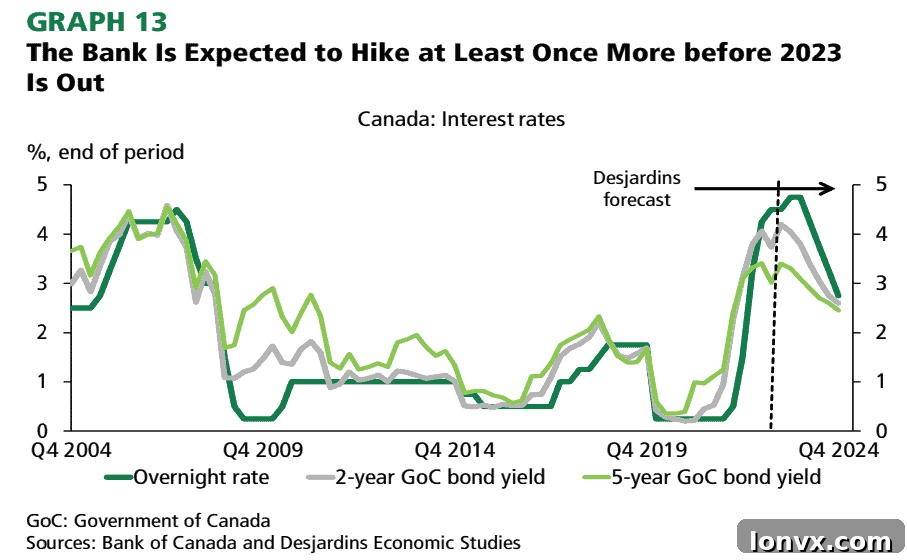
Despite the current optimism, the Desjardins report prudently injects a note of caution, highlighting several significant headwinds that could temper future market activity. The persistence of inflation, coupled with the Bank of Canada’s recent and anticipated interest rate hikes, poses a considerable challenge for some potential homebuyers due to the inevitable increase in borrowing costs.
Economists are largely anticipating at least one more 25-basis point rate hike in July. Such a move would undoubtedly give prospective homeowners pause, potentially leading them to reconsider their entry into the housing market, especially given the likelihood of further incremental increases. Each rate hike translates directly into higher monthly mortgage payments, shrinking purchasing power and making homeownership less accessible for a segment of the population.
A particularly critical warning from the report centers on the delayed impact of previous rate hikes. The full effect of last year’s series of increases, including the most recent hike in June, has yet to be entirely felt across the homeowner demographic. Desjardins’ research reveals that a substantial number of Canadian homeowners hold fixed-payment variable-rate mortgages. For these individuals, while their interest rate adjusts with the Bank of Canada’s policy rate, their monthly payment often remains constant until a pre-determined trigger point is reached (e.g., when the interest portion consumes too much of the payment). This structure means many have not yet experienced the full burden of increased interest costs, creating a potential fiscal cliff when their payments eventually adjust or their mortgage terms renew. This delayed reaction could introduce future volatility into the market.
The Enduring Challenge of Housing Supply
While demand side factors are clearly driving the current market strength, concerns about the availability of housing supply remain a critical and often exacerbating issue. Despite the challenging interest rate environment, new home construction has demonstrated commendable resilience. However, this momentum in elevated housing starts is not expected to be sustained indefinitely, particularly as overall resale activity has yet to return to its historical peak levels.
Furthermore, a significant portion of current housing starts comprises condominium units. While condos address a specific segment of the market, they underscore a persistent shortage in the “missing middle” housing segment. This crucial category includes diverse housing types such as townhomes, duplexes, and low- to medium-rise apartments, which offer a vital bridge between high-density apartments and detached single-family homes. The chronic scarcity of these varied housing options intensifies upward pressure on home prices across the board. Worryingly, the report suggests that there is currently “no meaningful relief in sight from government policies” to effectively address this profound supply-demand imbalance, indicating a potential for continued price appreciation due to structural constraints.
A Patchwork of Provincial Performances
The Canadian housing market is not a monolith; its performance varies significantly across different provinces and major metropolitan areas, reflecting unique regional economic conditions, demographic trends, and local policy landscapes.
- British Columbia: Primarily driven by robust resale activity, particularly within the Greater Vancouver Area, British Columbia has seen a substantial increase in home prices. High demand and limited land availability in its key urban centers continue to fuel price escalation, making affordability a growing concern.
- Ontario: Similar to B.C., Ontario has experienced a significant surge in both sales volumes and property values. The Greater Toronto Area remains the epicenter of this activity, heavily influenced by strong international migration flows that continually add to the region’s already dense population and housing demand.
- Alberta, Saskatchewan, and Manitoba: These prairie provinces have emerged as increasingly attractive destinations for young Canadians seeking greater affordability and robust economic opportunities. While still offering more accessible price points compared to the coastal giants, their markets are seeing heightened activity as inter-provincial migration boosts demand.
- Atlantic Provinces: Despite historically being Canada’s most affordable regions, the Atlantic provinces have witnessed some of the most dramatic percentage increases in home prices. This rapid appreciation, driven by a surge in demand from both within and outside the region, is making homeownership increasingly challenging for long-time local residents, fundamentally altering the fabric of these communities.
- Quebec: In Quebec, there has been a marginal increase in housing inventory. However, despite this slight improvement in supply, the market broadly remains in “seller’s territory,” with demand continuing to outstrip the available supply in many key areas, particularly around Montreal.
The Road Ahead: Continued Gains with Lingering Affordability Challenges
Looking forward, Desjardins predicts that the recent gains observed in the Canadian housing market are likely to persist, inevitably leading to a further erosion of housing affordability across the nation. The potent combination of strong housing demand, fueled by relentless population growth, a tight and competitive labor market, and the remaining reserves of accumulated pandemic savings, will continue to provide substantial support for market activity.
However, the upward trajectory is not without its limiting factors. The continued pressure from higher interest rates, alongside the deeply entrenched and unresolved issue of limited housing supply, is expected to act as a natural brake, tempering the rate of further price increases. These dual forces create a dynamic tension in the market: strong demand pushes prices up, while affordability constraints and supply bottlenecks prevent an unfettered surge. The Canadian housing market, therefore, remains in a delicate balance, characterized by remarkable resilience but also by significant challenges for aspiring homeowners.
For a detailed analysis, read Desjardins’ Canadian Residential Real Estate Outlook here.