The concept of hell is often relegated to the realm of theology, a place of eternal torment existing beyond our mortal plane. Yet, for those who have witnessed the depths of human cruelty and suffering, hell is not an abstract concept but a palpable reality, forged by human hands and played out on our very Earth. I may not consider myself profoundly religious, but I unequivocally believe in hell. It exists, not in some distant, otherworldly dimension, but right here, right now, whenever humanity allows its darkest impulses to prevail. The precise timing and location of this terrestrial hell are entirely within our collective control.
On April 22, 1915, the name of that hell was Ypres, a historic city nestled in the picturesque fields of Belgium. This date, etched in the annals of history, marks a terrifying turning point in modern warfare, forever altering the landscape of conflict and human suffering.
The Genesis of Hell: Ypres and the First Gas Attack
The First World War, a conflict already characterized by unprecedented brutality, trench warfare, and industrial-scale slaughter, descended into a new abyss on that fateful spring day. At Ypres, soldiers of the German Empire unleashed a weapon of unparalleled horror: poison gas. Across a four-mile front, 5,730 cylinders of chlorine gas were opened, releasing a pale green cloud that drifted menacingly across the battlefields. Carried by a gentle easterly breeze, this unseen assailant silently traversed the no-man’s-land, encroaching upon the unsuspecting French and colonial troops entrenched opposite.
The element of surprise was absolute. There had been no prior warning, no historical precedent for such a diabolical tactic on this scale. The soldiers, accustomed to the thunder of artillery and the crack of rifles, were utterly unprepared for an enemy that attacked not with bullets or shrapnel, but with the very air they breathed. This moment heralded a profound shift, stripping away any lingering illusions of chivalry or honor in warfare, replacing them with a stark, terrifying reality of dehumanization and indiscriminate destruction. Ypres became the horrifying crucible where the world first witnessed the true terror of chemical warfare, irrevocably changing the nature of combat and casting a long, dark shadow over the 20th century.
The Unseen Enemy: The Horrors of Chlorine Gas
The effects of chlorine gas on the human body are nothing short of monstrous, inflicting a slow, agonizing death that defies easy description. It is not merely a poison but an agent of physical and psychological annihilation. Anthony R. Hossack, a member of the Queen Victoria Rifles, provided a harrowing firsthand account of the scene, forever capturing the sheer terror and confusion that engulfed the Allied lines in his poignant memoir:
“Plainly something terrible was happening. What was it? Officers, and staff officers too, stood gazing at the scene, awestruck and dumbfounded; for in the northerly breeze there came a pungent nauseating smell that tickled the throat and made our eyes smart… One man came stumbling through our lines. An officer of ours held him up with levelled revolver, ‘What’s the matter, you bloody lot of cowards?’ says he. The Zouave was frothing at the mouth, his eyes started from their sockets, and he fell writhing at the officer’s feet.”
Hossack’s words paint a vivid picture of absolute pandemonium and despair. The gas, smelling faintly of pineapple or bleach, attacked the respiratory system with devastating efficiency. Upon inhalation, chlorine reacts with the moisture in the lungs to form hydrochloric acid, corroding the delicate lung tissue. This leads to the buildup of fluid, effectively causing the victim to drown from the inside out. Their lungs fill with mucus and blood, leading to excruciating chest pains, violent coughing, and a desperate struggle for breath. The victim’s complexion often turns a ghastly blue as oxygen deprivation sets in, their eyes bulging from their sockets in a final, horrifying testament to their suffering.
Death by chlorine gas is asphyxiation, a slow and torturous strangulation. Depending on the concentration and duration of exposure, the process can be swift, though never painless, or it can extend over hours or even days, each breath a searing agony. Compounding the horror, there was, and remains, no specific antidote or treatment for chlorine gas poisoning beyond symptomatic relief. The victims simply choked, convulsed, and died, often in full view of their comrades, their faces contorted in a silent scream. The psychological trauma inflicted on those who witnessed or survived such an attack was immeasurable, a scar far deeper than any physical wound, forever reminding them of humanity’s capacity for unimaginable cruelty.
A Poet’s Witness: John McCrae and “In Flanders Fields”
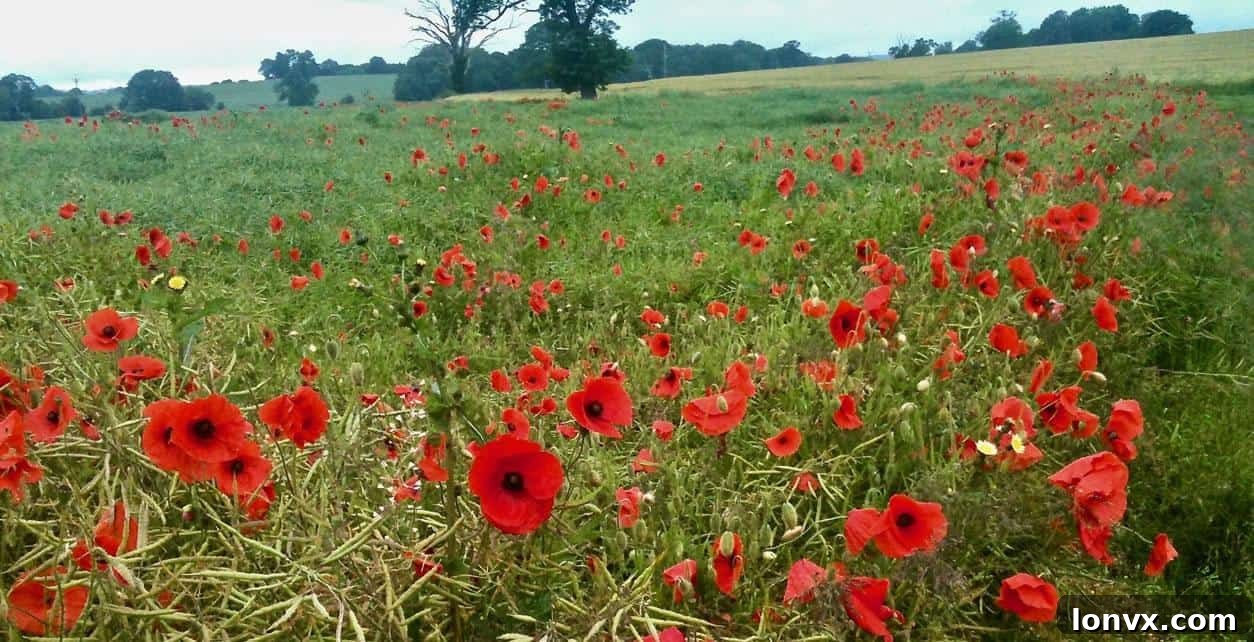
In November of each year, millions worldwide adorn their lapels with the crimson emblem of the poppy, a poignant symbol immortalized by John McCrae’s haunting poem, “In Flanders Fields.” Yet, how many truly understand the raw, immediate horror that inspired those enduring verses? McCrae, a Canadian physician and artillery commander, was present at Ypres on April 22, 1915, a direct witness to the hellish landscape wrought by the gas attack and the subsequent bloody fighting.
He saw firsthand the ghastly effects of chlorine gas, the agonizing deaths, and the immense human cost. His inspiration to write the poem came swiftly after the death of his close friend and former student, Lieutenant Alexis Helmer, during the ensuing Second Battle of Ypres. McCrae conducted Helmer’s burial service, observing the vibrant red poppies blooming defiantly amidst the freshly dug graves and shattered earth. It was this stark juxtaposition of natural beauty and profound desolation that spurred him to pen the lines that would resonate for generations, originally scribbled on a scrap of paper on May 3, 1915.
As the French lines crumbled under the devastating effects of the gas, leaving a gaping four-mile hole, Canadian troops were rapidly deployed to plug the breach, preventing a critical German advance. These Canadian soldiers, facing the horrors of the gas for the first time, displayed extraordinary courage and ingenuity. They quickly discovered that urine-dosed rags, held over the mouth and nose, could offer some rudimentary protection against the chlorine, a desperate and impromptu defense against an unprecedented threat. Their valor in holding the line against overwhelming odds became a cornerstone of Canadian national pride, a narrative frequently recounted in history lessons.
We are taught these powerful facts – of Canadian bravery, innovation, and sacrifice – and rightfully instilled with a sense of nationalistic pride. However, in our eagerness to celebrate heroism, we too often inadvertently gloss over the profound, agonizing lesson that McCrae and countless others experienced. We celebrate the resilience, but often forget the unbearable suffering that necessitated it. The poem, born of immense grief and the horror of war, has, for many, become a symbol divorced from its initial context, its message subtly warped over time.
Beyond National Pride: Reclaiming the Poppy’s True Meaning
The red poppy, in its purest form, is not, and never should be, a celebration of war. Its vivid hue is not meant to signify triumph or nationalistic fervor. On November 11th, Remembrance Day, we are not primarily called to remember merely how courageous or admirable Canadian soldiers, or any nation’s soldiers, were. We are not meant to celebrate the fundamental role they played in Allied victory or to applaud their effectiveness in acts of violence, however strategically justified that violence may have been at the time. Yet, tragically, this interpretation of the poppy as a symbol of military might and nationalistic pride has become disturbingly prevalent, overshadowing its more somber and crucial purpose.
To wear the poppy as a badge of nationalistic glory or as an endorsement of conflict fundamentally misunderstands its origin and profound message. The poppy should not symbolize Canada’s willingness to wage war, nor should it glorify the act of combat itself. Instead, it must serve as a stark, unyielding reminder of the utter desolation and horror that war inflicts. It is a crimson stain on the fabric of history, echoing the blood spilled and the lives irrevocably shattered.
It is a visceral reminder of the choking gas at Ypres, the relentless, grinding shelling at Verdun, where an entire generation was sacrificed. It recalls the inferno of the bombing of Dresden, where countless civilians perished in a firestorm. It forces us to confront the chilling shadow of the atomic bombs dropped on Hiroshima and Nagasaki, which ushered in an age of unprecedented destructive capability. The image of the napalm girl in Vietnam, fleeing with her skin burning, etched into our collective consciousness, speaks volumes of the innocent caught in geopolitical machinations. And the haunting revelations from Abu Ghraib remind us that even in recent times, the line between combatant and criminal can blur, leaving an indelible stain on our conscience.
The poppy demands more than a passive nod to heroism; it demands active remembrance of suffering. It challenges us to look beyond simplistic narratives of good versus evil and to confront the complex, often morally ambiguous, realities of conflict. It is a symbol that calls for sober reflection, not jubilant celebration.
The Poppy as an Anti-War Imperative
Therefore, the poppy stands as an enduring call for us to remain eternally vigilant and skeptical of our leaders, particularly when they propose sending our military forces into armed conflict. It implores us to scrutinize the justifications presented, to question the narratives spun, and to demand transparency regarding the true human and societal cost of war. It is a solemn plea, a profound reminder to never again rush into war unless it is an absolute, unavoidable last resort, when all other avenues for peace and diplomacy have been exhausted.
This powerful symbol compels us to remember the enormous, often unseen, sacrifices made by soldiers like John McCrae and countless others—not just their lives, but their innocence, their futures, and the profound trauma that often defined their existence even if they returned home. It is a collective pledge to honor their sacrifice by striving to never again place our young men and women in harm’s way unless there is truly no other viable option to protect fundamental freedoms or prevent even greater atrocities. The poppy is not merely about gratitude; it is about responsibility.
More than any other symbol, the poppy serves as a potent reminder of our own extraordinary, terrifying capability for evil when driven by fervent nationalism, geopolitical ambition, or a misguided sense of righteousness. It forces us to confront the uncomfortable truth that hell on Earth is not a natural disaster, but a human creation. It is a testament to the destructive power inherent in unchecked aggression, propaganda, and the dehumanization of the “other.” It is a constant, stark warning against the siren call of jingoism and the false promises of glorious victory. The poppy asks us to look inwards, to acknowledge the darkness within human nature, and to actively work towards a world where such horrors are relegated solely to the pages of history.
Lest We Forget: A Pledge for Peace
I wear the poppy not as a gesture of national pride or military veneration, but because I believe with every fiber of my being that it is, and always should be, an unequivocal anti-war symbol. It is a beacon of remembrance, illuminating the path away from conflict, not towards it. I wear the poppy because I recognize that hell is not merely a theological construct but a very real, tangible place that manifests on Earth whenever we allow ourselves to forget the lessons of history and succumb to the allure of violence.
If we permit the true meaning of the poppy to fade, if we allow ourselves to sanitize the horrors of war into mere acts of heroism, then we will bear the immense, unforgivable responsibility of needlessly sending future generations—our sons and daughters, our brothers and sisters—into the heart of that very hell. The poppy is a profound and somber promise: a promise to remember the cost, to honor the fallen by striving for peace, and to commit ourselves to a future where Ypres remains a tragic lesson, never a repeated reality.
Lest we forget the sacrifices. Lest we forget the horrors. Lest we forget our responsibility to build a world worthy of their memory.