
The Canadian real estate landscape is navigating a period of significant transformation, largely influenced by the Bank of Canada’s proactive monetary policy. Recent interest rate hikes have sent discernible ripples throughout the nation’s housing markets, creating a fascinating divergence in trends across its major urban centers. Cities such as Vancouver, the Fraser Valley, Hamilton, Toronto, and Ottawa have notably felt the impact, experiencing a deceleration in transaction volumes and a moderation in price gains. This shift marks a distinct departure from the robust momentum that characterized the spring season, signaling a new, more cautious phase for prospective buyers and sellers alike.
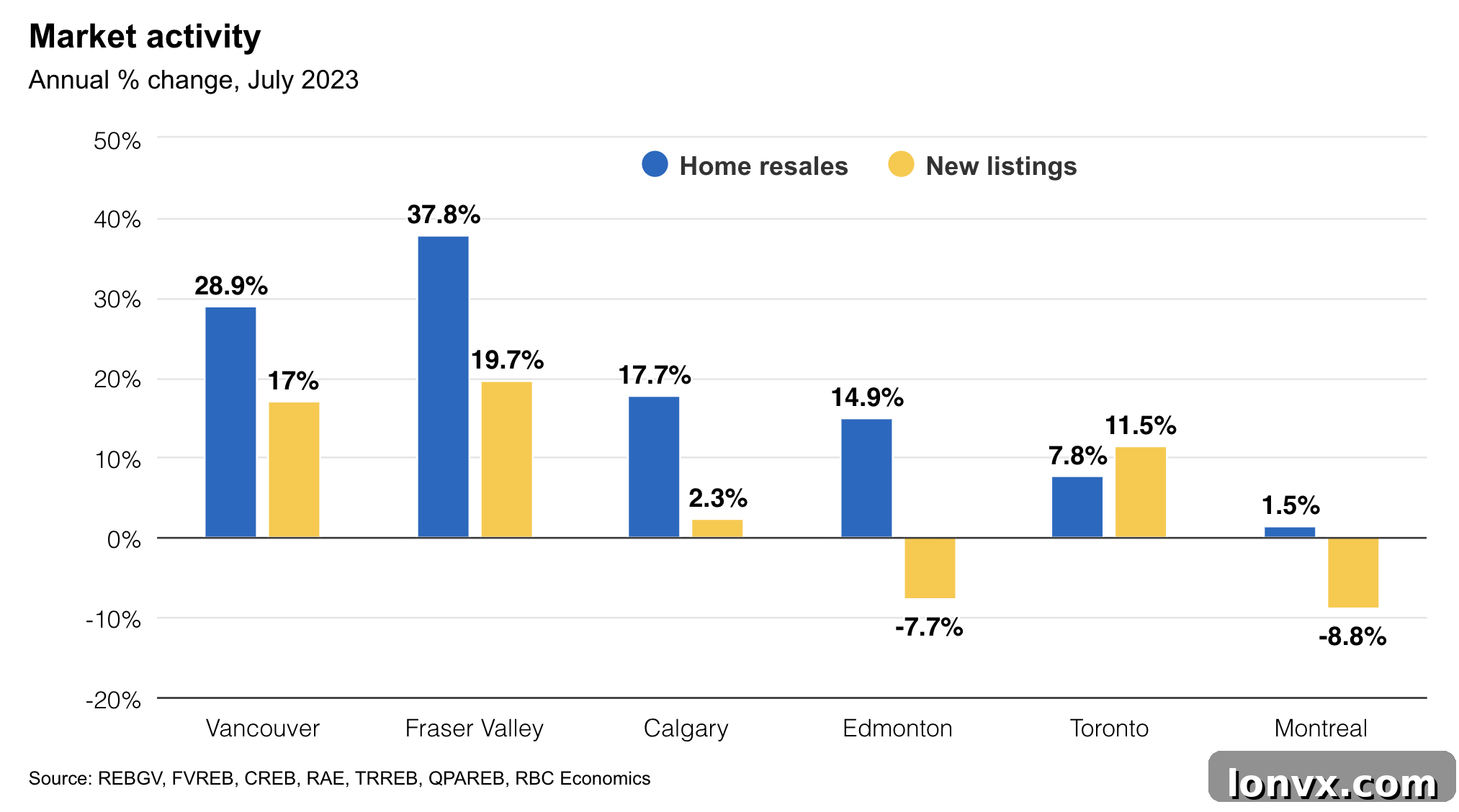
Insights from the latest Special Housing Report by RBC Economics, meticulously compiled by experts Robert Hogue and Rachel Battaglia, provide a granular view of how markets across Canada performed between June and July. Their analysis, drawing on early market results from local real estate boards, paints a comprehensive picture of regional variations and emerging national trends. A significant highlight from their report pertains to the supply side, which offered a glimmer of positive news last month. Sellers, responding to evolving market conditions, increased the number of properties available for sale in virtually all early-reporting markets. This trend, which in many regions extended for several months, has been instrumental in fostering a rebalancing act within the heated markets of Ontario and British Columbia, which had experienced considerable tightening during the spring. The economists project that if this upward trajectory in listings is sustained, it is reasonable to anticipate a continued moderation in price gains over the ensuing months, bringing a welcome sense of equilibrium.
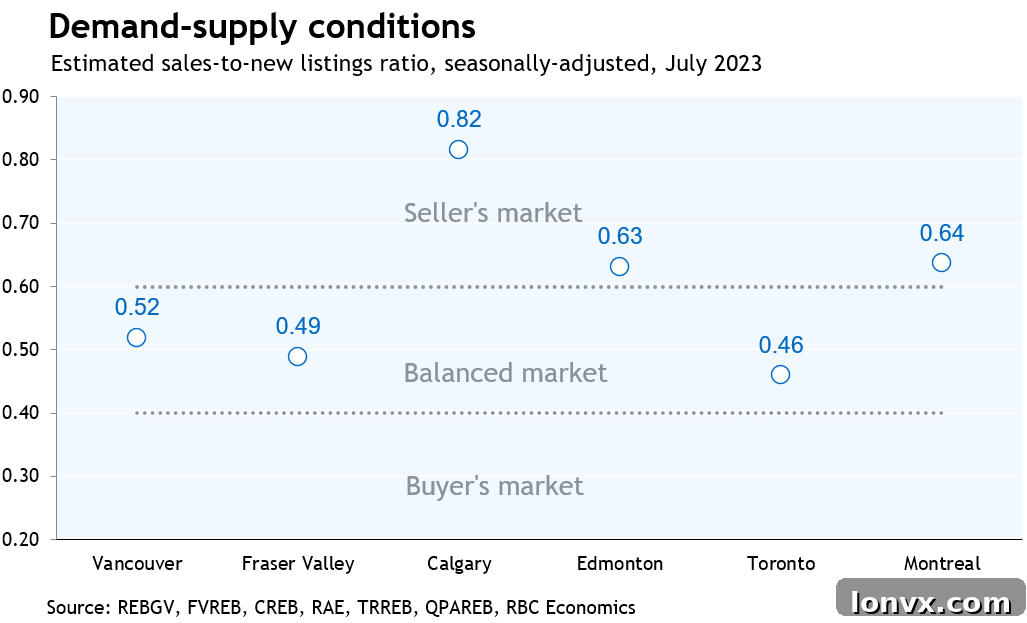
The observed signs of cooling activity across several of Canada’s largest real estate markets are entirely consistent with the forward-looking insights offered by RBC economists. They had previously articulated a cautious outlook, positing that “The spring rebound was premature and will taper off further amid high-interest rates, ongoing affordability issues, and a looming recession.” This statement underscores the multifaceted challenges confronting the Canadian housing sector. High borrowing costs continue to strain household budgets, while persistent affordability hurdles in prime urban centers limit access for many aspiring homeowners. Furthermore, the persistent specter of a potential economic recession casts a shadow of uncertainty, prompting many to adopt a wait-and-see approach. These combined factors are collectively reshaping buyer sentiment and market dynamics, moving from the exuberance of previous years to a more measured and cautious environment. The shift towards increased inventory, coupled with diminishing buyer urgency, is a critical development that could lead to a more sustainable market in the long run, albeit after a period of adjustment.
Toronto Area: Spring Momentum Stalls Amid Rate Hikes
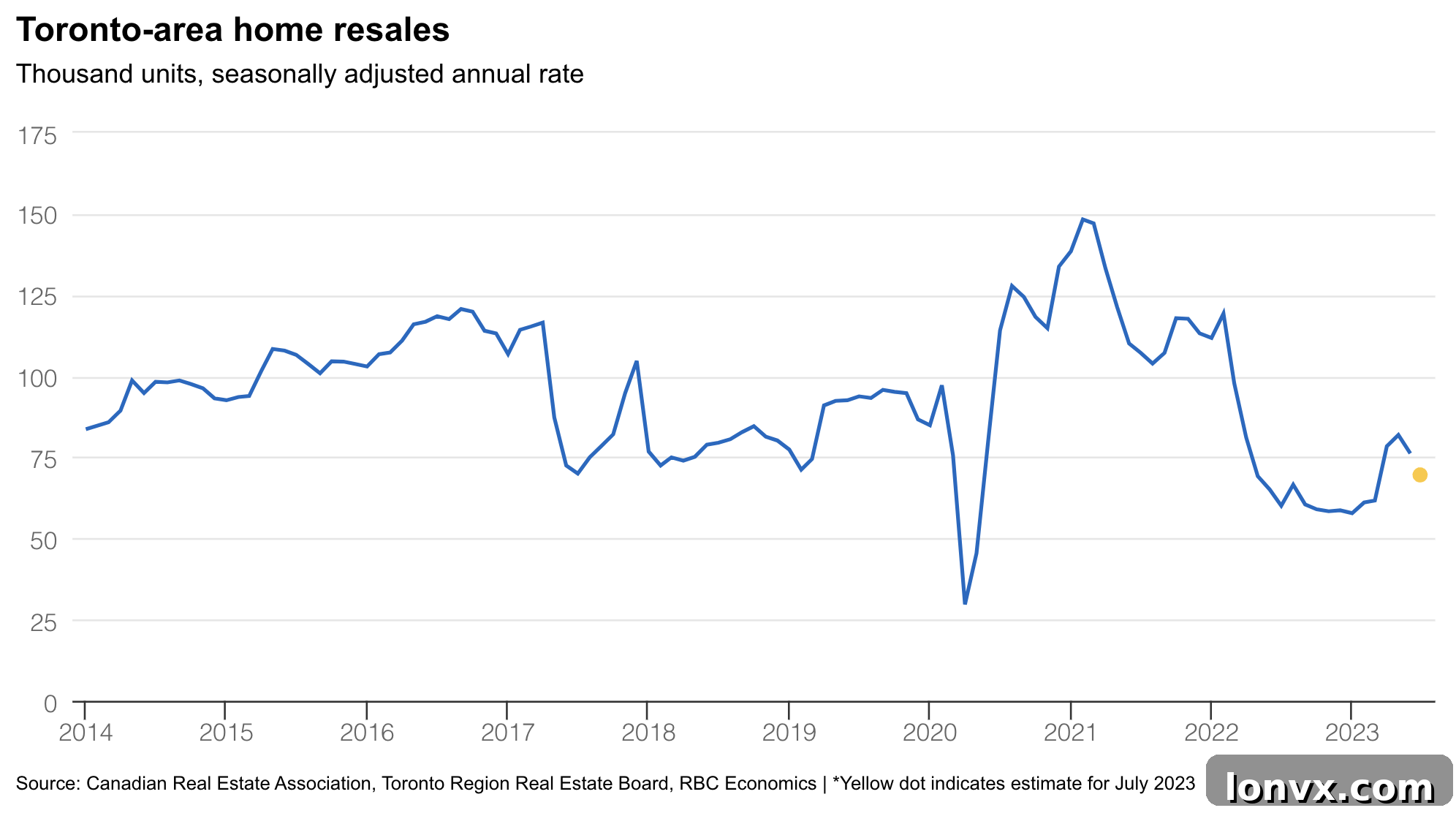
In the highly competitive Toronto area, the palpable momentum that had characterized the spring months has unmistakably decelerated. This slowdown is attributed directly to the cumulative and intensifying effects of recent interest rate hikes implemented by the Bank of Canada. Toronto, a bellwether for Canadian housing trends, is acutely sensitive to shifts in borrowing costs. As RBC economists meticulously detailed, the ownership costs in the Greater Toronto Area (GTA) are already exceptionally high, pushing the financial limits of a significant portion of potential buyers. The latest series of interest rate increases, therefore, served as a decisive factor, compelling even more prospective homeowners to retreat to the sidelines. This sudden withdrawal of demand effectively stalled the surprisingly brisk momentum that had taken hold during the spring season, catching many market observers off guard.
Despite this cooling activity, a significant and positive development has been the notable increase in new listings entering the market. This surge in available properties has empowered prospective buyers with a broader spectrum of choices, subsequently contributing to a much-needed rebalancing act between demand and supply. The immediate consequence of this shift is evident in the moderation of price increases. The Toronto composite MLS Home Price Index (HPI), a key indicator of market health, registered a modest increase of only 0.9 percent month-over-month in July. This figure stands in stark contrast to the considerably higher average increase of 2.4 percent observed during the preceding three months, clearly illustrating the market’s rapid adjustment.
A closer examination reveals a divergence in performance across different housing segments. While single-detached homes have, in some instances, managed to demonstrate stronger price gains, benchmark condo prices continue to linger below last year’s levels. This disparity highlights the unique challenges faced by the condominium market, often more susceptible to investor sentiment and the direct impact of high-interest rates on carrying costs. The confluence of elevated borrowing expenses, affordability constraints, and the persistent possibility of an impending economic recession are all contributing factors maintaining downward pressure on certain segments of Toronto’s housing market. The coming months will be critical in determining whether this moderation leads to a more stable environment or ushers in a period of sustained price corrections, particularly as supply continues to build.
Montreal Area: Gradual Recovery Supported by Inventory Increase
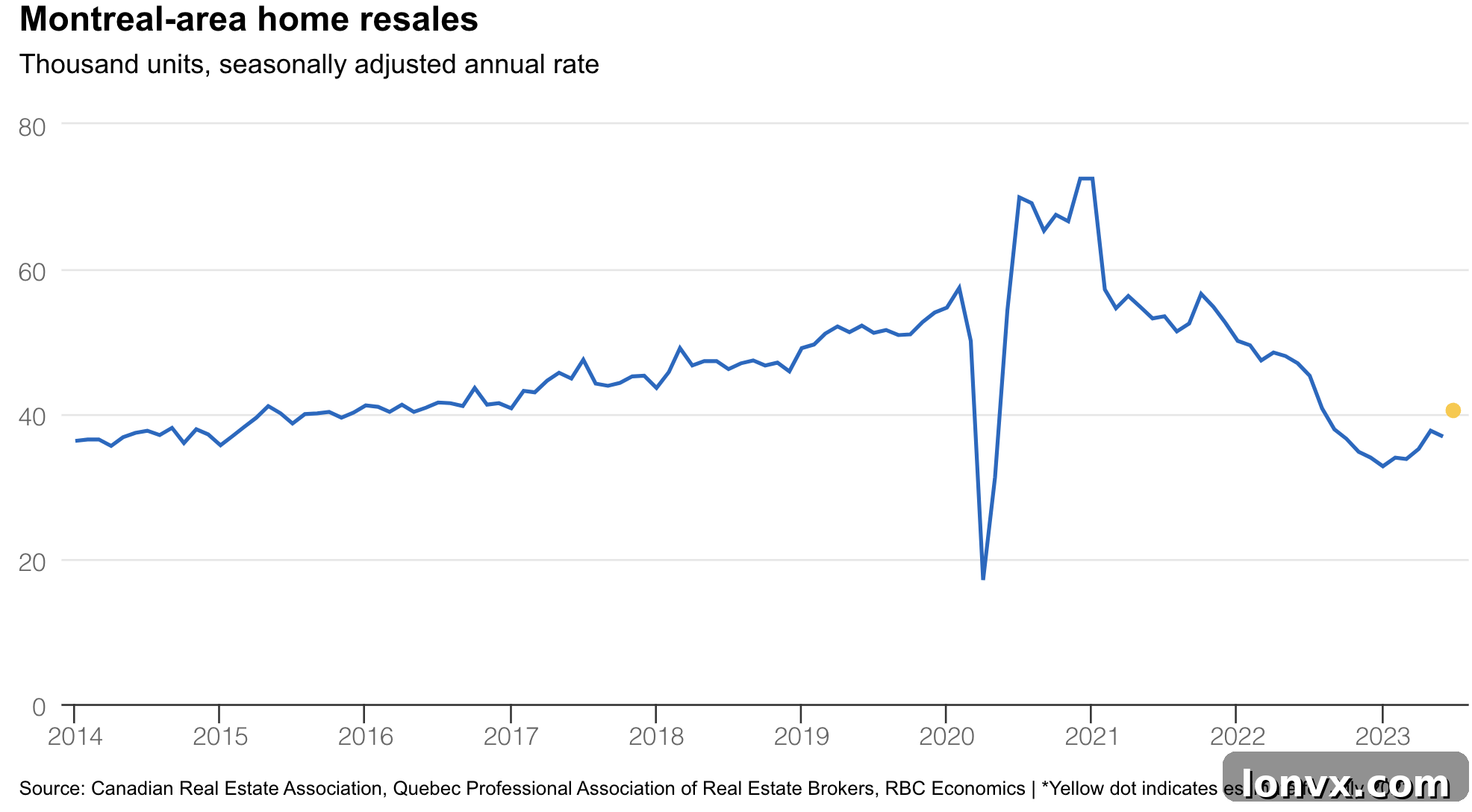
The Montreal real estate market is currently exhibiting encouraging signs of a gradual recovery, particularly as sellers, who had largely remained on the sidelines during a period of subdued activity, begin to re-engage. This renewed seller confidence is a crucial component in stabilizing and stimulating market activity. As noted by RBC economists, the increase in new listings observed in July was a pivotal factor in extending the sales recovery that first began in the spring. Specifically, new listings were pegged at a robust 7.0 percent month-over-month on a seasonally adjusted basis, indicating a healthy influx of properties. This expansion in inventory is a welcome development for a market that has historically struggled with supply constraints.
Despite these positive developments, the Montreal market continues to navigate a complex landscape fraught with challenges. High-interest rates remain a significant impediment, acting as a constraint on demand by increasing the cost of homeownership for potential buyers. Simultaneously, persistent affordability concerns in certain segments further limit the pool of eligible purchasers. While new listings have improved, the overall inventory levels, when compared to the historical demand, remain relatively low. This delicate balance means the market, despite its recovery, continues to be moderately tight, a condition that typically underpins modest price appreciation rather than rapid gains.
Both single-detached homes and condo apartments in Montreal have registered price increases, with the median values for these property types showing an upward trend in July. This broad-based appreciation suggests a foundational strength in local demand, even under challenging economic conditions. However, experts are quick to emphasize that the recovery trajectory is anticipated to be gradual. The ongoing interplay of high-interest rates, lingering affordability issues, and the need for sustained inventory growth will dictate the pace of this recovery. Unlike some other Canadian markets, Montreal’s inherent stability and diverse economic base might cushion it from sharper downturns, leading to a more prolonged, yet steady, path to full recovery. This measured approach allows for healthier market adjustments, preventing the rapid swings seen in more volatile regions.
Vancouver Area: A Softer Tone Emerges After Rate Hikes
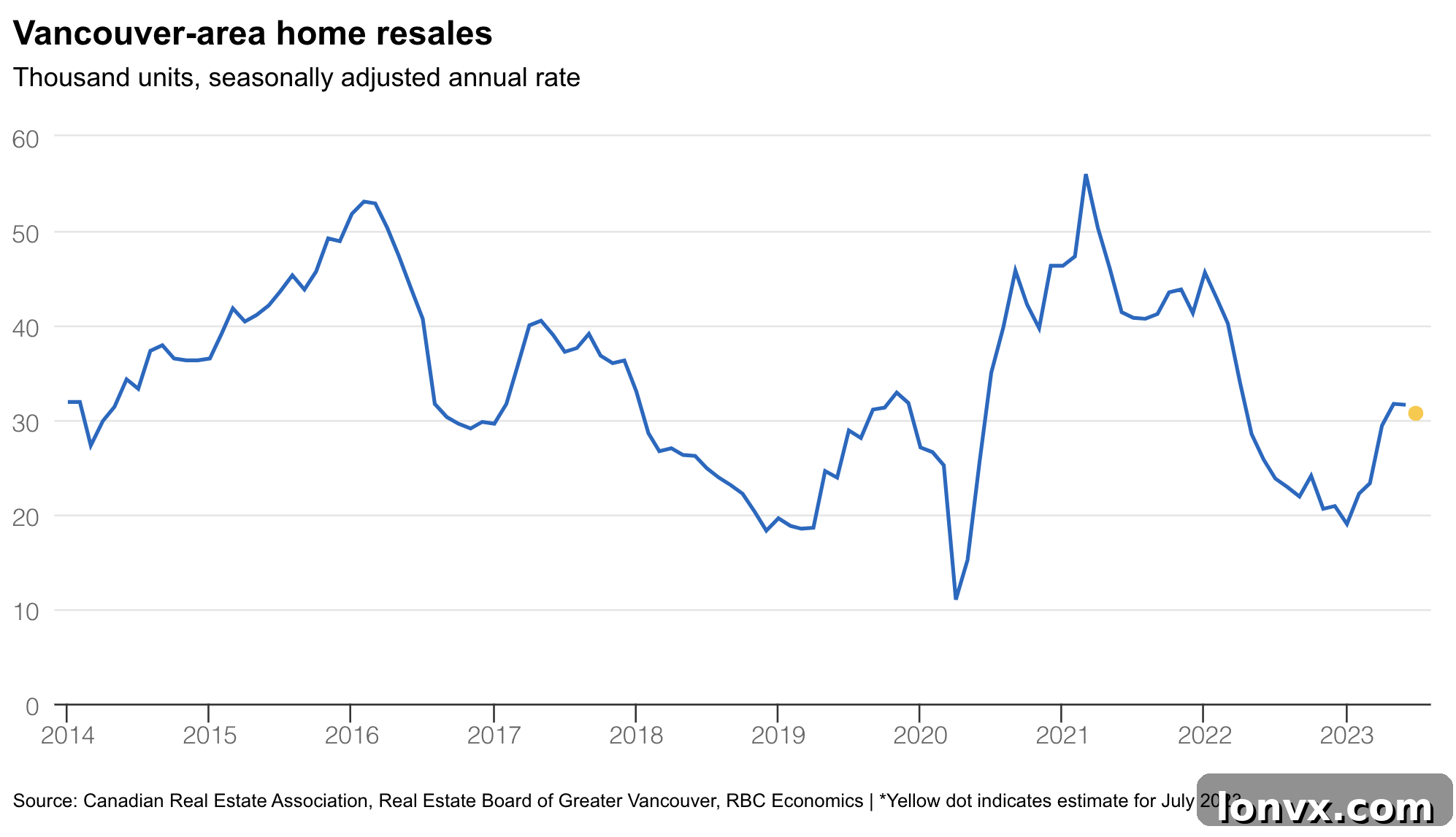
The prestigious Vancouver real estate market, known for its dynamic and often overheated conditions, has experienced a discernible shift in tone following the Bank of Canada’s consecutive interest rate hikes. These policy adjustments have introduced a greater degree of caution, leading to a more tentative stance among prospective buyers. RBC economists have observed this shift firsthand, noting that “Buyers turned more tentative in July, leading to an estimated 3.0 percent drop in home resales from June on a seasonally-adjusted basis.” This decline in transactions underscores a momentary hesitation in a market typically characterized by intense competition.
However, not all developments in Vancouver have been a cause for concern. A notable positive trend has been the increase in the number of sellers entering the market. This influx of new listings is a crucial factor in rebalancing the demand-supply dynamics, which had previously tilted heavily in favor of sellers. The increased inventory acts as a natural check on the rapid price rally that Vancouver has frequently experienced. With more options available, buyers face less pressure to engage in bidding wars, leading to more rational pricing.
Consequently, the Vancouver composite MLS Home Price Index (HPI) recorded a slower rate of growth in July compared to the preceding months, a clear indication that price gains are moderating. This slowdown, while suggesting a less frenzied market, does not imply a widespread decline. In fact, condo prices within the Vancouver area have continued to show appreciation, albeit at a tempered pace. This resilience in the condo market could be attributed to its relative affordability compared to detached homes, attracting buyers who are still keen to enter the market despite the higher borrowing costs. Nevertheless, the overarching challenges of persistently high overall affordability in Vancouver, coupled with elevated interest rates, are likely to maintain a “softer tone” in the market for the foreseeable future. This suggests that while significant price corrections might be avoided, the period of rapid, double-digit price increases is likely behind us, paving the way for more sustainable and gradual growth.
Calgary: Resilient Market Driven by Economic Momentum
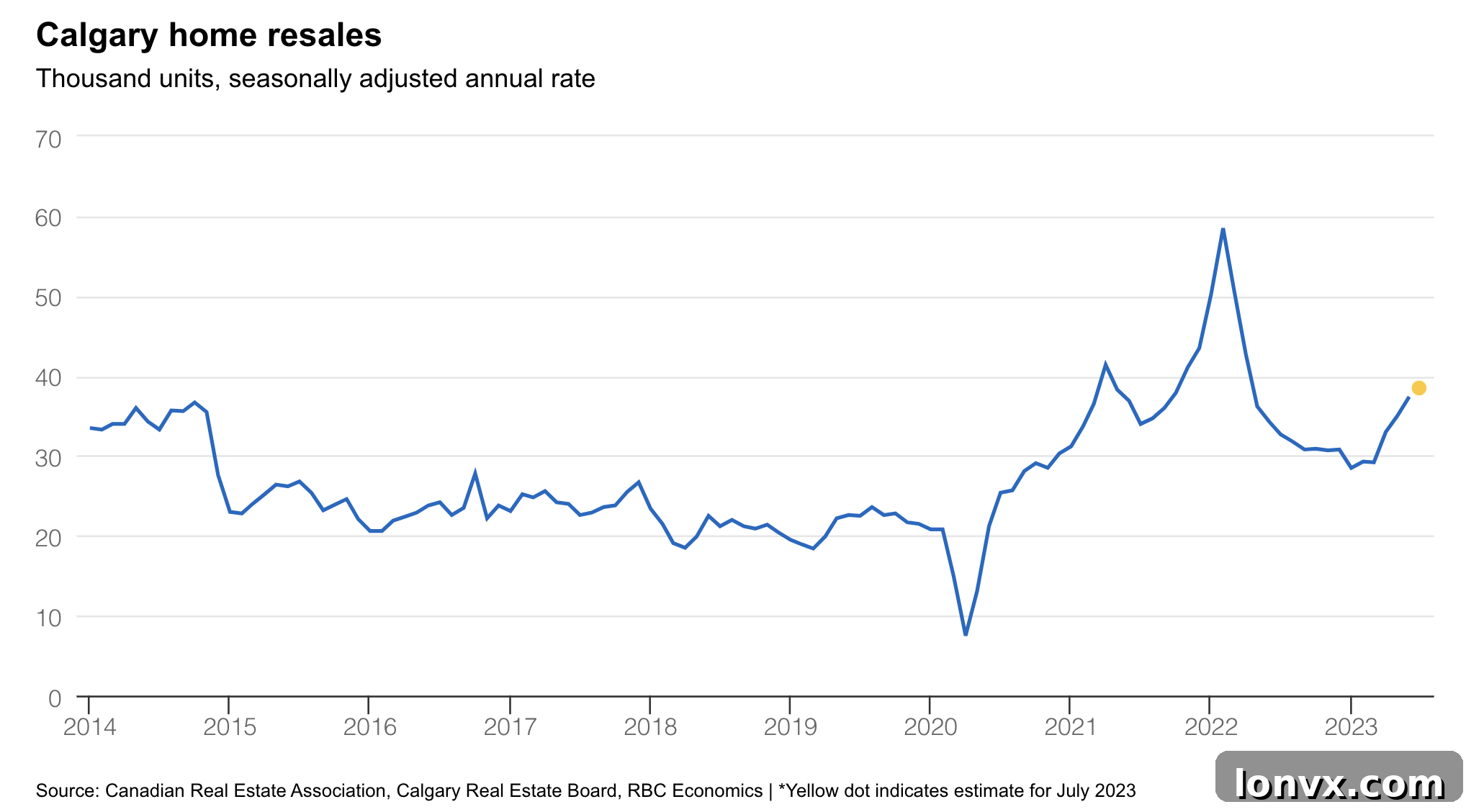
In stark contrast to the moderation and cooling observed in many other major Canadian cities, Calgary’s real estate market has demonstrated remarkable resilience and continued strength, even in the face of rising interest rates. July marked the fourth consecutive month of increased home resales, underscoring a brisk and sustained pace of activity within the market. This performance sets Calgary apart, highlighting unique underlying economic and demographic factors at play.
The robustness of Calgary’s market is primarily attributed to two powerful drivers: strong economic momentum and, crucially, explosive population growth. As highlighted by RBC economists, Alberta’s economy, bolstered by a resurgent energy sector and diversification efforts, provides a solid foundation for local job creation and income growth. This economic vitality translates directly into robust demand for housing. More significantly, Calgary has become a magnet for interprovincial migration, attracting individuals and families seeking more affordable living costs and burgeoning employment opportunities compared to Vancouver or Toronto. This influx of new residents fuels an unprecedented demand for housing across all segments.
Despite the consistent and persistent challenge of low inventories, the robust demand from a growing population has led to fierce competition among buyers. This intense competition is the primary force driving prices higher, with benchmark prices in Calgary rising at one of the fastest paces witnessed anywhere in the country. The market is characterized by quick sales and multiple offer scenarios, particularly in desirable neighborhoods and property types.
Within this heated market, townhouses and apartments have experienced particularly significant price gains over the past year. This trend reflects the strong demand from first-time homebuyers and those seeking more affordable entry points into Calgary’s market. These property types offer a viable alternative to detached homes, which, while still appreciating, are becoming less accessible to a broader range of buyers. The sustained performance of Calgary’s real estate market underscores its unique position, insulated to some extent by its strong economic fundamentals and demographic tailwinds, making it a standout performer in Canada’s evolving housing landscape.
A Complex Landscape Ahead: Navigating Canada’s Real Estate Future
The strategic interest rate adjustments by the Bank of Canada have undeniably ushered in a period of profound complexity and significant divergence within Canada’s vast real estate markets. The uniform strength that once characterized the national housing sector has given way to a more fragmented reality. While several major urban centers, notably in Ontario and British Columbia, have experienced a noticeable slowdown in activity and a more moderated pace of price gains, other regions like Calgary have exhibited remarkable resilience. This resilience is fundamentally driven by robust underlying economic strength and an accelerating pace of population growth, creating localized demand pressures that counteract broader national trends.
The trajectory of the Canadian real estate market remains shrouded in uncertainty, with experts forecasting a path ahead that is likely to be slow and potentially bumpy. The consensus among RBC economists points towards a recovery that will gradually gain momentum, but critically, only once interest rates begin their anticipated descent. This crucial pivot in monetary policy is not expected to unfold until 2024, suggesting that the current period of adjustment and cautious sentiment will persist for some time.
For both homeowners and prospective buyers, this complex landscape demands careful consideration and strategic planning. Affordability will continue to be a dominant theme, influencing purchasing decisions and shaping demand patterns. Supply-side dynamics, particularly the ability of new construction to keep pace with population growth and alleviate inventory pressures, will also play a critical role. As Canada navigates these evolving conditions, understanding the intricate interplay of economic indicators, demographic shifts, and monetary policy will be paramount for anyone involved in the real estate sector. The coming months will undoubtedly test the adaptability and resilience of Canada’s housing markets, paving the way for a redefined equilibrium in the years to come.