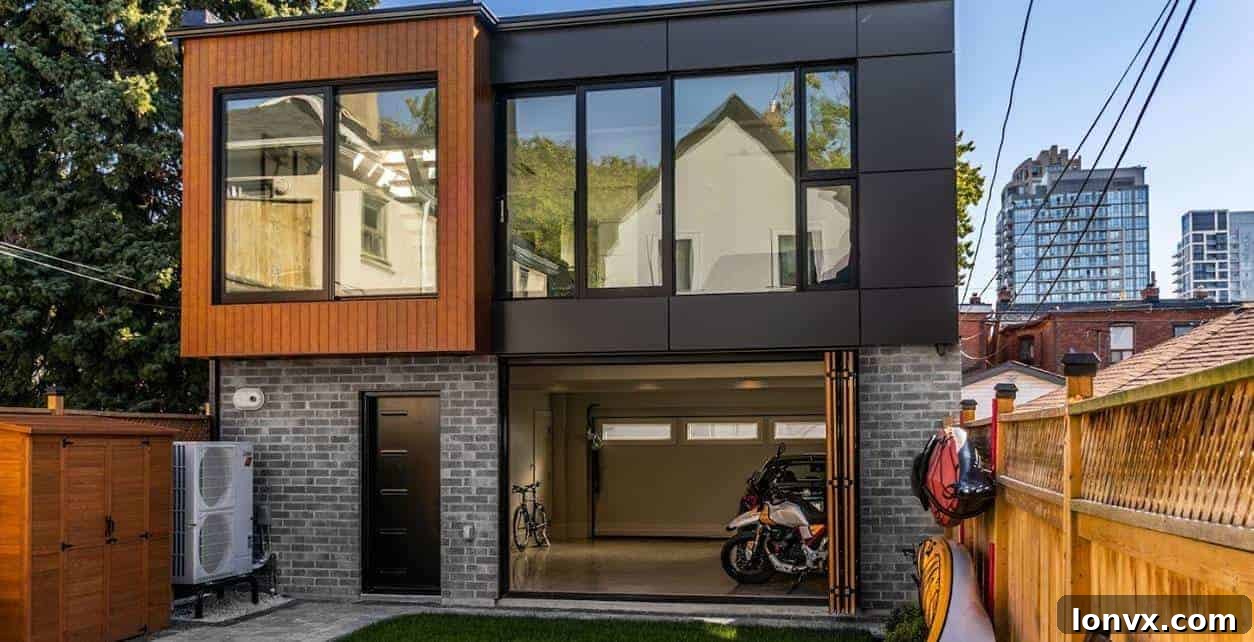
The Rise of Laneway Suites: A Smart Solution for Toronto’s Urban Landscape
In the bustling heart of Toronto, where land is an undeniable premium, innovative housing solutions are not just a luxury but a necessity. The concept of a laneway suite, an independent dwelling built on a property’s rear laneway, has emerged as a brilliant answer to urban density, rising property values, and the desire for flexible living spaces. These secondary units offer homeowners a unique opportunity to maximize their property’s potential, whether for additional income, accommodating family, or creating a future-proof personal retreat. David Shedd, a forward-thinking homeowner in Toronto’s charming Cedarvale neighbourhood, exemplifies this trend by transforming his property with a state-of-the-art laneway suite.
Shedd’s journey began not with a grand vision for a laneway suite, but with the practical need to rebuild his existing oversized two-car garage. However, a glance out his window at the underutilized space bordering the laneway sparked a much bolder idea: why just build a new garage when he could create a sophisticated, modern two-storey laneway suite? This decision led to the construction of a splashy, architecturally driven dwelling, meticulously outfitted with high-end finishes and designed with an eye toward future adaptability and sustainability.
David Shedd’s Vision: A Blueprint for Flexible Living
The core of Shedd’s project was a commitment to flexibility and future-proofing, a design philosophy he meticulously developed with the invaluable assistance of his girlfriend and the expertise of Angelo Antolino from Integrity Design and Build. Their collaborative team also included an architect, structural engineers, and HVAC professionals, ensuring every aspect of the build was robust, efficient, and aesthetically pleasing. This multidisciplinary approach was critical in bringing to life a structure that is both beautiful and incredibly functional, pushing the boundaries of what a laneway suite can be.
A Ground Floor Designed for Tomorrow
One of the most striking features of Shedd’s laneway suite is its ground level, a testament to intelligent, adaptable design. While currently serving as a modern garage, complete with prewiring for a Tesla charging station, this space was finished to the same exacting standards as a living area. It boasts elegant pot lights, luxurious radiant heated floors that promise comfort even in Toronto’s coldest months, and a convenient powder room. Eschewing traditional roll-up garage doors, Shedd opted for a hydraulic movable wall. This innovative feature not only offers superior aesthetics but also dramatically enhances the potential for conversion into a seamlessly integrated living space, blurring the lines between utilitarian and residential.
Uplifting Design: The Second-Storey Retreat
Ascending to the open-concept second level reveals a bright and inviting living space. Here, the commitment to maximizing utility without sacrificing style is evident. The floor features two thoughtfully designed bedrooms, one of which includes a clever Murphy bed. This allows the area to fluidly transform from a private sleeping quarter to an extended living space, perfect for daytime activities or entertaining. The main living area seamlessly integrates dining and relaxation zones, anchored by an efficient L-shaped kitchen. This culinary space is equipped with European-sized appliances, a smart choice for optimizing space without compromising functionality. Shedd’s reasoning for these compact yet high-performance appliances is pragmatic: the suite is designed for comfort and efficiency, not for hosting large family feasts requiring oversized kitchen equipment. An integrated fridge and even a dedicated wine fridge underscore the suite’s high-end appeal and attention to detail.
A host of premium finishes elevate the suite’s aesthetic, including rich hardwood floors that flow throughout, contributing to a sense of warmth and continuity. Pot lights provide discreet yet effective illumination, while glass railings on the staircase and floor-to-ceiling windows flood the space with natural light, creating an airy and expansive feel. These design elements collectively transform the suite into a truly luxurious urban haven.
Angelo Antolino (left) and owner David Shedd
Sustainable Future and Personal Sanctuary
A striking open-riser staircase serves as a focal point, leading not just to the second floor but extending upwards to a large skylight and hatch. This unique feature provides direct access to the roof, an often-overlooked space that Shedd plans to utilize for sustainable energy generation. His vision includes dedicating 50 percent of the rooftop for the installation of solar panels, a strategic move towards energy independence and reduced environmental footprint. This forward-thinking approach underscores the suite’s “future-proof” design, aligning with modern ecological sensibilities.
Despite the high-end finishes and thoughtful design, Shedd has no immediate plans to rent out his new laneway suite to the public. Instead, it serves a deeply personal purpose: a comfortable and private retreat for visiting family and friends. “It keeps them out of the principal residence and allows them to maintain their social bubble,” he explains, highlighting the suite’s role in providing autonomy and privacy for guests. He emphasizes that the suite was intentionally built with superior materials and craftsmanship, “higher end and maybe even nicer than the principal house,” reflecting its status as a premium extension of his home, not merely an income-generating unit.
This personal approach is also part of a larger, long-term strategy. “I’m 57 now and when I retire and travel, I don’t want the principal residence empty for months,” Shedd reveals. His plan is to eventually rent out his main house while using the laneway suite as his own elegant pied-à-terre, a compact yet luxurious base from which to enjoy his retirement years. This demonstrates the incredible versatility and long-term value proposition of a well-designed laneway suite.
Building Your Own Laneway Suite: Cost, Considerations, and Benefits
The construction of Shedd’s laneway suite took approximately eight months. The project benefited from a mild winter, which initially put it ahead of schedule, though it later faced some delays due to the unforeseen challenges of COVID-19. This timeline is fairly typical for such a complex build, emphasizing the need for meticulous planning and adaptability.
Investment and Value: Understanding the Costs
For those inspired by Shedd’s project, understanding the investment required is crucial. Angelo Antolino estimates that building a laneway suite of similar size and with comparable high-end finishes would typically cost between $420,000 and $450,000. While this may sound like a significant sum, Antolino is quick to point out that the cost is largely driven by the level of finishes. A suite intended purely as a rental property, for instance, might incorporate more standard finishes, bringing the price point down considerably. This distinction is vital for homeowners to consider when planning their budget and determining their primary use for the suite.
Antolino often begins his conversations with prospective homeowners by asking about their primary motivation for building a laneway suite. The answers vary widely, reflecting the diverse needs of Toronto residents. Some homeowners are primarily seeking additional rental income, a valuable asset in Toronto’s robust rental market. Others are looking for ways to support their children, who may be struggling to afford a home in the city. The rationale is compelling: “Why buy a condo when I can put them in my own backyard?” This sentiment highlights the appeal of providing independent living space for family members right on one’s property, fostering multi-generational living without sacrificing privacy.
Beyond children, laneway suites are increasingly popular for accommodating aging parents, in-laws, or even a live-in nanny. “Anyway you slice it,” Antolino observes, “there are a lot of options.” This adaptability makes laneway suites an incredibly attractive investment for a wide range of family dynamics and financial goals.
A Real Estate Game-Changer
For real estate agents, a property with a laneway suite can be a powerful selling point, assuming local bylaws permit such construction. For families who adore their neighbourhood but require additional space or a source of rental income, building a laneway suite can be the ideal solution. It allows them to remain in their beloved community while addressing pressing space constraints or financial needs, significantly enhancing the property’s overall appeal and market value. In a competitive market like Toronto, such unique value propositions stand out.
Navigating the Build Process: Eligibility and Practical Considerations
While the allure of a laneway suite is strong, it’s crucial for prospective builders to understand that not every property in Toronto qualifies for one. The journey begins with due diligence. Antolino advises that whenever someone inquires, he first provides the address to an architect. This professional then conducts preliminary homework, rigorously checking crucial factors such as lot coverage and ensuring the property meets all municipal zoning requirements. Fundamentally, as the name suggests, the property must also be situated on or adjacent to a laneway.
Challenges and Solutions: Insights from Experts
David Shedd notes an advantage: laneway houses can often be built from lot line to lot line. However, Antolino cautions that this proximity can lead to additional costs. For instance, any walls built close to neighbouring structures must be fire-rated to ensure safety and comply with building codes. This is just one example of the specialized requirements that can arise during construction.
Another often-overlooked but critical factor is the homeowner’s relationship with their neighbours. Antolino always asks how tight his clients are with their neighbours because a good rapport can significantly streamline the construction process. If neighbours are unwilling or unable to provide access to their properties during the build, walls might have to be constructed with cladding applied off-site and then carefully lifted into place by crane – a more complex and costly procedure. “It can be tricky without a good relationship,” he stresses.
Laneway suites typically draw all their essential services – electricity, water, and sewage – from the primary house. This integration requires careful assessment of the existing infrastructure. For example, an inadequate electrical service in the main house may necessitate an upgrade to a 200-amp system to accommodate the additional load of the suite. Similarly, while sanitary and water lines can be tied into those of the main house, if the existing sewage pipes are old clay, Antolino often recommends upgrading to modern PVC for better durability and flow. The volume of water is another consideration; older half-inch water lines may also need to be upgraded to larger diameters to ensure sufficient water pressure for both dwellings.
Architecturally, laneway suites in Toronto are subject to a six-meter height limit. Furthermore, certain structures may be required to have sloped roofs, depending on specific zoning overlays and proximity to property lines. However, to maximize the precious indoor ceiling height and create a more contemporary aesthetic, most laneway suites are designed with flat roofs, offering a sleek profile and optimal interior volume.
The Verdict: A Worthwhile Investment
“Nothing is straightforward, but it’s worthwhile,” says Antolino, summing up the journey of building a laneway suite. He reiterates that typical construction timelines range from five to eight months, a reasonable period for such a significant property enhancement. Despite the complexities, the benefits far outweigh the challenges for qualifying properties.
For homeowners who own a property that qualifies and have the means to invest, building a laneway suite is, in Antolino’s words, “a ‘no brainer’.” He drives home the compelling economic argument: “You can’t even buy a condo for what you can build a home for.” This statement perfectly encapsulates the profound value proposition of laneway suites in Toronto’s high-stakes real estate market. They offer not just an additional structure, but a versatile, future-proof asset that significantly enhances property value, provides flexible living solutions, and contributes to the evolution of sustainable urban living in one of Canada’s most vibrant cities.