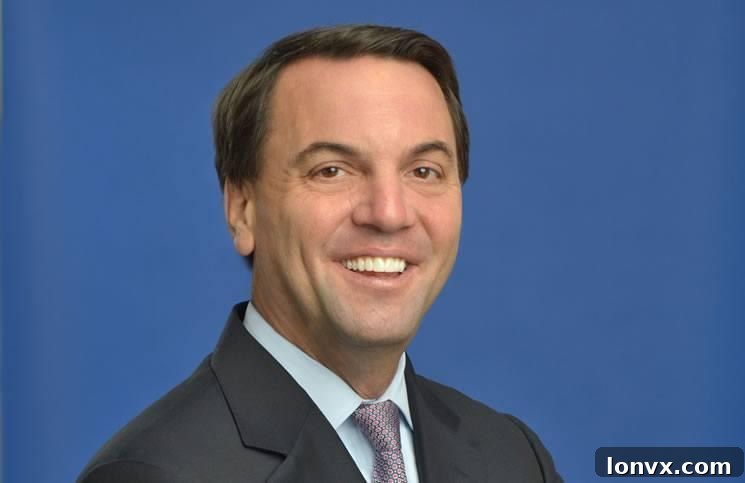
The Evolving Landscape of Ontario Real Estate: OREA’s Renewed Vision Under Tim Hudak
The Ontario real estate landscape is currently experiencing unprecedented shifts, presenting both significant challenges and unique opportunities for Realtors across the province. With consumers becoming increasingly sophisticated and demanding, the constant threat of new technology disrupting established business models, and persistent pressures from a dynamic housing market – particularly in the Greater Toronto Area – the industry finds itself at a pivotal juncture. Amidst this complexity, the Ontario Real Estate Association (OREA), under the leadership of CEO Tim Hudak, is embarking on a strategic transformation to ensure its continued relevance and indispensable value to its members.
Hudak acknowledges that questions regarding OREA’s role have emerged, especially following the organization’s divestment of its licensing education responsibilities as of 2020. However, he firmly asserts that OREA is not only relevant but “even more so, than ever” needed, emphasizing its critical function in safeguarding the interests of Ontario Realtors in a rapidly changing environment.
Navigating a Dynamic Market: Challenges for Ontario Realtors
The modern real estate professional faces a multifaceted array of challenges that demand adaptability and robust support. Consumers today are not just buyers and sellers; they are highly informed individuals with access to vast amounts of data, sophisticated online tools, and elevated expectations for service, transparency, and efficiency. This heightened consumer sophistication compels Realtors to evolve their approaches, offering personalized experiences and expert guidance that goes beyond simple transaction facilitation.
Simultaneously, technological advancements are continually reshaping the operational fabric of the real estate industry. From advanced data analytics and AI-powered lead generation to virtual reality tours and blockchain-based transactions, these innovations present both powerful tools and potential disruptions. Realtors must integrate these technologies effectively to remain competitive, while also navigating the complexities of data privacy and digital security. The pressure from a persistently hot housing market, characterized by affordability concerns, limited supply, and fluctuating interest rates, further complicates the daily work of Realtors, requiring them to possess deep market knowledge and exceptional negotiation skills.
These external pressures underscore the necessity for a strong, unified voice that can represent the collective interests of real estate professionals. OREA aims to be that voice, providing members with the resources, advocacy, and guidance needed to thrive in this intricate and ever-evolving market.
OREA’s Indispensable Role: Advocacy, Protection, and Influence
Tim Hudak passionately articulates OREA’s crucial role, particularly in government relations and policy advocacy. He points to cautionary tales from other jurisdictions, such as British Columbia, where the provincial government’s heavy-handed intervention in the real estate sector led to significant turmoil for Realtors. “Just look at what happened in Vancouver,” Hudak states, “The provincial government threw the (real estate) industry under the bus and dramatically interfered with day-to-day business and blew up the regulator.” This experience, he argues, starkly highlights why OREA’s strengths in government relations, communications, and research are “increasingly vital to the success of Realtors in our province.”
A Powerful Voice in Policy-Making: The Ontario Fair Housing Plan
A prime example of OREA’s impactful advocacy can be seen in its involvement with the Ontario Fair Housing Plan, introduced by Premier Kathleen Wynne’s government. Hudak proudly notes that OREA was granted “extraordinary access to government” during the plan’s development, a testament to the organization’s credibility and the respect it commanded. This unparalleled access included more than 16 separate meetings with the Premier, various ministers, and their executive teams, allowing OREA to directly influence policy formulation.
OREA entered these discussions with three clear objectives, all of which were successfully integrated into the final plan. Firstly, the association emphasized the critical need for supply-side solutions to address housing affordability, ensuring that new housing construction was recognized as a cornerstone of the strategy. Secondly, OREA advocated for the consideration of a vacancy tax, targeting speculators who purchase homes and leave them empty, a practice Hudak notes garners “no sympathy.” Finally, OREA successfully pushed for a comprehensive review and update of the provincial Real Estate and Business Brokers Act (REBBA), aimed at elevating industry standards – a commitment the province has since affirmed.
Hudak contrasts this collaborative approach with the situation in British Columbia. “You had the same situation [in B.C.] where you had a long-time government heading into an election with rapidly increasing housing prices,” he explains. “But B.C. threw Realtors under the bus. In Ontario, we were seen as active partners, and [the provincial government] responded to our advice.” This distinction underscores the value of OREA’s strategic engagement and Tim Hudak’s extensive political background – 21 years as a member of the Ontario Progressive Conservative party – which undoubtedly paved the way for OREA’s voice to be not only heard but actively sought out. His ability to build relationships and navigate the political landscape without “burning any bridges” has been instrumental in positioning Realtors as respected partners in policy development, rather than adversaries.
Transforming for the Future: The “New Rising of OREA”
The loss of the Realtor licensing education program after 2020 represented a significant shift for OREA, both financially and operationally. Its 2016 annual report revealed that approximately 76 percent of its 2015 revenue – a substantial $29 million – originated from its real estate college. However, Hudak clarifies that while the college was OREA’s largest revenue generator, it also constituted its largest expense. This strategic realignment presented an opportunity for OREA to redefine its core mission and deliver enhanced value to its members.
Strategic Realignment Post-Licensing Education
This transformation marks what Hudak terms the “new rising of OREA,” a vision initiated under past-president Ray Ferris and continued by current-president Ettore Cardarelli. The mandate is clear: OREA will focus on “fewer things, but we’re going to do them better.” This strategic pivot means doubling down on critical areas like government relations, which directly impacts the regulatory environment and market conditions for Realtors, and expanding leadership training initiatives, empowering members with advanced skills and insights. While future boards will determine the long-term impact on member fees, Hudak emphasizes that OREA is committed to demonstrating a tangible improvement in service quality before considering any request for “one additional penny” from its members.
Driving Efficiency and Accountability: A Commitment to Member Value
A cornerstone of this “new rising” is a steadfast commitment to fiscal accountability and efficiency, ensuring that every member dollar is utilized effectively. Hudak proudly recounts his immediate actions upon assuming the CEO role: “In my first month on the job, we found over $1.5 million in savings.” This was achieved through rigorous expenditure reviews, including the cancellation of various unnecessary expenses and the elimination of external consultants where OREA’s internal teams possessed the requisite expertise. Demonstrable reductions in operational costs include a 32 percent decrease in staff travel and accommodations, with a notable 37 percent reduction within the CEO’s office itself. Furthermore, the board proactively cut its own expenditures by a significant 20 percent.
These substantial savings were not simply about reducing costs; they represented a strategic reallocation of resources. “So, we shifted money that was going to fancy consultants and travel and hospitality, and refocused them on government relations and member services,” Hudak explains. This redirection ensures that member contributions are directly invested in high-impact initiatives that protect and advance the professional interests of Ontario Realtors, providing tangible returns on their investment in OREA.
Elevating Professional Standards: A Priority for Industry Integrity
Another pivotal aspect of OREA’s renewed advocacy is a relentless push for higher professional standards within Ontario’s real estate industry. This commitment marks a significant departure from past practices. Hudak openly admits that when OREA held the college contract, there were “occasions where OREA bit its tongue instead of holding RECO to account.” This dynamic, where the regulator effectively controlled OREA’s funding through the college contract, created a conflict of interest that hindered OREA from pushing for stricter enforcement, higher fines and penalties, and improvements to the continuing education program.
Reforming Continuing Education: A Call for Meaningful Improvement
Now, with the college contract behind it, OREA is free to champion the best interests of its members and the public without compromise. Hudak’s provincial tour, where he personally met with 36 of Ontario’s 39 real estate boards, revealed a resounding and consistent concern: approximately 95 percent of those conversations revolved around the glaring inadequacies of the continuing education program. Many Realtors described it as a “joke,” highlighting systemic flaws that undermine professional development and consumer trust.
Specific criticisms include the program’s susceptibility to abuse, particularly the lack of robust identity verification during testing. “The fact that you don’t even know who is taking the test really opens it up to abuse,” Hudak points out. Compounding this issue is the alarmingly low threshold for passing, where individuals “can still get all of the answers wrong and still pass.” Such lax standards not only fail to ensure that Realtors are continuously updating their knowledge and skills but also erode public confidence in the professionalism of the industry. Hudak emphasizes that it is the Realtors themselves who are passionately calling for a complete revamp of the program and a significant raising of industry standards – a movement he is incredibly proud to lead.
The Path Forward: A Stronger, More Effective OREA
Under Tim Hudak’s leadership, OREA is poised to become a more dynamic, accountable, and impactful force for Ontario Realtors. By focusing intensely on government relations, fiscal prudence, and the elevation of professional standards, the association is actively shaping a future where its members are better supported, better protected, and more respected. This renewed commitment to advocacy and excellence ensures that Realtors will have a collective and powerful voice championing their interests. “Realtors are going to see a stronger and more effective OREA,” Hudak affirms, signaling a new era of proactive leadership and unwavering dedication to the success and integrity of the Ontario real estate profession.