
[et_pb_section fb_built=”1″ _builder_version=”4.16″ da_disable_devices=”off|off|off” global_colors_info=”{}” da_is_popup=”off” da_exit_intent=”off” da_has_close=”on” da_alt_close=”off” da_dark_close=”off” da_not_modal=”on” da_is_singular=”off” da_with_loader=”off” da_has_shadow=”on”][et_pb_row _builder_version=”4.16″ background_size=”initial” background_position=”top_left” background_repeat=”repeat” global_colors_info=”{}”][et_pb_column type=”4_4″ _builder_version=”4.16″ custom_padding=”|||” global_colors_info=”{}” custom_padding__hover=”|||”][et_pb_text _builder_version=”4.24.0″ background_size=”initial” background_position=”top_left” background_repeat=”repeat” global_colors_info=”{}”]
Canada’s Housing Affordability Crisis: Navigating Taxes, Migration, and the Path to Sustainable Homeownership
The landscape of Canadian housing markets and interprovincial migration patterns is undergoing a significant transformation, largely driven by escalating affordability challenges. These challenges are exacerbated by increasing land transfer taxes and new property assessments, as highlighted in Re/Max Canada’s comprehensive 2024 Tax Report. This critical analysis underscores an urgent need for strategic interventions designed to enhance access to homeownership, address persistent housing supply shortages, and curb the ongoing out-migration of residents, particularly the younger demographic, from key urban centers. The report meticulously examines major markets across six Canadian provinces—Vancouver, Calgary, Winnipeg, Toronto, Montreal, and Halifax—revealing that governments at all levels are cumulatively collecting billions through various levies, development fees, land transfer duties, and property taxes, all contributing to the escalating cost of housing.
The Great Canadian Shift: Interprovincial Migration Towards Affordability
In the wake of the pandemic, a notable exodus from Canada’s most expensive real estate markets has accelerated. This shift is primarily fueled by a confluence of rising tax rates, soaring housing values, and elevated mortgage rates. Last year, this trend manifested in a substantial increase in interprovincial migration, with nearly 60,000 homebuyers relocating to Alberta and Atlantic Canada, encompassing Nova Scotia, New Brunswick, and Prince Edward Island. This movement signifies a profound reallocation of Canada’s population, as individuals and families seek more attainable housing opportunities and a higher quality of life away from the prohibitive costs of major metropolises like Toronto and Vancouver.
Alberta and Atlantic Canada: New Horizons for Homeowners
Statistics Canada data for the first three quarters of 2023 provides compelling evidence of this migration trend. Alberta, in particular, witnessed a staggering increase, more than doubling its interprovincial migration figures from the previous year. The province welcomed an impressive 45,194 new residents, with the largest influx originating from Ontario, British Columbia, Saskatchewan, and Manitoba. This surge highlights Alberta’s growing appeal as an economic powerhouse, offering robust job markets in sectors such as energy, technology, and agriculture, alongside a considerably lower cost of living and, crucially, more accessible housing.
Similarly, Atlantic Canada experienced significant growth. Nova Scotia saw over 5,000 new residents during the same period, following nearly 10,000 interprovincial migrants in the first three quarters of 2022. New Brunswick welcomed almost 4,500 new arrivals in 2023, while Prince Edward Island saw just over 1,000. These provinces are increasingly recognized for their vibrant communities, emerging job markets, and, crucially, more accessible housing options that allow residents to achieve homeownership dreams that feel out of reach elsewhere.
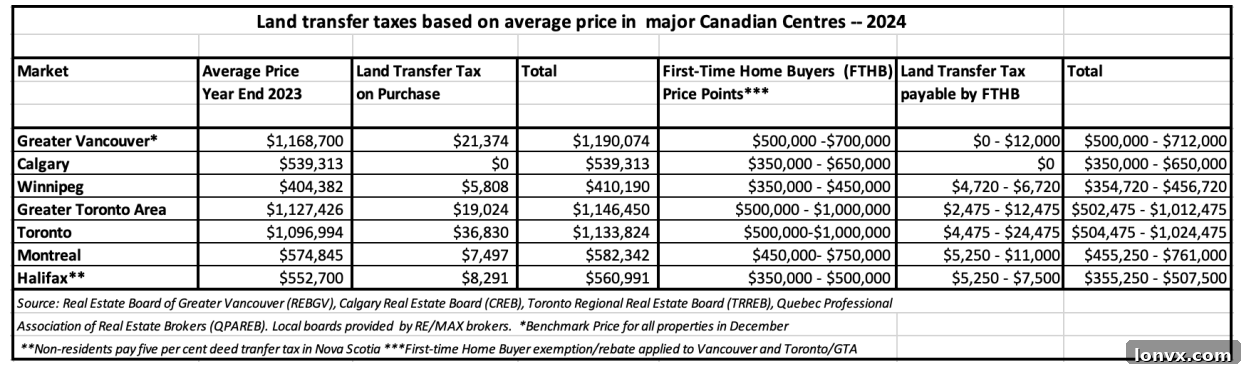
Christopher Alexander, President of Re/Max Canada, articulates the driving forces behind this movement: “Given today’s housing market realities, it comes as no surprise that buyers are willing to travel across the country to achieve homeownership. In addition to affordable housing values and extensive job opportunities, Alberta is well known for its advantageous position on taxation, boasting no provincial sales tax and zero land transfer tax on residential real estate. This fiscal advantage alone makes a substantial difference in a buyer’s overall cost.”
This tax advantage creates a compelling incentive. Cash-rich buyers from provinces like Ontario and British Columbia recognize that the proceeds from selling their properties in expensive markets like Toronto or Vancouver will yield significantly greater purchasing power in Alberta or Atlantic Canada’s major centers. For first-time buyers, this migration represents a pivotal opportunity to enter the market at a more affordable price point, build equity, and invest in their future, rather than continuing to rent and contribute to someone else’s mortgage without tangible assets.
Rethinking First-Time Buyer Support: A Critical Imperative
The escalating tax burden on Canadian families is a critical concern, directly impacting housing decisions and migration patterns. The Fraser Institute’s 24 Facts for 2024 Report reveals that the average Canadian family dedicates a staggering 45.3 percent of its income to various taxes. Land transfer taxes, in particular, alongside other regressive tax policies, disproportionately affect first-time buyers and contribute to the outflow of residents from high-cost areas, further exacerbating urban population shifts.
The Burden of “Luxury Taxes” and Inadequate Rebates
Toronto’s implementation of a new “luxury tax” on home sales exceeding $3 million, effective January 1, 2024, adds another layer of financial pressure to an already strained market. While intended to target high-value transactions, such policies can have ripple effects throughout the market, contributing to an overall perception of an increasingly punitive tax environment in major cities. These measures have intensified calls for an immediate re-evaluation and significant enhancement of first-time buyer rebates and exemptions in critical markets such as Toronto and Vancouver.
Alexander emphasizes the urgency of this reform: “When you think about what a $40,000 tax bill payable upon closing could do if it was applied to a down payment, it’s clearly time to incentivize the first domino. The first order of business should be revisiting the first-time buyer rebate/exemption in Toronto and Vancouver, because at $400,000 and $500,000-$525,000, respectively, they’re woefully inadequate given the average or benchmark price of properties in those cities.” The current thresholds are simply out of sync with present-day housing values, rendering these programs largely ineffective for those who need them most.
To truly support aspiring homeowners, policymakers must consider significantly increasing these rebate thresholds, or exploring alternative mechanisms such as targeted grants, shared equity programs, or even a temporary reduction in land transfer taxes specifically for first-time buyers. Such interventions are vital to prevent further market exclusion and foster a more equitable path to homeownership, ensuring that the “Canadian Dream” remains accessible for future generations.
Unpacking the Rising Costs: Beyond the Sticker Price
The complexity of rising housing costs extends far beyond just listing prices. A recent survey by Leger underscored this, revealing that 28 percent of Canadians believe land transfer taxes have directly influenced their housing decisions. This impact is disproportionately felt by younger generations, particularly Gen Z and Millennials, who are often at the initial stages of their homeownership journey. These demographics face the dual challenge of high prices and substantial upfront tax burdens, making entry into the market incredibly difficult. Consequently, a growing number within these demographics are actively seeking opportunities in more affordable regions, contributing significantly to the migration trends observed across the country.
The Confusion of Property Tax Reassessments
Adding to the uncertainty, new and proposed property tax reassessments across the nation—including in major cities like Toronto, Montreal, and Halifax—have generated considerable confusion. In some instances, properties have been assessed at values significantly above recent sale prices, creating a disconnect that frustrates homeowners and challenges the transparency and fairness of the assessment process. This ambiguity can lead to unexpected increases in annual property taxes, further straining household budgets already stretched thin by other living costs and making long-term financial planning more precarious for homeowners.
The Hidden Costs of New Construction
The cost of new home construction, particularly in high-demand markets like Toronto, represents another significant barrier to affordability and supply. For new condominiums, which are often the most accessible entry point for first-time buyers, taxes, development fees, and various levies are estimated to account for a substantial 25 to 30 percent of the total purchase price. This means a significant portion of what buyers pay goes not into the building itself, but into government charges and administrative costs, without directly adding value to the property.
A revealing study by the Building Industry and Land Development Association (BILD) in 2019 highlighted that an average new single-family home in the Greater Toronto Area (GTA) incurred an additional $222,000 in government charges. This figure is three times higher than similar costs in major U.S. markets, including notoriously expensive cities like San Francisco and New York City. These exorbitant charges inflate housing prices, stifle new supply by making development less profitable, and ultimately make homeownership an increasingly distant dream for many Canadians. Streamlining the approval process, reducing bureaucratic red tape, and re-evaluating the scope and scale of these charges are crucial steps towards fostering a more robust and affordable new housing market capable of meeting Canada’s growing population needs.
The Looming Crisis: Youth Exodus and Economic Implications
The current trajectory of the Canadian housing market poses significant long-term risks, threatening the very fabric of the “Canadian Dream”—the aspiration of stable homeownership and financial security. “The goal should be to make homeownership more accessible, not less,” asserts Christopher Alexander. “Taxation is inadvertently contributing to the demise of this dream, with homeownership rates across the country steadily declining from their peak levels reported in 2011. This trend will undoubtedly continue its downward spiral unless proactive intervention is swiftly implemented, focusing on systemic changes rather than superficial fixes.”
A crucial component of this intervention is a substantial increase in the supply of affordable housing within major urban centers. Such a strategic boost would have a profound impact on keeping the dream of homeownership alive for countless Canadians, stabilizing communities, and fostering economic growth. However, Alexander warns of severe consequences if these calls are not heeded: “If we don’t heed the call, we risk continued out-migration of our youth, depriving our most dynamic cities of the talent, innovation, and energy vital for future economic growth and societal prosperity. A ‘brain drain’ could severely limit Canada’s competitive edge on the global stage.”
This challenge is not unique to Canada. Similar socio-economic dynamics are observed in other North American cities. For instance, over 600,000 people have departed New York State for lower-tax states like Florida, underscoring the powerful and far-reaching impact of public policy on housing accessibility and broader economic dynamics. When the cost of living becomes unsustainable, populations shift, leading to potential brain drain, reduced tax bases in exiting regions, and increased strain on infrastructure in destination areas, creating a complex web of challenges for all involved.
“Clearly, public policy is contributing to a myriad of issues – with affordability front and center – and there’s no relief in sight,” Alexander concludes. “Shelter is a basic human need, yet accessibility is becoming increasingly problematic as government reliance on the housing sector as a means of funding creates a greater divide between those who can afford to buy and those who cannot, perpetuating inequality.”
For a healthy, sustainable real estate market and a vibrant national economy, affordability and opportunity are paramount. The potential economic impact of ongoing out-migration on the future prosperity and demographic stability of individual provinces should undoubtedly raise alarm bells for policymakers across the country. Addressing this crisis requires a coordinated, multi-level government approach, focusing on sustainable supply creation, comprehensive tax reform, and robust support mechanisms for all aspiring homeowners, ensuring a stable and prosperous future for Canada.
Read the full report here.
[/et_pb_text][et_pb_signup mailchimp_list=”REM|3f4c7c7b65″ first_name_field=”off” last_name_field=”off” title=”Enjoying this article?” description=”
Get the latest REM articles in your inbox 3x week so you stay up to date on the latest in the Canadian real estate industry
” _builder_version=”4.21.0″ _module_preset=”default” form_field_background_color=”#f7f7f7″ form_field_text_color=”#000000″ header_text_align=”center” header_text_color=”#FFFFFF” header_font_size=”33px” body_text_align=”center” body_text_color=”#FFFFFF” body_font_size=”18px” background_color=”#000000″ custom_button=”on” button_text_size=”21px” button_border_radius=”3px” custom_margin=”31px||31px||true|false” custom_margin_last_edited=”off|desktop” custom_padding=”28px||28px||true|false” custom_css_newsletter_title=”margin-bottom:10px” border_radii=”on|5px|5px|5px|5px” border_width_all_fields=”1px” border_color_all_fields=”#bfbfbf” box_shadow_style=”preset2″ box_shadow_horizontal=”1px” box_shadow_blur=”12px” box_shadow_color=”rgba(0,0,0,0.31)” global_colors_info=”{}”][/et_pb_signup][/et_pb_column][/et_pb_row][/et_pb_section]