The Transformative Power of High-Speed Rail: Reshaping Real Estate from Quebec City to Toronto
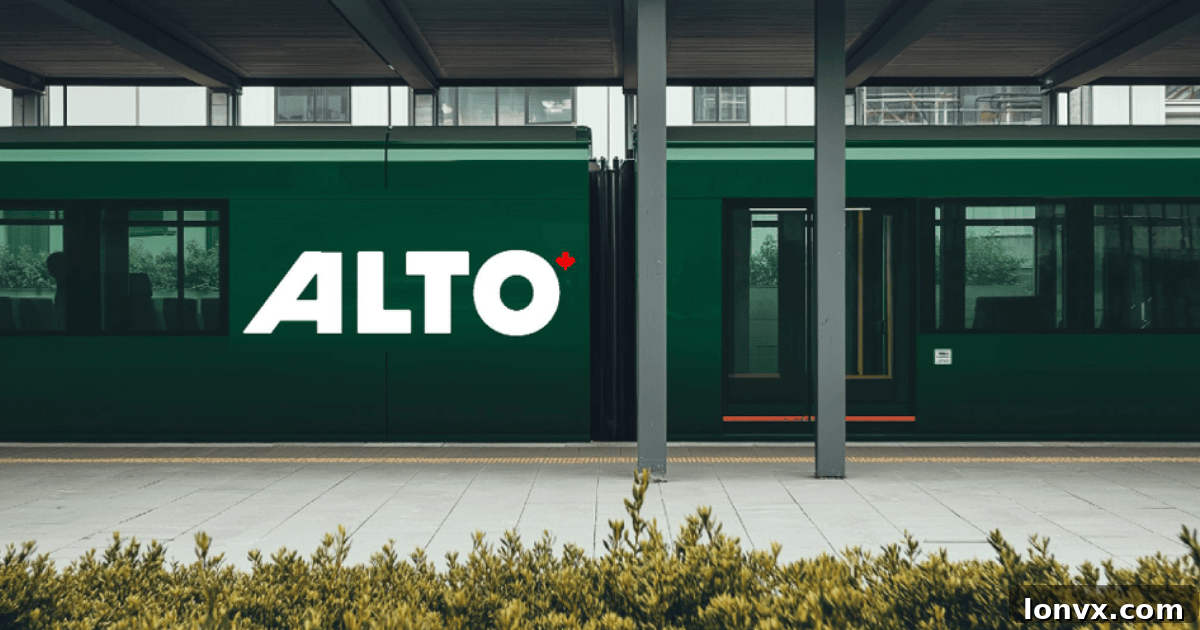
Artist rendering (source: altotrain.ca)
The vision of a high-speed rail (HSR) connection linking Canada’s bustling metropolises from Quebec City to Toronto is rapidly moving from concept to reality. This ambitious infrastructure project, dubbed Alto, promises to revolutionize intercity travel, drastically cutting journey times and fostering unprecedented regional connectivity. Beyond its immediate transportation benefits, the Alto HSR line is poised to exert profound and far-reaching impacts on real estate markets across the entire corridor, particularly creating new opportunities and challenges for communities like Peterborough.
Initiated at the dawn of 2025, the federal government’s Alto high-speed rail initiative is currently navigating its crucial consultancy phase. With construction anticipated to commence in 2029, the initial focus will be on establishing the vital Montreal-Ottawa segment. However, the overarching plan envisions a comprehensive network ultimately connecting Toronto, Peterborough, Ottawa, Montreal, and Quebec City. This state-of-the-art train system is projected to achieve speeds of up to 300 kilometres per hour, effectively doubling the pace of the existing VIA Rail service and fundamentally altering the landscape of travel and commerce in Eastern Canada.
Drawing Lessons from Global High-Speed Rail Successes
High-speed rail is by no means a novel concept on the global stage. Its proven success in enhancing connectivity, driving economic growth, and influencing urban development patterns provides valuable insights for Canada’s Alto project. Japan pioneered this advanced technology with its iconic Shinkansen in the 1960s, a testament to engineering prowess and forward-thinking urban planning. Since then, countries like France with its TGV, Germany with the ICE, the United Kingdom, China, and even a nascent network in the United States have adopted and expanded HSR systems, each with unique regional impacts.
A compelling 2019 study published by the Harvard International Review meticulously examined the real estate repercussions of Japan’s extensive high-speed rail network. The findings revealed a fascinating demographic and economic shift: the availability of HSR encouraged individuals seeking more affordable living options to relocate from densely populated urban cores to more outlying regions served by the rail line. This phenomenon was primarily driven by the significant reduction in commuting costs and times, making distant, more affordable housing markets viable. Consequently, this outward migration contributed to a desired reduction in urban density, while higher-productivity individuals often chose to remain in or move into the revitalized urban centres, a trend that positively correlated with an increase in GDP per capita within these metropolitan areas.
The Japanese experience also highlighted a nuanced effect on housing prices. As households gravitated towards outlying areas, the study found a localized appreciation in property values within these newly accessible communities. Crucially, however, the average housing costs within the major metropolitan areas ultimately settled at levels lower than what would have been projected had high-speed rail not been introduced. This suggests a potential for HSR to act as a significant decentralizing force, distributing both population and economic activity more evenly across a broader region, thereby mitigating some of the intense inflationary pressures typically associated with highly desirable urban centres.
Peterborough: A Future Commuter Hub in the Spotlight
For Canada’s Alto project, Peterborough emerges as a focal point of discussion regarding potential real estate transformation. Kathryn Exon Smith, a distinguished senior research officer at the University of Toronto’s School of Cities, whose research includes extensive study on the development trajectory of Canadian high-speed rail, anticipates a significant real estate boom in Peterborough. She predicts a tangible uplift in property values, particularly for homes situated near proposed HSR stations along the route. This anticipated surge is fundamentally driven by what she terms “the premium of being next to a transit amenity.”
Exon Smith emphasizes that the transformative effects of high-speed rail extend far beyond immediate station vicinities. “For something like high-speed rail, there’s the potential for it to have regional effects,” she notes, implying a ripple effect that could reshape entire local economies and demographic profiles. These profound changes, she suggests, could begin to materialize as soon as the detailed plans for the Alto project are officially confirmed. Currently, Peterborough holds a coveted spot on the shortlist for a high-speed rail station, a development that could fundamentally alter its future. However, this status is not immutable; Kingston, Ontario, is also vigorously vying for a station, and given the operational imperative to limit stops to maintain optimal speed, only one of these two key locations may ultimately be selected.
The precise placement of these stations — whether integrated into downtown cores or situated on city outskirts — will play a critical role in shaping the specific real estate outcomes and urban development patterns. Exon Smith draws a clear distinction by referencing international examples. She points to California, where peripheral station placements have, at times, dampened real estate impacts due to challenges such as traffic congestion and limited walkability. In stark contrast, Miami’s downtown station has not only become a bustling transit hub but also a popular destination in its own right, attracting commerce, leisure, and further development. “The idea of stations themselves being destinations is really powerful,” she asserts. “That has increased the value of properties around there,” highlighting the potential for transit-oriented development to create vibrant, self-sustaining communities.
The Nuances of Station Placement and Transit-Oriented Development (TOD)
The strategic decision regarding station location is paramount. An “outskirt” station, while potentially easier to construct from an engineering perspective, might necessitate substantial investment in feeder transit, parking, and new urban planning to connect it effectively to existing communities. Without careful integration, it risks becoming an isolated transport node with limited surrounding development impact. Conversely, a “downtown” station, while posing greater logistical challenges during construction, offers immediate advantages: leveraging existing infrastructure, stimulating pedestrian traffic, revitalizing urban cores, and fostering genuine transit-oriented development (TOD). TOD strategies aim to create compact, walkable, mixed-use communities around transit hubs, thereby maximizing accessibility, reducing reliance on private vehicles, and generating significant economic value for surrounding properties. The choice for Peterborough will define its urban fabric for generations.
Toronto’s Enduring Demand and Regional Dynamics
While Peterborough braces for potential real estate shifts, the outlook for Toronto’s housing market remains largely consistent. Imran Abdool, an economics and finance lecturer at Western University’s Ivey School of Business, firmly believes that Peterborough will almost certainly experience a rise in property prices as its accessibility to major urban centres like Toronto dramatically improves. This enhanced connectivity will undoubtedly make Peterborough a more attractive option for commuters and those seeking a blend of urban access and suburban affordability.
However, Abdool does not foresee a corresponding drop in Toronto property prices. This resilience is attributed to the multifaceted nature of demand within Canada’s largest city, including significant and sustained demand from immigrants who historically demonstrate a strong preference for settling in major urban centres due to diverse job opportunities, cultural amenities, and established support networks. Toronto’s status as a global economic engine, coupled with ongoing population growth and a persistent housing supply shortage, creates a robust and often inelastic demand that even increased regional accessibility is unlikely to fully deflate. Instead, the Alto HSR could strengthen the entire Greater Golden Horseshoe region, distributing growth more efficiently rather than pulling demand away from Toronto’s core.
Once the final plans for the high-speed rail line are solidified, Abdool anticipates a significant influx of development activity in Peterborough. Developers are expected to introduce a broader and more diverse range of housing types to meet the evolving needs of a new demographic. This will likely include modern condos and townhouses, offering more compact and urban-style living options, alongside the detached homes that currently dominate the local market. “If you introduce this high-speed rail, that changes the mix completely,” Abdool remarks, underscoring the potential for the Alto project to act as a catalyst for profound urban and demographic transformation. “This could change the history of that city,” he concludes, emphasizing the monumental impact such infrastructure can have on a community’s identity and trajectory.
Peterborough’s Unique Charms and Local Perspectives
Despite expert predictions of a transformative development boom, not everyone within Peterborough’s real estate community envisions a surge in condo high-rises. Carrie Brockhurst, a seasoned local realtor, offers a nuanced perspective. She anticipates that future development will predominantly favour detached houses, aligning with one of the city’s most significant attractions: affordable homes complete with backyards and ample green space. Brockhurst identifies considerable potential for new residential construction in both the northern and southern sectors of the city. She firmly believes that even with the advent of high-speed rail, Peterborough will retain its core identity, remaining a family-friendly market highly valued for its affordability and strong emphasis on outdoor living and community engagement.
“People who move to Peterborough are looking for space,” Brockhurst explains, articulating the distinct aspirations of her clientele. “They’re not looking for that Toronto lifestyle… we’re all about the outdoors.” This sentiment underscores a desire for a lifestyle that prioritizes spaciousness, natural surroundings, and a more relaxed pace, differentiating Peterborough significantly from the dense, high-energy urban environments of Toronto or Montreal. The HSR, while improving connectivity, might primarily facilitate access for those who wish to commute *from* a peaceful, green environment rather than transforming Peterborough into a mirror image of a bustling metropolis.
Interestingly, Brockhurst also notes a degree of public skepticism regarding the high-speed rail project among her local clients. After two decades of recurrent discussions and proposals surrounding high-speed rail in the region, many residents have adopted a pragmatic “wait-and-see” approach. The prolonged gestation period of such mega-projects can lead to a sense of fatigue and a reluctance to fully embrace the proposed changes until tangible progress is evident. “It’s kind of falling on deaf ears,” she admits, reflecting the cautious optimism, or perhaps even weariness, in the community. “Right now, we’re just in a wait-and-see type of game,” highlighting the local sentiment that while the potential is acknowledged, concrete action is awaited before widespread excitement or definitive plans are formed.
Beyond Real Estate: Broader Economic and Social Implications
The Alto high-speed rail project’s impact will extend far beyond housing markets. Economically, it promises significant job creation during construction and operation, stimulating local economies along the corridor. Enhanced connectivity could also boost tourism, making attractions in Quebec City, Montreal, Ottawa, and Peterborough more accessible to a wider audience. For businesses, the ability to transport goods and personnel rapidly between key economic hubs could foster new inter-regional partnerships and improve supply chain efficiencies. Environmentally, HSR offers a more sustainable alternative to air and road travel, potentially reducing carbon emissions and alleviating traffic congestion on major highways.
Socially, the project could foster greater cultural exchange and understanding between different regions, strengthening the fabric of Canadian identity. However, it also presents challenges. Local communities near proposed stations might face pressure from gentrification, potentially displacing long-term residents. Careful planning and community engagement will be crucial to mitigate such negative impacts, ensuring that the benefits of HSR are broadly shared and that development is inclusive and sustainable. The journey to a fully integrated high-speed rail system in Canada is complex, demanding not only engineering prowess but also astute socio-economic planning and strong political will.
The Road Ahead: Shaping Canada’s Future Corridor
The Alto high-speed rail line represents a monumental leap forward for Canadian infrastructure and regional development. By connecting major urban centres with unprecedented speed and efficiency, it stands to redefine how Canadians live, work, and interact. While the direct real estate impacts on cities like Peterborough are clear – a potential for property value appreciation and diversification of housing stock – the broader implications speak to a fundamental reshaping of the Quebec City-Toronto corridor. It promises a future where commuting is faster, regional economies are more integrated, and new communities flourish, all while demanding thoughtful planning to preserve local character and ensure equitable growth. As the project moves from consultation to construction, its potential to change the history of the cities it connects, and indeed the nation, becomes increasingly tangible.