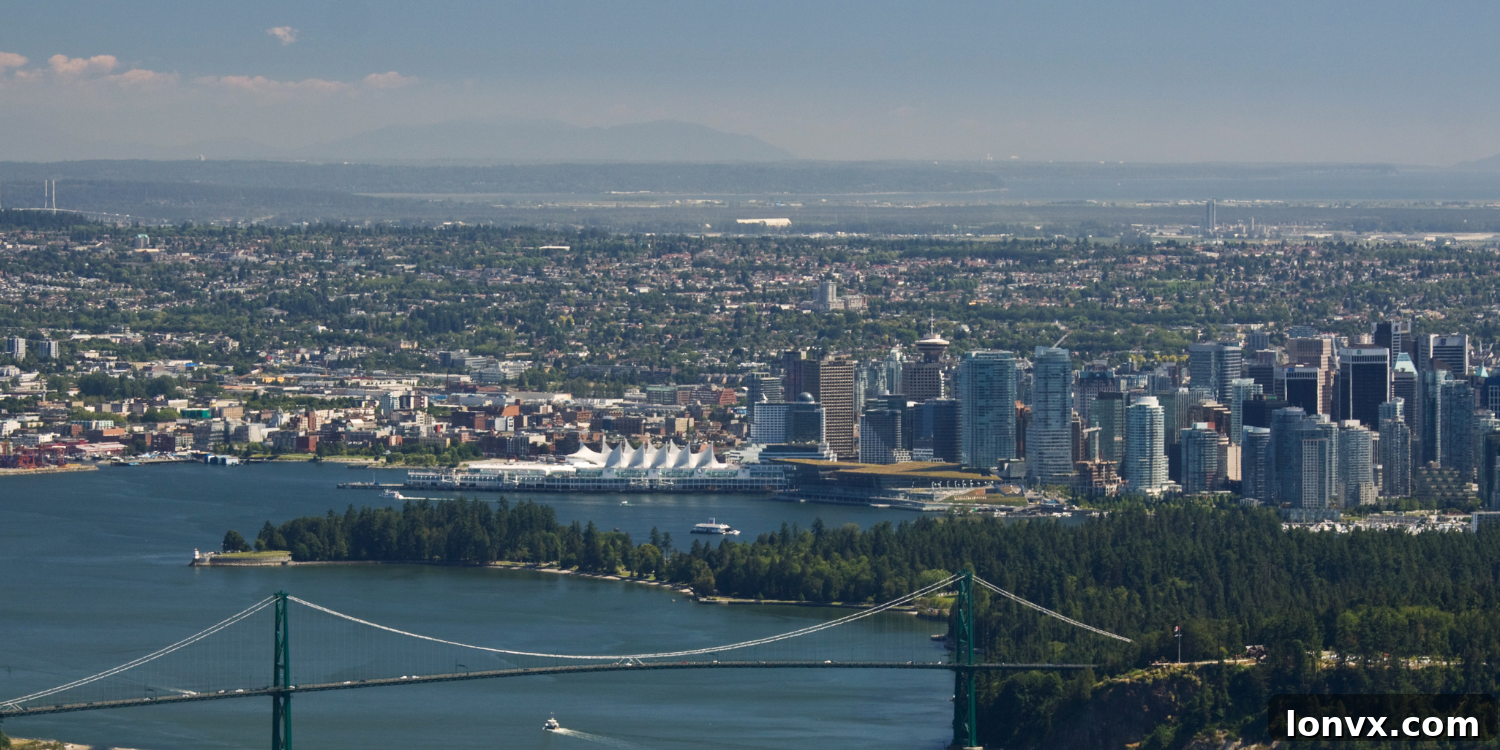
Metro Vancouver’s housing market continued its upward trajectory in July, with home prices experiencing consistent increases across all property types. New data released by the Real Estate Board of Greater Vancouver (REBGV) paints a clear picture of robust demand and a resilient market, even amidst evolving economic conditions.
The latest figures indicate a notable surge in residential home sales, reaching 2,455 transactions in July 2023. This represents a substantial 28.9 percent increase compared to July 2022. While this growth signifies a significant rebound from the previous year, sales volume still remains 15.6 percent below the ten-year seasonal average, suggesting there’s still room for the market to normalize towards historical levels of activity. The pronounced year-over-year percentage increase is largely attributed to the contrast with the market conditions of a year ago, which were heavily impacted by a major policy shift from Canada’s central bank.
Andrew Lis, REBGV’s director of economics and data analytics, provided crucial insights into this surge. He highlighted that July 2022 was a pivotal moment when the Bank of Canada introduced a “super-sized” one full percentage point increase to its policy rate. This unexpected move sent ripples through the market, catching both buyers and sellers off guard and significantly dampening real estate activity at the time. Lis notes, “Looking under the hood of these figures, it’s easy to see why sales are posting such a large year-over-year percentage increase. Last July marked the point when the Bank of Canada announced their ‘super-sized’ increase to the policy rate of one full per cent, catching buyers and sellers off guard and putting a chill on market activity at that time.” This historical context is essential for understanding the current market’s apparent acceleration.
Resilience Amidst Rising Borrowing Costs: Understanding Demand
The market’s performance in July 2023 is particularly noteworthy given the current economic landscape. Despite a more modest quarter-percentage point rate hike by the Bank of Canada this July, mortgage rates have climbed to their highest levels in over a decade across Canada. This scenario presents a fascinating paradox: how are sales surpassing last year’s levels when borrowing costs are even higher?
Lis’s analysis offers a compelling explanation: “Yet despite borrowing costs being even higher than last July, sales activity surpassed the levels we saw last year, which I think says a lot about the strength of demand in our market and buyers’ ability to adapt to and qualify for higher borrowing costs.” This statement underscores the deep-seated demand within the Metro Vancouver region and the impressive adaptability of prospective homebuyers. Buyers are seemingly adjusting to the new interest rate environment, finding ways to qualify for mortgages and proceed with their purchasing decisions, indicating a fundamental desire to own property in this highly sought-after area.
This resilience suggests that factors beyond interest rates, such as strong local employment, population growth, and the inherent desirability of Metro Vancouver as a place to live, continue to exert significant upward pressure on the housing market. It also highlights a potential shift in buyer psychology, where the initial shock of rate hikes has subsided, giving way to a more pragmatic approach to financing home purchases.
New Listings on the Rise, But Supply Remains Tight
On the supply side, July 2023 saw an increase in the number of newly listed properties across Metro Vancouver. A total of 4,649 detached, attached, and apartment homes entered the market, marking a 17 percent increase year-over-year. This influx of new listings is a positive sign, offering more choices for eager buyers and potentially helping to ease some of the competitive pressures.
However, a closer look reveals that even with this increase, the number of new listings remains 5.2 percent below the 10-year seasonal average. This indicates that while more homes are coming onto the market compared to the stifled activity of last year, the overall supply still hasn’t caught up to historical norms. A sustained period of new listings matching or exceeding the long-term average would be required to significantly rebalance the market from its current seller-favored state.
The persistent gap between new listings and historical averages suggests that while sellers are increasingly confident in bringing their properties to market, the rate of new supply is still insufficient to fully meet the strong buyer demand. This dynamic continues to contribute to upward pressure on prices and fuels a competitive environment, particularly for desirable properties in prime locations.
Active Listings Decline, Reinforcing a Strong Seller’s Market
Further accentuating the supply-demand imbalance, the total number of homes actively listed for sale on the Multiple Listing Service (MLS) in Metro Vancouver continued to decline. As of July 2023, there were 10,301 homes available for purchase. This figure represents a four percent decrease from the same month in 2022 and a more significant 14.4 percent drop below the ten-year seasonal average.
A shrinking pool of active listings, coupled with rising sales, is a classic indicator of a strong seller’s market. With fewer options available, buyers often face more competition, leading to quicker sales and potentially higher prices. This trend reinforces the notion that inventory levels are a critical factor shaping the Metro Vancouver housing landscape, consistently favouring sellers.
The sales-to-active listings ratio is a key metric for understanding market balance, and for July 2023, it stood at 24.9 percent across all property types. This ratio is a strong indicator of a seller’s market, as traditionally, a ratio above 20 percent suggests upward pressure on home prices. Conversely, a ratio below 12 percent over an extended period typically points to downward pressure on prices.
Delving deeper into specific property types, detached homes recorded a sales-to-active listings ratio of 16.5 percent. While this is lower than the overall average, it still indicates a relatively balanced market leaning towards sellers, though perhaps not as intensely as other segments. Townhomes, however, showed a much stronger seller’s market with a ratio of 32 percent, signaling high demand and limited supply. Apartment homes also demonstrated robust seller’s market conditions, with a ratio of 30.6 percent. These specific ratios highlight that while the entire market is tight, certain property categories are experiencing even more intense competition and price appreciation pressures due to pronounced imbalances between supply and demand.
MLS Home Price Index (HPI) and Property Type Performance
The MLS Home Price Index (HPI) composite benchmark price for all residential properties in Metro Vancouver now stands at $1.2 million. This figure reflects a modest but steady 0.5 percent increase from July 2022 and a 0.6 percent increase compared to June 2023. The HPI is considered a more accurate measure of price trends than average or median prices, as it tracks the price of a “typical” home based on various objective home attributes. Its consistent upward movement reinforces the overall appreciation within the market.
Breaking down the performance by property type provides a granular view of the market’s dynamics:
Detached Homes: Steady Growth in a High-Value Segment
Sales of detached homes experienced a significant year-over-year increase of 28.7 percent, with 681 transactions recorded. This recovery indicates renewed confidence in the higher-end segment of the market. The benchmark price for a detached home in Metro Vancouver has now reached $2 million, showcasing its premium status. This price reflects a 0.6 percent increase from July 2022 and a more notable 1.1 percent increase compared to June 2023. The month-over-month growth suggests a recent acceleration in value for these coveted properties, as buyers continue to seek larger living spaces and greater privacy where budgets allow.
Apartment Homes: Leading the Volume and Price Appreciation
Apartment homes continued to be a driving force in the market, with 1,281 sales in July 2023. This marks a substantial 20.7 percent increase from the 1,061 sales recorded in July 2022. Apartments often serve as an entry point into the Metro Vancouver market, and their strong sales volume indicates enduring demand from first-time buyers and investors alike. The benchmark price for an apartment home rose to $771,600, reflecting a 2.6 percent increase from July 2022. Furthermore, a 0.6 percent increase compared to June 2023 highlights ongoing month-over-month appreciation. This segment’s robust performance underscores its accessibility and attractiveness in a high-cost urban environment.
Attached Homes: The Fastest Growing Segment
Attached homes, which include townhouses and duplexes, recorded the most significant year-over-year increase in sales, with a remarkable 53.3 percent jump. A total of 466 attached homes were sold in July 2023, compared to 304 in July 2022. This impressive growth suggests that attached homes are increasingly appealing to buyers looking for a balance between space, affordability, and a sense of community that single-family detached homes might not offer at a comparable price point. The benchmark price for an attached home reached $1.1 million, signifying a 1.2 percent increase from July 2022 and a 0.5 percent increase compared to June 2023. The strong performance in both sales volume and price appreciation positions attached homes as a dynamic and highly competitive segment of the Metro Vancouver market.
Conclusion: A Resilient Market Adapting to New Realities
The July 2023 data from the REBGV paints a picture of a Metro Vancouver housing market characterized by strong demand, adapting buyers, and persistent upward pressure on prices. Despite higher borrowing costs and a relatively tight supply of listings compared to historical averages, sales volumes are recovering robustly. The market’s ability to absorb increased interest rates and continue its growth trajectory speaks to the fundamental strength and desirability of real estate in this region.
While the year-over-year increases are partly a reflection of the subdued market conditions in July 2022, the consistent month-over-month price growth and the strong sales-to-active listings ratio confirm that Metro Vancouver remains firmly in a seller’s market. Buyers are demonstrating remarkable adaptability and commitment, navigating a complex economic landscape to secure their place in one of Canada’s most competitive and sought-after housing markets. As the market continues to evolve, monitoring these key indicators will be crucial for understanding future trends and making informed real estate decisions in Metro Vancouver.