Navigating BC’s Evolving Real Estate Landscape: New Regulations and the Affordability Crisis
The real estate market in British Columbia, particularly within the bustling Greater Vancouver Region, has long been a subject of intense discussion, characterized by rapid growth and escalating prices. In an effort to address public concerns and enhance consumer protection, a new era of stringent regulations has been ushered in. The Office of the Superintendent of Real Estate in B.C., a newly established government oversight body, has implemented a significant change that is now reverberating throughout the industry: a strict prohibition against agents “double-ending” a deal. This amplified rule, effective March 15th, has initiated a period of profound adjustment for all licensed real estate professionals in the province, fundamentally altering long-standing practices and demanding a renewed focus on fiduciary duties.
The End of Dual Agency: A New Standard for Consumer Protection
For many years, the concept of “dual agency” — where a single agent represents both the buyer and seller in a transaction — has been viewed with skepticism due due to inherent conflicts of interest. While direct dual agency was formally outlawed some time ago, real estate professionals in B.C. developed work-around solutions that allowed them to continue facilitating deals with both parties. These strategies often involved offering “limited dual agency” or simply providing “no agency” to buyers who approached a listing agent directly. Under these arrangements, the agent would ostensibly represent the seller’s interests while merely acting as a facilitator for the buyer, claiming to provide unbiased transactional assistance without a formal agency relationship.
However, the new regulations are designed to eliminate these ambiguities entirely. The increased scrutiny of “implied agency” by the government regulator effectively closes these loopholes. The previous notion that labeling one side of a double-ended transaction as a “customer” somehow served the consumer’s best interest is no longer tenable. This legislative shift aims to ensure that every buyer and seller receives undivided loyalty and professional advocacy from their designated agent. For traditional listing agents, who historically might have made viewing their listings difficult for buyer agents in the hope of double-ending the sale themselves, this change will have a dramatic impact, fostering greater collaboration within the industry and a more transparent process for consumers.
Transforming Real Estate Team Structures
The new regulations in B.C. extend their reach beyond individual agents, profoundly impacting the operational models of larger real estate teams. The traditional business structure of many teams, where a senior “rain-maker” leader would secure listings while other team members acted primarily as buyer agents, is no longer viable under this new regime. B.C.’s updated rules now mandate that all team members are explicitly named on the listing contract and are therefore considered designated agents of the seller when a team member takes a listing.
This has a critical consequence: a team member who is working with a buyer will now be explicitly prohibited from selling a listing obtained by another member of their own team. Such a transaction would unequivocally be considered dual agency under the new guidelines, regardless of the individual agents involved. This regulatory shift compels real estate teams to fundamentally re-evaluate their internal structures, compensation models, and client management strategies. Teams may need to specialize more rigorously, establish clearer firewalls between listing and buying operations, or even consider forming entirely separate entities to navigate these stringent new definitions of agency. The ultimate goal is to remove any potential for conflicts of interest within a team structure, ensuring that clients always benefit from clear and unambiguous representation.
The Political Impetus Behind Regulatory Changes
The driving force behind these significant changes in B.C.’s real estate regulations is undeniably political. For years, the escalating anger and frustration of consumers regarding the seemingly intractable affordability crisis in the Greater Vancouver Region served as a lightning rod for politicians. Grappling with the immense challenge of identifying both the root causes and viable solutions for this crisis, the government felt compelled to demonstrate decisive action. In a highly publicized move to address the issues stemming from a heated real estate market, the then-Liberal government stripped the real estate industry of its long-standing self-governance. This was coupled with the introduction of new taxes, such as the foreign buyer tax and the speculation and vacancy tax, explicitly designed to discourage certain groups of buyers and investors from entering or holding properties within the Greater Vancouver market.
While these measures were presented as solutions, they often sidestepped the core economic realities of the market. The political narrative often sought to assign blame rather than address fundamental structural issues, leading to regulations that, while enhancing consumer protection in specific areas, may not fully alleviate the broader affordability challenges. These interventions highlight a complex interplay between public sentiment, political will, and the intricate dynamics of a high-value real estate market.
Unraveling the True Cause: Vancouver’s Supply-Side Dilemma
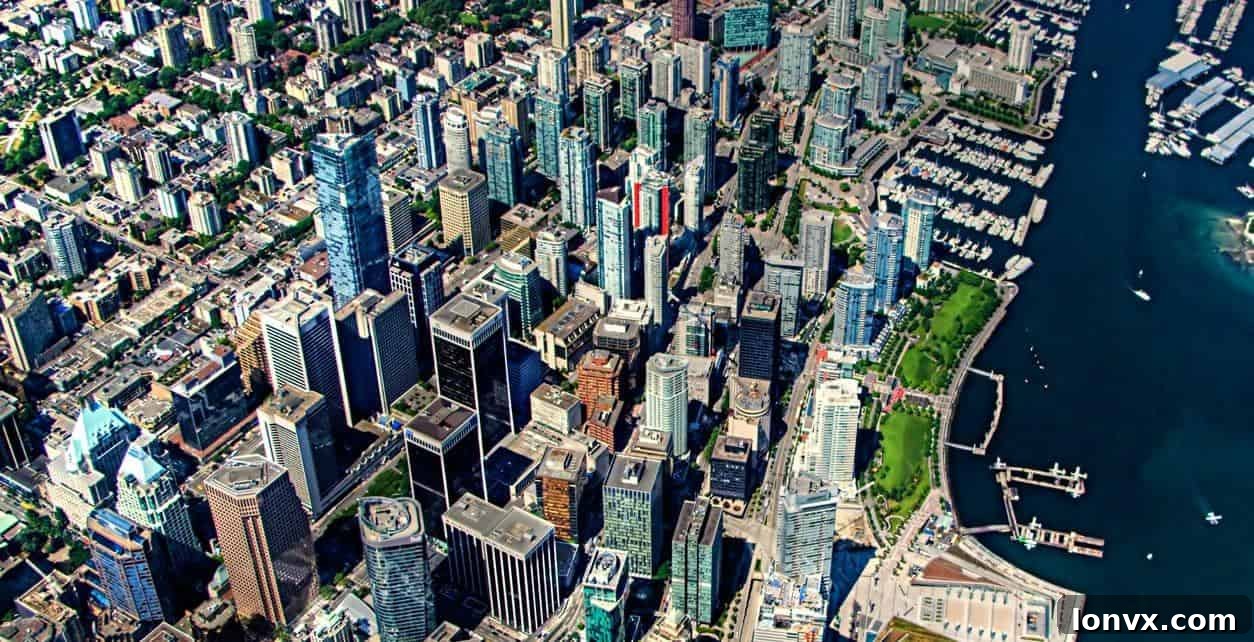
Despite various governmental attempts to “fix” the market through taxation and regulation, the core reason that the cost of homeownership in B.C., particularly in Greater Vancouver, continues to climb beyond the reach of the average consumer remains largely unaddressed: a fundamental supply shortage. The truth is, the Greater Vancouver area is an exceptionally desirable location to live, attracting talent and investment from around the globe. Its stunning natural beauty, vibrant economy, and high quality of life make it a magnet for residents. When this undeniable desirability is coupled with severe geographical constraints—wedged between majestic mountains, the Pacific Ocean, and the protected Agricultural Land Reserve (ALR)—a pervasive supply issue is created.
The ALR, established to preserve farmland, significantly limits the outward expansion of urban development. This physical scarcity of developable land within such a coveted region is the primary driver of property values. What exacerbates matters further in Vancouver is the pervasive resistance to densification within many of its older, established neighborhoods. Local politicians at the municipal level, often swayed by “Not In My Backyard” (NIMBY) sentiments from existing residents, have historically shielded these areas from much-needed higher-density housing proposals. This opposition often manifests as concerns over traffic, shadows, or neighborhood character, frequently overriding the broader societal need for more housing options.
This scenario is best understood through a simple economic analogy: if there is only one pair of shoes available in a store, but ten people are barefoot outside vying for them, the price of those shoes will inevitably skyrocket. This is the stark reality facing Greater Vancouver’s housing market. It is fundamentally a supply problem—a severe imbalance between the limited availability of housing units and an ever-growing demand. To attribute the crisis solely to realtors, foreign buyers, or specific market participants, while politically expedient, fundamentally misdiagnoses the situation. The scarcity of land and the constraints on its development are the primary engines driving this relentless upward trajectory of prices.
Cultural Shifts: Humanism and the Pursuit of Individual Rights
Beyond the tangible economics of supply and demand, the broader issue of homeownership affordability in a tightening inventory can also be traced to evolving collective thought and subsequent values within North American culture. Our society has been slowly but surely transitioning from a religion-based mindset, which often emphasized communal responsibility and sacrifice, to a more humanist worldview. Humanism, in its various forms, has become the prevalent philosophical framework, influencing societal norms and individual decision-making, even among those who maintain religious affiliations.
Within the general concepts of humanism, three prominent branches of thought include liberal humanism, social humanism, and evolutionary humanism. While the 20th century is often remembered as the era of failed social humanism, with the decline of communism and a general retreat from purely socialistic values, liberal humanism appears to have firmly taken hold in contemporary society. Liberal humanism places the individual’s feelings, rights, and values at the forefront, viewing them as society’s most important benchmark. This perspective is frequently encapsulated in popular phrases such as, “If it feels good, do it,” “The customer is always right,” and “Think for yourself and you will find the answers within.” In this framework, the social good is often perceived as a desirable by-product of individuals seeking to better themselves and their immediate surroundings, rather than a primary collective objective. Consequently, social rules, collective rights, and broader societal order often become secondary to the perceived entitlements and autonomy of the individual.
This pronounced emphasis on individual rights and feelings creates significant challenges in municipal politics, particularly when propositions for the common good require some form of individual concession or the surrender of perceived property value. When a high-rise building is proposed in an area adjacent to existing single-family homes, the passionate outcry from residents — arguing that the shade from the building will negatively impact them, their children, and their quality of life — is frequently given greater weight than the pressing need to reduce the overall cost of housing for the broader community. Historically, a religion-based ethical framework might have dictated that the homeless should be sheltered because it was a societal task ordained by a higher power. In contrast, the humanist doctrine, particularly in its liberal form, often suggests that we only provide aid to the homeless when such an act makes the individual contributor feel virtuous or personally fulfilled, thereby potentially deprioritizing collective action in favor of individual sentiment.
The evolutionary branch of humanism offers yet another lens through which to view the affordability issue, often from a Darwinistic perspective. This line of thinking suggests that it is the survival of the fittest that ultimately prevails in society. From this viewpoint, the more one can build wealth and accumulate property, the more successful and adaptable they are perceived to be. Proponents of this mindset might argue that a luxurious Vancouver lifestyle is a direct result of hard work, superior skills, and shrewd financial decisions. This individualistic ideology contends that a person should strive to “win” at all costs within the economic landscape, as this is merely how nature intended competitive systems to operate, further complicating any efforts towards collective housing solutions.
Economic Realities and Unyielding Market Forces
It is an unfortunate reality for those who lament the relentlessly rising costs of property in Greater Vancouver that the inherent pressures of a capitalist economic system also weigh heavily against any efforts to slow down accelerated growth and demand. In a free-market economy, without a centralized system designed to limit financial gains in the real estate sector, property owners are naturally incentivized to capitalize on their assets to the fullest extent possible. The pursuit of maximum profit is a fundamental tenet of capitalism, and real estate, often seen as a secure and appreciating investment, is a prime vehicle for wealth accumulation.
Furthermore, in this modern age of advanced data processing and readily available open information, consumers are more informed than ever. They can easily access details about what their neighbor’s property sold for, or view recent comparable sales in their area. This transparency, while beneficial in many ways, also fuels expectations among property owners, leading them to demand — and indeed, often expect — the same or even higher prices for their own homes. In a market scenario like the one currently observed in Vancouver, characterized by severely limited supply and high demand, property owners possess significant leverage. They can confidently set ever-increasing sticker prices for their homes, knowing that a competitive pool of buyers is likely to meet their demands. This dynamic creates a powerful feedback loop, where rising prices become self-perpetuating, further entrenching the challenge of affordability.
The Path Forward: Beyond Simple Solutions
The truth is that the supply of housing in Greater Vancouver is critically limited, and given the complex interplay of physical realities, entrenched political landscapes, and evolving social mindsets, there is no quick or easy answer to the affordability crisis. Placing additional limits and restrictions on Realtors, while often a politically attractive target, is akin to “shooting the piano player because you don’t like the tune.” Such measures, while perhaps addressing specific market behaviors, fail to tackle the fundamental imbalance. The problem of affordability is far more intricate and deeply rooted than many realize, spanning multiple dimensions beyond the immediate transaction.
Apart from comprehensive strategies aimed at significantly increasing housing supply to meet demand, the only conceivable “quick fixes” would be catastrophic events: either a major natural disaster that would dramatically scare buyers away from Vancouver, or a sudden, sharp, and sustained interest-rate jump that would stifle demand overnight. However, both of these scenarios would undoubtedly create a multitude of new and potentially worse economic and social problems than they would solve. Genuine solutions require a multi-faceted, long-term approach that transcends short-term political cycles and addresses the core issues. This includes revisiting restrictive zoning bylaws, promoting sustainable urban densification, investing heavily in infrastructure to support growth, streamlining permitting processes, and fostering a societal dialogue that balances individual property rights with the collective need for accessible housing. Only through such a sustained and holistic effort can Greater Vancouver hope to forge a more equitable and sustainable housing future.