
Canada’s proptech sector is no longer in its infancy; it’s a rapidly maturing ecosystem making significant strides on the global stage. A new report reveals that Canadian proptech companies successfully raised an impressive $450 million in 2025, signaling a pivotal shift as Artificial Intelligence (AI) moved beyond mere hype to become a fundamental component of real-world applications within the industry.
The “Proptech in Canada 2025” report, published by Proptech Collective, serves as a comprehensive benchmark for the sector’s evolution. Released on Thursday, the report meticulously tracks over 590 active Canadian proptech and construction-technology companies, a notable increase from the 535 firms recorded just last year. This growth underscores the dynamic expansion and increasing sophistication of Canada’s real estate technology landscape.
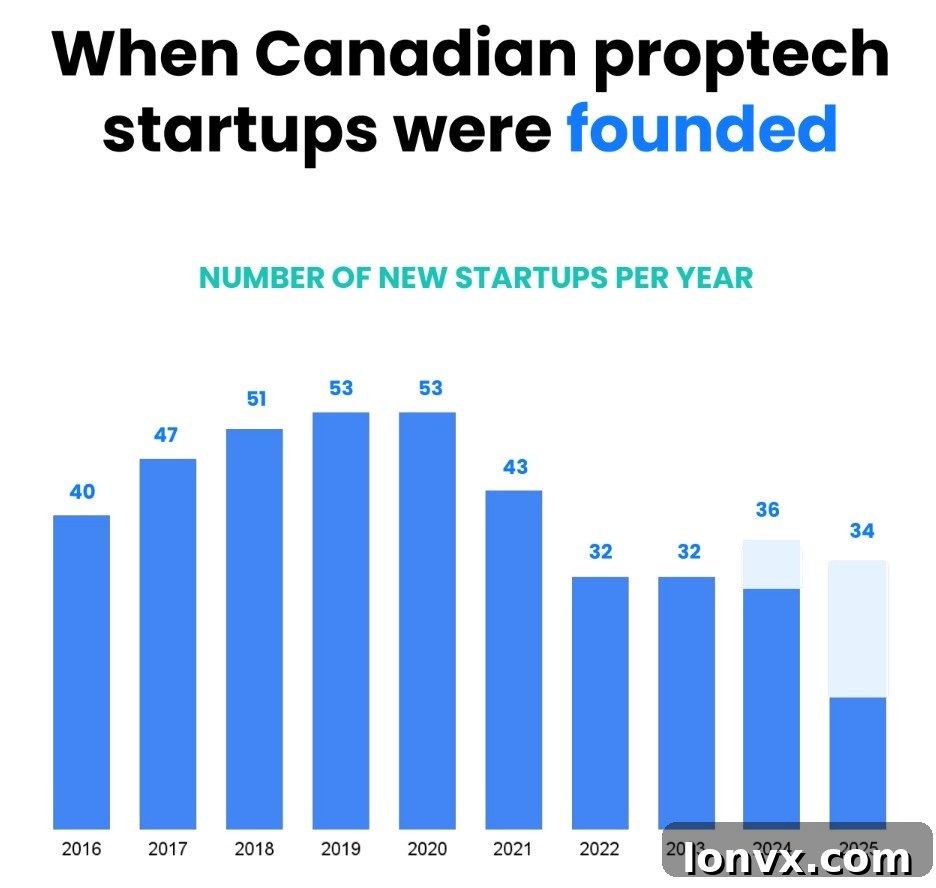
Now in its fifth annual iteration, the Proptech Collective report highlights a crucial “maturity moment” for the sector. This phase is characterized by a slight reduction in the number of brand-new startups entering the market, but conversely, a strengthening of existing companies. The industry is adopting a more disciplined and strategic approach to growth, prioritizing sustainable business models and focusing intensely on ensuring customer adoption and robust product utilization. This strategic pivot reflects a broader industry trend towards tangible value creation over rapid, unbridled expansion.
Firms Strive for Sustainability Amidst Tighter Capital Markets
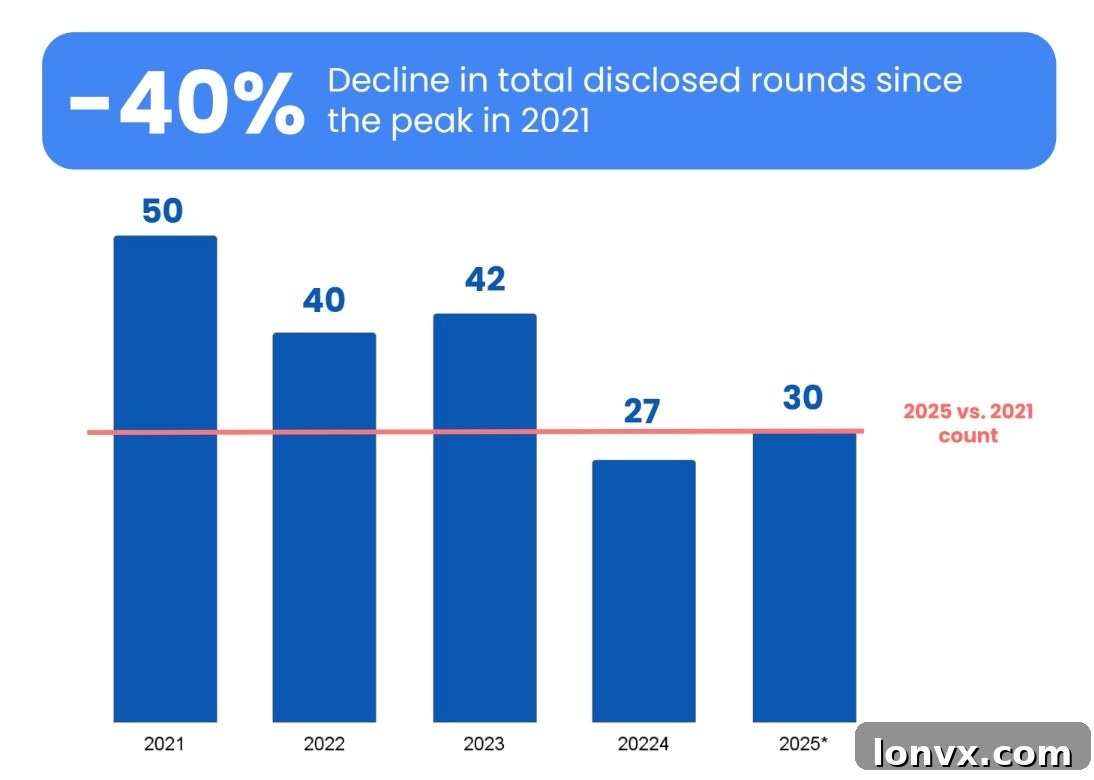
The economic landscape of 2025 presented both challenges and opportunities for the Canadian proptech industry, particularly concerning capital acquisition. Stephanie Wood, a founding member of Proptech Collective and Vice President at the venture capital fund Alate Partners, provided keen insights into these evolving trends. She noted that at its peak in 2021 and 2022, Canada’s proptech industry experienced approximately 50 founding investment rounds annually. However, this figure saw a discernible decrease in 2025, with around 30 such rounds.
While the fundraising environment has undoubtedly become more stringent, this tighter capital market has inadvertently fostered a more resilient and self-sufficient industry. Companies are now compelled to build stronger, more sustainable foundations that are less dependent on constant injections of venture capital. Wood emphasized that rather than solely pursuing external funding, many companies are strategically redirecting their efforts towards gaining significant traction in their respective markets and stabilizing their operational structures. This pivot towards operational excellence and market penetration is a hallmark of the sector’s newfound maturity.
Wood elaborated on this shift, explaining to Real Estate Magazine, “Companies have been forced to meticulously examine their business models and ensure their sustainability even without continuous funding. While we continue to observe considerable investment flowing into the industry, there’s been a clear maturation towards ensuring growth isn’t pursued at all costs, and that the company’s fundamental viability is paramount.” This disciplined approach signifies a healthy evolution, moving away from a ‘growth-at-any-cost’ mentality to one focused on long-term stability and inherent value.
Source: Proptech Collective
AI Goes Mainstream: Revolutionizing Real Estate Workflows
The strategic “reset” and focus on sustainable growth within Canadian proptech are demonstrably yielding positive results, particularly in the widespread adoption of technology. Increasingly, advanced technological solutions are being seamlessly integrated into the daily operations of major real estate, development, and construction firms, moving beyond initial pilot phases into full-scale deployment. This transition signifies a fundamental shift in how the industry leverages innovation.

Stephanie Wood (contributed)
Artificial Intelligence (AI) stands at the forefront of this transformative shift. According to Wood, AI-powered tools are now being embedded directly into everyday workflows at an accelerated pace across the real estate value chain. She highlighted that a significant proportion of the funding rounds observed in 2025 specifically targeted companies that were actively integrating AI elements into their core offerings. This trend underscores AI’s growing importance as a competitive differentiator and an essential component for operational efficiency.
While often perceived as complex, AI offers remarkably accessible applications for real estate professionals. Wood pointed out that one of the most immediate and impactful uses for real estate agents is the automated generation of compelling listing descriptions. However, this is merely the tip of the iceberg when considering the vast potential of AI for real estate professionals. Beyond basic content creation, AI is poised to revolutionize numerous other facets of the industry.
“Lead management is a critical area, spanning both commercial and residential real estate, where we are witnessing a substantial influx of AI solutions,” Wood stated. These AI tools can analyze vast datasets to identify high-quality leads, predict client behavior, and automate follow-up processes, thereby significantly enhancing conversion rates and client engagement. Furthermore, AI’s capabilities extend to personalized client communications and predictive analytics that can forecast market trends, empowering agents with data-driven insights.
Marketing represents another sector with immense potential for AI-driven streamlining and efficiency gains. The ability of AI to analyze market data, optimize advertising campaigns, and even create dynamic marketing content is game-changing. This week, Toronto-based company Mave exemplified this trend by successfully closing a $5-million funding round. Mave has developed an innovative AI assistant specifically designed to help agents and brokerages save countless hours each week on routine marketing tasks, allowing them to focus on high-value client interactions. Notably, Stephanie Wood’s own firm, Alate Partners, is among the key backers of Mave, further validating the strategic importance of AI in real estate marketing.
Wood firmly believes that AI is rapidly transitioning from being a mere tool to becoming an indispensable “team member” within real estate operations. “AI becoming a team member is truly happening, and companies that embrace it and implement it into their processes wherever feasible are going to ride a massive trend,” she predicted. This integration is not just about automation; it’s about augmenting human capabilities, allowing professionals to accomplish more with greater accuracy and speed.
Companies are under increasing pressure to find innovative ways to expedite work processes without compromising quality. Wood emphasized that AI tools offer an unparalleled solution, as they “exponentially increase output and impact.” This isn’t just about doing tasks faster; it’s about achieving a level of efficiency and strategic insight that was previously unattainable. The profound impact of AI signals a fundamental paradigm shift in how work is conducted across the industry. “I think the way that we work is fundamentally going to change over the next year or two,” she concluded, underscoring the rapid and far-reaching implications of AI integration.
Unlocking Opportunity: Canada’s Strategic Advantages in Proptech
The Proptech Collective report meticulously outlines several compelling advantages that position Canada’s proptech ecosystem for sustained growth and global prominence. One of the most significant strengths highlighted is the robust presence of large, sophisticated investors within the country. The report reveals that an impressive 11 of the top 100 global investors with the largest allocation to real estate assets are headquartered in Canada. This concentration of institutional capital signifies a deep understanding of, and commitment to, the real estate sector, providing a fertile ground for proptech innovation and investment.
Furthermore, the foundational importance of real estate and construction to the Canadian economy cannot be overstated. In 2025, these two sectors collectively contributed over 20 percent to the national Gross Domestic Product (GDP). This substantial contribution not only underscores the economic significance of the traditional real estate industry but also illuminates the vast untapped potential and inherent opportunity for proptech solutions to drive further efficiencies, innovation, and value creation across this vital segment of the economy. The sheer scale of the market provides ample scope for proptech companies to develop and scale their offerings.
Beyond private investment and market size, federal spending initiatives are also playing a crucial role in bolstering the sector’s growth. The Canadian government has demonstrated a clear commitment to fostering innovation, particularly in strategic areas. This includes a substantial commitment of $742 million dedicated to advancing Artificial Intelligence capabilities across various industries, including proptech. Concurrently, the government is investing $13 million into new housing initiatives through programs like “Build Canada Homes.” These targeted investments create a supportive environment for proptech companies, enabling them to innovate with AI and develop solutions that address critical national priorities, such as housing affordability and sustainable development.
A Glimpse into the Canadian Proptech Ecosystem: Key Hubs and Market Dynamics
A detailed analysis of the 590 active proptech companies tracked in the Proptech Collective report reveals a distinct geographic clustering within Canada. An overwhelming 90 percent of these innovative firms are strategically located across six primary hubs, which serve as epicenters for technological advancement and real estate innovation: Toronto, Vancouver, Montreal, Calgary, Kitchener-Waterloo, and Edmonton. These cities offer a unique blend of talent, capital, and established real estate markets, making them ideal incubators for proptech solutions.
The Greater Toronto Area (GTA) stands out as a dominant force within this landscape, hosting approximately 50 percent of all proptech startups. This concentration highlights Toronto’s burgeoning status as a global tech hub and its profound connection to Canada’s largest real estate market.
A closer look at the provincial distribution underscores regional strengths:
- Ontario – 56 percent: Bolstered by Toronto and Kitchener-Waterloo, Ontario leads the nation in proptech innovation.
- British Columbia – 18 percent: Vancouver’s dynamic real estate market and tech scene contribute significantly.
- Quebec – 12 percent: Montreal is emerging as a critical hub, particularly with its strong AI ecosystem.
- Alberta – 10 percent: Calgary and Edmonton anchor proptech growth in the prairies, often focused on commercial real estate and energy sectors.
- Prairies (excluding Alberta) – One percent: While smaller, these regions show nascent growth.
- Atlantic Region – Two percent: The Atlantic provinces are developing their proptech niches, often leveraging their unique economic strengths.
Source: Proptech Collective
Further analysis of these companies reveals their maturity and market focus. A quarter (25 percent) of the tracked companies were founded within the last five years, indicating a steady influx of new ideas and entrepreneurial drive. Approximately 65 percent of these firms are currently in the pre-seed or seed funding stages, suggesting a robust pipeline of early-stage innovation poised for future growth and investment.
The report also segmentsthe market by the primary focus of these proptech solutions. Of all the companies tracked:
- 21 percent specifically cater to the construction market, bringing technological advancements to project management, building information modeling (BIM), and on-site efficiency.
- 38 percent serve the commercial real estate market, focusing on solutions for property management, leasing, space optimization, and investment analytics.
- 41 percent target the residential real estate sector, providing tools for agents, property managers, homebuyers, and sellers, encompassing areas from listing platforms to smart home technologies.
In terms of financial performance, the median amount raised by Canadian proptech companies in 2025 was a solid $3 million. This figure reflects a healthy investment landscape that, while more disciplined, continues to support promising ventures across the entire real estate technology spectrum.
Conclusion: The Future is Bright for Canadian Proptech
Canada’s proptech sector is clearly undergoing a profound transformation, moving past its nascent stages to embrace a period of strategic maturity and innovation. The 2025 report from Proptech Collective paints a picture of an industry that is not only growing in numbers but also strengthening in fundamental business practices, prioritizing sustainability and customer value over sheer speed of expansion. The significant capital raised, even in a tighter investment climate, underscores investor confidence in the sector’s long-term potential.
The mainstreaming of Artificial Intelligence is a defining characteristic of this maturity. AI is no longer a futuristic concept but a practical, embedded reality, revolutionizing daily workflows from lead management and marketing to property analysis and construction efficiency. Companies that proactively integrate AI into their operations are poised for exponential increases in output and impact, fundamentally reshaping how real estate professionals operate.
With its strong foundation of institutional investors, substantial contribution of real estate and construction to the national GDP, and supportive governmental initiatives for AI and housing, Canada possesses a unique set of advantages. These factors, combined with vibrant innovation hubs across key provinces, create a fertile ground for proptech companies to thrive. The robust pipeline of early-stage startups and the diverse focus across residential, commercial, and construction markets further solidify Canada’s position as a burgeoning leader in real estate technology.
As the sector continues to evolve, the emphasis on robust business models, genuine market traction, and the transformative power of AI will undoubtedly propel Canadian proptech to new heights. The future promises a more efficient, data-driven, and innovative real estate landscape, with Canadian companies at the forefront of this global evolution.