
Canada’s Top Cities for Generation Z: Prioritizing Life Beyond the Urban Hustle
Generation Z, individuals born between 1997 and 2012, are quickly becoming a dominant force in shaping societal trends, influencing everything from technology to urban development. Unlike previous generations, Gen Z has a distinct set of priorities that are fundamentally reshaping their approach to choosing where to live and build their careers. A groundbreaking study by Point2 has shed light on these evolving preferences, revealing that this demographic isn’t just looking for opportunity; they’re seeking a holistic lifestyle that balances mental well-being, financial stability, and environmental consciousness.
This comprehensive study meticulously evaluated Canada’s 50 largest cities against a unique set of metrics designed to reflect Gen Z’s aspirations. While many might assume that the biggest metropolises would naturally attract the youngest and most ambitious professionals, the findings suggest a compelling counter-narrative. The research indicates that the attributes most cherished by Gen Z are often more attainable, and indeed, more prevalent, in Canada’s smaller, more close-knit, and less frenetic urban centers.
The study’s conclusions were, for many, quite surprising. It found that smaller cities consistently outperformed their larger counterparts in critical areas such as affordable housing, overall cost of living, work-life balance, and perceived mental health. This trend highlights a significant shift in what constitutes an “ideal” city for the newest generation entering the workforce and the housing market. Gone are the days when sheer economic opportunity alone was enough to draw young talent; today, quality of life holds equal, if not greater, sway.
Understanding Gen Z’s Core Demands: A New Urban Blueprint
The Point2 study clearly outlines Generation Z’s non-negotiable priorities. These aren’t mere preferences but fundamental aspects of their desired lifestyle, deeply influencing their decisions about where to establish roots:
- Mental Health and Well-being: Growing up in a fast-paced, digitally saturated world, Gen Z places a premium on mental wellness. They seek environments that foster peace, reduce stress, and offer accessible support systems. This includes access to green spaces, community engagement, and a slower pace of life that allows for personal reflection and reduced anxiety.
- Work-Life Balance: Rejecting the “hustle culture” often glorified by older generations, Gen Z prioritizes flexibility, personal time, and boundaries between professional and private life. They are less willing to sacrifice their personal lives for career advancement, favoring remote work opportunities and cities that support a balanced lifestyle.
- Environmental Consciousness: As the generation most acutely aware of climate change, Gen Z is deeply concerned about sustainability. They look for cities with robust environmental policies, access to nature, green infrastructure, and a general commitment to eco-friendly living.
- Financial Stability: Despite their idealism, Gen Z is also pragmatic about their financial future. Faced with student debt, rising inflation, and an increasingly competitive job market, affordable housing and a reasonable cost of living are paramount. The dream of homeownership, while challenging, remains a significant goal, and cities that make this more attainable hold a strong appeal.
These priorities collectively paint a picture of a generation seeking not just a place to work, but a community where they can thrive holistically. They want cities that support their aspirations for a meaningful, balanced, and financially secure future, rather than just offering high-paying jobs in expensive, high-stress environments.
The Unexpected Triumph of Smaller Canadian Cities
The Point2 report vividly demonstrates that Canada’s major urban hubs, with the notable exception of Montréal, largely fell short in meeting Gen Z’s unique demands. None of Canada’s traditionally bustling large cities managed to secure a spot in the top 10 highest-scoring cities, despite their perceived advantages in job markets and cultural offerings. Instead, a striking eight of the top ten cities that can best help young adults thrive boast populations under 300,000, with several even falling below the 200,000 mark.
This trend underscores a fundamental divergence between traditional measures of urban success and Gen Z’s definition of an ideal living environment. While large cities offer diverse employment opportunities and vibrant cultural scenes, they often come with prohibitive costs of living, intense competition, and a fast-paced environment that can be detrimental to mental well-being and work-life balance. Smaller cities, conversely, present an attractive alternative, offering:
- Enhanced Affordability: The most significant draw for Gen Z, smaller cities typically offer significantly more affordable housing options, both for rent and purchase, making financial stability and homeownership a more realistic prospect.
- Lower Cost of Living: Beyond housing, everyday expenses, from groceries to transportation, are generally lower in smaller communities, allowing Gen Z to stretch their income further and reduce financial stress.
- Stronger Community Ties and Slower Pace: These cities often foster a tighter-knit community feel, where residents can more easily connect with neighbors and engage in local activities. The slower pace of life reduces daily stress, commutes are shorter, and there’s often a greater sense of belonging.
- Access to Nature: Many smaller Canadian cities are nestled amidst natural beauty, offering easy access to parks, trails, lakes, and outdoor recreational activities, which significantly contributes to mental and physical well-being.
- Improved Mental Health Indicators: A combination of lower stress, stronger community support, and access to nature often translates into better perceived mental health outcomes for residents in these environments.
This shift represents a powerful message to urban planners and policymakers: the future of Canada’s cities depends on their ability to adapt to the evolving needs and values of its youngest professionals.
St. John’s, Newfoundland: Canada’s Top City for Gen Z
Emerging as the undisputed leader in the Point2 study, St. John’s, Newfoundland, claimed the number one spot for Generation Z lifestyle. This charming and historic capital city distinguished itself by scoring the highest points across a multitude of crucial categories, proving its exceptional alignment with Gen Z’s priorities. Its strong performance wasn’t limited to one or two metrics; St. John’s excelled comprehensively, demonstrating a balanced appeal that resonated deeply with the study’s framework.
The city’s outstanding ranking can be attributed to several key factors:
- Favorable Income and Education Opportunities: St. John’s offers a growing job market, particularly in sectors like technology, energy, and health, coupled with access to quality post-secondary education, setting a solid foundation for young professionals.
- Exceptional Cost of Living: Compared to Canada’s larger metropolitan areas, St. John’s offers a remarkably affordable cost of living, with housing prices that are significantly more accessible, easing the financial burden on young adults.
- Expanding Remote Work Opportunities: With its high-speed internet infrastructure and a forward-thinking approach, St. John’s is increasingly embracing remote work, offering the flexibility that Gen Z craves for their ideal work-life balance.
- Robust Mental Health Indicators: The city’s supportive community, slower pace, and access to stunning natural landscapes contribute to a positive environment for mental well-being, a top priority for this generation. The picturesque coastal scenery and outdoor activities provide ample opportunities for stress reduction and recreation.
St. John’s blends historic charm with modern amenities, offering a vibrant cultural scene, a friendly atmosphere, and a strong sense of community. Its unique appeal, combined with its strong performance in critical lifestyle metrics, makes it a true beacon for Generation Z professionals seeking a high quality of life without the prohibitive costs of bigger cities.
Quebec: A Provincial Powerhouse for Young Professionals
Beyond St. John’s, the province of Quebec emerged as another significant success story in the Point2 study, showcasing its inherent strengths in attracting and retaining young professionals. With an impressive eight cities ranking within the study’s top 10 best cities for Gen Z, Quebec solidified its reputation as a leading destination for this demographic. This strong provincial performance underscores a consistent set of advantages that resonate deeply with the priorities of young adults.
Quebec’s cities consistently earned high scores in several crucial areas, reflecting a provincial environment conducive to Gen Z’s desired lifestyle:
- High Share of Young Homeowners: Quebec’s more accessible real estate market allows a higher percentage of young adults to achieve the significant milestone of homeownership, a key indicator of financial stability and long-term planning for Gen Z.
- Affordable Cost of Living: Mirroring the trend seen in St. John’s, Quebec cities generally boast a lower cost of living compared to other Canadian provinces, making daily expenses and overall financial management much more manageable for young professionals.
- Competitive Median Income: While offering affordability, many Quebec cities also provide competitive median incomes, ensuring that residents can maintain a comfortable lifestyle without feeling stretched thin.
- Excellent Access to Health Services: Quebec’s robust public healthcare system provides accessible and comprehensive health services, addressing Gen Z’s paramount concern for mental and physical well-being.
The cultural richness, unique European flair, and strong social safety nets in Quebec further enhance its appeal. Cities like Quebec City, Sherbrooke, Trois-Rivières, and Saguenay (among others in the province) offer a blend of historical charm, educational opportunities, and a relaxed lifestyle that aligns perfectly with Gen Z’s values. These cities prove that a thriving economy and vibrant culture can indeed coexist with affordability and a high quality of life.
It’s also worth noting that Regina, Saskatchewan, secured the #10 spot on the list, demonstrating that the appeal of smaller, balanced cities is a national trend, not confined to one region.
A Close Race: The Future of Canadian Urban Living
While none of the 50 cities evaluated in the Point2 study achieved a perfect score, the competition for the title of “best city for Gen Z” was remarkably tight. This close running highlights a national landscape where many cities are striving to meet the evolving demands of this crucial generation of future homeowners and community builders.
The study’s findings are not merely a ranking of cities; they represent a significant shift in urban demographics and priorities. As Generation Z continues to mature and exert its influence, cities across Canada will need to re-evaluate their strategies for attraction and retention. This means a greater focus on sustainable development, mental health infrastructure, flexible work environments, and, critically, maintaining affordability in housing and living costs.
The image below visually represents some of the key findings and the overall landscape of cities evaluated:
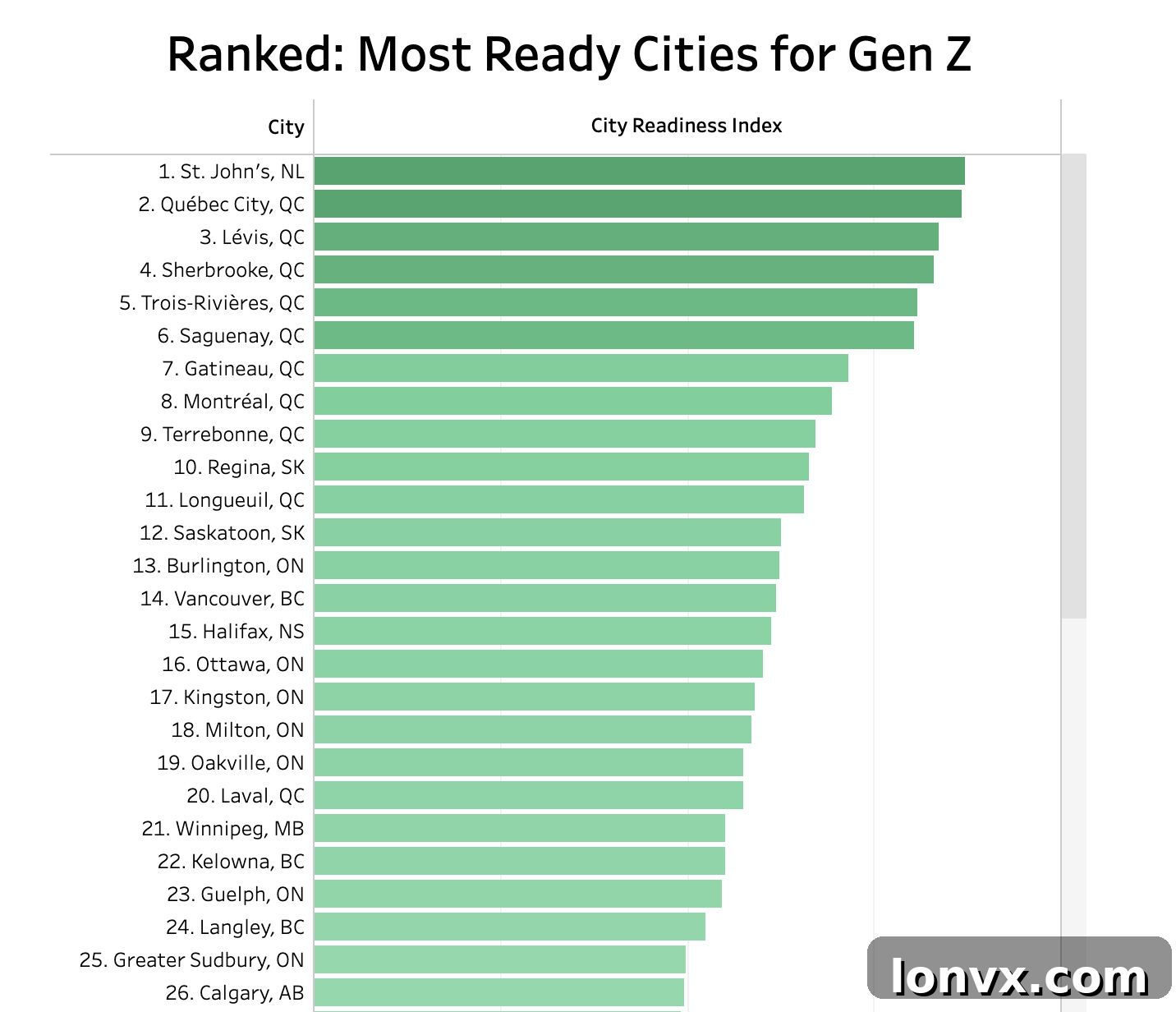
Source: Point2
For those interested in a deeper dive into the methodology and specific rankings, the full Point2 report provides extensive details. Understanding these trends is crucial for urban planners, real estate developers, and individuals alike, as they collectively shape the future of Canadian communities.
Read the comprehensive Point2 report to explore the full data and insights here.