Unlocking Value: What a Million Dollars Buys in Canada’s Diverse Housing Markets
Canada’s housing markets have been a focal point of discussion over the past two years, marked by unprecedented demand and significant price appreciation. While there has been some recent moderation in home prices, a persistent shortage of inventory continues to provide a floor for property values. Across many of the country’s major metropolitan areas, a price tag of $1 million for a home is no longer considered unusual; it’s often a common benchmark for various property types.
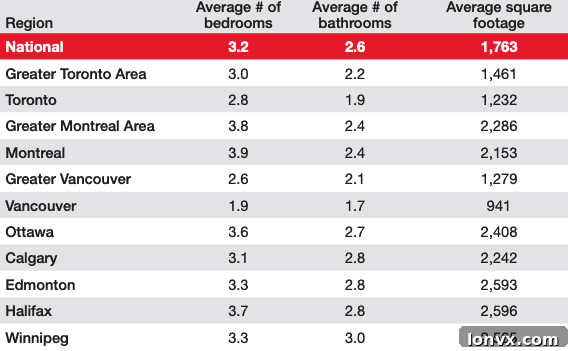
To provide clarity on what this significant budget can afford, Royal LePage conducted an insightful analysis of Canada’s major housing markets. Their research, based on data from December 2022, focused on properties valued between $950,000 and $1,050,000. Nationally, the average home within this $1 million price band featured 3.2 bedrooms, 2.6 bathrooms, and approximately 1,763 square feet of living space.
Phil Soper, president and CEO of Royal LePage, succinctly captured the evolving perception of this price point. “The mythical million-dollar house may not be the mansion it once was, yet a million-dollar budget will still buy a luxurious home in many parts of Canada. For those who live in our most expensive cities, low seven figures will get you a lovely, if more modest, home.” This statement highlights the stark differences in purchasing power across the vast Canadian landscape.
The Evolving Landscape of Canadian Homeownership
The post-pandemic era has fundamentally reshaped how and where Canadians choose to live. With the rise of remote work options, many individuals and families now possess the flexibility to select their preferred city or town without being solely tethered to local employment opportunities. This newfound freedom has diversified buyer motivations and influenced migration patterns across the country, further impacting local housing dynamics.
For some homebuyers, prioritizing expansive square footage, generous outdoor space, and luxurious amenities is paramount. In these cases, a $1 million budget typically stretches much further in cities outside the ultra-competitive markets of Toronto and Vancouver. Conversely, a distinct segment of buyers is willing to pay a premium to reside in the vibrant hearts of major urban centers. These individuals value immediate access to top-tier restaurants, diverse shopping, and entertainment options, often within walking distance, even if it means settling for a smaller living space.
Interestingly, the Greater Montreal Area stands out among Canada’s three largest metropolitan centers. Its properties within the $950,000 to $1,050,000 range boast an average home size that surpasses the national average for this price point, offering a unique value proposition for buyers.
Royal LePage Million-Dollar Properties report
Regional Spotlights: A Million-Dollar Perspective Across Canada
The national averages paint a broad picture, but the true story of Canada’s real estate market unfolds at the regional level. What $1 million buys can vary dramatically depending on the specific city and its unique market dynamics, local amenities, and prevailing demand.
Greater Toronto Area (GTA)
In the Greater Toronto Area, a $1 million budget secures a relatively modest property compared to the national average. Homes in the $950,000 to $1,050,000 range in December 2022 averaged 3.0 bedrooms, 2.2 bathrooms, and 1,461 square feet of living space. This is a notable 302 square feet less than the national average for the same price point.
Delving deeper into the City of Toronto itself, the average property within this price range offered even less: 2.8 bedrooms, 1.9 bathrooms, and just 1,232 square feet. This represents a significant reduction of 229 square feet compared to the broader GTA and a substantial 531 square feet less than the national average.
Shawn Zigelstein, broker and team leader with Royal LePage Your Community, notes the transformation of this benchmark. “Today, the $1-million benchmark is considered more of an entry-level price point in many neighbourhoods in the city.” He further emphasizes, “Sales over the seven-figure mark dominate the detached market in both the city centre and the suburbs. The increased demand for larger properties as a result of the pandemic has put pressure on supply in this segment.” Buyers looking for detached homes, especially those seeking more space, are consistently pushing prices past this threshold, making $1 million an entry rather than a luxury in Toronto.
Greater Montreal Area
The Greater Montreal Area offers a compelling contrast to Toronto and Vancouver in terms of value. For homes priced between $950,000 and $1,050,000 in December 2022, the average property boasted 3.8 bedrooms, 2.4 bathrooms, and an expansive 2,286 square feet of living space. This is a remarkable 523 square feet more than the national average, indicating superior value for money.
Within the City of Montreal, homes at this price point were slightly smaller than the greater region but still offered significant space: 3.9 bedrooms, 2.4 bathrooms, and 2,153 square feet, which is 390 square feet larger than the national average.
Roxanne Jodoin, a residential real estate broker with Royal LePage Privilege, elaborates on the possibilities for buyers in Montreal. With a $1 million budget, prospective homeowners can typically secure a single-family detached home featuring a minimum of three bedrooms, two bathrooms, a powder room, and often desirable modern amenities such as a pool or a spacious garden, particularly in the outer suburbs of Montreal. This market provides a unique blend of urban proximity and suburban comfort, making it attractive for families and those seeking more space.
Greater Vancouver
Greater Vancouver, renowned for its stunning natural beauty and high cost of living, presents a distinct challenge for $1 million buyers. The average home in the region, priced between $950,000 and $1,050,000 in December 2022, came with 2.6 bedrooms, 2.1 bathrooms, and a compact 1,279 square feet of living space. This is a substantial 484 square feet less than the national average, underscoring the premium placed on real estate in this vibrant market.
The situation becomes even more pronounced within the City of Vancouver. A $1 million budget here typically yields properties with just 1.9 bedrooms, 1.7 bathrooms, and a mere 941 square feet of living space. This is 338 square feet less than the average property in the greater region and a staggering 822 square feet less than the national average – representing just over half the size of an average Canadian property at this price point.
Adil Dinani, a sales representative with Royal LePage West Real Estate Services, articulates the regional variation. “…$1 million is perceived differently across the Vancouver region. In some cases, it is not uncommon to spend this amount on a downtown condo or a newer townhome in an established suburban neighbourhood, depending on where you are looking.” Dinani adds that for a $1 million budget, buyers might acquire a two-bedroom unit in a sought-after downtown Vancouver building. Moving to communities outside the city’s core, the same price point could attain a slightly larger property, often a townhome, offering excellent connectivity to transit and other essential amenities.
Ottawa
Canada’s capital, Ottawa, presents an appealing prospect for those with a $1 million budget, offering significantly more space than the national average. In December 2022, the average home in Ottawa valued between $950,000 and $1,050,000 featured 3.6 bedrooms, 2.7 bathrooms, and a generous 2,408 square feet of living space. This represents a substantial 645 square feet more than the national average, highlighting Ottawa’s relative affordability and value.
Sarah Wright, a sales representative with Royal LePage Team Realty, explains the flexibility a $1 million budget provides. “A $1-million budget will comfortably get you into Ottawa’s single-family detached home segment, with some variations depending on the micro-market you’re searching in.” She clarifies that “$1,000,000 will typically get you a sizable home with large bedrooms on a substantial lot in Ottawa’s outskirts, or an older or heritage-style home with less square footage in the urban neighbourhoods, which remain within walking distance of everyday amenities.” This flexibility allows buyers to choose between modern suburban living with ample space or charming, well-located urban properties.
Calgary
Calgary’s housing market has seen dynamic shifts, offering considerable value for a $1 million investment. In December 2022, the average home in Calgary within the $950,000 to $1,050,000 range included 3.1 bedrooms, 2.8 bathrooms, and 2,242 square feet of living space – an impressive 479 square feet more than the national average.
Doug Cabral, a sales representative with Royal LePage Benchmark, remarks on the transformation of the market. “We’ve reached a new height in the market. A few years ago, a $1-million home in Calgary would take approximately four months to sell, a timeline that has since been halved by consistent buyer demand and comparatively low home supply.” He adds, “A once-sluggish high-end market, the $1-million price point saw a burst of activity in 2021 and early 2022, as higher household savings, low-interest rates, and the migration of homebuyers from more expensive cities across the country pushed prices higher. Although $1 million is not considered the luxury price point it used to be, this size of budget still goes a lot further in Calgary than in other major cities.”
Cabral further notes a significant trend: the influx of young buyers from Ontario and British Columbia flocking to Calgary. These newcomers are drawn by the prospect of larger properties at greater affordability, shorter commutes, lower living costs, and the unparalleled proximity to Kananaskis Country and the majestic Rocky Mountains, all contributing to robust demand at this price point.
Edmonton
Edmonton stands out for offering exceptional luxury and space for a $1 million budget. Properties in Edmonton valued between $950,000 and $1,050,000 in December 2022 averaged 3.3 bedrooms, 2.8 bathrooms, and a remarkable 2,593 square feet of living space. This is a substantial 830 square feet more than the national average, positioning these homes firmly in the luxury segment.
Mani Bagga, a sales representative with Royal LePage Noralta Real Estate, affirms this perception. “A $1-million property in Edmonton is undoubtedly considered a luxury home. Buyers who have a budget of this size often prioritize location and will pay a premium to live in sought-after neighbourhoods with desirable amenities.” He observes that “Edmonton’s real estate market continues to see a lot of demand from newcomers to Canada, as well as buyers from other provinces who are looking for more space and greater affordability.” This strong demand, coupled with the city’s capacity to deliver expansive properties at this price, makes Edmonton a highly attractive market.
Halifax
Halifax’s real estate market has also experienced significant growth, with a $1 million budget unlocking true luxury. The average home in Halifax in the $950,000 to $1,050,000 range in December 2022 boasted 3.7 bedrooms, 2.8 bathrooms, and an impressive 2,596 square feet of living space. This makes it one of the markets offering the most square footage, with 833 square feet more than the national average.
Tanya Colbo, a sales representative with Royal LePage Atlantic, explains the high expectations of buyers in this segment. “A property worth $1 million in Halifax falls in the luxury segment of the market, so buyers shopping within this price range have big expectations. Homes in this city worth $1 million tend to offer all of the bells and whistles, such as gourmet kitchens, opulent floor finishes, lots of living space, and access to desirable school districts.” Colbo highlights a key trend: “Over the last two years, we’ve seen a lot more activity in this segment of the market, with an influx of buyers from out-of-province. Many who sold their homes in higher-priced cities and moved to the Maritimes have been able to significantly upgrade their space for less.” This inter-provincial migration is a major driver of the luxury market in Halifax.
Winnipeg
Winnipeg offers substantial value for a $1 million budget, positioning it as one of Canada’s more affordable major cities for high-end properties. The average home in Winnipeg, valued between $950,000 and $1,050,000 in December 2022, provided 3.3 bedrooms, 3.0 bathrooms, and a generous 2,565 square feet of living space – an impressive 802 square feet more than the national average.
Chris Pennycook, a sales representative with Royal LePage Dynamic Real Estate, reflects on the historical context. “Historically speaking, Winnipeg’s $1-million listings represent a small portion of the overall market.” However, he observes a recent shift: “With the rise in construction costs, consistent buyer demand and low inventory levels, we’ve seen the number of home sales in the seven-figure segment spike. However, even as the number of $1-million sales in Winnipeg rises, the city still remains one of the most affordable in the country. In today’s market, large and newly-renovated homes with good-quality finishes are listed in this price range.” Pennycook further clarifies that most $1 million sales in Winnipeg are typically for detached homes, although some ultra-luxury condominiums in popular neighbourhoods can also reach this price point, offering a blend of spaciousness and urban convenience.
Conclusion: Navigating Canada’s Million-Dollar Market
Royal LePage’s comprehensive report provides an invaluable snapshot of what a $1 million budget truly means in Canada’s diverse housing markets. While a seven-figure sum might secure an entry-level property in the nation’s most expensive urban cores like Toronto and Vancouver, it opens doors to significantly larger, more luxurious homes in many other vibrant cities across the country, including Montreal, Ottawa, Calgary, Edmonton, Halifax, and Winnipeg.
The findings underscore the significant impact of factors such as remote work, evolving lifestyle priorities, and inter-provincial migration on Canada’s real estate landscape. Buyers today are empowered with choices, weighing the allure of urban density and amenities against the desire for more space, affordability, and access to nature. As the market continues to evolve, understanding these regional nuances is crucial for both buyers and sellers looking to make informed decisions in Canada’s dynamic housing sector.