Nestled amidst the tranquil blue waters of Lake Titicaca, the Uros Islands of Peru offer a glimpse into an extraordinary way of life. Far removed from conventional housing concerns, the indigenous inhabitants of these remarkable floating islands engage in a unique form of home maintenance: rebuilding their entire dwellings and even their foundations every few years. This fascinating practice is necessitated by their building material of choice – the humble yet incredibly versatile totora reed, a plant native to the lake’s shallows.
For centuries, the Uros people, a vibrant blend of Quechua and Aymara cultures, have called these artificial islands home. Their ancestors ingeniously created these floating havens as a strategic refuge, seeking peace and security from the historical aggressions of the powerful Inca and Colla empires. This isolation fostered a self-sufficient lifestyle, centered around the lake’s bounty through fishing, hunting, and the resourceful use of totora reeds. Today, this ancient heritage thrives, with approximately 800 individuals inhabiting roughly 50 distinctive artificial islands that gracefully extend from the shores near the bustling city of Puno.
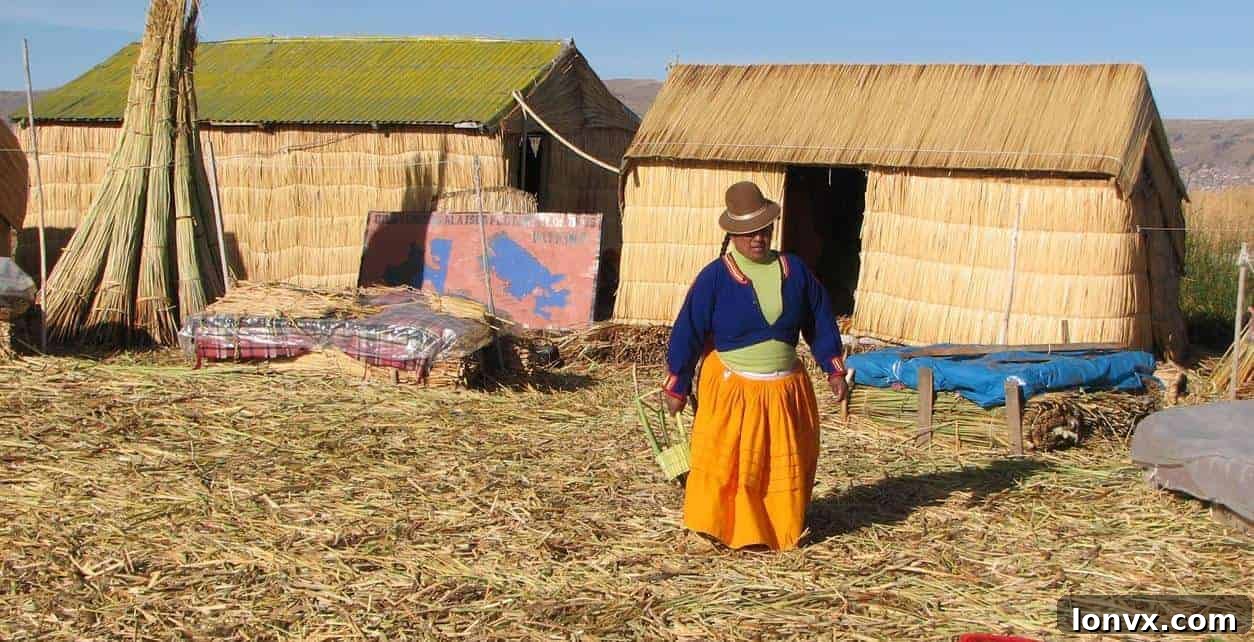
The iconic reed houses and boats of the Uros Islands, crafted from totora reeds which grow in prolific abundance in the serene shallows of Lake Titicaca.
The totora reed is, quite literally, the foundation of life on the Uros Islands. Without this tall, grass-like aquatic plant, the very existence of the Uros people in their traditional setting would be impossible. The reeds, which flourish across vast expanses of Lake Titicaca’s shallow areas, are meticulously harvested by hand. Once gathered, they are carefully bundled and left to dry under the Andean sun, transforming them into the robust building blocks for their homes and islands. To construct an island, countless layers of these reeds are densely packed and interwoven, often reaching a depth of more than a meter. This intricate layering creates a buoyant, stable platform, yet the organic nature of the reeds means they are perpetually subject to decomposition. Consequently, the islands require diligent, ongoing maintenance, with fresh layers of dried reed matting added frequently to ensure stability, buoyancy, and structural integrity. This continuous cycle of harvesting, drying, and layering represents an enduring testament to their deep connection with their environment and a profound understanding of sustainable living.
The ingenuity of the Uros extends beyond just the island construction. An average Uros island, typically measuring around five square meters, is a marvel of traditional engineering. Building such a platform is a labor-intensive process, usually taking about two months to complete, after which it can serve its inhabitants for approximately a dozen years before significant reconstruction is needed. Life on these unique floating communities seamlessly blends tradition with practical modern adaptations. Many islands have embraced solar power to provide electricity, illustrating a thoughtful integration of renewable energy into their sustainable lifestyle. Eco-friendly toilets are also commonplace, negating the need for complex plumbing systems and preserving the pristine waters of the lake. Far from being merely isolated dwellings, some of the larger Uros islands function as mini-villages, boasting essential community facilities such as a church for spiritual gatherings, a school for the younger generations, a post office to connect with the outside world, and even small shops catering to daily needs and the growing tourism industry. These facilities underscore the vibrant community spirit and self-sufficiency that defines Uros island life.
A captivating view of traditional reed houses and bundles of totora reeds drying in the sun, observed during an approach to one of the picturesque floating Uros Islands in Peru.
The totora reed’s utility permeates every aspect of Uros life. Beyond creating their homes and islands, the reeds are transformed into a myriad of essential items. They are expertly woven into comfortable furnishings, including beds and sleeping mats, providing a soft, natural resting place. Perhaps most iconic are the beautiful, sea-worthy gondolas, known as “balsas,” which are meticulously crafted from bundled reeds. These traditional vessels are vital for daily travel between islands, for fishing, and for transporting materials across Lake Titicaca. The reeds also serve a crucial role in providing warmth; dried bundles are burned as fuel for cooking and heating, particularly during the chilly Andean nights. Furthermore, the resourcefulness of the Uros extends to their diet, as the tender green roots of the totora reed are harvested and enjoyed as a nutritious snack, offering a subtle, refreshing taste. This comprehensive reliance on the totora reed exemplifies a profound cultural connection and an unparalleled ability to thrive using locally available resources.
While the Uros people maintained a largely isolated existence for centuries, their first significant contact with the modern world occurred in the mid-1960s. Since then, tourism has gradually become a vital economic pillar for many island inhabitants, offering a sustainable means of income. Today, numerous tour boats regularly ferry visitors from the mainland city of Puno to the floating islands. These excursions typically last an hour or so, providing ample opportunity for guests to capture stunning photographs, immerse themselves in this truly unusual way of life, and engage with the friendly Uros communities. Visitors are often captivated by demonstrations of reed construction and traditional crafts, finding opportunities to purchase exquisite, colourful handmade textiles and intricately crafted reed souvenirs, which serve as tangible reminders of their unforgettable experience. This interaction not only provides economic support but also helps to preserve and share the rich cultural heritage of the Uros people with a global audience.
Experiencing the Uros Islands first-hand is an unforgettable sensory adventure. Stepping onto the reed islands is a sensation unlike any other – soft, yielding, and at times wonderfully squishy, akin to walking on a colossal, resilient sponge. This unique tactile experience is a constant reminder of the living, breathing foundation beneath one’s feet. While life on these floating islands presents its own set of challenges, particularly during the intense storms that can sweep across Lake Titicaca, the Uros people have adapted with remarkable resilience. Living on an island of reeds also bestows extraordinary advantages. Should one ever desire to escape the immediate proximity of neighbors, or yearn for a place of absolute seclusion and tranquility, the Uros possess the ultimate freedom: the ability to simply untether their island, select a new, peaceful spot on the vast lake, and re-anchor, or even embark on the construction of an entirely new island, embodying a nomadic spirit within a settled community. This unparalleled adaptability underscores the enduring charm and unique appeal of the Uros Islands, a testament to human ingenuity and a profound harmony with nature.
The Uros Islands stand as a living monument to human resilience, cultural heritage, and sustainable innovation. Their unique floating architecture, crafted entirely from totora reeds, showcases an ancient wisdom passed down through generations. These indigenous communities not only survive but thrive on Lake Titicaca, constantly adapting to their environment while preserving a way of life that dates back centuries. Visitors to this corner of Peru are not just seeing a tourist attraction; they are witnessing a vibrant culture that continues to build its world, reed by reed, on the shimmering waters of the highest navigable lake in the world. The Uros people offer an inspiring lesson in resourcefulness, community, and the profound connection between humanity and the natural world.