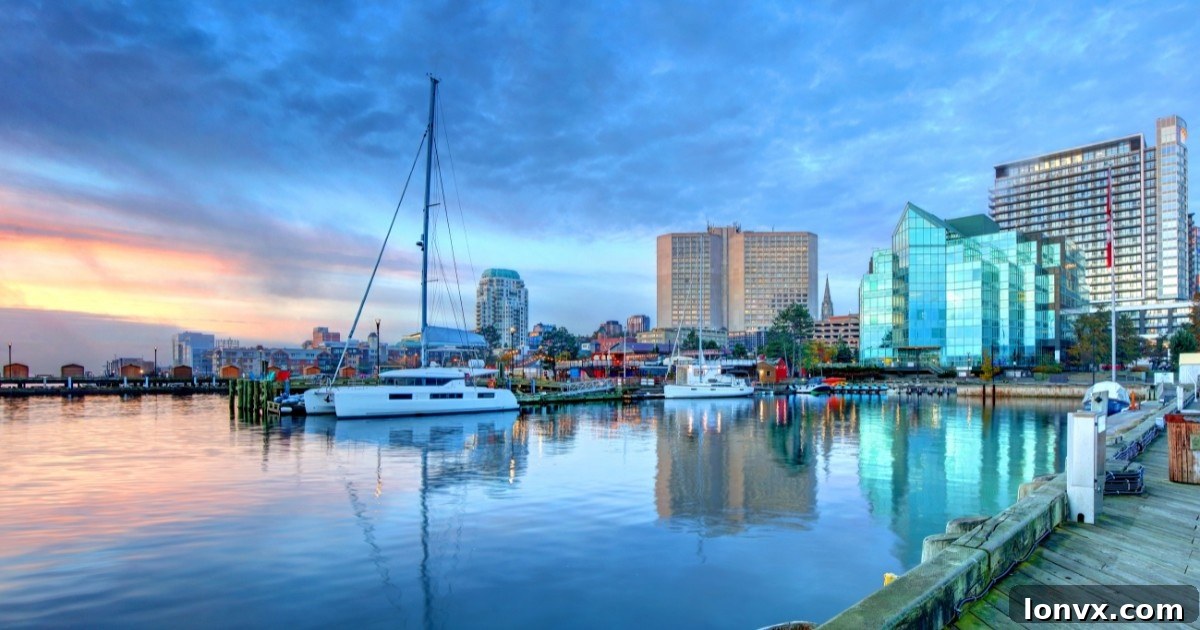
The Halifax housing market is currently navigating a compelling new chapter, evolving beyond the unprecedented surge of recent years. While it has settled from its meteoric rise, discerning indicators suggest that the market is far from cooling off completely. Instead, Halifax continues to demonstrate remarkable resilience and sustained appeal, firmly establishing itself as a coveted destination for homebuyers and investors alike across Canada and beyond.
A vibrant coastal city renowned for its distinctive blend of historic charm, world-class culinary scene, unparalleled access to natural beauty, and comparative affordability when stacked against Canada’s larger metropolitan hubs, Halifax consistently draws robust buyer interest. This enduring allure underpins the market’s stability and future growth prospects.
“Nova Scotia, I believe, was once perceived as a mere stepping stone, a transient stop. Today, however, it has unequivocally transformed into a prime destination,” observes Ryan Hartlen, a distinguished broker and partner at Re/Max Nova, encapsulating the profound shift in the region’s perception.
Hartlen characterizes the prevailing housing climate as a “slight seller’s market.” He acknowledges that the city has recently emerged from an intensely competitive seller-dominated environment. While certain competitive elements persist, the market’s intensity has notably moderated, offering a more balanced, albeit still active, landscape for both buyers and sellers. This evolution signifies a healthier, more sustainable pace of growth.
Even in this recalibrated market, phenomena like bidding wars and sales exceeding the asking price are still prevalent, particularly within the more accessible segments of the market. “Properties priced below the average sale threshold, generally around $600,000, are where you consistently encounter heightened competition, multiple offers, and successful bids surpassing the listed price,” Hartlen explains. This indicates a robust demand at entry-level and mid-range price points, often driven by first-time homebuyers or those seeking more affordable options.
“However, as you ascend into the $750,000 price bracket and beyond, the pace of transactions perceptibly slows,” he adds. This segmentation highlights differing market dynamics influenced by various factors, including the pool of eligible buyers and the availability of premium properties. This segment often appeals to a smaller demographic of move-up buyers or those relocating with significant equity, making these transactions naturally less frenetic.
The journey of Halifax home prices has been nothing short of remarkable. Since 2019, when the average price hovered around a modest $350,000, the city has witnessed an astonishing increase of approximately 75 percent. This substantial appreciation underscores the strong underlying demand and the growing recognition of Halifax’s value proposition.
Looking ahead, Re/Max’s 2025 Fall Housing Outlook projects a continued upward trajectory, forecasting a two percent rise in both sales activity and average prices this season compared to 2024 figures. This projection anticipates the average price for a home in Halifax to reach approximately $614,000. Such steady, moderate growth speaks to a market that is consolidating its gains rather than experiencing unsustainable volatility.
The entire province of Nova Scotia experienced a significant economic and population boost during the low-interest-rate, high-migration era of 2021-2022. This period served as a catalyst, propelling Nova Scotia real estate into the national spotlight and setting the stage for its current stability and growth.
Nova Scotia’s population officially surpassed the one-million mark at the close of 2021, a milestone that continues to be eclipsed with consistent annual growth. Halifax, as the provincial capital and economic engine, currently boasts a population of approximately 500,000 residents, a figure poised for rapid expansion. Projections from Halifax city staff are particularly striking, estimating that the city’s population could potentially double by the year 2050. This anticipated demographic boom carries profound implications for housing demand, infrastructure development, and overall economic vitality.
Halifax Real Estate: A Decade of Catching Up
Prior to the onset of the global pandemic, the Halifax real estate market was already contending with notably low housing inventory, as highlighted by Hartlen. This pre-existing condition, coupled with an unforeseen explosion in buyer demand fuelled by pandemic-driven migration and historically low interest rates, created a perfect storm that precipitated a sharp and dramatic escalation in home prices. “Prices surged, mirroring trends observed across Canada,” Hartlen notes. “However, for Halifax, it felt less like an isolated incident and more like a long-overdue catch-up from the preceding decade.”
Indeed, when contrasted with Canada’s perpetually booming major markets, such as Toronto or Vancouver, Halifax had not experienced the same magnitude of dramatic growth in average home values over the past ten years. “Our market wasn’t stagnant, but in comparison to the exponential rises seen in those cities, we didn’t register those massive jumps,” he explains. “Therefore, the recent surge felt like a market correction, bringing us back to a valuation level where we likely should have been all along.” This perspective suggests that the recent growth was not merely speculative but rather a re-alignment of value.
This newfound momentum propelled property values beyond previous expectations, driven by potent national economic trends and the widespread phenomenon of pandemic-induced relocation. Yet, the most significant and lasting transformation might be Halifax’s elevated status on the national stage. “Since the pandemic, Halifax has been prominently placed on the map in numerous respects,” Hartlen affirms, highlighting a fundamental shift in perception and desirability.
Understanding Halifax’s Unique Demographic and Economic Bedrock
Hartlen emphasizes that the unique dynamics of the Halifax housing market are significantly shaped by its evolving demographic profile. While historically influenced by an aging population, he notes a distinct and encouraging trend: “although the demographic is now noticeably trending younger.” This shift is critical, as a younger demographic often implies sustained demand for housing, diverse housing needs, and a vibrant workforce. The influx of younger residents, including families and young professionals, injects new energy and long-term stability into the market.
A cornerstone of Halifax’s economic stability is the presence of the Department of National Defence (DND), which stands as the city’s largest employer. The DND provides consistent, high-quality employment opportunities that insulate a significant portion of the local economy from broader market fluctuations. This stable employment base contributes to a robust housing demand from a reliable segment of the population, thereby underpinning market resilience.
Furthermore, Halifax is a prominent educational hub, boasting a high concentration of universities and colleges. These institutions are not only major employers themselves but also act as powerful magnets, attracting a continuous influx of students and academic talent to the province. This vibrant academic ecosystem generates a pipeline of skilled graduates, many of whom choose to remain in Halifax, contributing to the local workforce and further fuelling housing demand. The universities foster innovation, drive research, and create a dynamic, intellectual environment that enhances the city’s overall appeal and economic diversification beyond traditional sectors.
Factors Sustaining Halifax’s Market Strength and Future Growth
Ryan Hartlen expresses strong confidence that Halifax is exceptionally well-positioned to sustain both its robust real estate activity and current pricing levels, particularly when compared to other larger Canadian cities that might experience greater volatility. This belief is rooted in several fundamental strengths unique to the region.
He points directly to the overwhelming wave of growth sweeping across the entire Halifax Regional Municipality. “We are witnessing extensive development projects, significant cultural expansion, continuous urban infrastructure improvements, a burgeoning nightlife, and a thriving restaurant scene—there has simply been such a substantial overall increase in quality of life and opportunities,” he explains. “Halifax has truly transformed into a place where people genuinely desire to live, work, and invest.” This comprehensive growth creates a self-reinforcing cycle of demand and development.
This profound shift in desirability and the quality of urban living has been instrumental in helping Halifax retain its substantial pandemic-era price gains, even as some larger, more historically volatile markets experienced declines or corrections post-pandemic. “Relatively speaking, compared to those other major cities, we still represent a comparatively affordable option,” Hartlen states, highlighting Halifax’s enduring value proposition. “And crucially, we offer almost as much, if not more, in terms of lifestyle, amenities, and opportunities.” This combination of affordability and high quality of life is a powerful draw for inter-provincial migrants and new residents.
While Halifax may not boast professional major league sports teams, it has successfully cultivated a unique and compelling lifestyle appeal that deeply resonates with both newcomers seeking a fresh start and long-time residents cherishing their community. From its bustling waterfront and vibrant arts scene to abundant outdoor recreational opportunities and a strong sense of community, Halifax provides an enviable quality of life. “This intrinsic appeal is precisely why we did not experience the significant market drops that plagued some other cities post-pandemic,” Hartlen emphasizes. “The underlying fundamentals of our market remained exceptionally strong, creating a protective barrier that insulated us from some of the more severe negative impacts witnessed elsewhere.” This resilience speaks volumes about the inherent strength and enduring attractiveness of the Halifax housing market.
The local market is well-served by dedicated professionals; for instance, Re/Max Nova operates with a substantial team of 285 agents across several strategically located offices throughout the Halifax Regional Municipality, in addition to an office in Windsor, NS, further demonstrating the breadth and depth of real estate activity in the region.
In conclusion, the Halifax housing market is not just adjusting to a new normal; it’s thriving within it. Driven by sustained population growth, economic stability, comparative affordability, and an ever-improving quality of life, Halifax has cemented its position as a highly desirable and resilient real estate destination. The journey from a “stepping stone” to a “destination” reflects a profound and positive transformation, promising continued stability and appreciation for its homeowners and a welcoming environment for future residents.