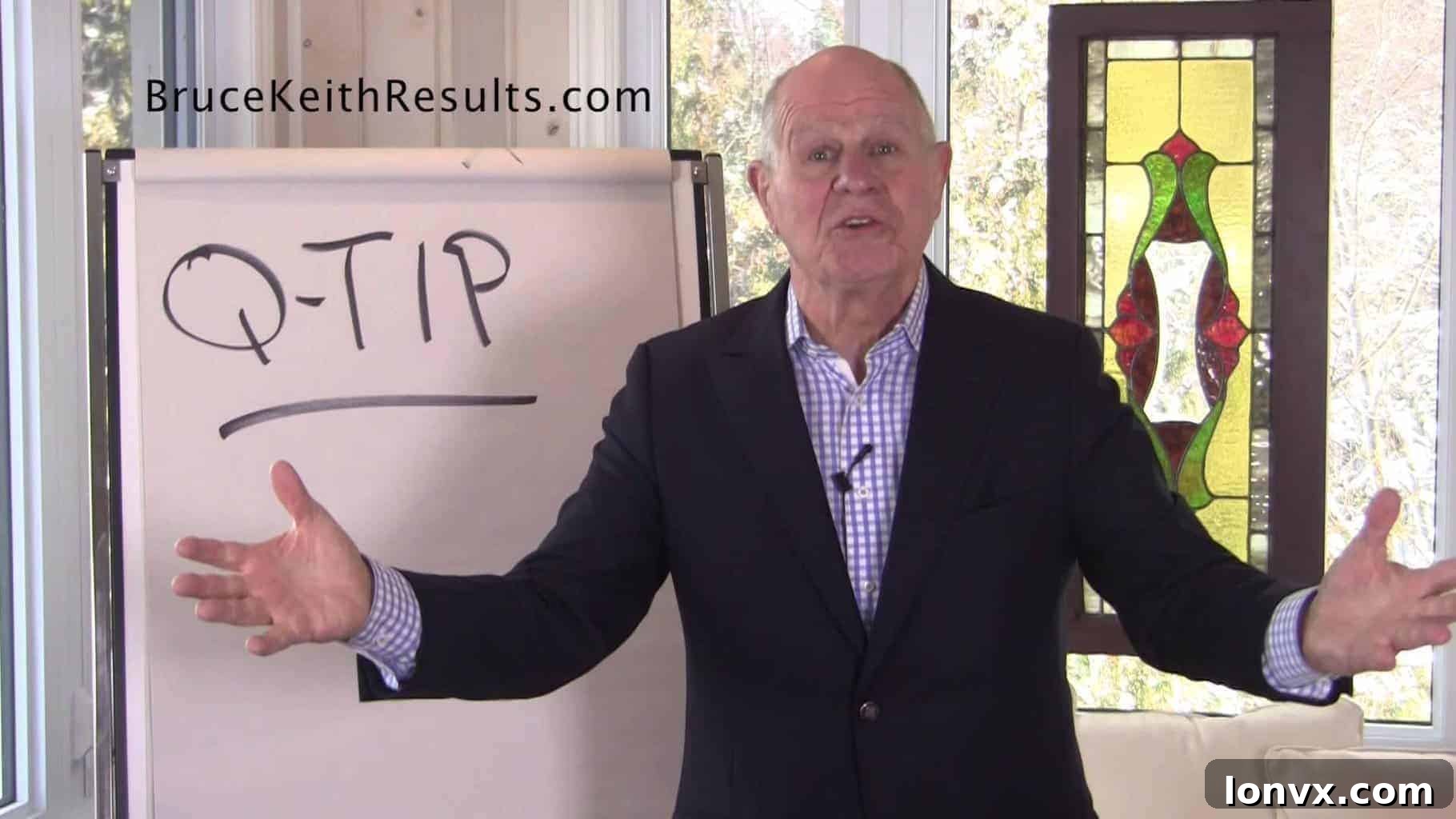
Mastering Sales Rejection: The Power of Q-TIP! (Quit Taking It Personally)
Every sales professional, regardless of their experience or impressive track record, eventually faces the sting of rejection. It’s an unavoidable facet of the job. You dedicate countless hours to understanding a client’s unique needs, meticulously craft a compelling proposal, and genuinely believe you’ve addressed every concern and opportunity. You tick all the boxes, demonstrate immense value, and envision a successful partnership. Yet, the dreaded call comes, or the polite email lands in your inbox, informing you they’ve decided to go in a different direction. Perhaps they’ve chosen a competitor, a neighbor, a family friend, or even a relative, often citing reasons that feel ambiguous or entirely unrelated to your offering’s true merit.
That familiar knot of tension tightens in your stomach. A wave of frustration, disappointment, and even self-doubt washes over you. It feels profoundly personal, doesn’t it? Like a direct indictment of your effort, your skill, your persuasive ability, or even your inherent worth. This emotional toll can be debilitating, leading to burnout, decreased motivation, and a significant drop in productivity. But what if there was a simple, yet profoundly powerful, mental tool designed to diffuse that tension, to reframe those rejections, and to protect your most valuable asset – your mindset? There is. It’s called Q-TIP! And once you understand its profound meaning and learn how to apply it consistently, your entire approach to sales rejection will transform, paving the way for unprecedented resilience and sustained success.
Understanding the Frustration: Why Rejection Feels So Personal
To truly appreciate the power of Q-TIP, we must first acknowledge the deeply personal nature of sales. Unlike many other professions, sales success is often measured by tangible outcomes – closed deals, signed contracts, achieved quotas. When these outcomes don’t materialize, especially after significant investment of time, energy, and emotional capital, it’s easy to internalize the failure. We tend to link the rejection of our proposal directly to a rejection of ourselves. This psychological trap is common among high-achievers who pour their personality and passion into their work.
Consider the scenarios: You’ve built rapport, identified pain points, presented solutions tailored to perfection. You even felt a genuine connection with the client. Then, they opt for “Uncle Bob’s” less-than-stellar service, simply because he’s family. Or perhaps they choose a rival company that offered a marginally lower price, despite your superior value proposition. These situations can breed resentment and make you question your entire sales process, your product, and even your own competence. The constant barrage of “no” can chip away at confidence, turning what should be a learning experience into an emotional battering. This is where Q-TIP steps in, offering a crucial lifeline to maintain your mental fortitude.
Introducing Q-TIP: Quit Taking It Personally
The acronym Q-TIP stands for one of the most vital principles in sales: **Quit Taking It Personally.** This isn’t an invitation to become indifferent or to ignore constructive feedback. On the contrary, it’s about drawing a critical and healthy boundary between your professional performance and your personal self-worth. It’s about recognizing that, in the vast majority of cases, a client’s decision not to proceed with your offering is rarely a reflection of your inherent value as an individual. Instead, it’s often influenced by a myriad of external factors entirely beyond your control.
When you embrace the Q-TIP mindset, you acknowledge that clients make decisions based on their own unique circumstances, biases, relationships, budget constraints, timing, or perceived needs that might not align perfectly with your solution at that specific moment. Their choice might be driven by existing loyalties, an internal political dynamic you’re unaware of, a sudden shift in priorities, or even an emotional connection to another provider. None of these reasons inherently diminish your skill, your dedication, or the value of what you offer. By reframing rejection through the lens of Q-TIP, you liberate yourself from the heavy burden of unwarranted self-blame and emotional distress, allowing you to move forward with a clear head and renewed determination.
The Psychology Behind Q-TIP: Building Resilience and Growth
The human brain is wired to seek approval and avoid rejection. When we personalize sales rejection, we activate our brain’s threat response, leading to feelings of anger, sadness, or anxiety. This can create a negative feedback loop: rejection leads to demotivation, which impacts performance, potentially leading to more rejections. Q-TIP disrupts this cycle. It encourages a shift from a fixed mindset (“I failed, I am a failure”) to a growth mindset (“This didn’t work, what can I learn?”).
By adopting the mantra “Quit Taking It Personally,” you cultivate psychological resilience. You learn to differentiate between what you can control (your effort, your preparation, your presentation, your follow-up) and what you cannot (a client’s pre-existing relationships, their budget limits, their internal politics, market conditions, or even their mood on a given day). This distinction is crucial for emotional intelligence in sales. It allows you to objectively review your process for improvement without letting the outcome define your self-worth. Instead of dwelling on the “why me?” of rejection, you can pivot to “what’s next?” and “how can I improve my approach for the *next* opportunity?” This psychological pivot is the bedrock of sustained success in any competitive field.
Practical Strategies for Applying the Q-TIP Mindset
Embracing Q-TIP isn’t just a passive mental exercise; it requires active strategies to integrate it into your daily sales routine:
- Immediate Detachment: The moment you receive a rejection, take a deep breath and consciously repeat “Q-TIP! Quit Taking It Personally.” This immediate mental intervention helps prevent the emotional spiral.
- Objective Post-Mortem: After a brief period of detachment, conduct an objective analysis. Ask yourself:
- Did I truly understand their needs?
- Was my presentation clear and compelling?
- Did I address all their concerns?
- Was there anything within my control that I could have done differently to improve the *process*?
Focus on actions and strategies, not personal attributes.
- Seek Constructive Feedback (When Appropriate): If possible and the client relationship allows, politely ask for specific feedback. Frame your request around learning and improvement, e.g., “I’m always looking to refine my approach; could you share any insights on why you ultimately chose a different direction?” Even vague answers can offer hints.
- Reframing Negative Thoughts: When thoughts like “I’m not good enough” or “My product isn’t competitive” arise, actively reframe them. Replace them with “This wasn’t the right fit for *this specific client at this time*,” or “Every ‘no’ brings me closer to a ‘yes’.”
- Focus on Your Sphere of Influence: Concentrate your energy on what you *can* control: your prospecting efforts, your skill development, your positive attitude, your persistence, and your ability to build genuine relationships.
- Build a Robust Pipeline: A healthy sales pipeline acts as a buffer against the emotional impact of any single rejection. When you have multiple opportunities in various stages, one lost deal doesn’t feel like the end of the world.
- Celebrate Small Wins: Acknowledge and celebrate every small victory – a good discovery call, a positive client interaction, a well-received presentation. This helps maintain a positive outlook and builds momentum.
- Maintain Professional Detachment: Understand that sales is a game of numbers and probabilities. Not every lead will convert, and that’s a statistical reality, not a personal failing. Separate your self-worth from your sales outcomes.
The Long-Term Benefits of Embracing Q-TIP
Integrating the Q-TIP philosophy into your sales DNA yields profound long-term benefits that extend far beyond simply handling rejection better:
- Increased Resilience: You become more robust, capable of bouncing back quickly from setbacks, maintaining momentum, and staying focused on your goals.
- Improved Mental Health & Reduced Stress: By not internalizing rejections, you significantly reduce anxiety, stress, and the risk of burnout. This leads to a healthier, more balanced professional and personal life.
- Enhanced Productivity & Focus: Less time spent dwelling on past failures means more energy directed towards future opportunities, leading to greater efficiency and output.
- Better Client Relationships: When you’re not desperate for every sale, you project confidence and authenticity. This allows you to build stronger, more genuine relationships based on trust and mutual respect, rather than perceived neediness.
- Consistent Performance: An even keel emotionally translates into more consistent sales performance, as your mood and motivation are less subject to the fluctuating outcomes of individual deals.
- Continuous Learning & Growth: Without the emotional baggage, you can objectively analyze each situation, extract valuable lessons, and continuously refine your skills and strategies. Every rejection becomes a data point for improvement.
- Long-Term Career Sustainability: Sales is a marathon, not a sprint. The Q-TIP mindset is a critical tool for ensuring longevity, enjoyment, and sustained success in a challenging yet incredibly rewarding profession.
Ultimately, Q-TIP empowers you to see rejection not as a definitive judgment, but as a temporary outcome or a redirection. It helps you understand that a “no” today doesn’t mean “never,” nor does it define who you are. It simply means “not right now, for these specific reasons.”
Conclusion: Transform Your Sales Journey with Q-TIP!
The path of a sales professional is paved with both triumphs and tribulations. Rejection is an inevitable part of the journey, but how you respond to it makes all the difference. The simple yet profound mantra of Q-TIP – Quit Taking It Personally – is a game-changer. It’s a powerful mental shield that protects your confidence, preserves your motivation, and propels you forward even in the face of disappointment. By detaching your self-worth from the outcome of every sales call and objectively analyzing each situation for growth, you transform potential setbacks into valuable learning experiences.
So, the next time a client chooses a neighbor, a relative, or a competitor, and you feel that familiar tension building, remember to pause, take a breath, and simply say to yourself, “Q-TIP!” Embrace this philosophy, integrate its practical strategies, and watch as your resilience grows, your stress diminishes, and your sales journey becomes not just more successful, but also infinitely more enjoyable and sustainable. Your career, and your peace of mind, will thank you for it.