
Calgary’s Resilient Real Estate Market: A Deep Dive into 2023 Trends and Future Outlook
Calgary’s real estate landscape in 2023 showcased remarkable resilience, navigating a complex environment characterized by elevated interest rates and shifting buyer preferences. While overall sales activity eased compared to the record-setting pace of 2022, the 17,416 transactions recorded still significantly surpassed pre-pandemic long-term trends, underscoring the city’s robust housing demand. A notable trend emerged with a distinct pivot towards more affordable housing options, particularly apartment condominiums, reshaping market dynamics.
Despite the cooling sales volume, tight market conditions persisted throughout the year, laying the groundwork for Calgary to achieve record-high pricing. The city experienced strong price growth, with the average annual benchmark growth stabilizing at nearly six percent in 2023. This represents a moderation from the exceptional 12 percent growth witnessed in 2022 but still signifies a healthy appreciation in property values. This detailed analysis will explore the factors that shaped Calgary’s market, delving into the performance of various property types and offering insights into what lies ahead.
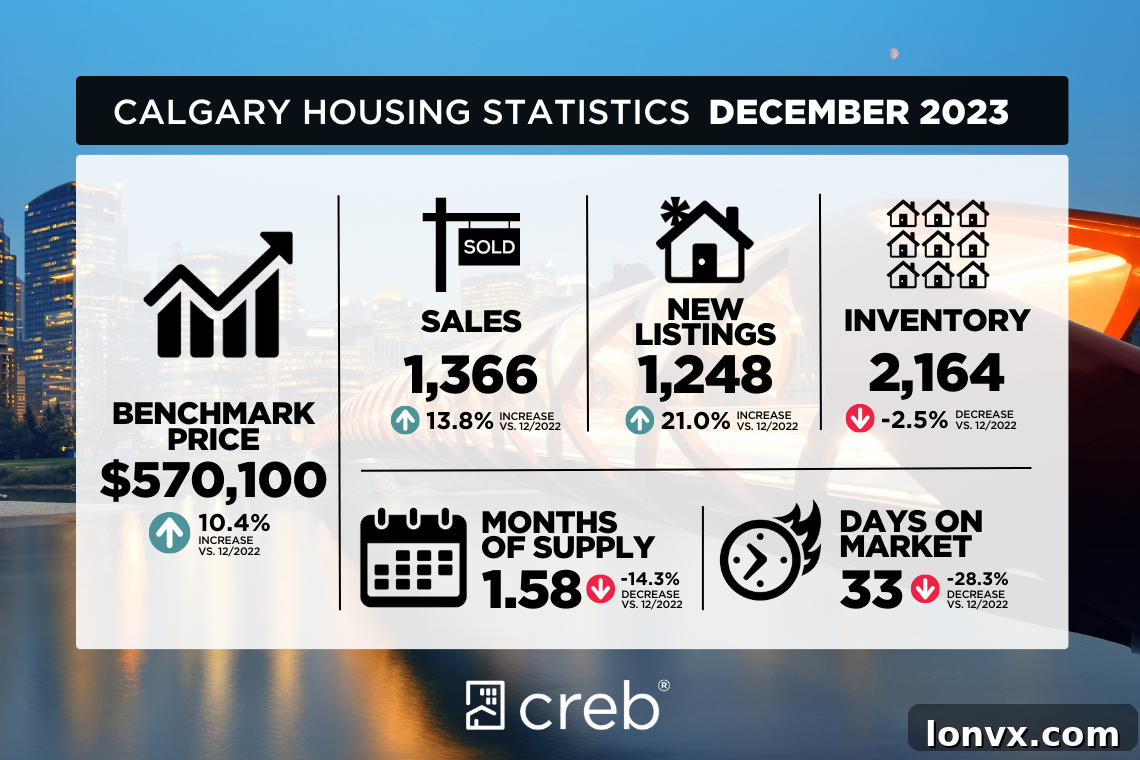
Demand Defies Higher Interest Rates, Driven by Strong Migration
One of the defining characteristics of Calgary’s 2023 housing market was the sustained strength of demand, even in the face of escalating lending rates. Ann-Marie Lurie, CREB’s chief economist, succinctly captured this phenomenon: “Higher lending rates dampened housing demand this year, but thanks to strong migration levels, housing demand remained relatively strong, especially for affordable options in our market.” Calgary, a beacon of affordability compared to other major Canadian urban centers, continued to attract a significant influx of interprovincial and international migrants, fueling population growth and, consequently, housing demand.
This demographic boom proved to be a powerful counterweight to the dampening effect of increased borrowing costs. The desire for homeownership, combined with Calgary’s attractive economic prospects and comparatively lower cost of living, meant that many newcomers were eager to enter the market. This robust demand, however, was met by persistently low supply levels throughout the year, creating an imbalance that pushed prices upward at a faster pace than initially anticipated.
The economic landscape of Alberta, bolstered by a strong energy sector and growing diversification in technology and logistics, also contributed to the confidence of both residents and prospective buyers. Job creation and a relatively healthy provincial economy provided the financial stability necessary for many to pursue home purchases, even as interest rates climbed.
Persistent Inventory Challenges Exacerbate Market Tightness
A critical factor shaping Calgary’s real estate narrative in 2023 was the chronic shortage of housing inventory. The city experienced inventory levels that consistently remained below long-term averages for the better part of the year. On average, inventory saw a substantial 44 percent decline compared to the 10-year average, a clear indicator of the severe supply-demand imbalance.
This scarcity was particularly acute for homes priced under $1 million, where the “months of supply” metric often dipped below two months throughout 2023. Months of supply indicates how long it would take to sell all current listings at the current rate of sales. A healthy, balanced market typically sees four to six months of supply. With supply consistently below two months, Calgary firmly remained in a seller’s market territory, empowering sellers and contributing to competitive bidding wars and upward pressure on prices across various segments.
The reasons behind the low inventory are multi-faceted. A combination of historically strong demand, slower-than-desired new construction completions, and homeowners reluctant to list their properties due to higher mortgage rates on a new purchase all played a role. Many existing homeowners with lower fixed-rate mortgages were hesitant to sell and incur a new, higher interest rate, further constraining the supply of available homes.
Segment-Specific Performance: A Mixed Bag
The overall market trends masked varying performances across different property types, with affordability being a key differentiator.
Detached Homes: A Shift in Demand Dynamics
The detached home market, traditionally the most sought-after segment, experienced the most significant sales decline in 2023, falling by almost 20 percent year-over-year. This segment faced a unique set of challenges, primarily driven by affordability concerns in a high-interest-rate environment. The limited supply of detached homes available for under $700,000, coupled with record-low inventories in general for this property type, created extremely tight conditions.
Despite the sales decline, the scarcity of available properties fueled robust price growth. The average benchmark price for detached homes saw an increase of approximately eight percent, reflecting the strong underlying demand from buyers willing and able to afford these properties, even as the overall pool of eligible buyers shrank due to rising costs. The aspirational nature of detached homes continued to command premium prices, especially in desirable neighborhoods.
Semi-Detached Homes: Navigating the Affordability Gap
Semi-detached homes also saw a reduction in sales, with a 10 percent decline in 2023. This downturn was largely concentrated in properties priced under $500,000, where supply was particularly constrained. For many buyers priced out of the detached market, semi-detached homes represented a viable, more affordable alternative, keeping demand relatively strong in higher price brackets within this segment.
Similar to detached homes, tight market conditions characterized the semi-detached sector, leading to upward price adjustments. The average benchmark price for semi-detached properties rose by seven percent, indicating that despite fewer sales, the competitive environment ensured that available homes sold for higher values. This segment continued to appeal to families and first-time buyers seeking more space than a condominium but at a lower price point than a fully detached residence.
Row Homes: Strong Price Growth Amidst Supply Constraints
The row home segment also experienced a decline in annual sales, with a drop of more than 11 percent. However, a notable nuance within this category was an increase in sales for homes priced over $400,000, suggesting a shift in the buyer demographic or a greater availability of higher-end units. For the majority of 2023, the row home market firmly remained a seller’s domain.
This market tightness translated into substantial price appreciation, with the average benchmark price for row homes surging by over 13 percent. Row homes offer an attractive balance of privacy, living space, and relative affordability compared to detached and semi-detached options, making them increasingly popular among urban dwellers and growing families. The strong price growth underscores their rising appeal in Calgary’s competitive housing landscape.
Apartment Condominiums: The Unquestioned Leader in Sales Growth
In stark contrast to other property types, the apartment condominium segment was the undeniable standout in 2023, recording a phenomenal sales gain and reaching a new record high of 7,884 transactions. This surge was initially supported by a higher inventory of available units and an increase in new listings, providing much-needed options for buyers grappling with affordability challenges elsewhere in the market.
As the year progressed, however, the robust demand quickly absorbed this additional supply, causing conditions to tighten significantly and ultimately favoring sellers. This competitive environment propelled the average benchmark price for apartment condominiums to grow by more than 13 percent, matching the impressive gains seen in the row home segment. Apartment condos emerged as the go-to option for first-time buyers, investors, and individuals prioritizing urban living and affordability, making them a cornerstone of Calgary’s resilient real estate market in 2023.
Key Market Drivers and Future Considerations
Looking beyond the individual property types, several overarching factors continued to influence Calgary’s real estate trajectory:
- Interprovincial Migration: Calgary’s relative affordability compared to Vancouver and Toronto, coupled with Alberta’s appealing economic conditions and lower taxes, continued to attract a steady stream of newcomers, exerting sustained pressure on housing demand.
- Economic Diversification: While oil and gas remain vital, Calgary’s concerted efforts towards diversifying its economy into tech, renewable energy, and logistics are creating new job opportunities and attracting a younger, dynamic workforce, further bolstering the housing market.
- Interest Rate Environment: The trajectory of interest rates will remain a critical determinant for the 2024 market. Any softening in rates could unlock latent demand and potentially ease affordability concerns, while continued high rates would maintain pressure on buyers.
- New Construction: The pace of new housing starts and completions will be crucial for addressing the chronic supply shortages. Policy efforts to streamline development and encourage construction could help alleviate market tightness in the long term.
Conclusion: A Market Adapting and Evolving
Calgary’s real estate market in 2023 was a testament to its adaptability and underlying strength. Despite facing headwinds from higher interest rates, the city’s appeal, driven by strong migration and economic stability, ensured sustained demand. The shift towards more affordable housing options, particularly apartment condominiums, highlights a market that is continually evolving to meet the needs of its growing population.
The persistent low inventory levels remain a significant challenge, perpetuating a seller’s market and contributing to ongoing price appreciation. As we move into 2024, the interplay of interest rate stability, continued population growth, and the response of new housing supply will define the next chapter for Calgary’s dynamic real estate landscape. For both buyers and sellers, understanding these nuanced trends will be key to making informed decisions in one of Canada’s most vibrant housing markets.
For more detailed insights and statistics, refer to the official reports from the Calgary Real Estate Board (CREB).
Check out the city of Calgary and Calgary region statistics.
Enjoying this article?
Get the latest real estate articles in your inbox 3x week so you stay up to date on the latest industry insights.