
Saskatchewan Housing Market Report: Navigating Tight Inventory and Rising Prices in March
Saskatchewan’s residential real estate market demonstrated robust activity in March, with a total of 1,183 home sales recorded across the province. This figure represents a healthy 6 percent increase above the long-term averages for the month, signaling sustained demand within the region. While sales were marginally lower by 2 percent compared to the exceptionally strong performance of the previous year, the overall trend points towards a vibrant market. The majority of this vigorous activity was concentrated within key economic regions, notably Regina-Moose Mountain, Saskatoon-Biggar, and Swift Current-Moose Jaw, reflecting their economic dynamism and attractiveness to homebuyers.
This consistent demand, however, is set against a backdrop of evolving market dynamics, where limited housing supply is beginning to exert considerable influence. Understanding these trends is crucial for both prospective buyers and sellers navigating the competitive landscape of Saskatchewan’s real estate.
March Highlights: Strong Sales Amidst Persistent Inventory Challenges
The consistent strength in home sales, marking the ninth consecutive month of above-average activity, underscores a resilient and attractive housing market in Saskatchewan. Buyers continue to enter the market, driven by various factors including population growth, economic stability, and perhaps a desire to secure property before further price increases or shifts in interest rates.
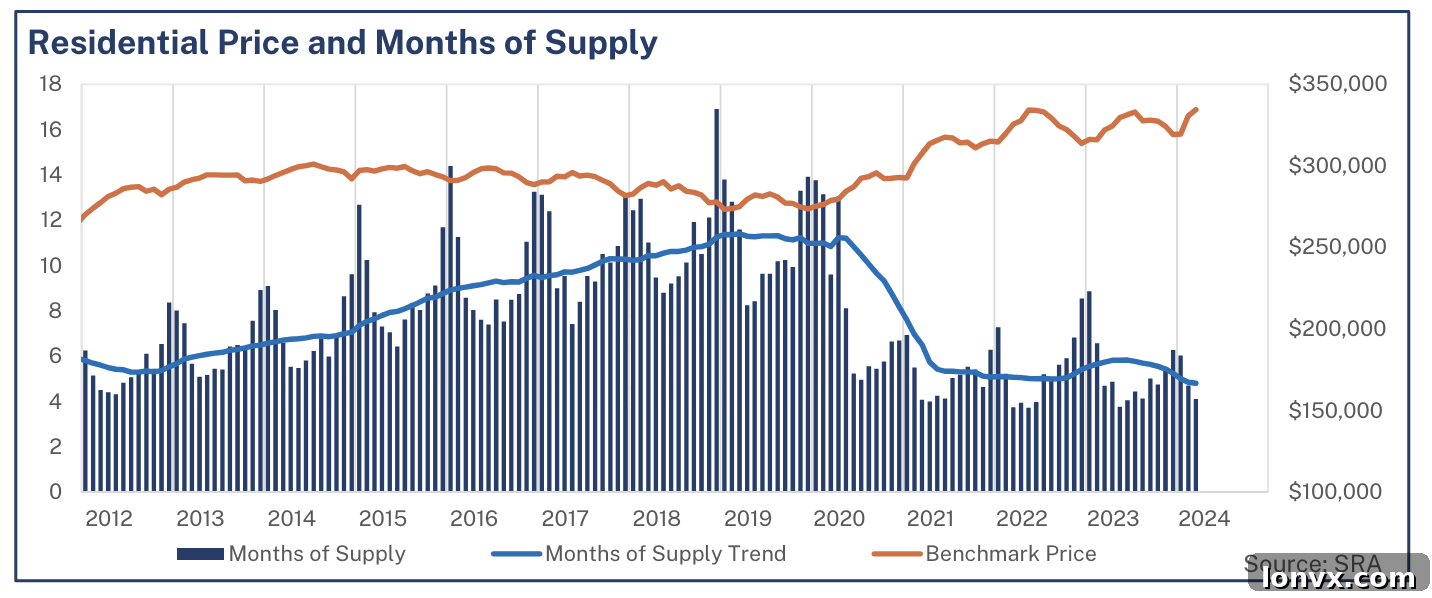
Despite the positive sales numbers, a critical challenge looms large: the dwindling supply of available homes. New listings have seen a notable decline, and the overall inventory of residential properties has plummeted by 15 percent year-over-year. This reduction leaves the current housing supply at approximately 40 percent below long-term trends, creating a significant imbalance between buyer demand and available homes. This scarcity is not just a statistical anomaly; it has tangible impacts on market competition and affordability, particularly in specific price segments.
The Alarming Inventory Decline: A Growing Concern for Saskatchewan’s Housing Supply
The sustained decline in housing inventory has become a primary driver of current market conditions and a significant concern for the Saskatchewan Realtors Association (SRA). Chris Guérette, CEO of the SRA, has explicitly voiced apprehension regarding the nearing “concerning levels” of supply in several major urban centers. This concern is amplified when considering the implications for market accessibility and the purchasing power of various buyer segments.
The particularly acute shortage is felt within the more affordable segments of the market, specifically properties priced below $400,000. For first-time homebuyers, young families, and individuals operating within a tighter budget, the current environment presents a formidable challenge. With fewer homes listed in this price range, competition intensifies, often leading to multiple offers, bidding wars, and properties selling above asking price. This not only makes the home-buying process more stressful but also stretches the financial capabilities of prospective homeowners, potentially pushing homeownership further out of reach for many.
The reasons behind this inventory crunch are multifaceted. Some homeowners with historically low mortgage rates may be hesitant to sell, fearing they might re-enter the market with a higher interest rate on a new property. Furthermore, the pace of new construction, while active, may not be keeping up with the robust demand and underlying population growth, especially for more affordable housing types. This confluence of factors creates a tight seller’s market, where properties that do come online are absorbed quickly, perpetuating the supply shortage.
Unwavering Price Growth Across the Province
The tight market conditions, characterized by high demand and limited supply, have inevitably fueled robust price growth across Saskatchewan. This upward trajectory in property values is a direct consequence of more buyers competing for fewer homes, pushing benchmark prices higher. In March, the provincial benchmark price reached $334,500, marking a significant increase of approximately $4,000 from the preceding month of February, and an impressive 4 percent rise compared to March of the previous year.
While price appreciation was a general trend observed across most regions, certain property types experienced more pronounced gains. Apartment units and row/townhouse units, often considered more accessible entry points into the housing market, saw particularly strong price increases. This suggests a strategic shift among buyers towards more affordable housing options in response to the overall market squeeze. The largest monthly gain in prices was recorded in the Swift Current-Moose Jaw region, indicating localized hot spots within the broader provincial trend. These regional variations highlight the importance of understanding specific market dynamics, as conditions can differ significantly from one area to another.
For current homeowners, this sustained price growth translates into increased equity, which can be a positive factor for financial planning and wealth accumulation. However, for those looking to enter the market, especially first-time buyers, rising prices coupled with potential increases in interest rates continue to pose significant affordability challenges.
Regional Market Snapshots: Regina and Saskatoon Lead the Way
While provincial trends provide a broad overview, a closer look at Saskatchewan’s major urban centers reveals distinct market characteristics and dynamics that are crucial for understanding the overall real estate landscape.
Regina’s Resilient Market: Sales Surge Despite Supply Constraints
Regina experienced a particularly strong March, reporting 312 residential home sales. This represents a substantial year-over-year gain of almost 7 percent and places sales volumes an impressive 23 percent above long-term averages for the city. Such elevated sales activity, coupled with a decline in new listings, has created a highly competitive environment. The city’s market currently boasts approximately two months of supply, a figure that firmly indicates a seller’s market. In such conditions, demand significantly outstrips supply, inevitably leading to upward pressure on prices.
Regina’s benchmark price in March stood at $313,100, an increase from $310,600 in February, and nearly 2 percent higher than March 2023. This steady appreciation reflects the city’s economic stability, ongoing development, and sustained population growth, all of which contribute to its enduring appeal for homebuyers. The tight supply means that properties are selling quickly, and buyers must be prepared to act decisively to secure a home in this vibrant market.
Saskatoon’s Dynamic Market: High Demand Meets Shrinking Inventory
Saskatoon, another key economic hub in Saskatchewan, recorded 364 residential sales in March. While this figure represents an 8 percent decline year-over-year, it still remains 2 percent above long-term averages, underscoring the city’s robust underlying demand. The year-over-year dip might be attributed to an exceptionally strong market performance in the comparative period of the previous year, rather than a significant slowdown in current demand.
The inventory situation in Saskatoon is particularly acute, with levels decreasing by a dramatic 21 percent year-over-year and currently sitting at almost 50 percent below long-term trends. This severe lack of available homes is a primary factor driving price increases in the city. Saskatoon’s March benchmark price climbed to $394,300, up from $388,300 in February, and an impressive over 5 percent increase from March 2023. This faster pace of price growth compared to Regina highlights the intensity of competition in Saskatoon, especially given its even tighter inventory levels. Buyers in Saskatoon are facing significant challenges in finding suitable properties, particularly those seeking specific features or locations, as available homes are quickly snatched up.
Expert Insights and Future Outlook for Saskatchewan Real Estate
The current state of Saskatchewan’s real estate market necessitates a nuanced understanding, as conditions are not uniform across the province. Chris Guérette, CEO of the Saskatchewan Realtors Association, aptly notes that “real estate is local and market conditions vary throughout the province.” However, she emphasizes that “the inventory crunch in certain markets is significant right now,” underscoring a pervasive and critical issue.
Looking ahead, the question of whether “new listing relief is on the way” remains unanswered. Economic factors, interest rate policies, and the pace of new construction will all play a role in shaping the supply side of the market. Based on current indicators, Guérette’s prediction of “a challenging spring and summer market in Saskatchewan” appears well-founded. For buyers, this challenging period implies continued competition, the need for swift decision-making, and potentially higher prices. They may benefit from getting pre-approved for mortgages, being flexible with their search criteria, and working closely with experienced real estate professionals to navigate the limited options.
For sellers, the current environment presents a unique opportunity, as low inventory typically results in faster sales and stronger selling prices. However, sellers who also intend to buy within the same market must carefully strategize their moves to avoid being caught in the same supply crunch that benefits their sale. The provincial government and local municipalities may also face increasing pressure to address housing affordability and supply issues through policy interventions, incentives for developers, or land use planning initiatives to ensure a balanced and sustainable housing market in the long term.
Understanding Saskatchewan’s Real Estate Landscape: Key Takeaways for Stakeholders
The March 2024 report on Saskatchewan’s housing market paints a picture of robust demand countered by a critically low supply of residential properties. Key takeaways include:
- Sustained Demand: Home sales continue to exceed long-term averages, indicating strong buyer interest and confidence in the provincial market.
- Critical Inventory Shortage: A significant decline in new listings and overall inventory levels is creating intense competition, particularly in the sub-$400,000 price range, challenging affordability.
- Rising Prices: This supply-demand imbalance is driving benchmark prices upward across the province, with apartment and townhouse units seeing notable gains, reflecting a shift towards more accessible housing types.
- Regional Hotspots: Regina and Saskatoon exhibit strong, yet distinct, market dynamics, with both cities experiencing intense buyer activity and considerable price appreciation due to limited supply.
- Challenging Outlook: The forecast for spring and summer suggests continued challenges for buyers, necessitating strategic approaches and expert guidance to navigate the competitive environment.
As Saskatchewan continues to grow, ensuring a balanced and accessible housing market will remain a key priority for residents, policymakers, and real estate professionals alike. Staying informed about these evolving trends is essential for making well-educated decisions in this dynamic real estate landscape.
Review March data by province, city, CMA/CA or region.