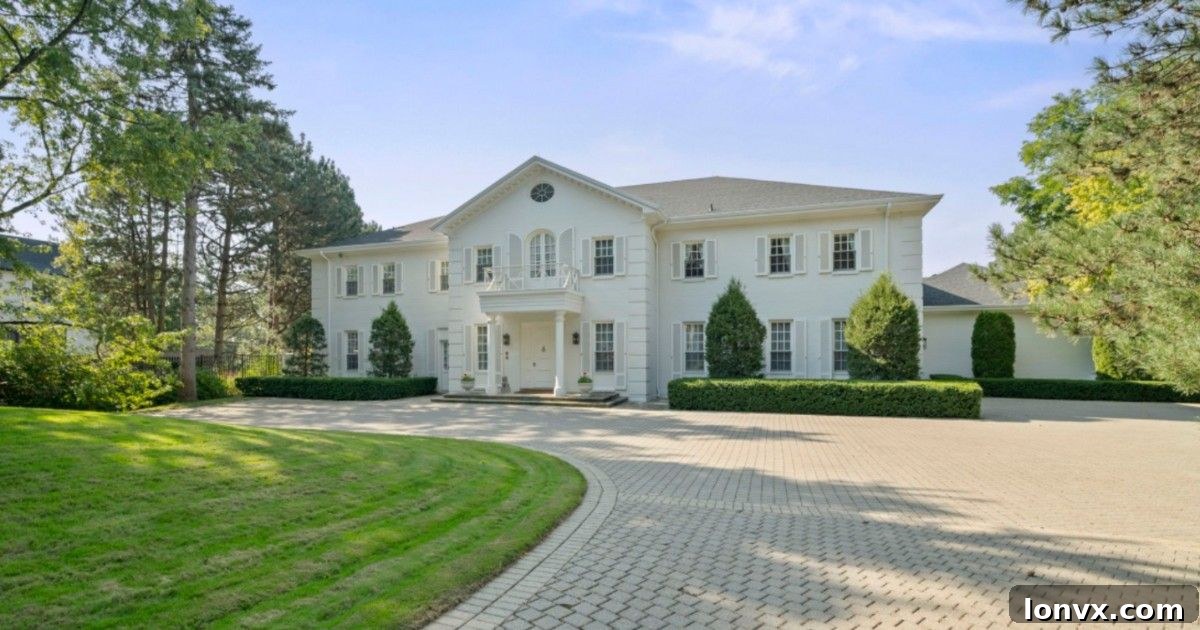
20/22 Park Lane Circle in North York, Ont., sold for $27.3 million in February/submitted
Understanding Canada’s Evolving Luxury Real Estate Landscape
Canada’s real estate market has experienced significant shifts, particularly within its high-end sector. While overall property values have surged across the nation, the impact on luxury housing has been notably uneven, creating a diverse and dynamic environment for ultra-wealthy buyers and investors. In some vibrant urban centers, soaring property values, fueled by unprecedented demand during the pandemic era, have permanently redefined what constitutes a top-tier luxury home. Conversely, in other regions, the very definition of luxury has remained more constant, even as prices in the broader market continued their ascent. This article delves into the intricate trends, regional disparities, and evolving definitions shaping Canada’s luxury real estate landscape, offering insights into its current state and future trajectory.
The allure of Canadian luxury properties extends beyond mere price tags, encompassing unique architectural designs, exclusive locations, unparalleled amenities, and a lifestyle that caters to the most discerning tastes. From the bustling metropolises to serene coastal retreats and expansive rural estates, the luxury market is a mosaic of distinct characteristics, each influenced by local economies, demographics, and buyer preferences. Understanding these nuances is crucial for anyone looking to navigate this exclusive segment of the Canadian housing market.
A Coast-to-Coast Overview of Canadian Luxury Real Estate
Pinpointing precise sales data for the luxury real estate market can be challenging due to the inherent discretion of high-net-worth individuals and the prevalence of off-market transactions. However, data collected by various real estate platforms offers a compelling glimpse into the diverse landscape of Canada’s most exclusive properties. These figures reveal significant regional variations, painting a picture of a market that is far from monolithic.
Ontario’s Explosive Growth: Over the last decade, Ontario, particularly the Greater Toronto Area, has witnessed an extraordinary surge in luxury home sales. According to data from real estate platform HouseSigma, the number of urban residential sales exceeding $5 million increased by a staggering 220 percent, climbing from 78 transactions in 2015 to 251 in 2025. Properties valued above $10 million experienced an even more dramatic trajectory, with a 280 percent growth rate over the same period, rising from just six sales to 23. This remarkable growth underscores Ontario’s position as a robust hub for wealth accumulation and luxury investment, driven by a strong economy, population growth, and a limited supply of truly exceptional properties.
British Columbia’s Unique Trajectory: In contrast to Ontario’s upward trend, metro areas in British Columbia, particularly Vancouver, have experienced a different pattern in their high-end market. HouseSigma data indicates a decline of approximately 30 percent in home sales above $5 million and $10 million over the past decade. In 2025, there were 226 homes sold over $5 million, compared to 373 in 2015. Similarly, sales over $10 million dropped from 32 to 20 during the same period. This shift could be attributed to a combination of factors, including past foreign buyer taxes, market corrections, and a possible recalibration of buyer expectations in one of Canada’s historically most expensive markets. Despite the numerical decline, Vancouver remains a quintessential luxury market, albeit one that has undergone a period of adjustment.
Emerging Luxury Hotspots Beyond the Big Two: While Ontario and British Columbia traditionally dominate the luxury conversation, other Canadian provinces are rapidly gaining traction and redefining their high-end markets. The most significant sale of 2025 for Engel & Völkers affiliated brokerages was recorded in Montreal, Quebec, at just under $41 million. This monumental transaction highlights Montreal’s burgeoning status as a destination for ultra-luxury buyers, drawn by its European charm, vibrant culture, and comparatively lower entry points for high-end properties. Alberta also registered a notable sale above $10 million in 2025, signaling growing affluence and demand for premium homes in its major cities, fueled by a robust energy sector and an attractive lifestyle.
On the East Coast, the luxury market in Halifax, Nova Scotia, is showing clear signs of maturity and expansion. ViewPoint.ca reports approximately 25 homes on or immediately around the peninsula closing at price points over $1 million in the last 90 days. This acceleration points to a significant revaluation of properties in Atlantic Canada, driven by lifestyle migration and an increasing appreciation for its unique coastal appeal.
Redefining Luxury: Beyond the Price Tag
The notion that a specific price point automatically defines a property as ‘luxury’ is increasingly being challenged by industry experts. Andrew Carros, COO and private office advisor at Engel & Völkers Vancouver, emphasizes that markets across Canada—from Alberta and British Columbia to Nova Scotia and Ontario—are governed by “completely different” demographics and market drivers, making direct comparisons misleading. He asserts that true luxury is not merely a function of cost but rather a confluence of rarity, exclusivity, and desirability.
“A home may carry a premium price tag of $4 million, but if it sits on a standard-sized lot in a homogenous neighborhood with similar houses all around, and lacks any distinguishing features or unique appeal, it isn’t truly luxury,” Carros explains. He champions the idea that luxury is inherently tied to what makes a property “special.” In Vancouver, for instance, waterfront properties command the highest premium due to their extreme scarcity. “There’s very little actual waterfront in Vancouver because of our seawalls and the way the city was planned,” he notes. “You’ll always get higher dollar amounts for those really luxury properties that are unique.”
Beyond waterfront access, several other attributes contribute to a property’s luxury status. These include expansive land parcels, breathtaking top-floor views, architecturally significant designs, bespoke finishes, state-of-the-art smart home technology, and extensive outdoor living spaces that offer privacy and connection to nature. Ultimately, a luxury property distinguishes itself by offering something extraordinary—a rare blend of location, design, amenities, and an intangible sense of exclusivity that appeals to a sophisticated buyer. It’s about an unparalleled lifestyle experience that cannot be easily replicated.
Halifax’s Ascent: A Luxury Market Triple-Digit Growth Story
Nova Scotia’s luxury real estate market has experienced a profound transformation over the past decade, demonstrating robust expansion. Sales activity accelerated significantly in the aftermath of the global pandemic and has maintained its strength, even amid recent market moderations. This burgeoning market garnered national attention, leading Sotheby’s International Realty Canada to establish a presence in Halifax in 2022, led by the experienced real estate duo Angie and Scott Bryant. Their expansion reflects the undeniable growth and potential of the province’s high-end sector.
Angie Bryant, a broker and senior vice president of sales, highlights the dramatic shift in what defines luxury in her market. Just ten years ago, a property around $800,000 would have been considered luxury in Halifax. Today, that definition has firmly shifted into the seven-figure range, reflecting substantial appreciation and an increased appetite for premium properties. While the majority of high-end listings are concentrated within the Halifax metropolitan area, significant activity is also observed along the picturesque South Shore, enchanting buyers with scenic seaside communities such such as Chester, known for its charming village atmosphere and stunning waterfront estates.
The data unequivocally supports this growth narrative. According to the Nova Scotia Association of Realtors, there were 32 residential sales exceeding $1 million in 2015. By 2020, this number had surged to 94. The pace of growth continued to accelerate, with an impressive 320 sales over $1 million recorded as of December 2025. This effectively represents a tripling of million-dollar-plus sales over just the past five years, underscoring the extraordinary appeal of Nova Scotia.
The pandemic acted as a pivotal turning point, drawing unprecedented attention to Nova Scotia’s unique attributes: its abundant space, relative affordability compared to larger Canadian cities, and an irresistible lifestyle appeal. Bryant notes that buyers were increasingly motivated by the promise of “a relaxed, slower-paced lifestyle” that offered an escape from the hustle and bustle. Demand has been particularly strong from the eastern seaboard of the United States, which continues to be a crucial feeder market for the province. One of the most significant luxury transactions this year exemplifies this trend: an island sale in Mahone Bay, fetching over $8 million, to buyers hailing from Virginia, USA.
Discerning Buyers and Policy Headwinds: The Current Luxury Market Dynamics
The landscape of luxury real estate has evolved, with today’s high-end buyers exhibiting a more cautious and discerning approach than those observed during the frenzied “gold rush” period of 2021-2022. Don Kottick, president of Remax Canada, notes that the speculative fervor has subsided, giving way to a more considered purchasing process. Buyers are now taking their time, conducting thorough due diligence, and seeking exceptional value rather than simply securing a property at any cost.
However, the luxury market is not without its challenges. Kottick points to the “continual burden of taxes” imposed by municipal governments as a potential drag on high-end sales. In Toronto, for example, Mayor Olivia Chow has proposed higher graduated land transfer tax rates for properties valued over $3 million. Such policies, while intended to generate revenue, can add significant costs to luxury transactions, potentially influencing buyer decisions and overall market activity. These local tax burdens, coupled with broader economic uncertainties, contribute to a more complex environment for luxury real estate transactions.
Despite these headwinds, Remax projects a 3.4 percent uptick in overall sales in 2026. While the primary drivers influencing the conventional housing market often differ from those affecting the ultra-wealthy (who typically do not require mortgages), Kottick anticipates “some positive movement” in the top-end of the market next year. Luxury buyers are often driven by factors such as wealth diversification, lifestyle aspirations, and global economic stability rather than interest rate fluctuations alone.
Intriguingly, Andrew Carros, Angie Bryant, and Don Kottick observe several commonalities across their respective luxury markets. A significant trend is the diminished appetite for “fixer-uppers” compared to a few years ago. During periods of tight inventory, buyers often had to compromise and settle for properties requiring extensive renovations. Today’s luxury buyers, however, overwhelmingly prefer turn-key, meticulously maintained homes with premium finishes, bespoke amenities, and cutting-edge technology. They are seeking perfection and are willing to pay for it, rather than undertaking the complexities of a major renovation.
Another crucial insight is that the vast majority of today’s luxury buyers are domestic. This trend has been significantly shaped by government policy, notably the federal ban on foreign ownership of residential properties. This ban is currently set to expire on January 1, 2027. The potential implications of either extending or lifting this ban are a significant point of discussion within the industry. In June, Richard Silver of Sotheby’s wrote an open letter to Prime Minister Mark Carney, advocating for the ban to be lifted sooner. The re-entry of foreign buyers could introduce a new wave of demand and capital into Canada’s luxury real estate market, potentially impacting pricing, inventory levels, and overall market dynamics.
As Canada’s luxury real estate market continues to evolve, shaped by economic forces, policy decisions, and the discerning tastes of affluent buyers, it promises to remain a fascinating and complex segment of the national economy. Its future will undoubtedly be influenced by a delicate balance of local market specificities, national economic performance, and global investment trends.