A recent survey conducted by Wahi, a leading real estate platform, has shed light on the aspirational preferences of Canadian homebuyers. The findings reveal a compelling truth: even amidst persistent affordability hurdles and a dynamic housing market, the traditional dream of owning a renovated single-family home in the suburbs continues to resonate deeply with a significant majority of Canadians.
The Unwavering Appeal of Single-Family Homes and Suburban Life in Canada
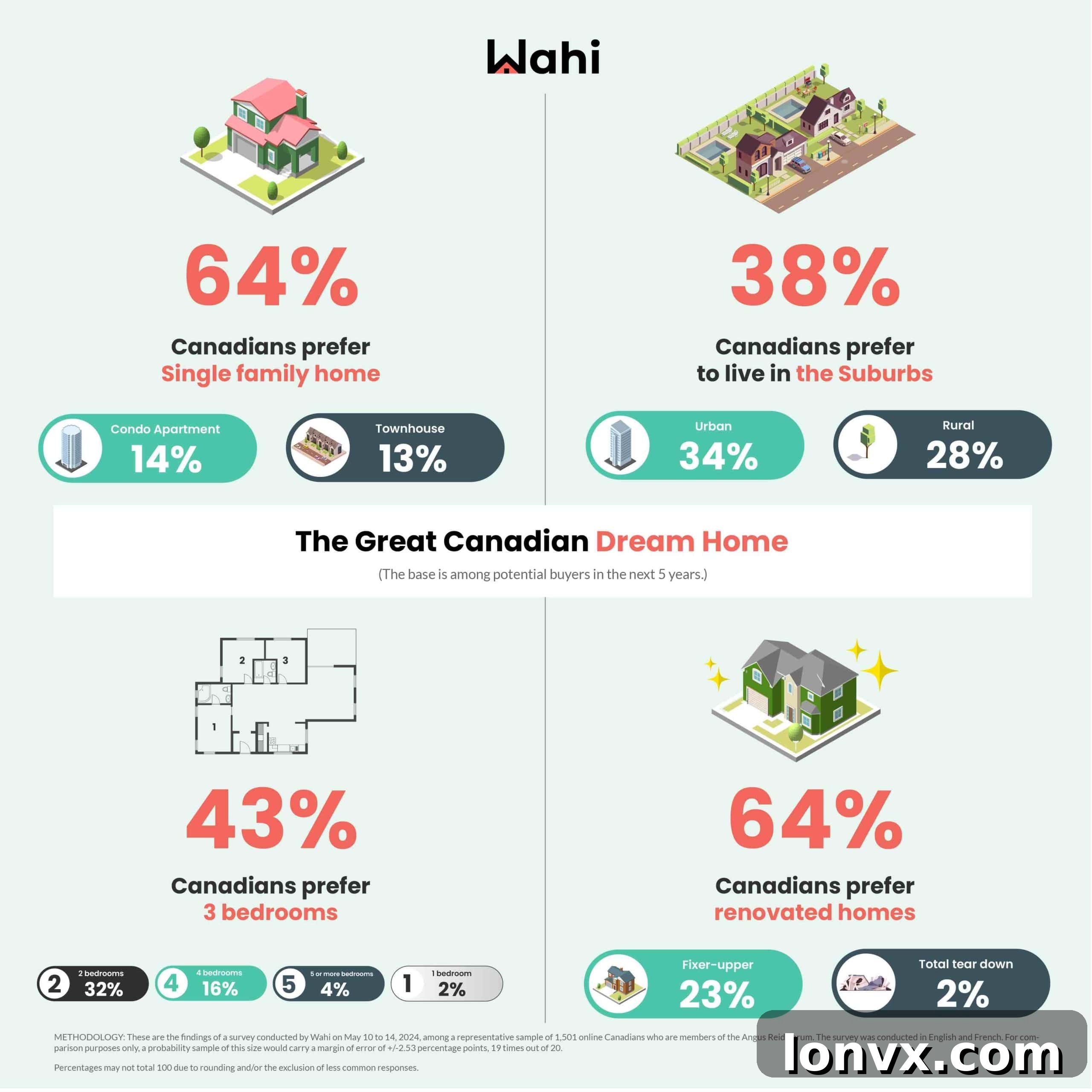
The Wahi survey delved into the hearts and minds of potential homeowners across the country, uncovering a strong and consistent desire for specific property types and locations. A remarkable 64 percent of prospective buyers expressed a clear preference for single-family homes. This preference wasn’t merely for any detached dwelling; respondents largely envisioned properties that offered more space, often renovated, and strategically situated in either suburban (38 percent) or urban (34 percent) environments. When it came to size, three-bedroom homes emerged as the most sought-after option, appealing to 43 percent of respondents. Interestingly, the romantic notion of rural living, while present, was a choice for only 28 percent of those surveyed.
This enduring demand for single-family residences, particularly in family-friendly suburban settings, paints a vivid picture of Canadians’ long-term housing goals. It suggests that despite the significant financial pressures and market shifts experienced in recent years, the intrinsic value placed on private space, a backyard, and a sense of community remains paramount. The desire for a renovated home further underscores a preference for convenience and move-in readiness, allowing buyers to avoid the immediate financial and logistical burdens often associated with extensive home improvements.
Adding another layer to these findings, an earlier Wahi poll indicated a surprising level of optimism among Canadians regarding their homeownership aspirations for the near future. Despite the current climate of elevated interest rates and record-high home prices, approximately 20 percent of Canadians stated they would “probably” or “may” buy a home in 2024. This resilience in buyer intent highlights a deep-seated commitment to achieving homeownership, even when facing a challenging economic landscape.
Regional and Demographic Variations: A Closer Look at Canadian Homebuyer Preferences
While the overall trend points towards single-family suburban homes, the Wahi survey also revealed fascinating regional and demographic differences that add nuance to the national picture. These variations underscore the diverse socio-economic landscapes and housing market realities across Canada.
Regional Disparities in Home Preferences
Unsurprisingly, provinces with more accessible housing markets exhibited an even stronger lean towards single-family homes. For instance, in regions like Saskatchewan/Manitoba, a striking 82 percent of respondents expressed this preference. Similarly, Atlantic Canada saw 77 percent of buyers favoring detached properties. Atlantic Canada stood out as the sole region where the majority of respondents (58 percent) explicitly desired to live in a rural area, indicating a lifestyle preference deeply rooted in the region’s unique charm and typically lower property values compared to larger urban centers.
In stark contrast, high-cost provinces, such as British Columbia, demonstrated a comparatively lower demand for single-family homes. Here, only 52 percent of respondents opted for this housing type, reflecting the acute affordability crisis prevalent in the province’s major metropolitan areas. In such markets, where detached homes often command exorbitant prices, prospective buyers are frequently compelled to consider alternative housing forms, such as condominiums or townhouses, to enter the market at all.
Benjy Katchen, CEO of Wahi, offered valuable insight into this phenomenon: “Canadian cities like Vancouver, Montreal, and Toronto all boast vibrant urban cores with an abundance of activities and amenities. This urban allure means some potential homebuyers may consciously choose condominiums to be closer to the action, trading space for location and lifestyle conveniences.” This perspective highlights a pragmatic adaptation among buyers in expensive urban markets, where the desire for city living often outweighs the traditional dream of a detached house.
Demographic Trends: Age and Housing Choices
The survey also illuminated significant generational differences in housing preferences. Younger Canadians, specifically those aged 18-34, were found to be the most inclined towards single-family homes, with 67 percent expressing this desire. This age group often represents first-time homebuyers or those looking to start families, for whom the idea of a detached home with a yard holds strong appeal. However, even within this younger cohort, there was a notable preference for urban settings (34 percent), suggesting a desire for amenities and career opportunities often found in cities, even if it means stretching their budgets for a single-family dwelling or considering properties further from the absolute core.
Conversely, older generations, particularly those aged 55 and above, showed a greater inclination towards downsizing. Only 50 percent of this demographic chose single-family dwellings, indicating a shift in priorities often associated with retirement, empty-nesting, or seeking lower-maintenance living options. For many older buyers, the upkeep of a large single-family home can become burdensome, leading them to explore condos, townhouses, or smaller, more manageable properties.
Turnkeys Preferred: The Quest for Move-In Ready Homes
Beyond the type and location of a home, the Wahi survey also explored preferences regarding a property’s condition, revealing a clear leaning towards renovated, move-in ready homes. The vast majority of Canadians (64 percent) indicated a strong preference for properties that have already undergone renovations, requiring little to no immediate work.
This desire for “turnkey” homes is particularly pronounced among older buyers (55+), who are often looking to simplify their lives and avoid the significant hassle, expense, and stress associated with home renovations. For these buyers, walking into a fully updated home means instant comfort and convenience, allowing them to enjoy their new living space without the immediate disruption of construction.
While the appeal of a fully renovated home is undeniable, a smaller segment of the population is open to properties requiring some work. Approximately 23 percent of respondents said they would consider a “fixer-upper,” indicating a willingness to invest time and effort into a property to potentially gain equity or customize it to their taste. This group often includes those with renovation skills, a tighter budget, or a specific vision for their future home. However, the appetite for major overhauls is minimal, with only 2.0 percent expressing interest in a complete “tear-down” project, which typically involves substantial capital, expertise, and time commitment.
This strong preference for renovated properties highlights a broader trend towards convenience and efficiency in modern home buying. In today’s fast-paced world, many buyers prioritize immediate comfort and functionality, opting to pay a premium for homes that require minimal additional investment post-purchase.
The Enduring Allure of the Suburbs and the Canadian Dream
The Wahi survey unequivocally demonstrates that the vision of homeownership for many Canadians continues to be rooted in the suburbs. The appeal of suburban living transcends mere proximity to urban centers; it embodies a lifestyle choice deeply ingrained in the Canadian ethos. Suburbs often offer a blend of community, safety, better school districts, and larger lot sizes than found in dense urban cores, all at a typically more attainable price point. This balance makes them particularly attractive to families and individuals seeking a peaceful environment without being entirely disconnected from city amenities.
The dream of a detached home with a private yard, a space for children to play, and a sense of belonging to a neighborhood is a powerful draw that has withstood economic fluctuations and evolving market dynamics. While affordability challenges continue to reshape how and where Canadians achieve homeownership, the underlying desire for a single-family dwelling, preferably renovated and nestled in the suburbs, remains a cornerstone of the Canadian dream.
In conclusion, Wahi’s comprehensive survey reinforces the resilience of traditional homeownership aspirations across Canada. Despite facing significant headwinds in the form of high prices and interest rates, the ideal of a single-family home in a suburban setting remains firmly entrenched in the national consciousness. While regional economic conditions and generational life stages introduce interesting variations to this dream, the core desire for space, comfort, and community continues to drive Canadian homebuyers in 2024 and beyond. Understanding these fundamental preferences is crucial for real estate professionals, policymakers, and anyone looking to navigate the complex yet vibrant Canadian housing market.