
Canada’s Housing Market: Navigating Correction Towards Recovery
Canada’s dynamic housing market has undergone a significant correction since its peak during the pandemic, with home sales and average prices experiencing a notable decline. However, recent analyses suggest this intense period of adjustment is gradually decelerating. The swift pace of market shifts, which characterized much of 2022 and early 2023, appears to be easing, signaling a potential stabilization on the horizon.
A comprehensive report from Desjardins, a leading financial institution, indicates that the housing market may be nearing its bottom. Economists anticipate that home sales will find their lowest point early in the second half of 2023. Following this stabilization in sales activity, a subsequent rebound in home prices is projected to commence shortly thereafter. This forecast offers a glimmer of optimism for stakeholders, from potential homebuyers to developers and investors, suggesting that the most challenging phase of the market correction could soon be behind us.
Several key factors are expected to underpin this anticipated recovery and sustained demand. Foremost among these is the widespread expectation of interest rate cuts by the Bank of Canada, following a prolonged period of monetary tightening. Lower interest rates typically translate into reduced borrowing costs for mortgages, thereby enhancing affordability and stimulating buyer confidence. Concurrently, a persistently tight labour market, characterized by low unemployment and strong wage growth, ensures that a significant portion of the population maintains robust purchasing power. Furthermore, Canada’s ambitious immigration targets continue to drive substantial population growth, adding continuous pressure to housing demand across the country, particularly in major urban centers.
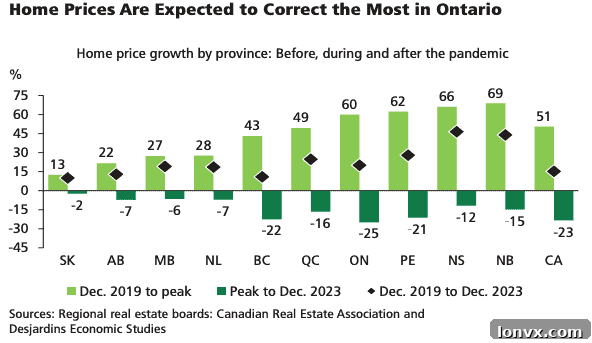
Despite this overarching national outlook, the Desjardins report also underscores considerable variability in the housing market performance across different provinces. This divergence largely reflects the differing economic structures of Canada’s regions. Commodity-producing provinces, particularly those rich in energy and non-energy primary goods, are expected to exhibit stronger economic resilience. As global prices for these commodities are projected to remain elevated, these provinces benefit from robust export revenues and increased investment, which in turn supports their local housing markets. Conversely, provinces with economies more intimately tied to other sectors, particularly the housing market itself, are likely to experience more pronounced adjustments. Ontario, Canada’s most populous province and a major economic engine, is highlighted as a region expected to face some of the largest price corrections due to its significant economic exposure to the real estate sector and its susceptibility to interest rate fluctuations.
Ontario’s Real Estate Market Under the Microscope: A Deep Dive into Dynamics and Challenges
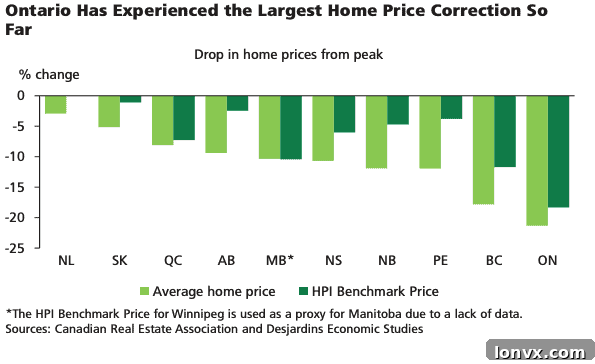
Focusing specifically on Ontario, the Desjardins report vividly illustrates the province’s unique position within the national housing landscape. Since the national market peaked in February 2022, Ontario has recorded the most significant decline in home prices across all Canadian provinces. This sharp correction has not merely impacted individual homeowners; Desjardins economists point out its substantial drag on overall economic activity within Ontario, particularly affecting residential investment. A downturn in residential investment, which encompasses new home construction and renovations, can have ripple effects throughout the economy, impacting employment in the construction sector, material suppliers, and related industries.
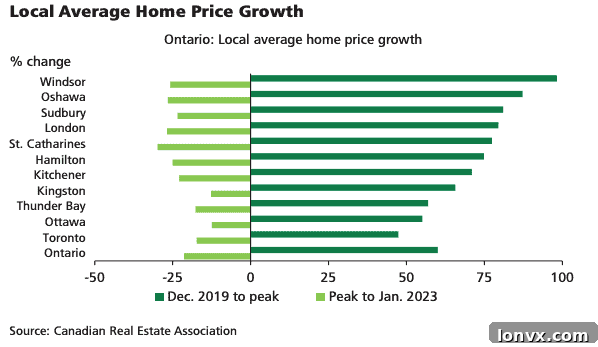
The Greater Toronto Area (GTA) traditionally commands the lion’s share of attention in Ontario’s housing narrative, accounting for nearly half of all existing home sales in the province. Its vibrant economy, diverse job opportunities, and cultural attractions consistently draw significant interest from both domestic and international buyers. However, the dynamics of the COVID-19 pandemic introduced a fascinating shift. While home prices in the GTA certainly escalated during this period, it was the surrounding communities and smaller urban centers across Ontario that often dominated headlines with their unprecedented price surges. The pandemic-induced shift towards remote work and the necessity for homeschooling prompted many urban dwellers to re-evaluate their living requirements. The desire for more spacious homes, larger yards, and a perceived better quality of life, coupled with the ability to work from anywhere, fueled an exodus from dense urban centers to more suburban and rural locales. This redistribution of demand led to astonishing price increases in areas previously considered more affordable.
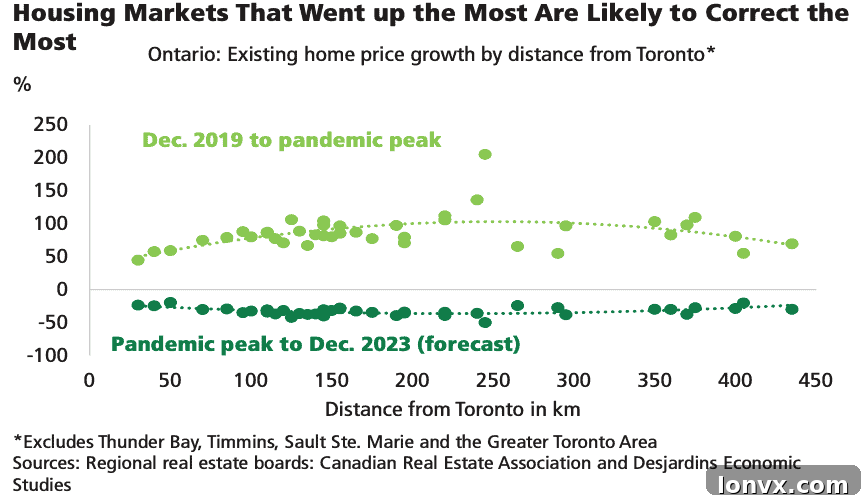
The surge in demand for larger living spaces, a direct consequence of widespread remote work and homeschooling mandates, became a primary catalyst for the dramatic increase in house prices across Ontario during the pandemic. This phenomenon was most acutely observed in communities situated within a few hundred kilometers of the GTA, often considered part of its broader economic orbit or accessible for occasional commutes. However, the price increases were not uniformly distributed. Several smaller communities experienced truly exceptional growth, with average home prices more than doubling between December 2019 and the market’s peak. Notable examples include picturesque towns and regions such as Bancroft, Parry Sound, Quinte, Renfrew, Northumberland Hill, Muskoka, Haliburton, Woodstock-Ingersoll, and North Bay. These areas, often characterized by their natural beauty, recreational opportunities, or strategic locations, suddenly became hotspots for buyers seeking affordability, space, and a lifestyle change, fundamentally altering their local real estate landscapes in a short period.
The Affordability Crisis in Ontario: Challenges and Demographic Shifts
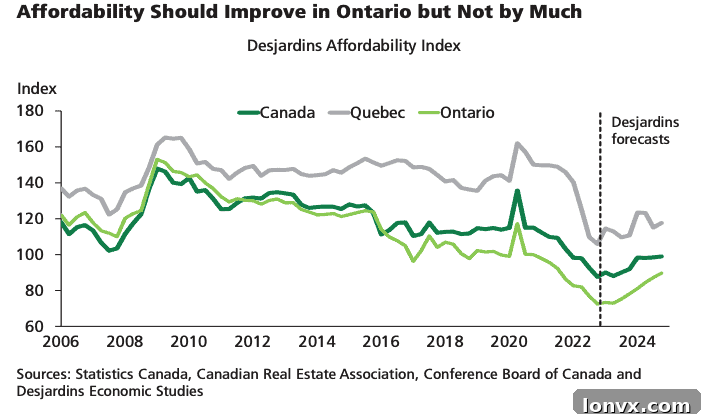
The rapid escalation of home prices, particularly during the pandemic, severely eroded housing affordability across Ontario. This deterioration was stark, significantly widening the affordability gap between Canada’s most populous province and regions like Quebec, as well as the rest of the country. For many residents, the dream of homeownership became increasingly elusive, placing unprecedented strain on household budgets and forcing difficult choices. While the ongoing correction in home prices and the anticipated reduction in borrowing costs are expected to offer some relief, forecasts suggest that affordability in Ontario will not revert to its pre-pandemic levels by the end of 2024. This extended period of diminished affordability poses significant long-term challenges for the province’s economic health and social fabric.
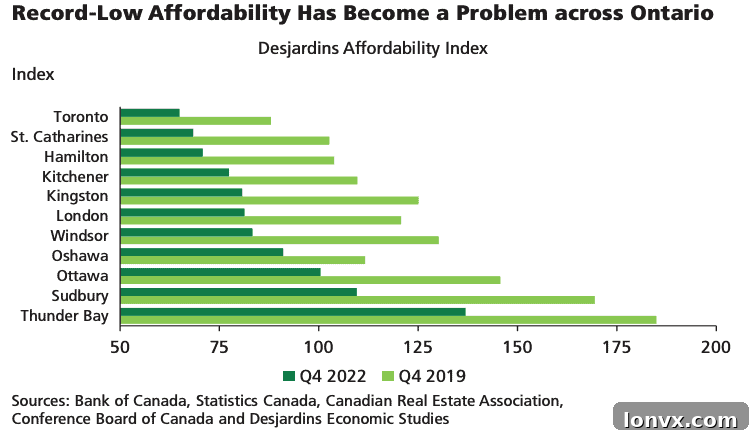
The affordability challenge in Ontario is not confined solely to the Greater Toronto Area (GTA), despite Toronto’s consistent ranking as the most unaffordable city in the province. The ripple effect of high demand and soaring prices has spread across the region, impacting numerous other urban centers. Cities such as St. Catharines, Hamilton, and Kitchener now closely follow Toronto in terms of housing unaffordability, having experienced dramatic price appreciation during the pandemic. Even communities like London, Windsor, Kingston, and Oshawa, which traditionally offered more accessible housing options, have seen a noticeable, albeit more modest, decline in affordability. This widespread erosion of affordable housing options underscores a systemic issue that extends beyond mere local market dynamics, reflecting broader economic pressures and supply-demand imbalances.
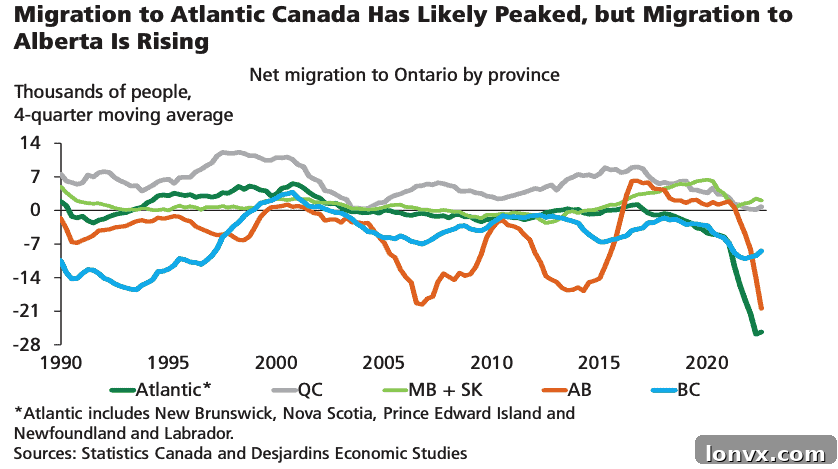
The severe decline in housing affordability has triggered a range of unintended and significant demographic consequences for Ontario. Families and individuals, grappling with escalating housing costs and stagnant relative incomes, have increasingly sought more affordable living environments. This has led to an internal migration pattern where residents are moving from the least affordable parts of the province, typically within the GTA and surrounding highly-priced areas, to “greener pastures” elsewhere in Ontario. More notably, a growing number of Ontarians are opting to leave the province entirely. Since the onset of the pandemic, the Atlantic provinces have emerged as a preferred destination, attracting those seeking a more attainable cost of living and a different lifestyle. More recently, Alberta has also seen a significant influx of interprovincial migrants from Ontario, drawn by its relatively stronger economy, lower housing prices, and diverse employment opportunities. This population outflow, while alleviating some pressure on Ontario’s housing market in the very short term, represents a brain drain and an economic challenge for the province, potentially impacting its future growth trajectory and demographic composition.
Addressing Ontario’s Housing Conundrum: Supply, Demand, and Policy Pathways
Despite the notable outflow of residents from Ontario to other provinces, the fundamental pressure on its housing market remains intense due to relentless and rapid population growth. This growth is primarily fueled by international migration and the admission of a significant number of non-permanent residents, as detailed in the Desjardins report. Canada’s robust immigration policies, aimed at addressing labor shortages and fostering economic expansion, have a direct and substantial impact on housing demand, particularly in provinces like Ontario which are primary destinations for newcomers. This sustained influx of people ensures that housing demand will likely remain high, even in an environment characterized by elevated interest rates, which typically dampen buyer activity.
In response to these market pressures, a multi-faceted approach is required. Economists anticipate that ongoing price declines, combined with the introduction of new financial tools like the Tax-Free First Home Savings Account (TFSA), which became available starting April 1st, will offer some much-needed support to first-time homebuyers. The TFSA, designed to help Canadians save for their first home on a tax-free basis, is expected to be particularly impactful in the Greater Toronto Area (GTA) where affordability challenges are most acute. However, its positive effects are also projected to create spillover benefits, extending to other communities across Ontario by marginally improving buyer capacity.
The supply side of the equation presents a more immediate challenge. The recent downturn in housing starts, a trend that is expected to persist throughout 2023, is deeply concerning. This reduction in new construction means that the supply of new housing units will continue to fall short of the burgeoning demand generated by Ontario’s rapidly expanding population, as well as the national demographic growth trends. The Desjardins report highlights this as a significant missed opportunity. It emphasizes that there remains considerable potential for increased construction and intensification within existing urban boundaries, particularly within the GTA and its surrounding cities. Leveraging this potential through strategic land-use planning, expedited permitting processes, and incentives for developers could unlock vital housing supply.
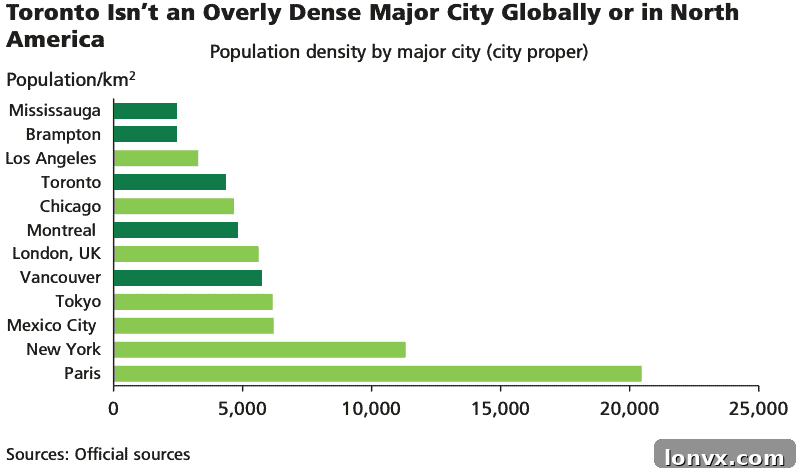
To truly address the supply deficit, Desjardins recently estimated that Canada would need to increase housing starts by an average of 100,000 units nationally per year in both 2023 and 2024. This ambitious target is deemed essential to offset the price gains driven by high immigration levels and to begin to restore a healthier balance between supply and demand. Achieving such an increase would require a concerted effort from all levels of government, coupled with private sector innovation and investment in construction capacity.
Ultimately, the report urges policymakers to adopt the classic real estate mantra: “location, location, location.” This implies a focused approach where affordability measures are specifically targeted at overpriced markets, rather than applying a blanket strategy across the board. Such targeted interventions could include tailored zoning reforms to encourage higher-density development in high-demand areas, investment in infrastructure to support new communities, and financial incentives for affordable housing projects in specific regions. By understanding and addressing the distinct challenges of Ontario’s diverse housing markets, policymakers can pave the way for a more stable, accessible, and equitable housing future for all residents.
For a comprehensive understanding of these insights, the full report can be accessed here.