The Evolving Footprint of Walkability: Shaping Canadian Cities and Real Estate
Walkability, at first glance, seems like a straightforward concept. Yet, beneath its apparent simplicity lies a nuanced reality, especially when considering the vast and diverse urban landscapes across Canada. From the sprawling prairies to the dense coastal cities, what constitutes a truly walkable environment is far from an apples-to-apples comparison, impacting everything from daily commutes to the bustling real estate market.
This discussion delves into how different Canadian cities define and experience walkability, exploring its profound implications for urban planning, community development, and property values. We’ll examine diverse perspectives from experts and residents, uncovering the unique challenges and innovative solutions shaping the future of pedestrian-friendly cities in Canada.
Defining Walkability in Diverse Canadian Contexts: Calgary and Winnipeg
Francesca Johnson, a seasoned realtor with Century 21 in Calgary, offers a perspective shaped by both her current city, which holds a Walk Score* of 39, and her upbringing in Manitoba. She highlights how the definition of walkability shifts dramatically depending on the urban and even agricultural character of a region. Interestingly, Winnipeg technically boasts a higher Walk Score of 48, yet Johnson’s lived experience illustrates a more complex truth.
“It takes half an hour to an hour to even get to the city from where a lot of people live because it’s very agricultural,” Johnson explains, referring to Winnipeg’s surrounding areas. This geographical spread and reliance on vehicular transport immediately challenge conventional notions of walkability, where proximity to destinations is paramount. The ‘city’ itself might be walkable, but accessing it from outlying areas often negates the benefit for many residents.
Johnson distills walkability into three critical components, particularly relevant to her experience living and working in Calgary: “I would break it open to three pieces: amenities, accessibility, and safety.” These factors are not merely about sidewalks but encompass a holistic urban experience. Amenities refer to the presence of shops, restaurants, parks, and services within a reasonable walking distance. Accessibility extends beyond physical barriers to include the ease of navigating these spaces, regardless of mobility. Safety, crucially, addresses both perceived and actual security, particularly in Canada’s challenging winter months.
“Are they taking good care of the sidewalks in the winter time, or are you going to be terrified that you’ll break your back on the way to work because they haven’t started it or they haven’t travelled it?” she queries. This question underscores a uniquely Canadian aspect of walkability: the seasonal impact of snow and ice. Proper winter maintenance is not just a convenience but a fundamental safety requirement that can make or break a city’s pedestrian-friendliness for several months a year, directly affecting how people interact with their urban environment and influencing their transportation choices.
Place-Making and Pedestrianization in Vancouver: The Gastown Pilot
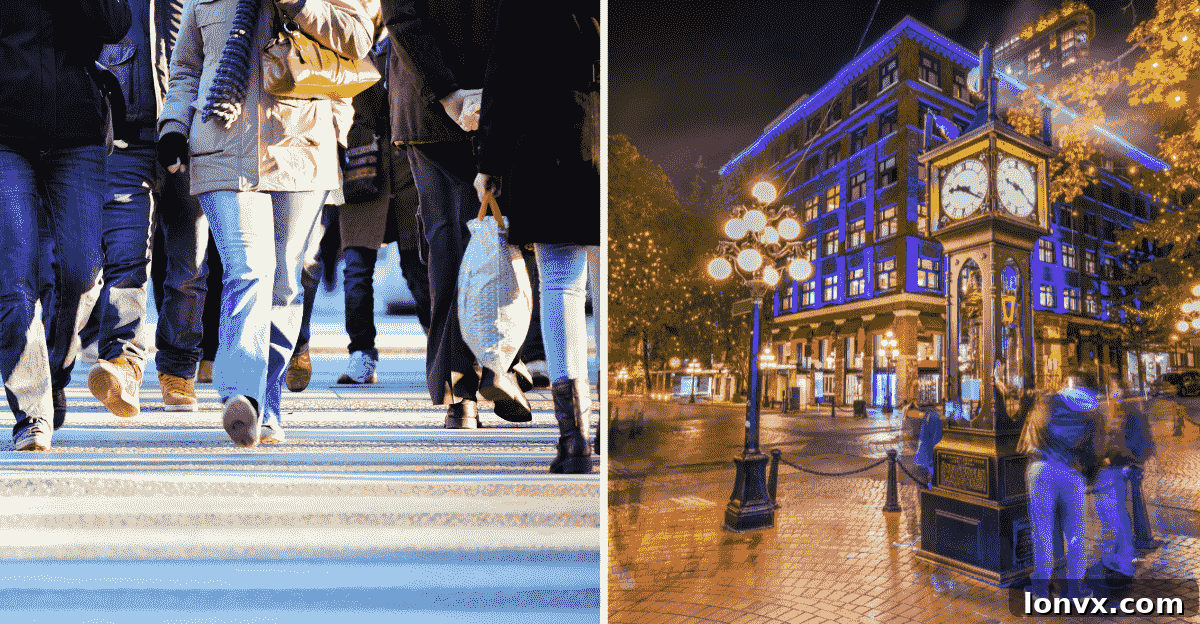
Moving to the West Coast, Vancouver, with an impressive Walk Score of 80, is actively addressing its own walkability questions through innovative urban interventions. Over the summer, the City launched the Water Street Pedestrian Zone pilot project in the historic and popular Gastown area. This initiative transformed a significant section of the street, previously open to vehicle traffic, into a vibrant pedestrian-only zone, complete with public seating, market stalls, and even a complimentary bike valet service.
Nathan Hawkins, an urban planning student at the University of British Columbia and an active participant with Vision Zero Vancouver, a non-profit advocating for safety-first transportation systems, closely observed the Gastown pilot’s unfolding throughout July and August. His assessment is overwhelmingly positive. “I love it,” Hawkins shares. “I think any change of use and pedestrianization of streets is fantastic from a safety and place-making perspective.”
The concept of “place-making” is central here. It’s about more than just closing a street to cars; it’s about intentionally designing public spaces to promote well-being, interaction, and a sense of community. By dedicating Water Street to pedestrians, Vancouver sought to create a more inviting and dynamic public realm, encouraging people to linger, connect, and engage with their surroundings. This aligns perfectly with Vision Zero’s objectives, which prioritize the safety and comfort of vulnerable road users, primarily pedestrians and cyclists, in urban design.
Such projects aim to reduce traffic congestion, lower emissions, and enhance the overall quality of urban life. By creating dedicated pedestrian zones, cities can foster a more human-scaled environment, where walking becomes not just a means of transport but an enjoyable experience that contributes to the unique character and vibrancy of a neighborhood.
Business Dissatisfaction vs. Long-Term Benefits of Enhanced Walkability
Despite the enthusiasm from urban planners and advocates like Hawkins, pedestrianization projects often face resistance, particularly from local businesses. The Gastown pilot was no exception, with some businesses expressing dissatisfaction and citing negative impacts on sales due to reduced vehicular access and perceived parking issues. This tension between urban design aspirations and immediate commercial concerns is a common challenge in city development.
However, Hawkins, drawing on his previous experience as a real estate project manager for a retail start-up in Canada, approaches these claims with an analytical lens. He emphasizes the importance of robust metrics for assessing business success, including month-over-month revenue, daily revenue, year-over-year revenue, and basket size per sale/transaction. From this perspective, he firmly believes that the pilot project, and the subsequent increase in walkability it fosters, should ultimately help rather than hinder these businesses.
“No business has the resources to be able to say this specific pedestrian pilot accounted for 80 per cent of their loss of sales this month versus last month. There’s just no way,” he asserts. His argument points to the complexity of business performance, which is influenced by numerous factors beyond a single urban intervention, such as economic climate, marketing efforts, competition, and product offerings. While initial disruptions can occur, studies from cities globally often show that pedestrian-friendly areas tend to attract more foot traffic, leading to increased exposure and, in the long run, higher sales for businesses that adapt and leverage the new environment.
The enhanced public realm can make an area a destination, encouraging longer dwell times and repeat visits. Businesses in walkable districts often benefit from higher property values and a more vibrant customer base. The key for cities and businesses alike lies in effective communication, adaptation strategies, and a focus on long-term benefits over short-term anxieties. When implemented thoughtfully, pedestrian zones can become catalysts for economic revitalization, transforming areas into thriving hubs for commerce and community.
Toronto: The Commute Challenge and Real Estate Implications
The discussion shifts eastward to Toronto, a metropolitan giant with a Walk Score of 61, where the impact of walkability on the real estate market is equally profound but manifests differently. Adam Jacobs, PhD, the national head of research with Colliers, provides insights into the city’s unique challenges, particularly concerning its notorious traffic and the arduous daily commute.
“It’s so hard to get downtown here,” comments Jacobs. “It’s a difficult commute, there’s a lot of construction, there’s a lot of traffic and it’s getting harder and harder to get employees downtown.” This statement encapsulates the dilemma facing many businesses and their employees in Canada’s largest city. The sheer size and growth of Toronto have outpaced its transportation infrastructure, making the daily journey to the city center a significant burden. This isn’t just an inconvenience; it has direct economic repercussions.
For businesses with offices in downtown Toronto, every minute saved on an employee’s commute translates into tangible benefits. A Q1 2024 report from Colliers highlighted this correlation, indicating that “an average lower commute time of 10 minutes is correlated to a two-percentage point lower market vacancy.” This finding underscores a critical driver in the commercial real estate market: accessibility and employee satisfaction are now key determinants of where businesses choose to locate their operations.
So, how do businesses make these crucial decisions about their next office space? Jacobs explains their rationale: “(They think,) ‘Let’s make this as frictionless and easy as possible. I’ll pay top dollar to rent the building right next to the main train station’.” This demonstrates a clear preference for properties in highly walkable areas, particularly those with excellent public transit access. These locations reduce commuter stress, improve employee well-being, and ultimately enhance productivity and talent retention. The demand for such prime, transit-accessible and walkable office spaces creates a premium in the market, making walkability a significant, quantifiable asset in Toronto’s competitive real estate landscape.
Walkability: A “Wholly Canadian Issue” of Boldness and Vision
Across Calgary, Winnipeg, Vancouver, and Toronto, walkability consistently emerges as a pivotal factor influencing the real estate market and urban development. Yet, despite the localized differences and unique challenges each city faces, Nathan Hawkins perceives a unifying theme: walkability, and more broadly, progressive urban planning, is a “wholly Canadian issue” rooted in a national hesitancy towards bold, transformative action.
“We as a country are very unwilling to invest deeply and make bold moves,” Hawkins observes. He elaborates on what he sees as a characteristic Canadian approach to governance: “Canada as a whole really approaches governance as, ‘We need to see somebody else do it successfully for 10 years and then we’ll do a milder version of what they did,’ and that’s exactly what’s happened with the Gastown pedestrian pilot.” This critique suggests a risk-averse culture that prefers to observe international successes for extended periods before adopting diluted versions, rather than pioneering innovative solutions tailored to local needs.
Hawkins believes this cautious approach limits Canada’s potential for creating truly world-class walkable cities. Regarding the Gastown pilot, he contends, “I don’t think the City went far enough with it. They’re very averse to taking risks and doing things boldly, the way that other cities, like Paris, are willing to really invest in public spaces.” The comparison to Paris is telling. Cities like the French capital, Copenhagen, or Barcelona have demonstrated a commitment to investing heavily in pedestrian infrastructure, reclaiming streets from cars, and prioritizing public spaces, often through bold and sometimes controversial projects that have ultimately transformed their urban fabric and enhanced residents’ quality of life.
This “wholly Canadian issue” highlights a crucial debate: should Canadian cities continue to play it safe, or should they embrace more ambitious urban planning strategies that prioritize pedestrian life, green spaces, and sustainable transportation? The answer will undoubtedly shape the future livability and economic competitiveness of Canada’s urban centers.
Montreal: A Potential Source of Inspiration for Canadian Urbanism
Amidst the varied landscape of Canadian urban planning, Montreal frequently stands out as a beacon of walkability, often drawing favorable comparisons to iconic European cities like Paris. With a Walk Score of 65 – surprisingly lower than Vancouver’s – Montreal serves as a compelling example of how quantitative metrics alone cannot fully capture the nuanced reality or paint the complete picture of a city’s accessibility and pedestrian experience.
Lea James, originally from Paris, lived in Montreal before eventually moving to Vancouver, where she now advocates alongside Nathan Hawkins at Vision Zero Vancouver. Her international perspective provides valuable insight into what truly makes a city walkable beyond just numbers. James believes that the successful transformations observed in Paris and now increasingly in Montreal, leading them to become among the most walkable and bikeable cities, offer a crucial lesson. She states, “Without determined political powers and citizens pushing for healthier and safer cities, change will not happen.” This emphasizes that vibrant, pedestrian-friendly urban environments are not accidental; they are the deliberate outcome of collective will and sustained effort.
Montreal’s success stems from a combination of factors: its historic urban layout with dense, mixed-use neighborhoods, a robust and integrated public transit system, numerous public squares and parks, and a strong cultural appreciation for street life. Its European charm encourages walking, making it a natural choice for many residents and visitors. The city’s willingness to implement pedestrian-only streets and seasonal closures further enhances its appeal, creating spaces where people can gather, socialize, and engage with their environment free from constant vehicular dominance.
James eloquently summarizes the overarching benefits: “A walkable city is the best advocacy for living in a sustainable way, connecting with our communities and enjoying healthier living, and that’s the winning recipe to make our cities durable and equitable.” This holistic view underscores that walkability is not merely about transportation efficiency; it is a foundational element for fostering environmental sustainability, strengthening social bonds, promoting public health, and ensuring equitable access to urban resources for all citizens. Montreal’s example provides a powerful testament to what is possible when political vision aligns with community aspirations to create cities designed for people first.
The Path Forward: Prioritizing Walkability for Sustainable Urban Futures
The journey through various Canadian cities reveals a multifaceted understanding of walkability, one that transcends simple scores to encompass deep-seated urban planning philosophies, diverse geographical realities, and the very fabric of community life. From Calgary’s winter challenges to Vancouver’s pilot projects, Toronto’s commuter woes, and Montreal’s inspiring pedestrian culture, the narrative consistently points to walkability as a critical component of sustainable and equitable urban development.
What unites these diverse experiences is the growing recognition that prioritizing pedestrians is not just an aesthetic choice but an economic imperative and a social responsibility. Walkable communities foster healthier lifestyles, reduce carbon footprints, enhance local economies through increased foot traffic, and build stronger, more interconnected neighborhoods. Yet, as highlighted by experts like Nathan Hawkins and Lea James, achieving true walkability requires more than just good intentions; it demands bold political leadership, innovative urban design, and active citizen engagement.
Canada stands at a crossroads, with the opportunity to move beyond cautious adaptation to embrace a future where its cities are leaders in human-centered design. By learning from successes and failures both domestically and internationally, Canadian municipalities can create urban environments that truly prioritize the needs of their residents. This means investing deeply in public infrastructure, advocating for policies that support active transportation, and fostering a culture where walking, cycling, and public transit are not just alternatives but preferred modes of movement.
Ultimately, the conversation around walkability is a conversation about the kind of cities we want to build: cities that are vibrant, resilient, healthy, and accessible to everyone. As Canada continues to grow and urbanize, the commitment to enhancing walkability will be a defining characteristic of its progress towards truly sustainable and livable urban futures.
*Walk Scores sourced from walkscore.com
Enjoying this article?
Get the latest REM articles in your inbox 3x week so you stay up to date on the latest in the Canadian real estate industry