
The early months of 2026 paint a compelling picture of the Toronto housing market, suggesting it remains deeply entrenched in a period of correction rather than embarking on a definitive recovery. For many residents, homeowners, and prospective buyers across the Greater Toronto Area (GTA), understanding these nuanced shifts is crucial for making informed decisions. The latest data from the Toronto Regional Real Estate Board (TRREB)’s Market Watch report provides a sobering glimpse into current conditions, indicating that the market is still navigating significant challenges.
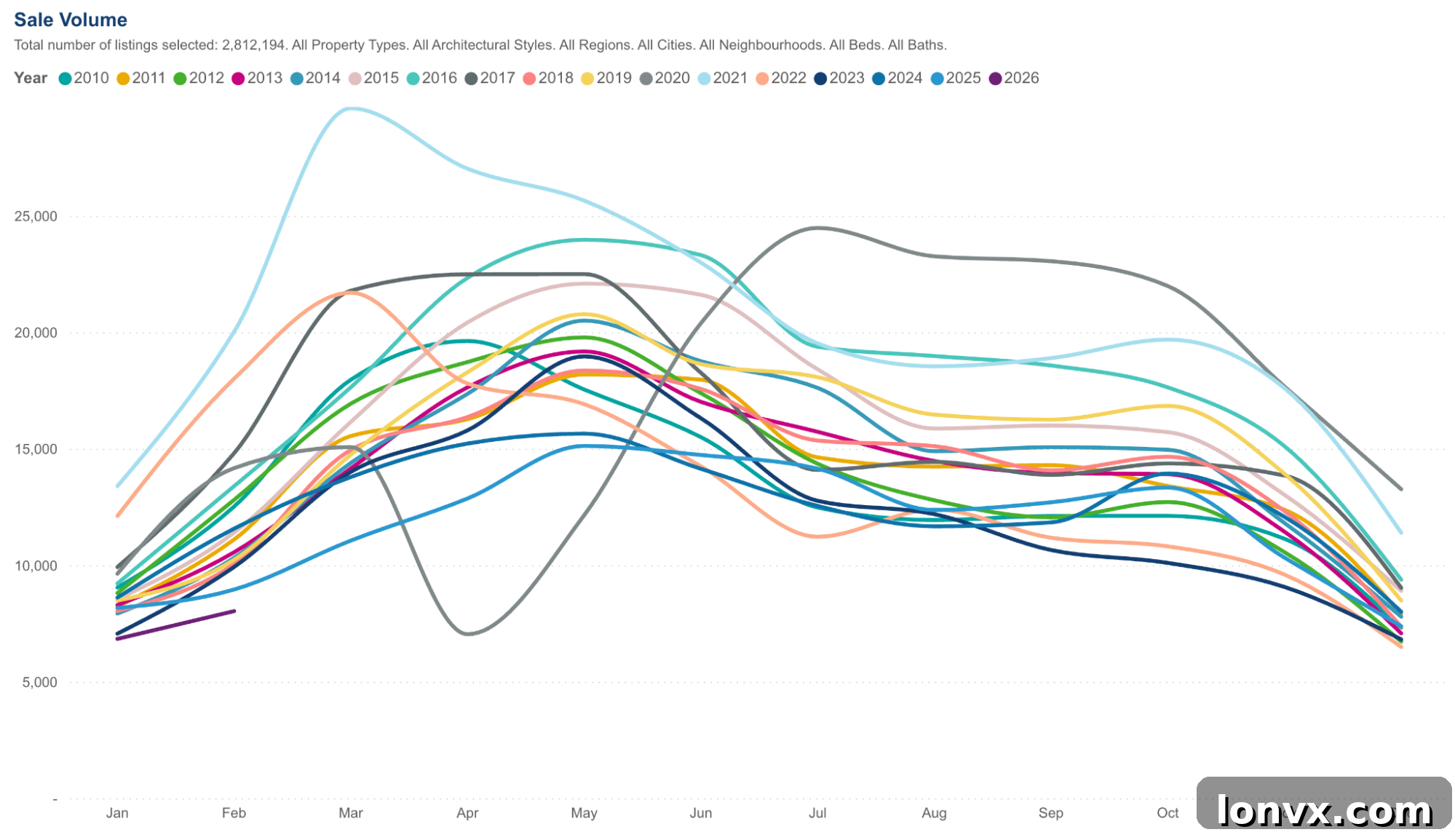
February 2026 witnessed a total of 3,868 home sales, marking a 6.3 percent decrease compared to February 2025. While this percentage might not immediately appear alarming, its true significance lies in the context: 2025 was already recorded as one of the weakest years for housing sales in recent memory. When current sales figures fall even below such subdued levels, it inevitably prompts a critical question: Is the market’s downcycle far from over? This persistent weakness challenges the prevailing optimism that often follows periods of market adjustment, urging a more cautious and analytical perspective.
To gain deeper insight into these complex microeconomic trends, we turn to Rob Marsiglio, a highly respected GTA housing analyst known for his sharp observations and data-driven assessments. Marsiglio’s analysis frequently offers a more granular understanding of market dynamics, revealing underlying patterns that broader statistics might obscure. His expertise is invaluable in dissecting the current state of Toronto’s housing landscape, and much of his insightful commentary forms the backbone of this comprehensive market report. His contributions are particularly relevant as we explore the unexpected twists and turns shaping buyer and seller behaviour across the region.
The “Broken Floor” Trend: Challenging Market Bottom Expectations
One of Marsiglio’s most compelling recent observations is what he terms the “broken floor” trend, a concept that fundamentally re-evaluates previous market expectations. Heading into 2026, a widespread assumption among many market participants, including some experts, was that the Toronto housing market had successfully reached its cyclical bottom in 2025. This belief fostered hope for stabilization and a potential rebound, encouraging buyers and sellers alike to anticipate an imminent shift in momentum. However, February’s stark numbers have provided a decisive counterpoint to this optimism, suggesting that such an assumption was, regrettably, premature.
Instead of finding a stable foundation, the year 2026 has, according to Marsiglio’s analysis, “officially broken the floor” established last year. This isn’t merely a slight deviation; it signifies a more profound downturn, marking the slowest start to a year for the Toronto real estate market in over a decade. This extended period of suppressed activity tells us something critical about the current market cycle: the usual spring momentum, which historically draws buyers back into the market with renewed vigour and confidence, has conspicuously failed to materialize. The absence of this typical seasonal upswing is a powerful indicator of entrenched market hesitancy.
The implication is clear: instead of engaging actively, buyers appear to be stuck in a prolonged “wait-and-see” phase. This protracted period of indecision is often driven by a combination of factors, including persistent high interest rates, broader economic uncertainties, and a palpable lack of clarity regarding future price trajectories. Potential buyers are hesitant to commit to significant investments in an environment where the perceived market bottom continues to recede, leading to reduced demand and a noticeable slowdown in transaction volumes. This collective pause creates a complex dynamic, impacting everything from listing strategies to overall market liquidity.
Homes Are Taking Significantly Longer to Sell: A Clear Signal of Softer Demand
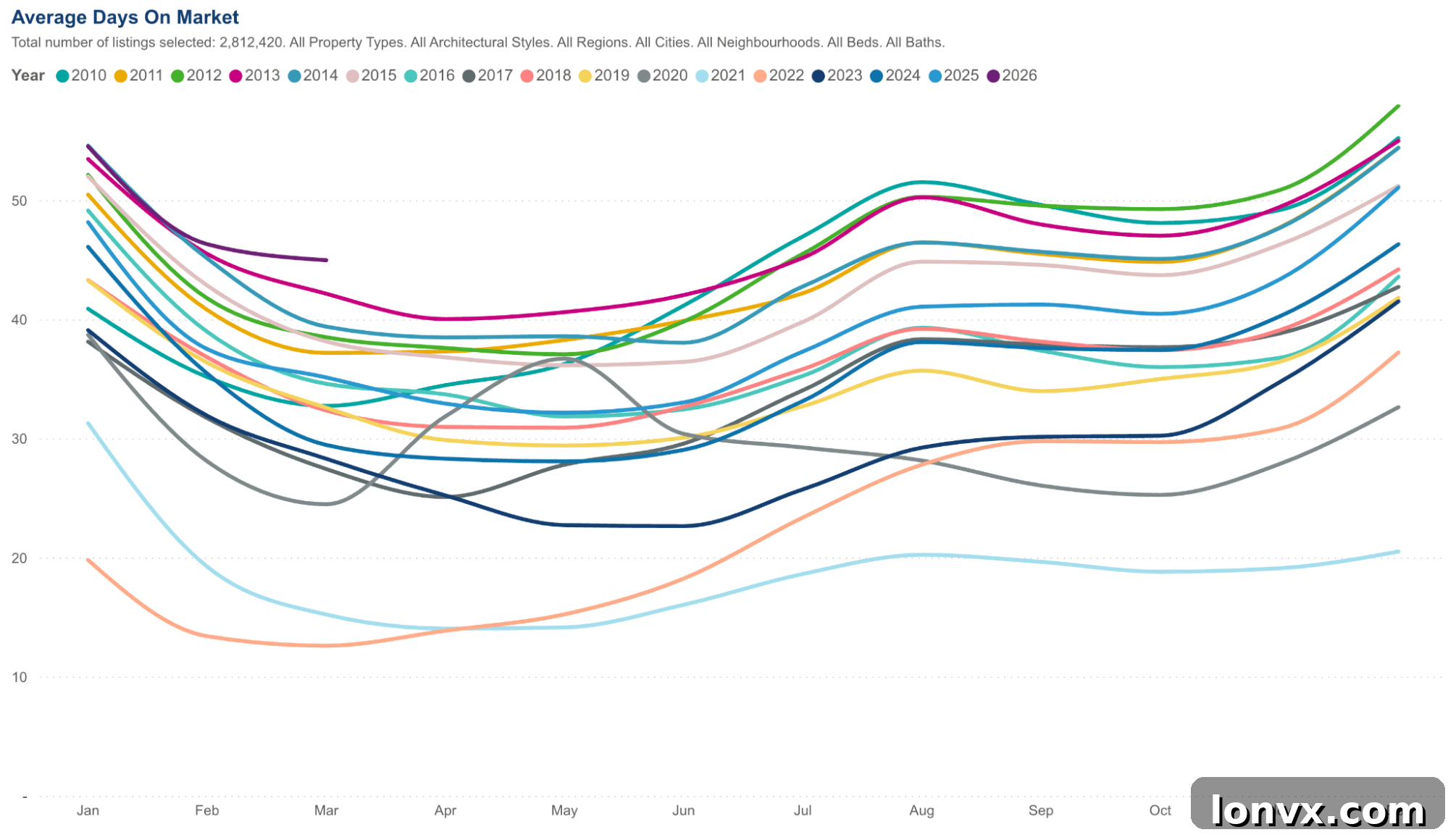
Beyond sales volumes and price adjustments, another unambiguous indicator of softening demand within the Toronto housing market is the increasing amount of time properties are spending on the market. This metric, often referred to as ‘Days on Market’ (DOM) or ‘Property Days on Market’ (PDOM), provides critical insight into buyer urgency and seller leverage. When homes linger longer without securing a buyer, it typically signals a shift in market dynamics, moving away from the frenetic pace of a seller’s market towards more balanced or even buyer-favoured conditions.
The February report unequivocally highlights this trend:
- The average days on market for properties increased significantly to 36 days, representing a substantial 33.3 percent rise year-over-year. This statistic captures the time from a property’s listing until it is conditionally sold.
- The broader property days on market, which includes conditional periods, also saw a notable increase, rising to 54 days. This marks a 28.6 percent increase compared to the previous year.
These escalating figures are not merely statistical anomalies; they reflect a fundamental change in buyer behaviour and market sentiment. When homes begin to sit longer, it fundamentally alters the power dynamic between buyers and sellers. Buyers gain a distinct advantage, as they face less competition and feel less pressure to make hasty decisions. This extended timeframe allows them to conduct more thorough due diligence, compare multiple properties, and often, negotiate more aggressively on price and terms. Consequently, the urgency that characterized previous boom cycles has dissipated, replaced by a more deliberate and cautious approach from purchasers.
In essence, the balance of power has definitively shifted. Sellers are now compelled to adapt to a landscape where potential buyers hold greater leverage. This often translates into sellers needing to be more realistic with their pricing expectations, more flexible during negotiations, and more strategic in their marketing efforts to attract interest. The era of multiple offers and bidding wars, which once dominated the Toronto market, has largely subsided, giving way to a more traditional sales process where properties need to be priced competitively and present strong value propositions to attract a discerning pool of buyers.
The Condo Market Comes “Full Circle”: Erasing Years of Appreciation
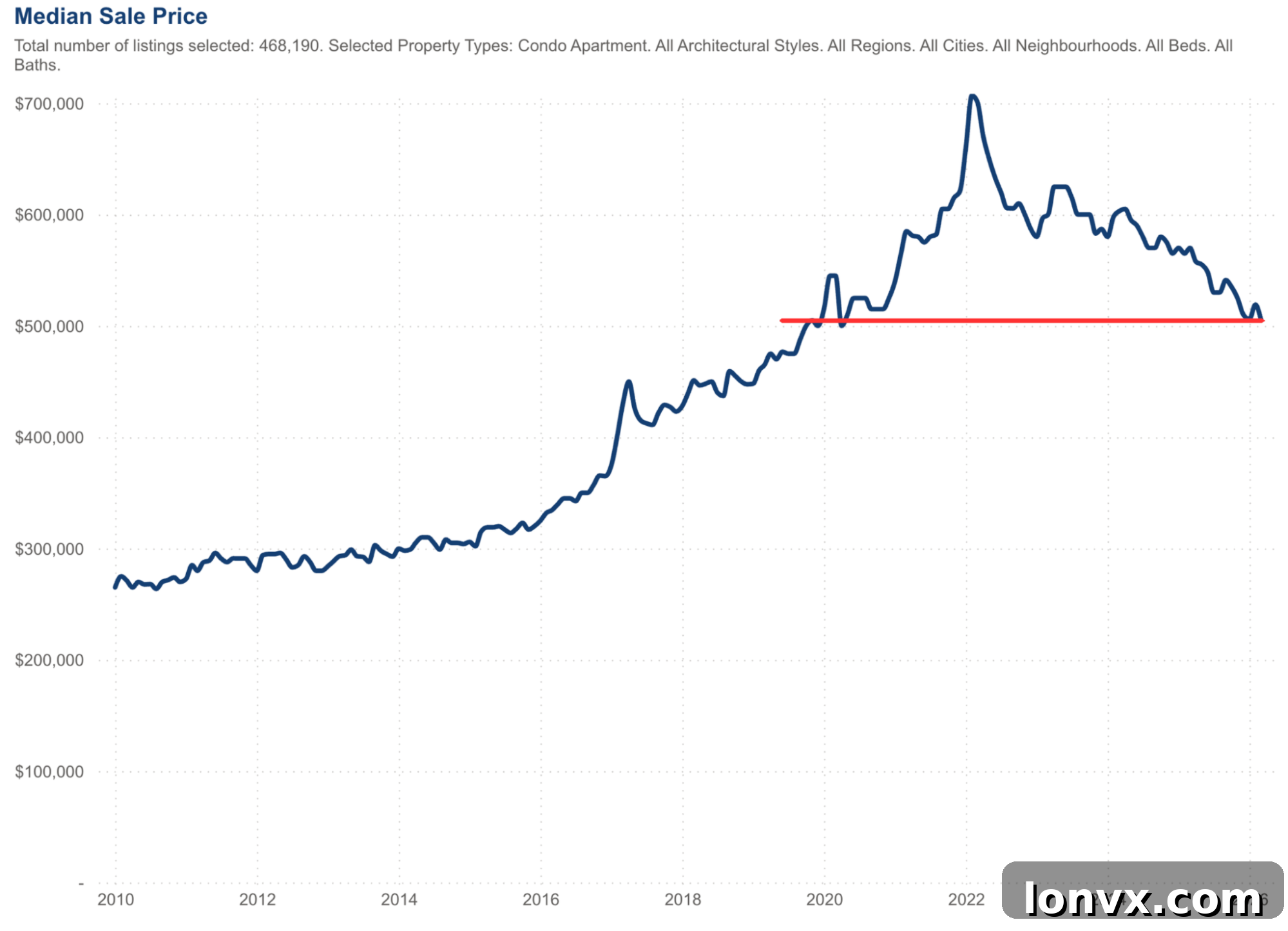
Perhaps the most striking and impactful shift currently unfolding within the Toronto housing market is occurring within the condominium sector. This segment, often considered an entry point for first-time buyers and a popular choice for investors, is experiencing a particularly pronounced recalibration. Rob Marsiglio’s detailed analysis reveals a fascinating and somewhat sobering development: median condo prices have now effectively reverted to their February 2020 levels, hovering around the $590,000 mark. This is a crucial benchmark, as it predates the significant market acceleration driven by the pandemic era.
What this means in practical terms is that the Toronto condo market has effectively erased six years of price appreciation. For owners who purchased during the peak of the market, or even in the years leading up to it, this represents a substantial loss in perceived equity. This “full-circle” phenomenon highlights the vulnerability of certain market segments to broader economic headwinds, particularly rising interest rates and tightened lending conditions, which disproportionately impact entry-level buyers and investors who often rely on financing. The rapid unwinding of value in this sector stands in stark contrast to the sustained growth observed in previous periods.
While the freehold housing segment has demonstrated somewhat greater resilience, managing to retain some of the considerable price gains accumulated during the pandemic era, the entry-level condominium market has undergone a much more complete and thorough recalibration. This divergence underscores the differing dynamics at play within Toronto’s diverse real estate landscape. Freehold properties, often seen as more stable long-term investments due to land ownership and scarcity, have historically weathered market fluctuations with more robustness. However, the condo market, with its higher density and often investor-driven dynamics, has proven more susceptible to a dramatic adjustment.
This kind of full-cycle reset, occurring within such a relatively short time frame, is historically rare and signals the profound degree of adjustment currently underway in Toronto’s housing market. It’s not merely a slight correction but a significant re-evaluation of value, bringing prices back to a pre-boom baseline. This reset carries significant implications for market confidence, investor sentiment, and the overall affordability narrative in one of Canada’s most expensive urban centres. It forces a reconsideration of long-term growth expectations and emphasizes the unpredictable nature of market cycles, particularly when influenced by unprecedented economic conditions.
The Inventory Paradox: A Stalemate in Supply and Demand
One of the more perplexing and unusual trends emerging from the February data is what Rob Marsiglio astutely describes as the “inventory paradox.” Typically, February marks the beginning of the spring real estate season, a period when the market traditionally experiences a significant surge of new listings. Sellers often time their entries to capitalize on increased buyer activity and favourable weather conditions, leading to a predictable uptick in available properties. However, 2026 has defied this conventional seasonal pattern, presenting a market dynamic that is anything but typical.
Instead of the anticipated increase, new listings plummeted by a substantial 17.7 percent year-over-year, falling to just 10,705 properties across the GTA. This dramatic reduction in new supply is coupled with another interesting observation: active inventory, which represents all available homes on the market at a given time, also saw a slight decline of approximately 2.4 percent year-over-year. At first glance, declining inventory might intuitively suggest strong underlying demand, as fewer available homes could theoretically drive up competition and prices. Yet, Marsiglio’s analysis points to a very different interpretation of these figures.
Rather than indicating robust demand outstripping supply, the current scenario appears to be the result of what Marsiglio refers to as a “strategic withdrawal” by sellers. Faced with a cooling market, extended selling times, and increasingly cautious buyers, many homeowners are choosing to hold back their properties from sale. The motivation behind this withdrawal is multifaceted: some sellers may be unwilling to accept lower offers than they previously anticipated, while others might be hoping for a future market recovery that would yield a better return on their investment. This decision to wait rather than list into an unfavourable market contributes significantly to the reduced supply.
This strategic withdrawal by sellers, combined with the “wait-and-see” approach adopted by buyers, creates a kind of stalemate in the market. Buyers are patiently waiting for prices to stabilize further, or even decline, before making a move, seeking the optimal time to secure a deal. Concurrently, sellers are patiently waiting for market conditions to improve, hoping for a return of buyer confidence and competitive bidding. When both sides pause simultaneously, the natural consequence is a sharp fall in transaction volumes, leading to a quiet, less active market despite underlying demand and supply dynamics being complexly intertwined. This paradox is a testament to the psychological factors heavily influencing real estate decisions in uncertain times.
A Sustained Buyer’s Market: Shifting Dynamics and Negotiating Power
All the aforementioned trends—weak sales, longer selling times, price adjustments, and the inventory paradox—are collectively pushing the Toronto housing market firmly into buyer’s territory. This marks a significant and welcome shift for prospective purchasers who have long contended with highly competitive and often frustrating seller’s markets. Understanding the characteristics of a buyer’s market is crucial for both those looking to purchase and those contemplating selling their property in the current climate.
One of the clearest indicators of this shift is observed in the condominium market, where Marsiglio highlights that months of inventory (MOI) has now exceeded seven months. The MOI metric represents how long it would take to sell all available homes on the market at the current rate of sales. An MOI of 1-3 months typically signifies a seller’s market, 4-6 months a balanced market, and anything above 6 months is generally associated with clear buyer’s market conditions. The seven-month threshold in the condo sector underscores a substantial imbalance in favour of buyers, offering them an abundance of choice and significantly reduced competition.
Even the traditionally more resilient freehold segment, which typically enjoys stronger demand due to land ownership, is showing undeniable signs of softening. A critical metric underscoring this trend is the sale-price-to-list-price ratio. For the first time this decade, this ratio dipped below 100 percent in February for freehold properties. This means that, on average, buyers are successfully negotiating prices below the initial asking price. This capability represents a monumental shift from just a few years ago, when the market was characterized by intense bidding wars, often driving sale prices significantly above list prices.
The ability to negotiate below asking price fundamentally alters the purchasing experience. Buyers are no longer under immense pressure to waive conditions or bid aggressively; instead, they have the luxury of making conditional offers and engaging in more deliberate price negotiations. This transition from a frantic, high-stakes environment to one favouring buyer discretion signifies a return to more conventional real estate practices. For sellers, it means that pricing strategies must be more realistic and competitive from the outset, as overpricing is likely to result in prolonged market exposure and potential price reductions. The current environment empowers buyers with greater choice, more time for decision-making, and increased leverage to secure favourable terms.
Durham Region: The Notable Exception in a Cooling Market
While much of the Greater Toronto Area is experiencing a broad-based cooling trend and a decisive shift towards a buyer’s market, it’s essential to recognize that not every part of the GTA is responding equally. There are intriguing pockets of resilience that defy the prevailing narrative, and one such notable outlier is Durham Region, particularly its municipalities of Whitby and Oshawa. These areas stand out as exceptions, demonstrating market conditions that deviate significantly from the broader regional trends.
According to Rob Marsiglio’s granular analysis, Durham currently represents the tightest micro-market within the entire GTA. This assessment is based on several key indicators that reveal a comparatively healthier and more competitive environment. Specifically, Durham Region is recording the lowest average days on market (DOM) figures, indicating that properties there are selling much faster than in other parts of the GTA. Furthermore, the sale-price-to-list-price ratios in Whitby and Oshawa are still holding remarkably close to 100 percent, suggesting that sellers are achieving asking prices, or very near to them, more consistently than their counterparts in core Toronto and other surrounding areas.
This distinct pattern within Durham Region strongly reinforces a broader, underlying trend shaping the current market: relative affordability has emerged as the primary driver of competition and demand. In an environment where lending conditions have tightened considerably and borrowing costs remain elevated due to higher interest rates, buyers are meticulously scrutinizing their budgets and seeking out value. This economic reality is increasingly pushing purchasers away from the historically high prices of central Toronto and into more accessible markets where their purchasing power can stretch further.
Consequently, buyers are concentrating their efforts and investment in the few remaining freehold markets that still fall within the challenging affordability constraints of 2026. Durham Region, with its more attainable price points for freehold homes compared to central GTA, has become a natural magnet for these budget-conscious buyers. This influx of demand helps explain why this specific micro-market retains its competitive edge, with properties selling faster and closer to asking prices. It illustrates how shifts in financial conditions can profoundly reorient buyer preferences and create distinct, localized market dynamics even within a larger cooling trend.
A Market Still Finding Its Balance: Navigating Towards Equilibrium
It is crucial to emphasize that the current market adjustments and cooling trends do not signify an indefinite decline. Real estate markets, by their very nature, operate in cycles, and every period of adjustment eventually leads to stabilization and, ultimately, a renewed upward trajectory. However, the early data emerging from 2026 strongly suggests that the Toronto housing market has not yet reached a clear turning point where a sustained recovery is imminent. Instead, it appears to be continuing its complex journey towards a new equilibrium.
Several key indicators reinforce this cautious outlook. Sales volumes remain historically weak, reflecting a persistent reluctance from buyers to enter the market with conviction. Properties are taking significantly longer to sell, providing tangible evidence of reduced urgency and increased buyer leverage. Moreover, prices, particularly in the condominium sector, are still undergoing a significant adjustment phase, indicating that the market is still actively correcting previous overvaluations. These combined factors paint a picture of a market still very much in flux, rather than one poised for a rapid rebound.
Perhaps most importantly, both prospective buyers and potential sellers appear to be united in their cautious approach. Buyers are waiting for clearer signals regarding price stability, interest rate trends, and overall economic confidence before making their significant investment decisions. Concurrently, sellers are adopting a “strategic withdrawal,” holding properties off the market in anticipation of improved conditions and better offers. This collective “wait-and-see” mentality from both sides creates a dynamic where transaction volumes remain suppressed, and market momentum is difficult to generate.
Given these prevailing conditions, expectations of a quick rebound in the Toronto housing market may prove overly optimistic. While the inherent long-term value of real estate in a growing metropolitan area like Toronto remains strong, the immediate future points to continued adjustments. For now, the comprehensive data and expert analysis suggest that Toronto’s housing market is doing what markets often do after a major boom: methodically working its way back toward a more sustainable and balanced state of equilibrium. This journey requires patience, vigilance, and an astute understanding of the evolving market signals for all participants.