
Canada’s housing market is currently navigating a complex period of recovery, characterized by significant regional disparities. While national home resales are steadily climbing, signaling a renewed interest and activity among buyers, the trajectory of property prices continues to diverge sharply across the country. This creates a fascinating and often challenging landscape for both homeowners and prospective buyers, highlighting the localized nature of real estate dynamics even within a single national market.
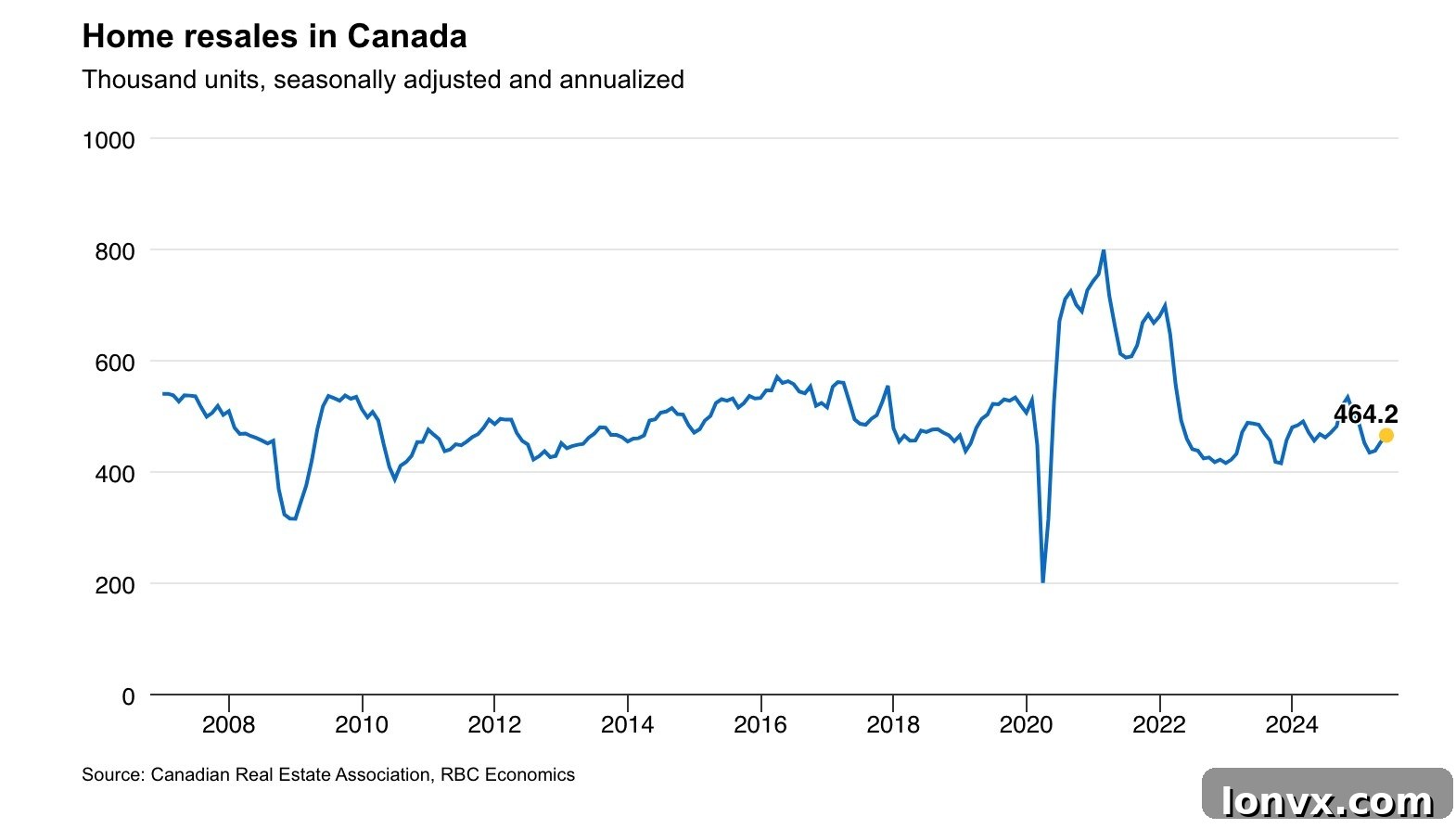
The latest data confirms a positive trend in sales volume, with national resales recording their third consecutive monthly increase in June. However, this recovery in transaction activity has not yet translated into a broad-based surge in property values. Robert Hogue, Assistant Chief Economist at RBC, notes that overall prices have remained lower, with national declines primarily influenced by softer market conditions in the country’s two most populous provinces: Ontario and British Columbia. These provinces, traditionally powerhouses of the Canadian real estate sector, are currently experiencing unique pressures that contrast starkly with other regions.
Hogue further emphasizes that these regional differences in market performance have become increasingly pronounced, creating a multi-speed housing market. On one side, provinces like the Prairies, Quebec, and Atlantic Canada are experiencing robust demand coupled with tighter supply conditions, which often leads to more stable or appreciating property values. On the other side, several key areas within Ontario and British Columbia are grappling with an elevated inventory of homes for sale, persistent affordability challenges stemming from historically high prices and rising interest rates, and, in some cases, worsening job prospects that erode buyer confidence and purchasing power. This bifurcation necessitates a granular understanding of local conditions for anyone looking to enter or exit the market.
Understanding these distinct market environments is crucial for stakeholders across Canada. For those in robust markets, it might mean continued equity growth and competitive bidding. Conversely, for those in areas facing headwinds, it could involve longer listing times, price adjustments, and a greater emphasis on strategic selling. The interplay of macroeconomic factors, local economic health, and demographic shifts is creating a dynamic mosaic that challenges a simplistic, national narrative of the Canadian housing market.
More Sales Activity, Yet Prices Remain Tempered: A Closer Look at Canadian Real Estate Dynamics
Despite the persistent downward pressure on national average prices, the latest figures paint a more optimistic picture concerning sales volumes. Nationally, home resales saw a healthy increase of 2.8 per cent in June compared to May, building on previous months’ gains. More significantly, activity was up by 3.5 per cent from a year ago, indicating a steady rebound in buyer confidence and market engagement. This reversal is a positive sign, marking a recovery from earlier in the year when broader economic uncertainties had temporarily dampened market enthusiasm and transactional activity across various sectors of the economy.
Robert Hogue highlighted these encouraging signs, noting that key markets across the country contributed significantly to this national uplift. Toronto, Canada’s largest housing market, experienced a notable surge, with sales climbing 8.1 per cent from May. Vancouver also saw a respectable increase of 2.8 per cent, while Edmonton reported a 3 per cent rise, and Montreal recorded a 1.8 per cent bump in resale activity. These figures suggest that buyers are cautiously re-entering the market, perhaps in response to easing prices in some areas or a desire to lock in properties before potential future rate changes or inventory shifts.
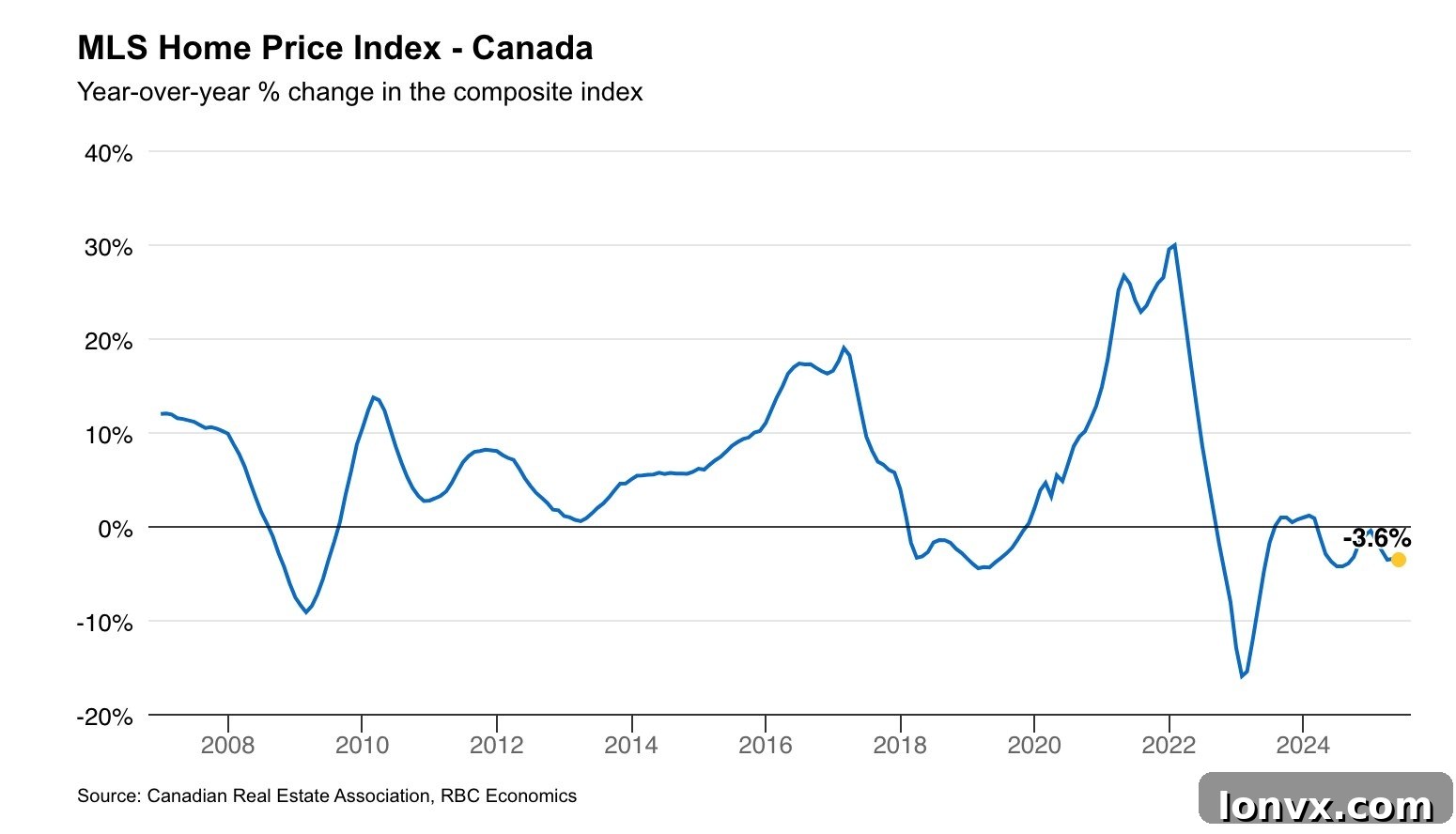
However, it is crucial to temper this optimism regarding sales with a realistic assessment of price trends. Despite the undeniable recovery in transactional activity, this resurgence has yet to translate into a reversal of the ongoing decline in house prices across the country. The national composite MLS Home Price Index (HPI), a widely recognized benchmark for housing values, edged 0.2 per cent lower in June from May. This marked the seventh consecutive monthly drop, underscoring the deep-seated challenges affecting affordability and seller expectations, particularly in historically expensive markets. The HPI, which tracks price changes based on a statistical model of typical home types, provides a more accurate reflection of price trends than simple average prices, which can be skewed by shifts in the types of homes sold.
This persistent decline in the national HPI, even amidst rising sales, can be attributed to a combination of factors. Elevated interest rates continue to impact purchasing power, forcing buyers to adjust their budgets downwards. Furthermore, increased inventory in certain regions gives buyers more choice and leverage, leading to less competitive bidding and greater price negotiations. For the market to truly stabilize and see price appreciation nationally, a more sustained period of increased demand, coupled with a tightening of supply or a decrease in lending rates, would likely be required. Until then, the Canadian housing market remains in a state of flux, with sales activity pointing towards a recovery, but prices still firmly in a correctional phase.
Diverging Regional Trends: Understanding Canada’s Multi-Speed Housing Market
The overarching national trends mask a vibrant and highly segmented real estate landscape across Canada. Price declines, in particular, have been predominantly concentrated in Southern Ontario and British Columbia, regions that experienced unprecedented growth during the pandemic-era housing boom. Here, the dynamics have shifted dramatically, with sellers engaging in fierce competition amidst a historically high number of homes for sale. This abundant supply, combined with buyers facing stretched affordability conditions exacerbated by elevated interest rates and high initial purchase prices, has decisively tipped the market in favor of purchasers.
The MLS HPI data from May to June vividly illustrates this regional disparity, showing continued price erosion in several key markets. Toronto, the economic heart of Canada, saw a 0.9 per cent drop, while Guelph experienced a more significant decline of 2.5 per cent. Other Southern Ontario markets also faced headwinds, including the Niagara region (-1.5 per cent), London (-1.2 per cent), Windsor (-0.8 per cent), and Cambridge (-0.4 per cent). Out West, British Columbia’s Fraser Valley recorded a 1 per cent decrease, and Vancouver, another global real estate hot spot, saw a modest but persistent 0.1 per cent dip. These regions have collectively witnessed some of the most significant weakening over the past year, largely because supply-demand conditions have shifted heavily into the buyer’s favour, offering more choice and negotiation room than seen in years.
This market shift has profound implications. For potential buyers in these areas, it presents an opportunity to enter a market that was previously unattainable for many. However, concerns about further price corrections, high borrowing costs, and potential job market instability mean that buyers are often proceeding with caution. For sellers, adapting to this new reality means adjusting price expectations, being more flexible in negotiations, and understanding that homes may take longer to sell. The previous era of multiple offers and quick sales has largely receded, replaced by a more balanced, albeit challenging, environment.
The current conditions in Ontario and B.C. are a direct consequence of a perfect storm of factors. Decades of strong price growth, fueled by low interest rates, population growth, and speculative investment, pushed home ownership out of reach for many. As interest rates rose to combat inflation, the cost of borrowing skyrocketed, severely impacting affordability. This, coupled with an increase in listings—some from investors looking to exit, others from homeowners facing higher mortgage payments—created an oversupply that sellers are now navigating. The long-term outlook for these markets will depend heavily on interest rate trajectories, economic stability, and the ability of new construction to meet underlying demand at more sustainable price points.
In stark contrast to the trends observed in Ontario and British Columbia, property values have demonstrated remarkable resilience and even robust growth in other parts of Canada. The Prairies, Quebec, and Atlantic Canada are currently experiencing more stable and often appreciating real estate markets, reflecting different economic fundamentals and demographic patterns. In the Prairies, cities like Regina, Saskatoon, and Winnipeg have seen property values climb by nearly 8 per cent year-over-year, showcasing sustained demand and relatively affordable entry points compared to their western and eastern counterparts. These markets often benefit from steady local economies, driven by natural resources, agriculture, and a growing tech sector, attracting interprovincial migration.
Quebec’s housing market also tells a story of strength, with Montreal experiencing a solid 7.3 per cent year-over-year growth, and Quebec City leading the pack with an impressive 16 per cent increase. This vibrancy is supported by a stable economy, a relatively high quality of life, and a strong sense of community, drawing residents and investors alike. Meanwhile, Atlantic Canada continues its post-pandemic boom, with several cities reporting double-digit growth. Fredericton saw an 11 per cent rise, Saint John a 13 per cent increase, and St. John’s a remarkable 12 per cent climb. Halifax, the region’s largest urban center, maintained a healthy 4 per cent growth. The appeal of Atlantic Canada lies in its relative affordability, stunning natural beauty, and a growing remote work population seeking a better work-life balance away from the pricier major metropolitan areas.
Robert Hogue also points out a nuanced situation in Alberta’s two major cities, Calgary and Edmonton, where the picture is “rebalancing.” While homebuying activity in these cities has leveled off somewhat this year, it remains at solid levels. Simultaneously, prices are easing amid a growing supply of available homes. This rebalancing suggests a healthy market adjustment where increased inventory is being met with consistent, albeit no longer escalating, demand. Alberta’s market dynamics are often influenced by the energy sector and interprovincial migration, with many seeking relatively affordable housing options and job opportunities. The current trend suggests a gradual shift towards a more sustainable market, moving away from rapid price appreciation without collapsing into a deep correction.
The divergent performance across Canada underscores the importance of local economic drivers, population movements, and varying affordability thresholds. While higher interest rates are a national phenomenon, their impact is modulated by regional price points and economic resilience. Regions with lower average home prices and stronger local economic fundamentals are better equipped to absorb the shock of higher borrowing costs, leading to continued market activity and more stable property values. This multi-speed reality means that generalized statements about the Canadian housing market can be misleading, and a detailed regional analysis is essential for accurate understanding and strategic planning.