Navigating the New Landscape: Unpacking the Cowichan Tribes Aboriginal Title Ruling in Richmond, B.C.
Understanding the profound implications for property owners, the real estate market, and reconciliation efforts in British Columbia.
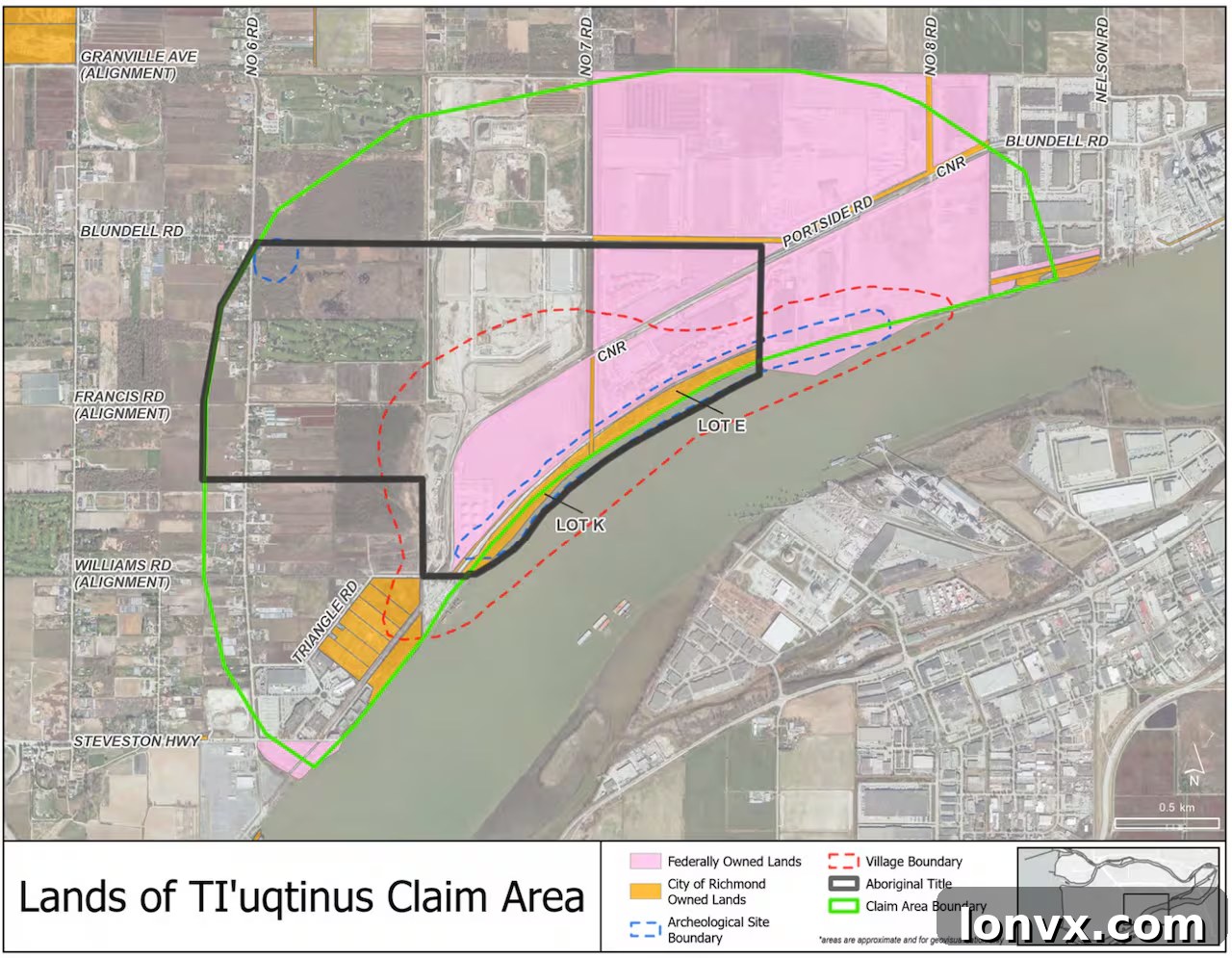
The legal landscape of British Columbia’s real estate market was irrevocably altered almost four months ago when Justice Barbara Young delivered a landmark ruling. Her decision confirmed the Cowichan Tribes’ Aboriginal title over 750 hectares of land in Richmond, B.C., sending palpable shockwaves throughout the province. Despite an 18-month transition period designed to mitigate immediate disruptions, the ruling has left countless property owners in a state of unease, grappling with questions about the future security and nature of their land titles. This apprehension persists even as no First Nation has, to date, initiated private claims based on this decision.
Following the judgment, approximately 150 property owners within the affected area received letters from the City of Richmond, explicitly stating that the ruling “may impact the title to your property.” This official communication amplified existing anxieties, contrasting sharply with the consistent message from Aboriginal groups. As articulated by the British Columbia Assembly of First Nations, these groups maintain that “Aboriginal title and fee simple private ownership can and do co-exist,” aiming to reassure stakeholders about the potential for shared land stewardship. Nevertheless, the Cowichan decision has undeniably shaken the very foundations of B.C.’s established land title system, prompting a critical examination of how the real estate industry, particularly Realtors operating in the affected and surrounding areas, is navigating this unprecedented uncertainty.
Understanding Aboriginal Title: A Landmark Decision with Deep Roots
To fully grasp the significance of the Cowichan Tribes’ victory, it’s essential to understand the concept of Aboriginal title in Canada. Aboriginal title is an inherent, collective right of Indigenous peoples to the land, based on their prior occupation and use before the assertion of Crown sovereignty. This right has been affirmed through a series of foundational Supreme Court of Canada decisions, including Delgamuukw v. British Columbia (1997) and Tsilhqot’in Nation v. British Columbia (2014), which established the criteria for proving Aboriginal title and affirmed its legal status. The Tsilhqot’in decision, in particular, marked the first time the court declared Aboriginal title over a specific land area, laying crucial groundwork for subsequent claims like that of the Cowichan Tribes.
The Cowichan Tribes’ successful claim over 750 hectares in what is now Richmond is not merely a legal victory; it’s a profound recognition of their enduring connection to their ancestral lands. While the ruling applies to a specific area, predominantly comprising industrial and agricultural lands, its ripple effects extend across the province. It serves as a powerful reminder of the ongoing process of reconciliation and the imperative to acknowledge and uphold Indigenous rights. The 18-month transition period underscores the complexity of implementing such a ruling, providing a critical window for dialogue, negotiation, and the development of frameworks for co-existence and shared governance.
The Real Estate Market’s Initial Reaction and Expert Observations
Amidst the legal and political discussions, the tangible impact on the real estate market has been a focal point of concern. Chris Dinnell of Dinnell Real Estate, a Realtor familiar with the Richmond market, reports that he has not observed any significant market shifts directly attributable to the ruling. His experience suggests that the broader market has remained largely status quo, navigating a period of general sluggishness that has characterized the entire year, particularly for the condo sector. “The affected area is so limited in the grand scheme of the market here, so no, I don’t know anybody that’s been affected,” Dinnell noted, indicating that widespread panic has not materialized.
While Dinnell’s direct observations suggest minimal immediate disruption, the undercurrents of concern are undeniable. At the time of this report, a small number of apartments were listed for sale within the periphery of the claimed area, though not within the core Aboriginal Title land itself. These properties had notably longer days on market (70 and 105 days respectively, according to Realtor.ca) compared to the regional average of 38 days for apartments in Greater Vancouver the previous month. While direct causation is difficult to ascertain, this disparity raises questions about whether heightened buyer caution, even in adjacent areas, might be playing a subtle role.
On the financing front, Kelly Hudson of Kelly Hudson Mortgages echoed Dinnell’s sentiments. In an email, Hudson confirmed that she has not “had any mortgages I’ve been working on affected by the Cowichan Tribes decision.” This is a crucial point, as the ability to secure financing is a cornerstone of property transactions. The current lack of direct impact on mortgage approvals offers some reassurance, suggesting that financial institutions are, for now, processing applications without specific amendments related to the Cowichan ruling. However, this could evolve as the long-term implications become clearer and regulatory frameworks adapt.
Navigating Uncertainty: Support and Resources for Real Estate Professionals
Despite the absence of widespread concrete issues reported thus far, the underlying apprehension among all stakeholders—property owners, potential buyers, and industry professionals—remains palpable. The complex nature of the reconciliation process, combined with the groundbreaking legal precedent set by the Cowichan decision, necessitates clear guidance for Realtors. These professionals are often the first point of contact for clients seeking to understand the implications of such rulings on their investments and property rights.
The British Columbia Real Estate Association (BCREA) is expected to play a pivotal role in disseminating information and providing support. When approached for comment, BCREA’s CEO, Trevor Koot, referenced materials developed for members through BCREA Access. However, the accessibility of these resources to the broader public or even the media remains limited, leaving a degree of ambiguity about the specific guidance Realtors are currently receiving. This lack of transparency can hinder effective communication and potentially exacerbate confusion.
For Realtors, understanding their disclosure obligations is paramount. They must be prepared to address client concerns with accurate, up-to-date information, advising them to seek independent legal counsel when appropriate. Proactive engagement with legal experts specializing in Aboriginal law and property rights, as well as staying continuously informed about BCREA updates, will be critical. The industry must move beyond simply reacting to inquiries and instead equip its professionals with the tools to confidently and ethically guide clients through this evolving landscape. The integrity of the real estate transaction process depends on it, fostering trust in a system undergoing significant re-evaluation.
A Complex History Demands a Balanced Future
The Cowichan Tribes decision is not an isolated incident but a continuation of a broader historical and legal narrative concerning Aboriginal title and rights in British Columbia. As Trevor Koot highlighted in an interview regarding another Aboriginal title claim in Kamloops, B.C., the market sentiment across the province has shown a degree of “docility” rather than outright “deal-breaking” due to uncertainty. While deals aren’t necessarily falling through, Koot observed that people are often choosing to “pause for a bit.” This pause reflects a natural human reaction to ambiguity, underscoring the vital distinction between uncertainty and a complete erosion of trust in the system.
Koot further stressed that Aboriginal title claims throughout B.C. are inherently complex, rooted in centuries of history, and therefore defy simple, quick resolutions. “It’s got a complex history. It’s going to have a complex future,” he asserted, emphasizing the collective responsibility to engage with this issue from a balanced perspective. This balanced approach requires acknowledging the historical injustices faced by Indigenous peoples, respecting legal precedents that affirm their rights, and fostering collaborative pathways forward that benefit all residents of British Columbia. The province’s adoption of the United Nations Declaration on the Rights of Indigenous Peoples (UNDRIP) into provincial law further underscores this commitment to recognizing and implementing Indigenous rights.
The challenge now lies in translating the legal affirmation of Aboriginal title into practical, equitable solutions on the ground. This will necessitate close cooperation between First Nations, provincial and municipal governments, property owners, and industry stakeholders. Developing clear policy frameworks for co-existence, land use planning, and economic development within areas subject to Aboriginal title claims will be crucial. The 18-month transition period offers a critical window for dialogue and the co-creation of these frameworks, ensuring that stability and certainty can ultimately be restored to the land title system while upholding Indigenous rights.
Looking Ahead: Toward Certainty and Reconciliation
The Cowichan Tribes’ Aboriginal title ruling is more than just a legal judgment; it’s a pivotal moment in British Columbia’s ongoing journey toward reconciliation. While the initial reaction has been characterized by uncertainty and apprehension among some property owners, it also presents an opportunity to forge new models of land governance and partnership. The call for a “balanced perspective” by industry leaders like Trevor Koot resonates deeply, urging all parties to approach this evolving landscape with understanding and a commitment to shared progress.
For the real estate sector, this means actively engaging with the implications of Aboriginal title, prioritizing client education, and advocating for clear, accessible resources. It requires moving beyond traditional paradigms of land ownership to embrace a future where Indigenous rights are not only legally recognized but also practically integrated into the fabric of land management and development. As the 18-month transition period progresses, the focus will undoubtedly shift towards the collaborative development of frameworks that define what “co-existence” truly entails—ensuring both the protection of Aboriginal title and the stability of the broader property market. This will be a complex, multi-faceted process, but one that is essential for building a more just and equitable future for all in British Columbia.