
In a significant move poised to redefine Canada’s residential lending landscape, the Office of the Superintendent of Financial Institutions (OSFI) is deliberating a pivotal shift: replacing the long-standing mortgage stress test with a more dynamic, portfolio-level approach to risk management. This potential regulatory overhaul signifies a fundamental transformation, moving away from assessing individual borrowers in isolation to focusing on the aggregate risk within financial institutions’ mortgage portfolios.
The existing stress test, implemented to shield Canada’s financial system during periods of historically low interest rates, largely achieved its intended purpose. However, the current economic climate presents a new set of complexities. Emerging inflationary pressures, potentially fueled by global trade disputes and tariffs, coupled with analyses from institutions like Scotiabank suggesting limited capacity for the Bank of Canada to enact significant rate cuts, indicate that the nation is navigating uncharted economic waters.
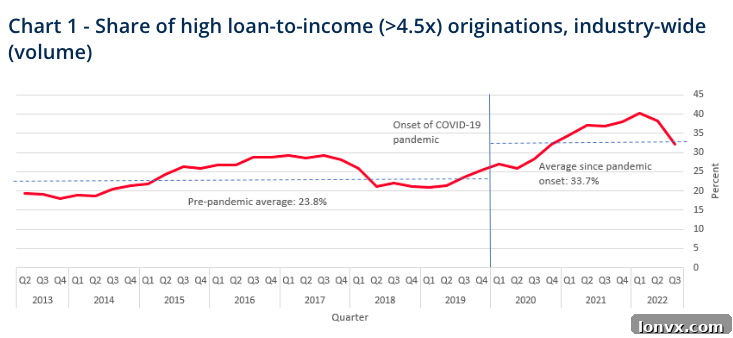
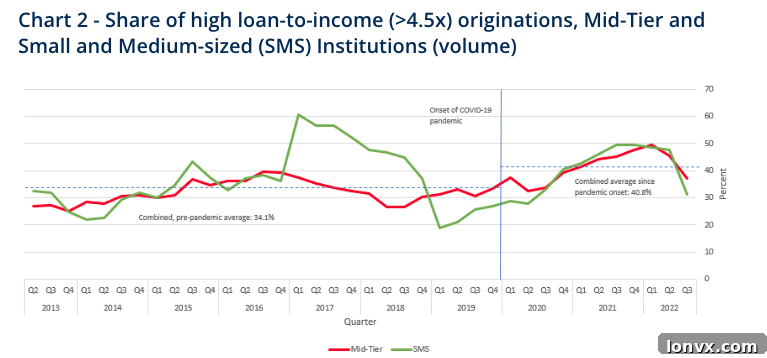
These challenges underscore the need for a flexible regulatory framework capable of adapting to persistent inflation and evolving market dynamics. While the stress test successfully mitigated risk in previous environments, as illustrated by OSFI’s own data, the landscape has changed. It’s critical to acknowledge that the initial impact of the stress test did, for a brief period, shift some demand and associated risk towards medium-sized lenders, indicating the complex interplay of regulation and market response.
Source: Valery.ca
The charts below, provided by OSFI, visually demonstrate the positive influence of the stress test in reinforcing the stability of the Canadian financial system. However, they also hint at the temporary re-distribution of risk within the lending ecosystem, highlighting the continuous need for adaptive regulatory measures.
The Current Landscape of Mortgage Regulation in Canada
Introduced in 2016 and subsequently expanded in 2018, the mortgage stress test has been a contentious yet crucial instrument in Canadian housing policy. On one hand, it’s lauded as a prudent safeguard, fortifying the financial system against potential shocks. On the other, it has been heavily criticized for creating an unnecessary barrier to homeownership, particularly for first-time buyers and those in high-cost urban centers.
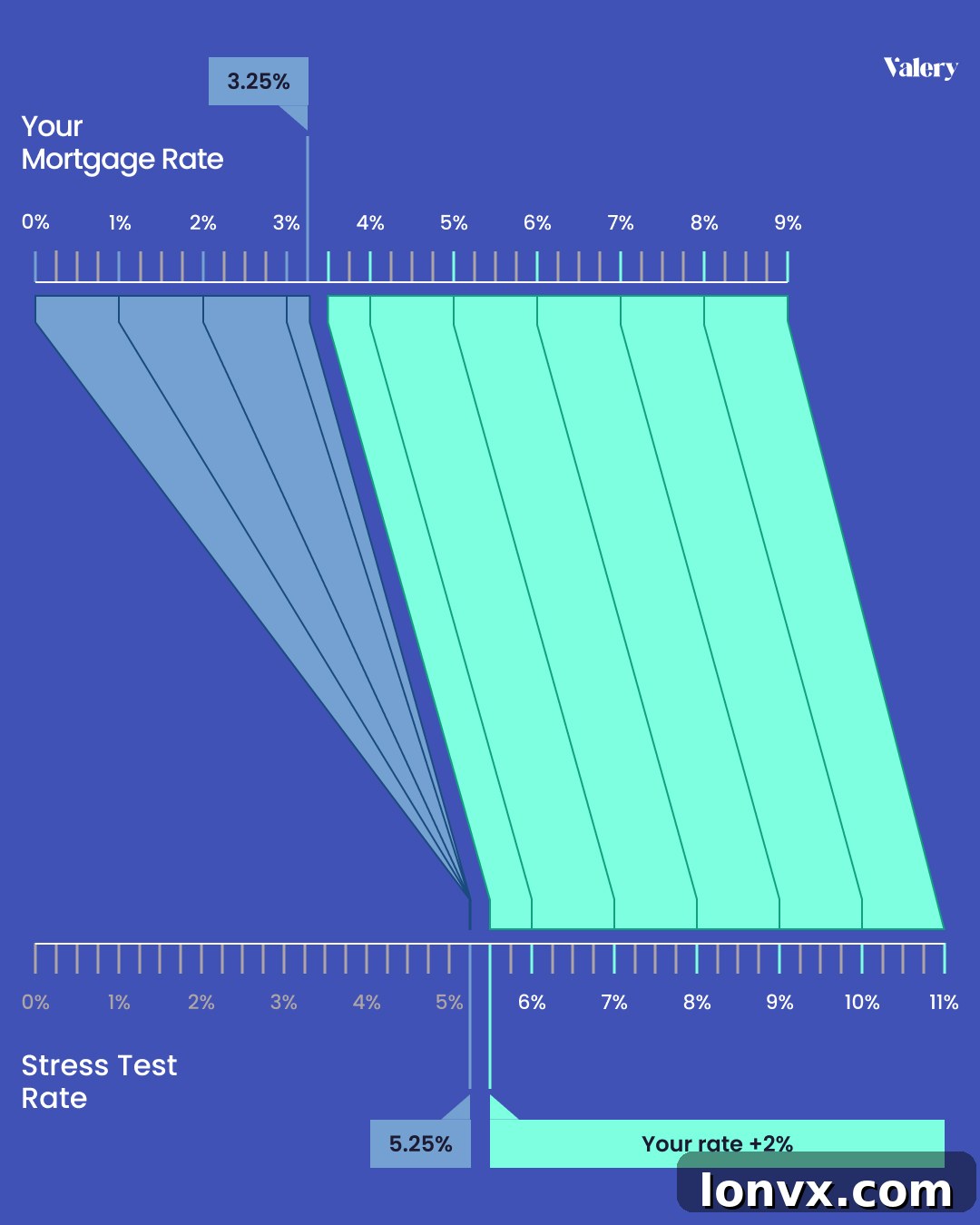
Under the existing rules, aspiring homeowners must demonstrate their ability to manage mortgage payments at an interest rate that is either 5.25 per cent or their contract rate plus 2 per cent, whichever is higher. This qualification hurdle significantly reduces the purchasing power of many Canadians, affecting both the type of property they can afford and their overall market access. For many, it has meant the difference between qualifying for a home and being priced out of the market entirely.
The efficacy of the stress test was particularly evident during the aggressive interest rate hikes between 2022 and 2023. The relatively low default rates observed during this period are a testament to its protective capacity, suggesting that it helped insulate borrowers and lenders from the immediate impacts of rising rates. However, the horizon now includes the potential for persistent inflationary pressures, driven by geopolitical tensions and trade disputes. This could translate into interest rates remaining higher for longer than initially projected, demanding a more sophisticated and adaptive framework for mortgage regulation.
This evolving economic environment provides a compelling rationale for OSFI’s proposed shift to portfolio-level risk management. Such an approach could offer greater flexibility in navigating complex market conditions, where the delicate balance between curbing inflation and maintaining financial stability must be constantly recalibrated. The critical challenge lies in designing and implementing a system that can effectively adapt to these new economic realities while preserving the robust protective benefits that the current stress test has provided.
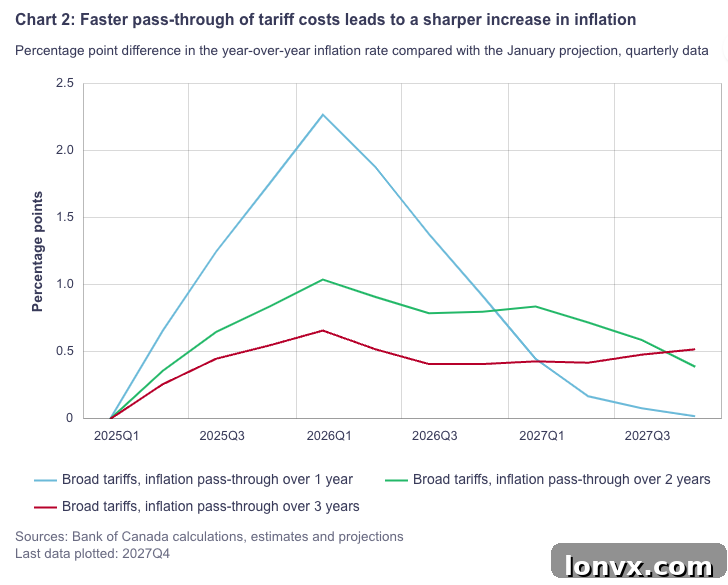
Bank of Canada’s thoughts on how tariffs could show up in Canadian inflation
A New Direction: OSFI’s Portfolio-Level Risk Approach
OSFI’s proposed alternative represents a significant evolution in regulatory thinking, moving beyond individual borrower assessment to a broader, more strategic oversight of lending practices. Instead of forcing every borrower to qualify against a hypothetical higher interest rate, the new framework would impose limits on the overall exposure of banks to high-risk lending within their mortgage portfolios.
Specifically, the proposal suggests that financial institutions would be restricted from originating more than 15 per cent of their quarterly mortgages to borrowers whose total mortgage debt-to-income (DTI) ratio exceeds 450 per cent of their annual household income. This means banks would need to actively manage the composition of their loan books, ensuring that a significant portion of their lending remains within more conservative DTI thresholds. This macro-prudential approach aims to curb systemic risk without necessarily placing an immediate, direct barrier on every single potential homeowner.
Why This Regulatory Shift Matters for Canada’s Housing Market
This isn’t merely a technical tweak to existing regulations; it signifies a profound reimagining of how Canada approaches housing market risk. The current stress test, despite its noble intentions, has faced considerable criticism for creating artificial barriers to entry, often pushing qualified buyers to the sidelines or into the less regulated private lending market. Furthermore, OSFI’s own internal analyses have highlighted a critical paradox: even with the stress test in place, a substantial number of borrowers continued to secure mortgages where their total debt exceeded 450 per cent of their household income. This suggests that the individual stress test, while useful, may not have fully addressed the underlying accumulation of high household debt at a systemic level.
The portfolio-level approach seeks to address this by directly limiting the volume of high-DTI mortgages across an institution’s entire book, thereby promoting more prudent lending practices overall. This could lead to a more balanced and sustainable growth trajectory for the housing market, potentially reducing the risk of a widespread debt crisis while still allowing for some flexibility at the individual borrower level.
Historical Context: Lessons from Canada’s Past
Canada’s cautious and often stringent approach to mortgage regulation is deeply rooted in historical experience. The devastating housing crash of 1982 serves as a stark reminder of the perils of lax lending rules. That period saw the collapse of 36 federally insured loan and trust companies, alongside two banks, necessitating a staggering $1.3-billion in government deposit insurance payouts. The memory of market corrections tied directly to weak or inadequate lending oversight continues to heavily influence the regulatory philosophy of bodies like OSFI.
This historical context explains OSFI’s diligent and deliberate approach to any proposed changes. The primary objective remains safeguarding the financial system from undue risk, even as regulators strive to balance this with the need for market accessibility and economic growth. Any new framework must demonstrably prove its ability to prevent similar catastrophic events, echoing the lessons learned from past vulnerabilities.
Potential Market Implications of OSFI’s Proposed Changes
The proposed transition from an individual stress test to a portfolio-level risk management framework could trigger wide-ranging effects across Canada’s dynamic real estate market:
- Strategic Portfolio Management for Lenders: Banks and other financial institutions will be compelled to adopt more sophisticated and strategic approaches to managing their mortgage portfolios. This might involve more granular data analysis, proactive risk assessment, and potentially a recalibration of their lending criteria to ensure compliance with the 15% DTI cap. This could lead to a greater emphasis on the overall health of their mortgage book rather than just individual borrower qualification.
- Varied Impact on Market Access for Borrowers: The changes could create a bifurcated experience for borrowers. Some, particularly those with strong financial profiles or lower debt-to-income ratios, might find it easier to qualify for mortgages, as lenders gain more flexibility in allocating a portion of their lending to higher-DTI clients. Conversely, those with very high debt relative to their income might face new challenges, depending on their individual circumstances and the bank’s overall portfolio strategy. The “exception” quota (the 15%) would become a highly sought-after category.
- Redistribution of Risk Management Responsibility: This new approach fundamentally shifts the primary responsibility for systemic risk management from individual borrowers (who are stress-tested) to the financial institutions themselves. Banks would bear a greater onus to ensure the resilience and stability of their entire mortgage portfolio, fostering a more institution-centric approach to market oversight. This could encourage banks to innovate in their risk assessment models and diversify their lending practices.
- Impact on Housing Affordability: While the direct impact on housing prices is complex and multifaceted, the changes could indirectly influence affordability. By potentially easing some restrictions for certain borrowers, it might slightly increase demand, but the overall cap on high-DTI lending aims to prevent excessive risk-taking that could inflate prices unsustainably.
- Potential for Increased Competition: With new flexibility, lenders might compete more aggressively for qualified borrowers, potentially leading to more favorable rates or terms for some segments of the market.
The Broader Economic Picture and Canada’s Housing Future
This regulatory evolution unfolds at a truly critical juncture for Canada’s housing market. Concerns over housing affordability have reached unprecedented levels, becoming a defining issue for policymakers and citizens alike. Simultaneously, specific sectors of the economy face unique uncertainties, as evidenced by recent, targeted restrictions on lending to certain groups, such as steel and aluminum workers. The timing and implementation of these proposed changes are therefore profoundly significant, with the potential to reshape market dynamics, influence consumer behavior, and impact the overall economic stability of the nation.
The government’s focus on addressing the housing crisis, coupled with the persistent threat of inflation and potential global trade disruptions, creates a complex backdrop against which OSFI’s decision will be made. The new framework must not only protect against financial instability but also contribute positively to the goal of making housing more accessible and affordable for Canadians.
Looking Ahead: OSFI’s Deliberate Assessment
OSFI’s commitment to a full year of assessment before making a final decision underscores the complexity and profound importance of this potential regulatory shift. This measured approach allows for thorough stakeholder consultation, rigorous data analysis, and an opportunity to model various economic scenarios. The regulator is tasked with the delicate balancing act of maintaining robust financial market stability while simultaneously fostering a healthy, accessible, and dynamic housing market. The decision will not be taken lightly, reflecting its far-reaching consequences for homeowners, aspiring buyers, and the broader Canadian economy.
The Next Chapter in Canadian Mortgage Regulation
As the Canadian financial industry and prospective homeowners eagerly await OSFI’s final verdict, one fundamental truth remains clear: Canada’s approach to mortgage regulation is in a perpetual state of evolution, continuously adapting to new market realities and economic challenges. Whether this signifies the conclusive end of the stress test era, paving the way for a purely portfolio-based system, or merely marks the genesis of a sophisticated hybrid approach that integrates elements of both, remains to be seen. Regardless of the exact outcome, the implications for Canada’s housing market – from affordability and accessibility to systemic risk management – will undoubtedly be profound and long-lasting.
We invite you to share your perspectives on these proposed changes. How do you envision they might impact Canada’s real estate market, your own housing plans, or the broader economic landscape? Your insights are valuable as we collectively navigate this pivotal moment in Canadian housing policy.
Enjoying this article?
Get the latest REM articles in your inbox 3x week so you stay up to date on the latest in the Canadian real estate industry