
Embarking on the journey of homeownership is a significant milestone, often considered a cornerstone of financial stability and personal achievement. However, for many Canadians, this dream comes with a hefty price tag, especially during the crucial first year. A groundbreaking new report by Point2, a leading real estate intelligence platform, has meticulously analyzed just how financially demanding this initial period can be across Canada’s diverse housing markets. The study delves into the comprehensive costs associated with stepping into a new home, providing invaluable insights for prospective buyers and shedding light on the stark regional disparities that define the Canadian real estate landscape.
The Point2 analysis scrutinizes the financial realities facing new homeowners in the country’s 50 most populous cities, revealing a dramatic spectrum of costs. From the moment the keys are handed over, buyers are confronted with a myriad of expenses, ranging from substantial upfront outlays like down payments and closing costs, to ongoing annual commitments such as mortgage payments, property taxes, and homeowners’ insurance. Understanding these combined financial burdens is paramount for anyone considering a purchase, as the study starkly illustrates that the path to homeownership can vary wildly in affordability depending on where one chooses to settle.
Deciphering the True Cost of Canadian Homeownership: Beyond the Purchase Price
The Point2 report goes beyond merely listing property values; it provides a holistic view of the financial commitment required in the initial 12 months. This includes a robust examination of two primary categories of expenses:
- Upfront Costs: These are the immediate expenses incurred at the time of purchase. They typically encompass the down payment, which is a significant portion of the home’s purchase price paid initially, and a collection of closing costs. Closing costs can be surprisingly diverse and include legal fees, land transfer taxes (which vary by province and municipality), appraisal fees, home inspection costs, title insurance, and various adjustments for utilities or property taxes already paid by the seller. These costs can quickly add tens of thousands of dollars to the initial investment.
- Annual Recurring Costs: Once the transaction is complete, homeowners face a continuous stream of expenses. The most substantial of these is the mortgage payment, which covers both the principal loan amount and the interest accrued. Alongside this, property taxes, levied by municipal governments, represent a significant ongoing cost, funding local services. Homeowners’ insurance is another mandatory expense, protecting against unforeseen damages and liabilities. Often overlooked but equally important are utility costs (electricity, gas, water, internet), which contribute significantly to the monthly budget.
By compiling and dissecting these varied expenses, the study paints a clearer, more comprehensive picture of what it truly costs to own a home in Canada, particularly during that critical first year when financial adjustments are most pronounced.
The Great Divide: Canada’s Most and Least Expensive Cities for First-Year Homeownership
The findings from Point2 underscore a profound geographical disparity in housing affordability across Canada. The cost of that pivotal first year of homeownership spans a breathtaking range, from a relatively manageable $74,342 in Saguenay, Quebec, to an astonishing sum exceeding $400,000 in Richmond Hill, Ontario. This dramatic difference highlights the vastly different economic realities that prospective homeowners face depending on their chosen location.
Quebec: A Haven for Affordability?
Cities within Quebec consistently emerged as the most affordable options for first-time buyers. This trend is largely attributable to significantly lower upfront costs and more modest annual mortgage payments compared to other Canadian provinces. For instance, picturesque cities such as Saguenay, Trois-Rivières, and Quebec City offer a more accessible entry point into the housing market. In these vibrant communities, down payments were typically less than $59,000, and the burden of annual mortgage payments remained below $18,000. This affordability is a testament to a combination of factors, including generally lower average property values, a potentially less competitive market, and distinct provincial economic conditions that favor buyers seeking value.
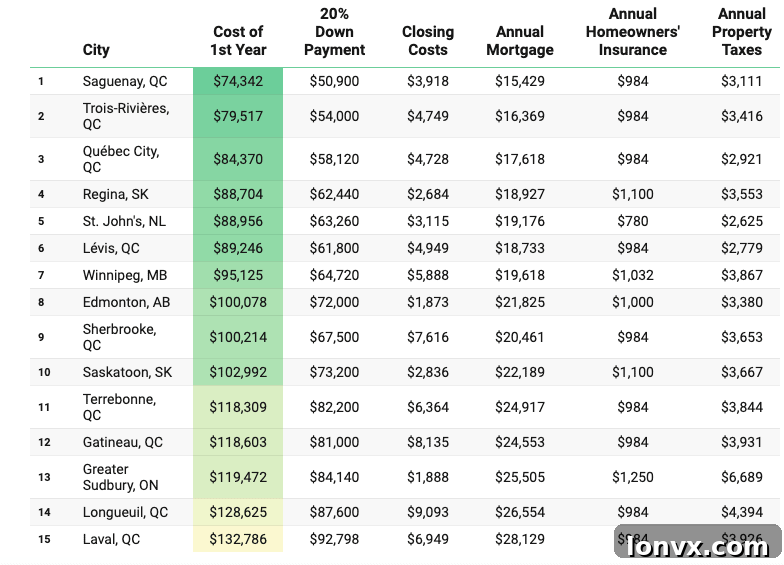
Source: Point2Homes – An overview of Canadian cities offering the cheapest first year of homeownership.
Ontario and British Columbia: The Pinnacle of Expense
In stark contrast, Canada’s most populous provinces, Ontario and British Columbia, present formidable financial hurdles for aspiring homeowners. Owning a home in desirable Ontario cities like Richmond Hill, Markham, or Oakville demands an entirely different financial commitment. Here, down payments soared to $265,000 or more, and annual mortgage payments frequently exceeded $80,000. These figures are indicative of exceptionally high property values driven by robust economies, strong population growth, limited housing supply, and sustained demand.
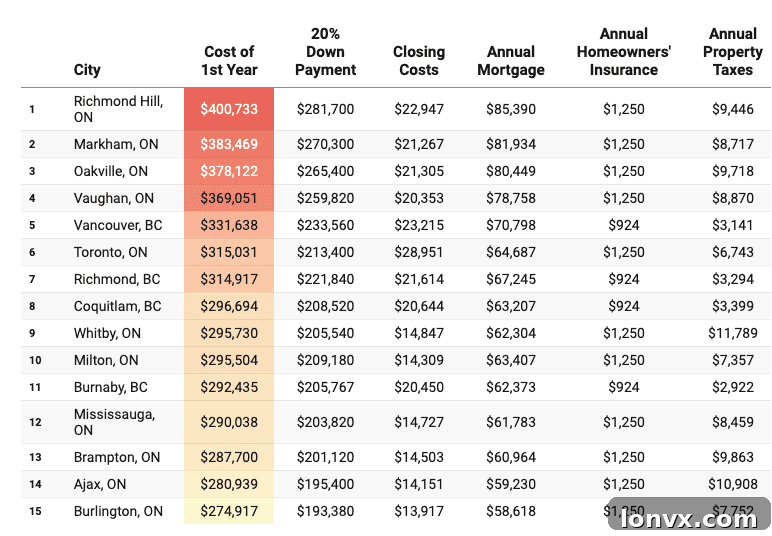
Source: Point2Homes – Exploring Canadian cities with the highest costs in the first year of homeownership.
Unsurprisingly, the nation’s two largest metropolitan hubs, Vancouver and Toronto, consistently rank among the most expensive markets. The report confirms that the average first-year cost of homeownership in these bustling cities comfortably surpasses $315,000. This staggering sum reflects the intense competition, premium land values, and desirability of living in world-class urban centers that offer unparalleled career opportunities and cultural amenities. The dream of owning a home in these locales often remains just that for many, requiring significant financial planning and often, considerable sacrifices.
Navigating the Challenges: Support and Solutions for Homebuyers
The findings of the Point2 report highlight a growing affordability crisis, particularly for first-time buyers and those with limited financial resources. While the challenges are substantial, the report also acknowledges that various measures and programs are in place, or being implemented, to help ease the burden and potentially boost homeownership rates across Canada.
Financial Aid Programs: A Lifeline for First-Time Buyers
Governments at both federal and provincial levels have introduced initiatives designed to support individuals entering the housing market. These can include:
- First-Time Home Buyer Incentive (FTHBI): A shared-equity mortgage program that offers a portion of the home’s purchase price to eligible first-time buyers, reducing their monthly mortgage payments without increasing their down payment.
- Home Buyers’ Plan (HBP): Allows first-time buyers to withdraw funds from their Registered Retirement Savings Plans (RRSPs) to buy or build a home, tax-free, provided the funds are repaid within 15 years.
- Provincial and Municipal Grants: Many provinces and cities offer specific grants or rebates for first-time buyers, often related to land transfer taxes or energy-efficient home purchases.
These programs, while not universally accessible or sufficient to offset all costs, represent crucial efforts to make the dream of homeownership more attainable for a segment of the population.
Policy Interventions: Addressing Market Dynamics
Beyond direct financial aid, broader policy interventions aim to reshape the housing market. One significant measure highlighted by the report is the two-year moratorium on non-Canadians purchasing residential property. This ban was introduced with the intention of cooling down speculative demand and ensuring that housing supply is primarily available for Canadian residents. While its long-term impact is still being assessed, such policies reflect a proactive stance by the government to address issues of affordability and access.
Other potential solutions often discussed in policy circles include increasing housing supply through zoning reforms, investing in affordable housing projects, and exploring measures to stabilize interest rates or make mortgage qualifications more flexible for responsible borrowers. A multi-faceted approach, combining demand-side management with supply-side enhancements, is often seen as the most effective way to foster a more balanced and accessible housing market.
The Path Forward: Informed Decisions in a Complex Market
The Point2 report serves as a vital resource, offering a transparent look into the initial financial realities of homeownership across Canada. For potential buyers, especially those venturing into the market for the first time, these findings underscore the critical importance of meticulous financial planning, comprehensive budgeting, and realistic expectations. Understanding the full spectrum of upfront and recurring costs – not just the sticker price of a home – is essential for making an informed decision.
While the disparities in affordability are significant, the dream of owning a home remains within reach for many, particularly in regions where costs are more manageable. For those aspiring to live in the more expensive metropolitan areas, the journey may require greater savings, longer-term financial strategies, and potentially leveraging available government support programs. The report implicitly encourages prospective buyers to research extensively, compare markets, and seek professional advice to navigate the complexities of the Canadian housing market successfully.
As Canada continues to grapple with housing affordability challenges, reports like this provide critical data to inform both individual decisions and broader policy discussions. The goal remains to foster a housing market that is sustainable, accessible, and allows more Canadians to realize the benefits of homeownership without undue financial strain.
For a deeper dive into the specifics of these costs and city-by-city breakdowns, read Point2’s full report on the cheapest first year of homeownership in Canada here. Understanding these dynamics is the first step towards making a confident and well-prepared entry into the Canadian housing market.