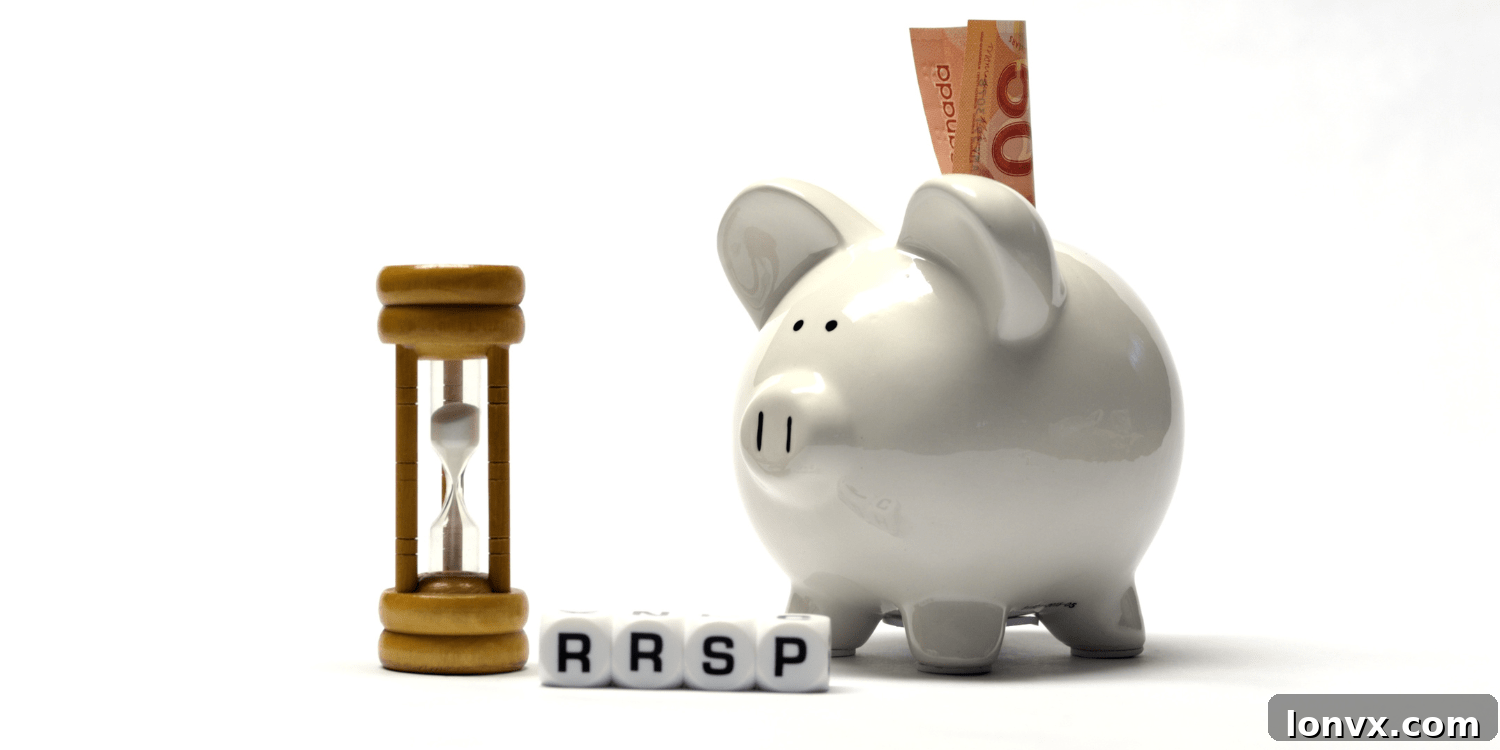
Beyond Bricks and Mortar: Unlocking Retirement Potential with RRSPs for Realtors
As a driven professional realtor, the natural inclination might be to channel all investment efforts back into what you know best: real estate. After all, “invest in what you know” is a common adage. However, from an unbiased financial perspective, have you truly explored the compelling advantages of a Registered Retirement Savings Plan (RRSP)? Many professionals, realtors included, often harbor misconceptions about RRSPs, sometimes driven by fears of hefty tax bills at death or concerns about poor investment performance. These fears can lead to avoiding what could be one of the most powerful tools in your retirement planning arsenal.
While there are numerous avenues for retirement savings, understanding the fundamental math and strategic benefits of an RRSP is an absolute must. For most individuals, especially self-employed professionals like realtors, an RRSP should undeniably form a foundational piece of a comprehensive retirement strategy. It’s not about abandoning real estate investments; it’s about diversifying and leveraging tax-efficient growth opportunities that an RRSP provides.
The Bottom Line:
Despite the myriad of uncertainties life can present, incorporating an RRSP into your financial plan is a fundamentally sound decision. Much like strategically incorporating your business, the RRSP empowers you to defer highly taxed income from your peak earning years to later stages of life, typically during retirement, when your income—and consequently your tax rate—is expected to be significantly lower. In the interim, your investments within the RRSP grow tax-deferred, compounding wealth over decades without being eroded by annual taxes, making it a robust vehicle for long-term financial growth.
Understanding the RRSP Advantage: Crunching the Numbers
To truly grasp the power of an RRSP, let’s move beyond assumptions and put some realistic, yet conservative, figures to the test. We’ll use a straightforward scenario without stretching the assumptions to avoid misleading conclusions:
- **Starting Age & Contribution Period:** Assume an individual begins saving at age 35 and continues for 25 years, stopping at age 60. (While starting earlier is ideal, this reflects a common scenario).
- **Income and Annual Contribution:** After business expenses, let’s assume an annual income of $120,000. A consistent annual contribution of $20,000 to the RRSP over these 25 years will be made.
- **Investment Growth:** We’ll invest these funds in a very average, balanced mutual fund, projecting a modest annual growth rate of 6% after all fees. This isn’t an aggressive or exceptional return, aiming for a realistic expectation.
Over 25 years, the total contributions would amount to $20,000 per year multiplied by 25 years, totaling $500,000. A key benefit of RRSP contributions is the immediate tax refund. Assuming an average marginal tax rate of 40% (this varies by province, from approximately 35% in Nunavut to 44% in Prince Edward Island), your annual $20,000 contribution would generate a $8,000 tax refund each year. Over 25 years, these refunds total $200,000. This means your true out-of-pocket investment is $300,000, not $500,000, as the government effectively subsidizes a portion of your savings through the tax refund.
Now, let’s apply our 6% annual growth assumption. By age 60, your RRSP account balance would grow to an impressive $1,096,851. This illustrates the incredible power of tax-deferred compounding, turning your $300,000 net investment into over a million dollars.
What about the often-feared “worst-case scenario” – dying at age 60 with no spouse to whom the account can be rolled over? In this situation, the entire RRSP balance becomes fully taxable to your estate. While the tax bill would indeed be significant, ranging from approximately $452,881 in Nunavut to $556,283 in Nova Scotia, the net amount remaining for your estate would still be between $540,568 and $643,970. Even in this most unfavorable tax scenario, your original after-tax investment of $300,000 would have grown to provide your estate with a substantial after-tax return of $240,568 to $343,970. This demonstrates that even with very conservative assumptions and the highest possible tax burden at death, the RRSP still generates a considerable net gain. If any of our initial inputs improve – higher taxable income, a later date of death, an earlier start to saving, or better investment returns – the outcomes improve dramatically.
However, the more common and far more appealing scenario is living well into retirement. If you live to age 90 and distribute the funds evenly over 30 years, you could withdraw approximately $75,175 per year. This amounts to a total of $2,255,250 over your retirement. While inflation will naturally erode some of this purchasing power over three decades, the sheer magnitude of wealth created is undeniable. You would have effectively transformed $300,000 of your after-tax dollars into, conservatively, around $1.7 million of after-tax dollars throughout your retirement. For those who enjoy a long and active retirement, the RRSP strategy becomes an indisputable financial advantage.
A crucial element of the RRSP’s tax efficiency lies in the difference between your working income tax rate and your retirement income tax rate. Most clients, especially realtors with high earning potential, pay a marginal tax rate ranging from 25% to over 50% during their working years. In retirement, with lower overall income (often a mix of pension, RRIF withdrawals, and other savings), individuals typically fall into much lower tax brackets, often paying between 5% and 25%. This differential is the core of the RRSP’s power: save money when you’re in a high tax bracket, and withdraw it when you’re in a lower one.
Strategic Contributions: Maximizing Your RRSP Room
For incorporated realtors, maximizing your RRSP contributions requires a specific strategy: paying yourself a salary. This is a critical distinction, as salary creates “earned income,” which is the basis for RRSP contribution room. Dividends, on the other hand, do not generate RRSP contribution room. While paying yourself a salary means you will contribute to the Canada Pension Plan (CPP), covering both the employee and employer portions, the long-term benefits of the RRSP often far outweigh this cost. CPP contributions secure your future pension, disability, and survivor benefits, which are valuable components of a comprehensive financial plan, in addition to unlocking significant tax-deferred growth potential in your RRSP.
The maximum RRSP contribution room for 2024 is $31,560. To generate this full amount of contribution room, you would typically need to pay yourself an eligible salary of approximately $175,333. Managing payroll can seem complex, but user-friendly payroll software like Wagepoint can automate the process, making it routine and simple. Alternatively, your bookkeeper can easily handle this for you, ensuring compliance and accurate calculations.
Furthermore, if your corporation has accumulated extra savings and you have unused RRSP room from previous years, consult with your accountant about a highly effective strategy: paying a bonus directly to your RRSP. This transaction can be structured to be tax-neutral or even generate an additional tax refund in your corporation, effectively allowing you to move corporate funds into your personal, tax-sheltered retirement account without immediate personal tax implications, further optimizing your financial position.
Smart Growth: Investing Wisely Within Your RRSP
Once your hard-earned money is safely within your RRSP, the next crucial step is to ensure it is invested sensibly and strategically. You have two primary paths for investment management: self-directed investing or hiring a professional manager. Both options are entirely valid, and the best choice depends on your comfort level, time commitment, and financial literacy. The good news is that investing within an RRSP doesn’t need to be overly complicated or time-consuming, especially with the right approach.
For those who prefer a self-directed approach, a diversified portfolio typically includes a mix of assets. Common choices might include low-cost index funds or Exchange Traded Funds (ETFs) that track broad market indexes, individual dividend-paying stocks (such as those from stable sectors like banks and utilities), growth stocks (like technology companies), and potentially fixed-income assets like GICs or bonds. Some investors, like myself, might even explore higher-interest mortgages as part of a diversified portfolio, depending on their risk tolerance and knowledge. The key is diversification across different asset classes to mitigate risk and capture various growth opportunities over the long term.
If you opt to hire a professional manager, it’s essential to look for specific credentials and licensing. Prioritize managers with the highest levels of education and accreditation, such as a Chartered Financial Analyst (CFA) designation, which signifies rigorous training in investment analysis and portfolio management. Additionally, ensure they are properly licensed as a Registered Portfolio Manager or Investment Counsellor, indicating they meet strict regulatory standards to manage client portfolios. While these professionals charge fees, remember that you are paying for expertise, time savings, and potentially superior returns. Just as you charge a fee for your excellent real estate services, financial professionals also provide valuable service. Fees should be transparent and ideally at the lower end of the industry scale, typically varying based on the size and complexity of your account.
Finally, beyond the tax advantages and growth potential, RRSPs offer significant protective benefits. Critically, RRSPs are creditor-proof. This means that if you were ever to face a lawsuit or bankruptcy, the assets held within your RRSP are generally protected from creditors. This provides an invaluable layer of security for business owners and self-employed professionals. Furthermore, while the primary intention is long-term retirement savings, an RRSP also offers a degree of liquidity and control. In periods where business might be exceptionally slow, you have the flexibility to draw income from your RRSP (subject to taxation upon withdrawal) to bridge financial gaps. This accessibility ensures that your money is not locked away indefinitely but remains a valuable resource under your control.
Investing solely in what you know – real estate – might seem like the most obvious and comfortable choice for a realtor. However, when you take the time to become fully informed and meticulously crunch the numbers, you’ll discover that a diversified approach, integrating powerful financial tools like RRSPs, makes immense sense for your financial future. RRSPs and other strategic financial investments are not just alternatives; they are essential components that can significantly enhance your ability to navigate retirement with greater financial security, stability, and minimized worry.
Enjoying this article?
Get the latest REM articles in your inbox 3x week so you stay up to date on the latest in the Canadian real estate industry