
Unlock deeper insights into the dynamic Canadian housing market by joining REM for an exclusive monthly market breakdown. On August 26 at 2 PM ET, REM columnist Daniel Foch will meticulously analyze the latest statistics from CREA, dissecting critical regional variations and interpreting what the evolving market sentiment signifies for real estate professionals nationwide. This is an essential session for Realtors seeking to navigate the current landscape with confidence and strategic foresight. Secure your spot and register here to gain a competitive edge.
The Canadian housing market is currently undergoing a significant transformation, a nuanced shift that, while subtle in its immediate manifestation, carries profound implications for buyers, sellers, and real estate professionals alike. July’s market signals indicate a distinct recalibration in the delicate balance between the steadfast resolve of prospective buyers and the aspirational ambitions of sellers. This isn’t merely a fleeting trend but a foundational adjustment that promises to reshape market dynamics for the foreseeable future. Understanding these underlying currents is paramount for anyone involved in the Canadian real estate sector.
National home sales data reveals a compelling narrative, with transactions climbing by an encouraging 3.8 percent from June, marking the fourth consecutive month of increases. Since March, the volume of transactions has surged by an impressive 11.2 percent, with the bustling Greater Toronto Area (GTA) leading this rebound with a remarkable 35.5 percent growth over the same period. At first glance, these figures might suggest the long-anticipated market recovery is finally underway, signaling a return to pre-correction levels of activity and investor confidence.
However, a closer examination reveals a more intricate picture. The driving force behind this current uptick in transactions is not an outpouring of market exuberance or a sudden, dramatic easing of borrowing costs. Instead, this momentum is fundamentally rooted in price adjustments – a crucial distinction that has far greater significance than it might initially appear. Unlike past boom cycles fueled by low interest rates and a fear of missing out, today’s market is reacting to tangible shifts in property values, making affordability a key determinant of buyer action.
This dynamic is particularly evident in the Greater Toronto Area, where CREA’s observations confirm that increased transaction volumes have played a substantial role in propelling national sales figures upward. Given that the GTA has experienced some of the sharpest price declines in the country, it is logical to infer a strong correlation: reduced prices enhance affordability, thereby creating more viable opportunities for buyers to re-enter or enter the market for the first time. This raises a pertinent question for the broader Canadian real estate landscape: Will similar price adjustments be necessary across other regions for them to achieve comparable sales growth?
Closing the Bid-Ask Gap: The Path to Market Equilibrium
Leading financial institutions have been unequivocal in their assessment of the primary impediment to a more fluid Canadian housing market. BMO Capital Markets, through the insights of senior economist Robert Kavcic, has consistently highlighted the pervasive “wide bid-ask spread” – the significant disparity between what sellers expect for their properties and what buyers are genuinely willing to pay. This fundamental disconnect has effectively stalled market activity, leading to prolonged listing periods and a sense of stagnation. The only sustainable solution, according to experts, is the narrowing of this gap, fostering a more harmonious environment where transactions can occur naturally.
There are theoretically three distinct avenues through which this critical bid-ask gap could be closed, each with varying degrees of desirability and probability. The first scenario involves widespread forced selling, which would necessitate a severe economic downturn characterized by a deep recession, a sharp increase in mortgage defaults, and substantial job losses across various sectors. This scenario, while theoretically possible, is neither an imminent nor a desirable outcome for the Canadian economy or its citizens. Policymakers and financial institutions are actively working to mitigate such risks.
The second theoretical path involves a substantial and sustained drop in mortgage rates, pushing them into the highly attractive low three-percent range. Achieving this would require a significant cut of approximately 100 basis points from current levels, a move deemed highly improbable in the near term given ongoing inflationary pressures and the Bank of Canada’s cautious stance. While lower rates would undoubtedly stimulate demand, the economic conditions required for such a dramatic shift are not presently in alignment.
This leaves the third option: price reductions. BMO views this as the most realistic and probable outcome for achieving market equilibrium. This perspective is echoed by RBC, whose analysis similarly concludes that moderating property prices in several key regions have delivered the most significant improvement in housing affordability in three years. This enhanced affordability has been instrumental in encouraging a greater number of prospective buyers to act, transforming their latent demand into active market participation. The evidence strongly supports this conclusion.
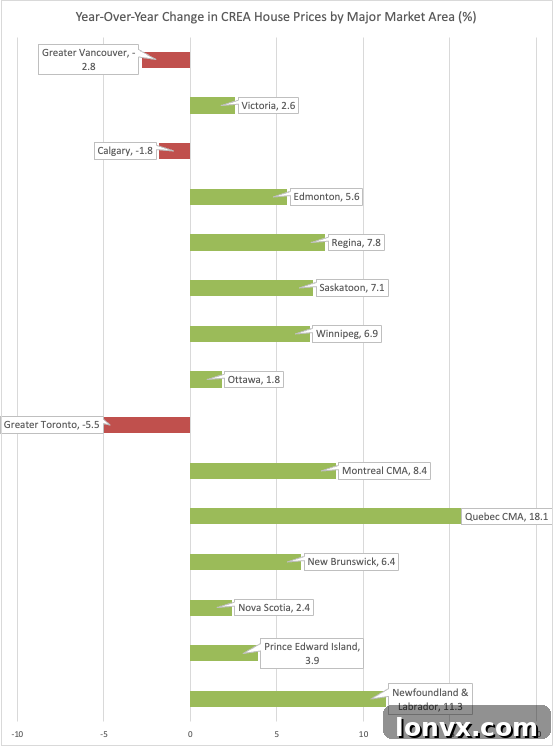
July’s MLS® Home Price Index, while unchanged from June, registered a notable 3.4 percent decrease compared to a year earlier, underscoring a clear trend of price moderation. The impact is particularly pronounced in major urban centers: in the Greater Toronto Area, property values have fallen by 5.5 percent over the past 12 months; Vancouver has seen a 2.8 percent decline, and even Calgary, which long stood as an exception to the national trend, now sits 1.8 percent lower. This modest, yet meaningful, easing in prices has proven sufficient to entice a growing cohort of buyers back into the market, demonstrating the profound influence of affordability on buyer behavior.
Price Movements: The Dominant Lever for Enhancing Affordability
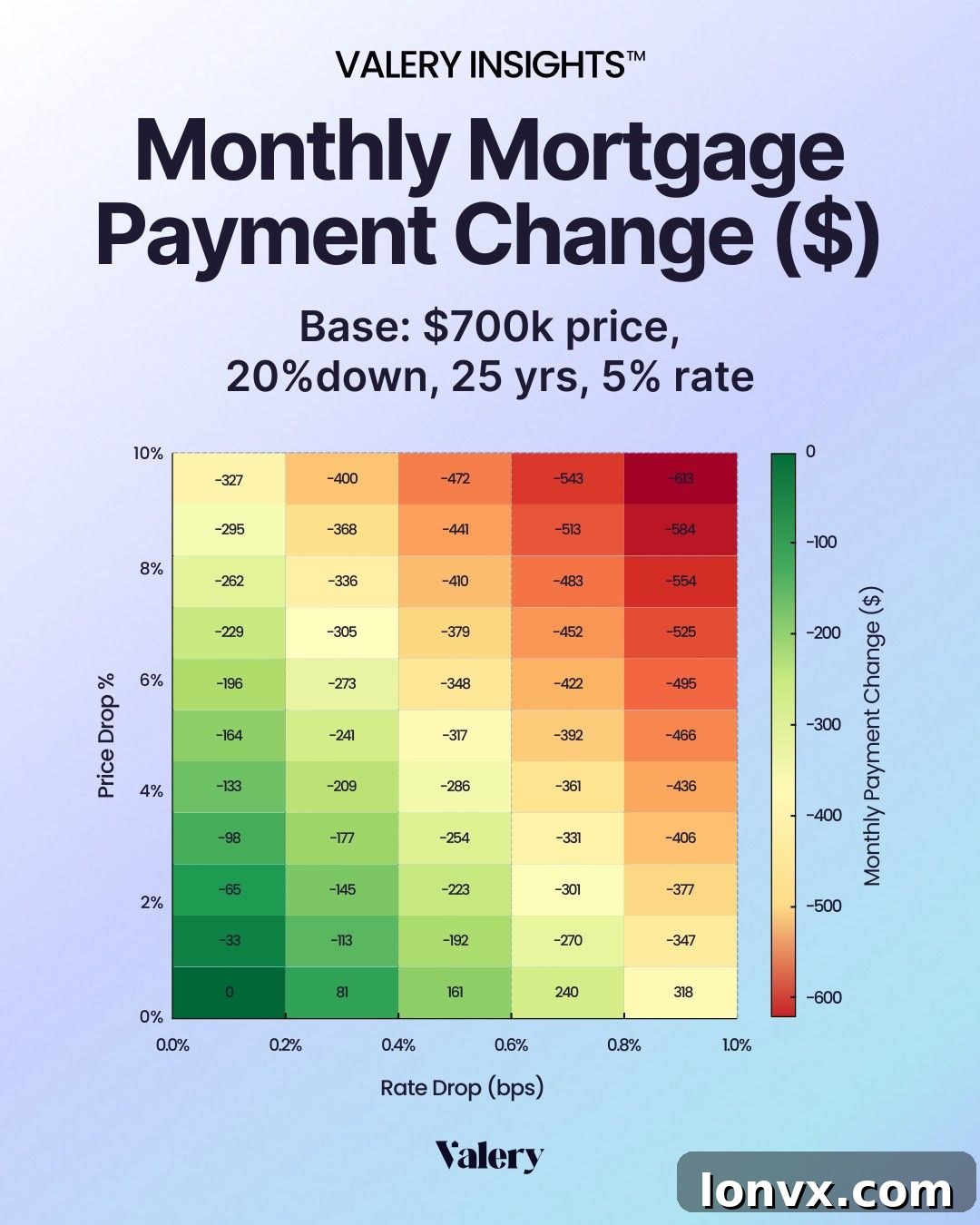
In the prevailing high interest rate environment, the fundamental arithmetic of housing affordability unequivocally favors price declines as a more potent mechanism for unlocking demand compared to incremental rate cuts. To illustrate this point, consider a hypothetical scenario: a home priced at $700,000, purchased with a 20 percent down payment, a 25-year amortization period, and a 5 percent mortgage rate. If the price of this home were to drop by 5 percent (a $35,000 reduction), the monthly mortgage payments would decrease by approximately $165. Conversely, a 25-basis-point reduction in the mortgage rate on the same priced home would only save the homeowner about $58 per month.
This comparison reveals a straightforward and critical implication for the near-term outlook of the Canadian housing market. Further moderation in property prices will exert a significantly greater influence on stimulating buyer demand and improving overall affordability than any marginal adjustments made by the Bank of Canada to its benchmark interest rate. While rate cuts are certainly beneficial, their impact on monthly carrying costs is dwarfed by the direct savings offered through lower purchase prices. This reality places price adjustments at the forefront of market recalibration, acting as the most powerful lever for restoring accessibility and confidence among potential homebuyers.
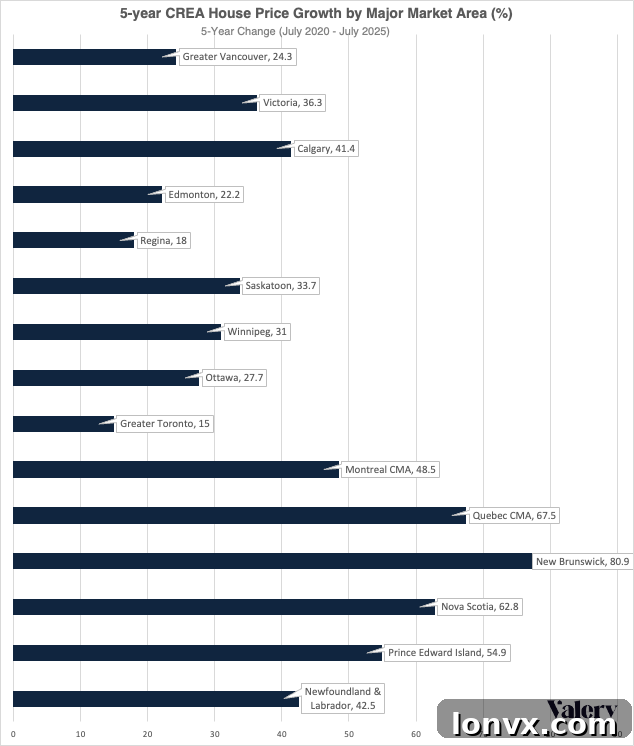
The patterns of price growth across Canadian cities have displayed remarkable divergence, reflecting the varied economic and demographic realities of different regions. Major metropolitan areas like Toronto and Vancouver, and more recently Calgary, have all recorded year-over-year price declines, signaling a cooling in these once red-hot markets. Over the past five years, Toronto’s price performance stands out as the weakest among Canada’s major markets, with gains of just over 15 percent, illustrating the impact of its high baseline and recent corrections. In stark contrast, New Brunswick has emerged as a leader, boasting an impressive 80.9 percent gain since July 2020, driven by strong inter-provincial migration and relative affordability.
Looking at the more recent past, over the last three years, Toronto has also experienced the sharpest price drop among major markets, reflecting a significant adjustment following years of rapid appreciation. During this same period, Quebec City has posted some of the strongest gains, demonstrating the resilience and growth potential of markets outside the traditional hotspots. These regional disparities highlight a complex and localized market, where broad national averages can often mask very different realities on the ground, necessitating a granular approach to understanding Canadian real estate trends.
Canada’s Split-Screen Inventory Picture: Regional Disparities Define the Market
Delving into the inventory landscape further underscores the fragmented nature of the Canadian housing market. July’s data revealed that new listings remained essentially unchanged from June, indicating a steady, rather than surging, influx of new properties. However, the active inventory across the nation stood a significant 10.1 percent higher than a year earlier, suggesting that homes are taking longer to sell, or more homes are being put on the market than are being absorbed. Nationally, there were approximately 4.4 months of inventory available, a figure typically consistent with balanced market conditions, implying neither a strong seller’s nor a strong buyer’s market on average. Yet, beneath this national average, regional differences are strikingly pronounced, painting a picture of a “split-screen” market.
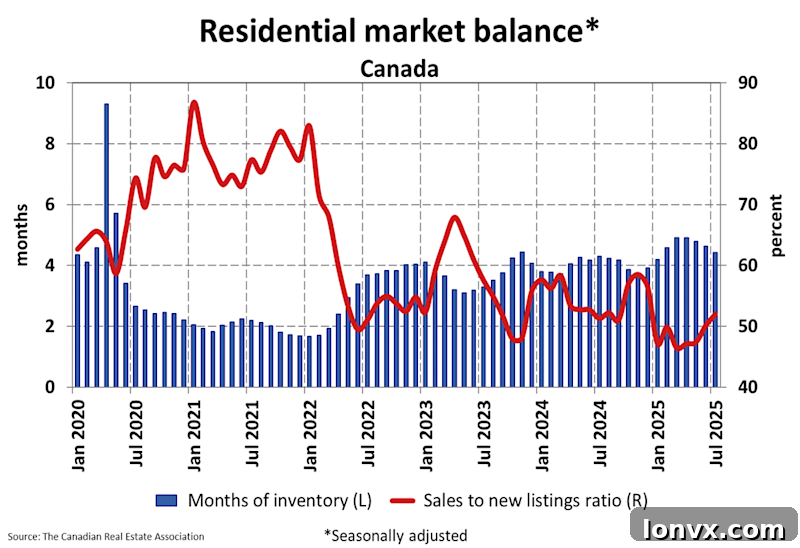
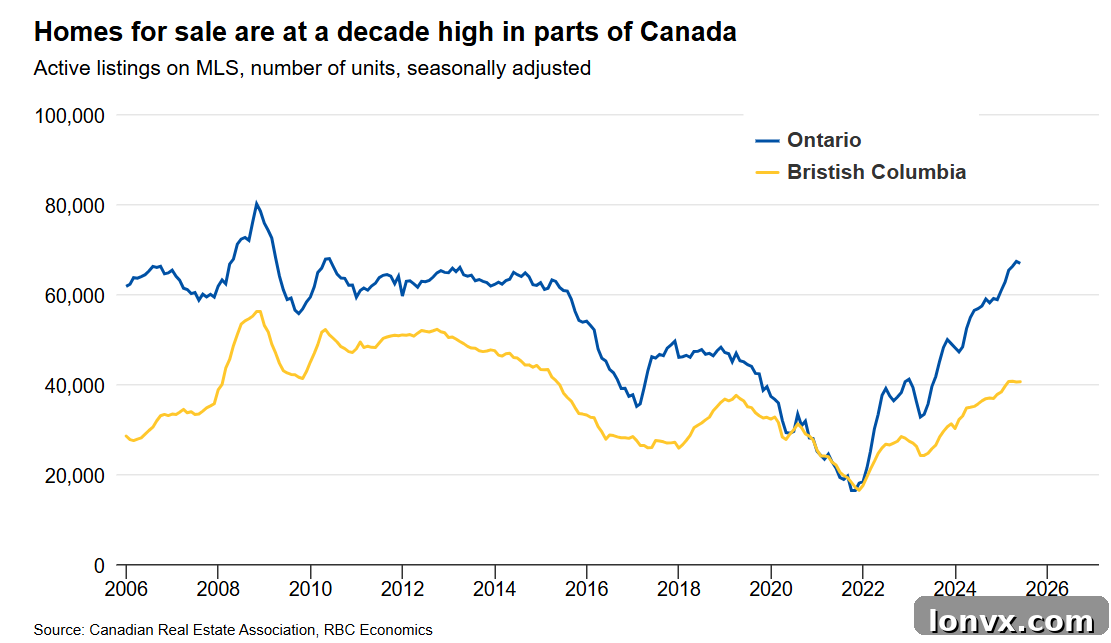
According to the aforementioned report by RBC Economics, provinces such as Ontario and British Columbia are currently grappling with the highest levels of housing inventory seen in a decade. This elevated supply has fostered an environment of intense competition among sellers, who are increasingly motivated to adjust prices to attract buyers. This situation is expected to maintain downward pressure on prices in these regions well into 2026, creating a more favorable climate for buyers. In stark contrast, the Prairies, Quebec, and Atlantic Canada continue to experience tight inventory levels, with some areas even falling below pre-pandemic norms. This scarcity of available homes contributes to sustained demand and, consequently, supports more buoyant pricing trends in these regions. These stark disparities in inventory levels are a critical factor in explaining why price corrections are effectively unlocking demand and stimulating sales in certain provinces, while others remain robust and competitive, reflecting the diverse forces at play across Canada’s expansive real estate landscape.
September’s Pivotal Test and the Path to a Durable Recovery
As the Canadian housing market transitions into the fall season, September traditionally brings an influx of new listings, and this year, it presents a pivotal test for the market’s newfound resolve. CREA has highlighted this period as a critical juncture where the delicate equilibrium between buyer demand and seller supply will determine the trajectory of the market. The outcome could either sustain the modest gains observed in recent months or compel further price concessions from sellers, particularly in regions with high inventory. Real estate professionals and market watchers will be closely monitoring how this seasonal surge in supply interacts with prevailing buyer sentiment and affordability conditions.
The significance of this outcome cannot be overstated because the recent lift in home sales reflects a response to renewed opportunity, rather than a return to the speculative exuberance of previous market peaks. With mortgage rates remaining elevated and borrowing costs still a primary concern for many, price adjustments have undeniably been, and will continue to be, the single most powerful lever for unlocking latent demand. In many of Canada’s major markets, property values have softened just enough to restore a crucial measure of affordability, successfully drawing previously sidelined buyers back into active participation. These buyers, cautious yet determined, are seizing opportunities that were unavailable just a year ago.
For the Bank of Canada, charting a course toward a sustained and healthy housing market recovery that does not inadvertently reignite inflationary pressures involves a clear strategy. Rather than relying solely on marginal interest rate cuts, which have a limited impact on immediate affordability, the most effective path lies in allowing this organic process of price normalization to run its natural course. This involves accepting that property values may need to adjust further in some areas to align with economic realities and buyer purchasing power. By facilitating this natural recalibration, the Bank can contribute to a more stable, accessible, and ultimately more durable Canadian housing market, benefiting all stakeholders in the long run.