“So, what are your client’s expectations for this property?” the agent inquired, a question that momentarily caught me off guard. This wasn’t the usual query about how close to the asking price my clients hoped to settle, a standard and expected question from any buyer’s agent. Instead, he was subtly probing for how much over the asking price they were anticipating.
“Well,” I began, choosing my words carefully to avoid revealing my clients’ strategy or causing offense, “we believe our asking price is well-aligned with recent comparable sales in the area.” My response was designed to be diplomatic, a professional deflection intended to buy some time in this increasingly aggressive market.
He chuckled, acknowledging my cautious reply, and claimed to understand. Yet, even I wasn’t entirely sure I understood the new landscape we were navigating. For the first time in over two decades of involvement in the real estate industry, the asking price had ceased to be a ceiling. It had transformed into a mere starting point, a launchpad for bidding wars with an almost guaranteed upward trajectory.
The Unprecedented Shift in Real Estate Dynamics
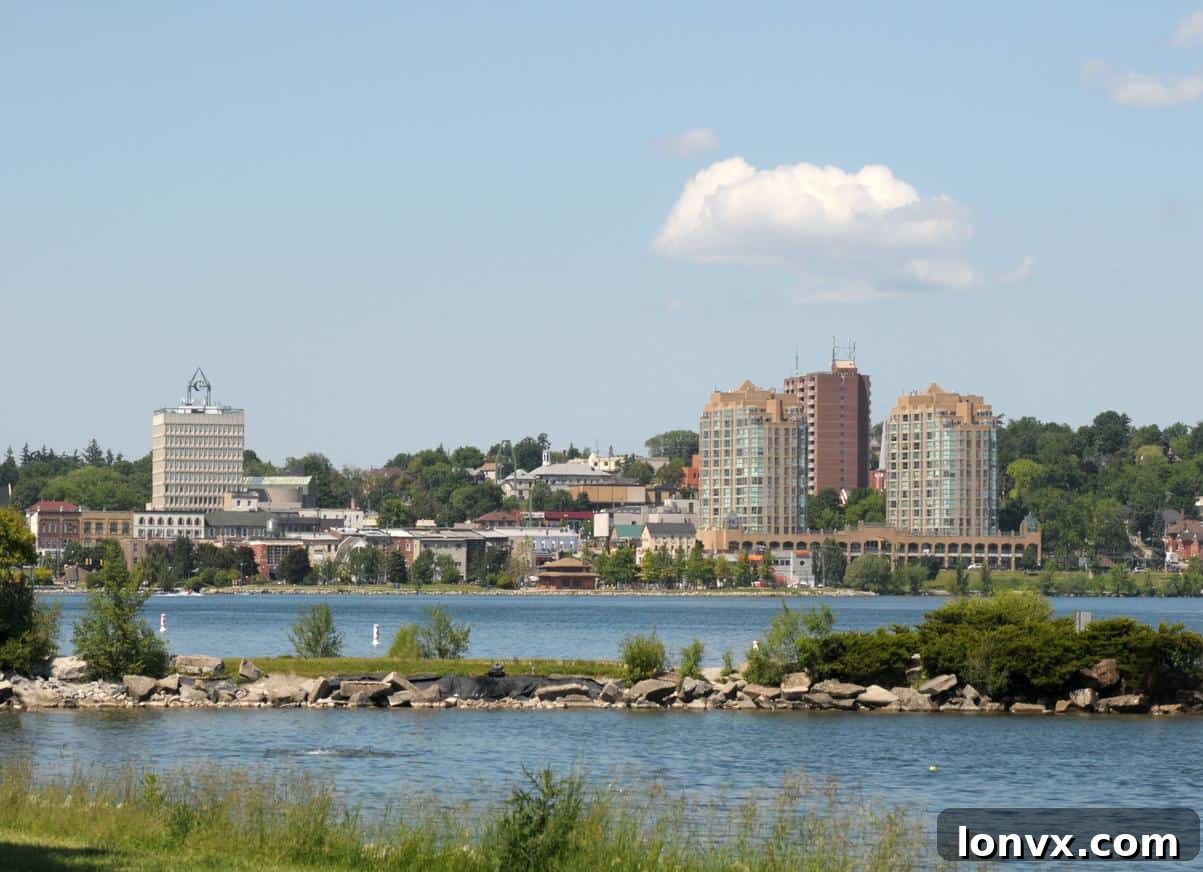
This dramatic shift begs a fundamental question: how did we arrive at such an unprecedented market? How did our beautiful, serene community of Barrie, Ontario, our cozy city nestled by the bay, evolve into such a coveted hot commodity? Properties now vanish from the market almost as quickly as they appear, snapped up by eager buyers often without so much as a financing clause, a testament to the sheer velocity and competitiveness of transactions.
And Barrie’s experience is far from unique. Across Canada, countless smaller communities, particularly those situated outside the immediate vicinity of the Greater Toronto Area (GTA) and indeed, the City of Toronto itself, are witnessing an unprecedented influx of people. This phenomenon can be aptly described as an urban exodus, with individuals and families determined to “get the heck out of Dodge” in search of more space, different lifestyles, and often, a more affordable cost of living.
Beyond the Asking Price: A New Reality
The traditional understanding of a property’s asking price has been fundamentally redefined. No longer does it serve as an anchor, but rather as a baseline from which prices are expected to escalate. This creates an environment where aggressive bidding is the norm, and offers significantly above the listed price are commonplace. It’s a psychological game as much as an economic one, driven by both genuine demand and the pervasive “Fear Of Missing Out” (FOMO), an acronym that has become disturbingly relevant in today’s housing market.
Barrie and the Rise of Secondary Cities
Barrie serves as a microcosm of a broader national trend. Its appeal lies in its combination of natural beauty, community charm, and relative affordability compared to its larger urban neighbor, Toronto. Many buyers are drawn to the promise of a more relaxed pace of life, access to outdoor amenities, and the opportunity to achieve homeownership in a detached property, a dream that feels increasingly out of reach in major metropolitan centers.
The Allure of Smaller Communities
The appeal extends beyond just Barrie. Communities like Guelph, Kitchener-Waterloo, Hamilton, Kingston, and countless others are experiencing similar pressures. They offer a blend of urban conveniences and small-town charm, often boasting good schools, vibrant local economies, and strong community ties. This makes them ideal destinations for those seeking a change of pace without completely sacrificing access to essential services or cultural experiences.
Unpacking the Driving Forces Behind the Boom
Several interconnected factors have converged to create this intense market environment. Understanding these drivers is crucial to grasping the full scope of the current real estate landscape.
The Remote Work Revolution and the Quest for Space
The COVID-19 pandemic acted as a powerful catalyst, fundamentally reshaping our relationship with work and home. With widespread directives to stay at home, many quickly realized the limitations of cramped condos or smaller houses in densely populated urban areas. The sudden shift to remote work, facilitated by significant investments from companies in enabling their employees to work effectively from anywhere, freed many from the daily commute. This newfound flexibility allowed them to prioritize space, comfort, and quality of life over proximity to the office.
The desire for a dedicated home office, a larger yard for children or pets, or simply more elbow room became paramount. This quest for additional space fueled a migration away from urban centers, where such amenities came at an astronomical premium, towards communities where they were more accessible and affordable.
The Great Urban Exodus and FOMO
The phenomenon of the “urban exodus” is directly linked to the remote work revolution. People are actively seeking to escape the higher cost of living, congestion, and perceived stressors of major cities. This outward migration creates a domino effect: as more people move, demand in these secondary markets surges, pushing prices ever higher. This, in turn, intensifies the “Fear Of Missing Out” (FOMO) among potential buyers.
FOMO drives a sense of urgency, compelling buyers to make quick decisions, often foregoing due diligence like home inspections or financing clauses, out of fear that if they don’t act immediately, they’ll be priced out of the market entirely. This psychological pressure creates a self-fulfilling prophecy, as frantic buying further inflates prices and reinforces the perception of a runaway market.
The Role of Technology: Connecting the Dots
None of this would be possible without robust technological infrastructure. The widespread availability of high-speed internet – from Wi-Fi networks to expanding 5G coverage and fibre optics – has been a game-changer. These technologies ensure seamless connectivity, making remote work not just a possibility, but a practical and productive reality. Without reliable internet, the dream of working from a lakeside cottage or a rural acreage would remain just that – a dream.
The Iron Laws of Supply and Demand
At its core, the current real estate boom is a classic illustration of fundamental economic principles: an imbalance between supply and demand. This age-old lesson in economics explains why a scarcity of inventory combined with overwhelming demand inevitably leads to bidding wars and offer frenzies, where asking prices are often dwarfed by the ultimate accepted offer.
The Scarcity Factor: Why Supply Lags
The supply side of the equation is constrained by multiple factors. New construction often struggles to keep pace with population growth and demand, facing challenges such as zoning restrictions, labor shortages, and rising material costs. Furthermore, existing homeowners may be reluctant to sell, knowing that finding a new home in such a competitive market will be a formidable challenge. This “chicken and egg” scenario further reduces available inventory, intensifying the bottleneck.
Unprecedented Demand: A Perfect Storm
On the demand side, a confluence of factors is at play. Historically low interest rates have made borrowing more affordable, enticing more buyers into the market. Population growth, fueled by immigration, also contributes to a steady increase in the need for housing. Add to this the pandemic-induced desire for more space and the urban exodus, and you have a perfect storm of unprecedented demand.
Navigating the Bidding War Frenzy
Bidding wars have become the norm, not the exception. Buyers often face scenarios where they must compete against dozens of other offers, frequently waiving crucial conditions such as home inspections or financing approvals to make their bid more appealing. This high-stakes environment can be incredibly stressful and emotionally taxing, leading to buyer fatigue and sometimes, regret.
The ultimate outcome, from a seller’s perspective, is often a “Sold Over Asking!” sign proudly displayed on their property. While undoubtedly a good day for the sellers, this triumph often comes with its own set of challenges, particularly the task of finding their next home in the very same hyper-competitive market.
Consequences and Considerations in a Red-Hot Market
While a seller’s market offers clear advantages for those looking to cash in on their property’s appreciation, it also presents significant challenges and raises important questions for all participants.
The Seller’s Advantage and Dilemma
Sellers are undoubtedly in a strong position, often receiving multiple offers well above their asking price. However, this advantage is frequently tempered by the dilemma of where to go next. Selling high is only beneficial if they can secure their next property without overpaying or facing a prolonged search in a market with extremely limited options. Many find themselves selling for a premium, only to become buyers in a market that demands an even higher premium for their next purchase, creating a cyclical challenge.
The Buyer’s Journey: Stress and Opportunity
For buyers, the journey is fraught with stress, disappointment, and financial strain. Securing a property, even at a significant premium, can bring a sense of relief and accomplishment. Many buyers are betting on continued appreciation, hoping that their investment, no matter the initial cost, will continue to grow in value. However, the emotional toll of repeated unsuccessful bids and the pressure to make rash decisions should not be underestimated.
Broader Societal Impacts: Affordability and Growth
Beyond individual transactions, this market trend has broader societal implications. Rapidly rising property values lead to a severe affordability crisis for many, particularly first-time homebuyers and those on fixed incomes. It can also strain local infrastructure in recipient communities, which may not be equipped to handle sudden population growth. Questions about sustainable growth, gentrification, and maintaining community character become increasingly pertinent.
Gazing into the Crystal Ball: What Lies Ahead?
As we navigate this historic period in the evolution of real estate, we can only hold our collective breath and hope for the best. We hope that sellers successfully transition to their next home or can bide their time until prices stabilize, if indeed they ever do. We hope that buyers are truly content with their newfound piece of property in a new town, complete with a new area code and new schools for their children, and that their investments prove to be sound in the long run.
Sustaining the Momentum or Preparing for a Shift?
The sustainability of this market frenzy is a constant topic of debate. Will rising interest rates temper demand? Will an increase in housing supply eventually bring prices back to a more balanced level? Or have we entered a “new normal” where property values will continue their upward trajectory, albeit at a slower pace? These are questions for which answers remain elusive, pending more data and the unfolding of economic trends.
Adapting to the New Normal in Real Estate
In the meantime, adapting to these new market realities is crucial. For real estate professionals, it means embracing innovative strategies and providing empathetic guidance to clients navigating this complex landscape. For buyers and sellers, it necessitates patience, informed decision-making, and a realistic understanding of market dynamics. Amidst all the market volatility and economic pressures, we must also remember the human element of housing – the quest for a home, a place of sanctuary, and a foundation for life. And, perhaps most importantly, we should all try to remember to breathe.