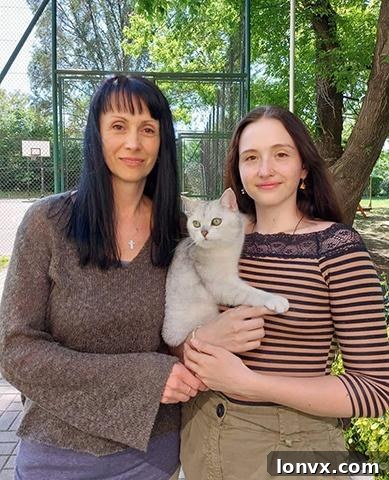
As the relentless shadow of war stretched across Ukraine, turning everyday life into a harrowing fight for survival, one family in Kharkiv faced an unimaginable choice. With bombs falling ever closer and Russian troops advancing on their beloved home city, a mother and daughter made the heartbreaking decision to leave everything they knew behind. Their arduous journey would take them from the perilous east to the relative safety of western Ukraine, then across borders to Poland, and finally, after immense emotional and physical strain, to the welcoming shores of Canada. The father, a beacon of courage, stayed behind to contribute to the valiant war effort, a decision that weighed heavily on all their hearts. This profound human drama recently unfolded in Kingston, Ontario, where Carole Palmer, a dedicated sales associate with Sutton Group – Masters Realty, extended an open hand and a warm home to the resilient family.
A Journey of Hope: From War-Torn Ukraine to the Embrace of Canada
The story of Olena and her 19-year-old daughter, Polina, a promising website design student, is a poignant testament to the human spirit’s capacity for endurance in the face of unimaginable adversity. Their flight from Kharkiv wasn’t just a physical relocation; it was an emotional odyssey fraught with peril, uncertainty, and profound loss. The initial decision to leave their husband and father behind was undoubtedly one of the most agonizing choices they had ever made, forced upon them by the brutal realities of armed conflict. Yet, the instinct to protect life, especially that of a child, drove them forward.
The Agonizing Decision to Flee Kharkiv
Kharkiv, once a vibrant cultural and industrial hub, became a target for relentless shelling and ground assaults. For Olena and Polina, the escalating frequency of explosions and the encroaching presence of military forces shattered any semblance of normalcy. Each distant rumble, each close impact, amplified the terror, making their home no longer a sanctuary but a potential death trap. The conversations leading up to their departure must have been gut-wrenching, filled with tears, fear, and the painful recognition that staying meant risking everything. The father’s commitment to his homeland, a selfless act of patriotism, meant their family unit would be forcibly fractured, a common tragedy shared by millions of Ukrainians during this devastating conflict. This initial separation marked the true beginning of their refugee experience, a deep wound that would take years, if not a lifetime, to heal.
A Perilous Path to Safety: The Journey Westward
Their escape was not a swift or comfortable passage. From Kharkiv, they embarked on the first leg of their journey towards the relative calm of western Ukraine, a journey often undertaken by crowded trains or cars, dodging potential hazards and navigating through zones of conflict. This initial phase was critical, offering a temporary respite before the daunting prospect of crossing international borders. The subsequent travel to Poland was another significant hurdle, involving long waits at border crossings, the emotional toll of witnessing countless other displaced individuals, and the constant fear of the unknown. Finally, their flight across the Atlantic to Canada on June 16 was the culmination of nearly 40 hours of continuous travel, flying, and waiting, a grueling expedition made even more challenging by the presence of their senior cat, Lexus, who accompanied them as a precious remnant of their former life. This extended travel time, compounded by the emotional baggage of war and displacement, underscores the immense physical and mental fortitude required of refugees.
Carole Palmer: A Beacon of Compassion in Kingston, Ontario
Amidst the global humanitarian crisis, individual acts of kindness shine brightest, offering glimmers of hope and demonstrating the profound impact one person can have. Carole Palmer’s decision to open her home to Olena, Polina, and Lexus exemplifies this spirit of compassion and community. A sales associate deeply rooted in her Kingston, Ontario, community, Palmer felt a strong call to action as she witnessed the unfolding atrocities in Ukraine. Her desire to contribute, to alleviate suffering in a tangible way, transcended mere sympathy; it was an active commitment to humanitarian aid.
Opening Doors and Hearts: Welcoming Olena, Polina, and Lexus
“I wanted to assist in some way, so I opened my home to this amazingly resilient family,” Palmer recounts, her voice reflecting a genuine warmth and admiration. Her home became a sanctuary, providing not just shelter but also comfort, stability, and a vital sense of belonging for Olena, Polina, and their cherished feline companion. The arrival of the family in Kingston marked the beginning of a new chapter for them, one filled with the challenges of integration but also the promise of a peaceful future. Palmer’s generosity facilitated their initial steps towards rebuilding their lives in Canada, offering a much-needed soft landing after their traumatic experiences. The simple act of sharing her home, she observes, is a minor effort compared to the immeasurable rewards reaped by everyone involved, fostering a deep connection and mutual respect between host and newcomer.
Echoes of the Past: Ancestry and Modern-Day Humanitarianism
Interestingly, the journey of Olena and Polina resonates deeply with Carole Palmer’s own family history. Generations ago, Palmer’s ancestors also immigrated from Ukraine, seeking new opportunities and safety in a distant land. This personal connection provides Palmer with a unique understanding and empathy for the struggles faced by her new houseguests. It highlights a timeless narrative of human migration, a search for a better life that spans centuries. However, as Palmer keenly observes, there’s a stark contrast between her ancestors’ migration and the current crisis. This time, the entire world has borne witness to the barbaric war unfolding on daily news cycles, a constant, vivid reminder of the devastation. Yet, paradoxically, as the conflict persists, the initial intense media coverage has waned, leaving millions of people to suffer in relative obscurity. This shift in public attention is a critical point, underscoring the ongoing need for awareness and support for Ukrainian refugees, even as the headlines fade.
Navigating New Horizons: The Immense Challenges Faced by Ukrainian Newcomers
Arriving in a new country, especially under such traumatic circumstances, presents a formidable array of challenges. For Ukrainian refugees like Olena and Polina, the physical journey is merely the first step; the true arduous task lies in rebuilding their lives from scratch, far from their homeland and everything familiar. Their experiences shed light on the complex realities faced by millions of displaced individuals worldwide, underscoring the need for comprehensive and sustained support systems.
Beyond the Journey: Adapting to a New Culture and Language
One of the immediate priorities for Olena and Polina has been to obtain work permits, a crucial step towards financial independence and integration into Canadian society. Simultaneously, they are diligently practicing English, recognizing that language proficiency is key to navigating daily life, securing meaningful employment, and connecting with their new community. However, adapting to a new culture goes far beyond language. It involves understanding unfamiliar social norms, bureaucratic processes, and even subtle nuances of communication. This “culture shock” can be disorienting and isolating, creating a sense of being perpetually out of step. For Polina, a student of website design, the challenge also extends to aligning her educational aspirations with Canadian academic and professional standards, a process that requires guidance and support.
The Financial and Emotional Burden of Displacement
Carole Palmer articulates the profound difficulties faced by Ukrainian newcomers, extending beyond cultural adjustment. “Their struggle is heartbreaking,” she states, highlighting the inadequacy of limited financial assistance. While the one-time $3,000 incentive from the government is a helpful initial gesture, it barely scratches the surface of the actual costs of resettlement, especially in areas with high living expenses. “It doesn’t go far, notably when rent is too high,” Palmer emphasizes. Housing affordability is a significant barrier, often forcing families into precarious living situations or leaving them dependent on the generosity of hosts for longer periods. Beyond the financial strain, these individuals are simultaneously grappling with the immense trauma of their experiences—witnessing war, losing loved ones, leaving homes behind—and the profound grief associated with these losses. This combination of practical and psychological burdens makes the path to stability incredibly challenging, requiring not just financial aid but also access to mental health services, community support networks, and patient understanding from their new society.
The Enduring Crisis: Why Sustained Support for Ukrainian Refugees is Crucial
The initial outpouring of global solidarity with Ukraine was immense, fueled by the shock and horror of the unprovoked invasion. Yet, as time passes and new global events compete for attention, the urgency of the Ukrainian crisis tends to recede from the daily headlines. This diminishing media spotlight, however, does not diminish the suffering; rather, it often leaves millions to contend with their prolonged hardships in silence, highlighting the critical need for sustained international and community support.
The Shifting Media Spotlight and Persistent Suffering
“In the early days of the war, it was constantly on the news,” Palmer recalls, reflecting on the intense public interest. “As of late, there is little mention of it and often at times very brief.” This observation points to a dangerous phenomenon: the world’s attention span often moves on, even as the humanitarian crisis deepens. This “crisis fatigue” can lead to a decline in donations, volunteer efforts, and overall public engagement, leaving vulnerable populations even more exposed. Yet, as Palmer rightly reminds us, “There are millions of people still suffering.” The war continues, displacement persists, and the needs of those who have lost everything remain acute. This disparity between dwindling media coverage and ongoing human suffering underscores why it is vital to keep the narrative alive and to remind communities of the continuous need for aid.
The Unimaginable Loss: Homes, Livelihoods, and a Sense of Belonging
Those who flee conflict zones do so out of dire necessity, leaving behind everything they know and have painstakingly worked for over a lifetime. They arrive in new lands often with nothing more than a single suitcase, carrying the weight of untold stories and the heavy burden of psychological trauma. Their departure from their homeland is not a choice made lightly; it is a forced exodus from a place they loved, driven by circumstances they can barely comprehend. “Every day, so many want to go ‘home’ but that is not possible,” Palmer laments, capturing the profound sense of loss and displacement. Their homes may be destroyed, occupied, or simply too dangerous to return to. Their livelihoods are gone, their social networks shattered, and their sense of belonging irrevocably altered. This profound rupture from their past makes the process of rebuilding in a new country even more complex, necessitating long-term compassion and practical assistance from host communities. It is an ongoing act of humanitarianism, not a temporary response to a fleeting news cycle.
How You Can Make a Difference: Supporting Ukrainian Families in Canada
The scale of the Ukrainian refugee crisis requires a concerted effort from governments, international organizations, and, crucially, individual citizens. Carole Palmer’s powerful call to action resonates with a clear message: the Ukrainian people need sustained support, now more than ever. Their journey has been arduous, and their integration into a new society is fraught with challenges. While the initial government assistance provides a temporary cushion, the long-term needs are vast and varied, ranging from financial aid to emotional support and community integration.
Practical Ways to Offer Assistance
Palmer outlines several concrete ways in which Canadians can contribute to alleviating the plight of Ukrainian newcomers. Financial assistance, even in small amounts, can make a significant difference in helping families cover essential living expenses, bridge gaps in employment, and secure necessary resources. Donations to reputable organizations working on the ground or directly to families (where appropriate channels exist) can provide crucial support. Beyond financial aid, opening one’s home, as Palmer has done, represents one of the most impactful forms of assistance. Providing temporary housing not only offers shelter but also a vital sense of security, stability, and community during a highly vulnerable period. It allows families to focus on learning English, seeking employment, and healing from trauma, rather than grappling with immediate housing insecurity. Host families play a pivotal role in easing the transition, offering cultural guidance and a friendly face in a new, unfamiliar world.
Community Resources and Networks for Aid
For those looking to offer help, Palmer suggests leveraging existing community networks and online platforms. Facebook groups, such as “Canadians helping Ukrainians,” have emerged as powerful tools for connecting refugees with potential hosts, volunteers, and resources. These groups facilitate direct communication and offer practical advice, from job opportunities to language exchange partners. Additionally, local city websites and community centers often provide comprehensive information on support initiatives, volunteer opportunities, and donation drives specifically tailored to Ukrainian newcomers. Engaging with these local resources ensures that aid is directed effectively and meets the specific needs of families integrating into particular communities. The collective strength of these local and online networks is instrumental in providing a holistic support system for those rebuilding their lives after unimaginable loss.
Conclusion: A Testament to Resilience and the Power of Human Kindness
The story of Olena, Polina, and Lexus, supported by the compassion of Carole Palmer, is a powerful microcosm of the larger Ukrainian refugee crisis. It highlights the profound courage and resilience of individuals forced to flee their homes, the immense challenges they face in adapting to new lives, and the indispensable role of humanitarian efforts. From the agonizing decision to leave Kharkiv to the arduous journey across continents, their story is a testament to the enduring human spirit in the face of conflict. It also serves as a poignant reminder that even as global attention shifts, the suffering and needs of millions of displaced Ukrainians persist.
Carole Palmer’s open heart and home embody the best of Canadian hospitality and underscore the deeply personal impact one individual can have. Her connection to her Ukrainian ancestry adds a layer of historical empathy, bridging past migrations with present-day humanitarianism. The rewards of her generosity, she notes, are immeasurable, not just for the family she hosts but for the entire community that benefits from such acts of profound kindness. As Palmer urges, the need for support—financial, practical, and emotional—remains critical. The ongoing struggle of Ukrainian families demands continued attention, advocacy, and direct assistance. By remembering their plight and actively engaging with resources and initiatives designed to help, we can collectively ensure that the hope for a peaceful future, nurtured by acts of kindness, continues to flourish for those who have lost so much.