
Navigating Trust: Real Estate Services Dominate Consumer Complaints in British Columbia
The intricate world of real estate transactions, often representing the largest financial decisions in an individual’s life, demands unwavering trust and transparency. However, a groundbreaking report from the BC Financial Services Authority (BCFSA) reveals a significant challenge to this trust within British Columbia. The inaugural Consumer Complaints and Investigations Report 2023-2024 highlights real estate services as the leading source of consumer grievances, underscoring critical areas where industry practices need reinforcement and consumer awareness must be heightened.
Released by the primary regulator of financial services and real estate in British Columbia, the BCFSA report provides an unprecedented look into the landscape of consumer dissatisfaction. Its findings are not merely statistics; they are a clear indicator of the complexities, potential pitfalls, and areas requiring greater accountability in the province’s dynamic real estate market.
Real Estate Complaints: The Unmistakable Numbers
During the fiscal year spanning April 1, 2023, to March 31, 2024, the BCFSA recorded a total of 1,711 consumer complaints across various sectors it oversees. A striking majority of these—1,234 complaints, representing more than 70 percent—were directly related to real estate services. This overwhelming proportion signifies that the real estate sector, encompassing everything from property sales and purchases to property and strata management, disproportionately affects consumers compared to other regulated industries.
The sheer volume of real estate complaints underscores the high stakes involved in property transactions and the potential for significant consumer harm when things go awry. These aren’t just minor inconveniences; they often involve substantial financial investments, emotional distress, and long-term implications for individuals and families. The BCFSA’s focus on this sector is therefore not just warranted but essential for maintaining a healthy and equitable housing market.
Tackling the Backlog: A Commitment to Resolution
Beyond the number of new complaints, the BCFSA also made significant strides in resolving existing cases. During the same period, the regulator successfully resolved 1,690 real estate complaints. A key component of this effort was addressing a substantial backlog of cases inherited following the BCFSA’s integration with the Real Estate Council of BC and the Office of the Superintendent of Real Estate in 2021. This strategic merger aimed to streamline regulatory oversight and enhance consumer protection across the province.
The BCFSA’s commitment to clearing this backlog demonstrates a proactive approach to historical grievances while simultaneously handling new ones. According to the report, the overall inventory of open real estate complaints has been dramatically reduced from 1,538 in August 2021 to a more manageable 609 by March 31, 2024. This reduction is a testament to the regulator’s enhanced operational efficiency and its dedication to providing timely resolutions for consumers who have experienced issues.
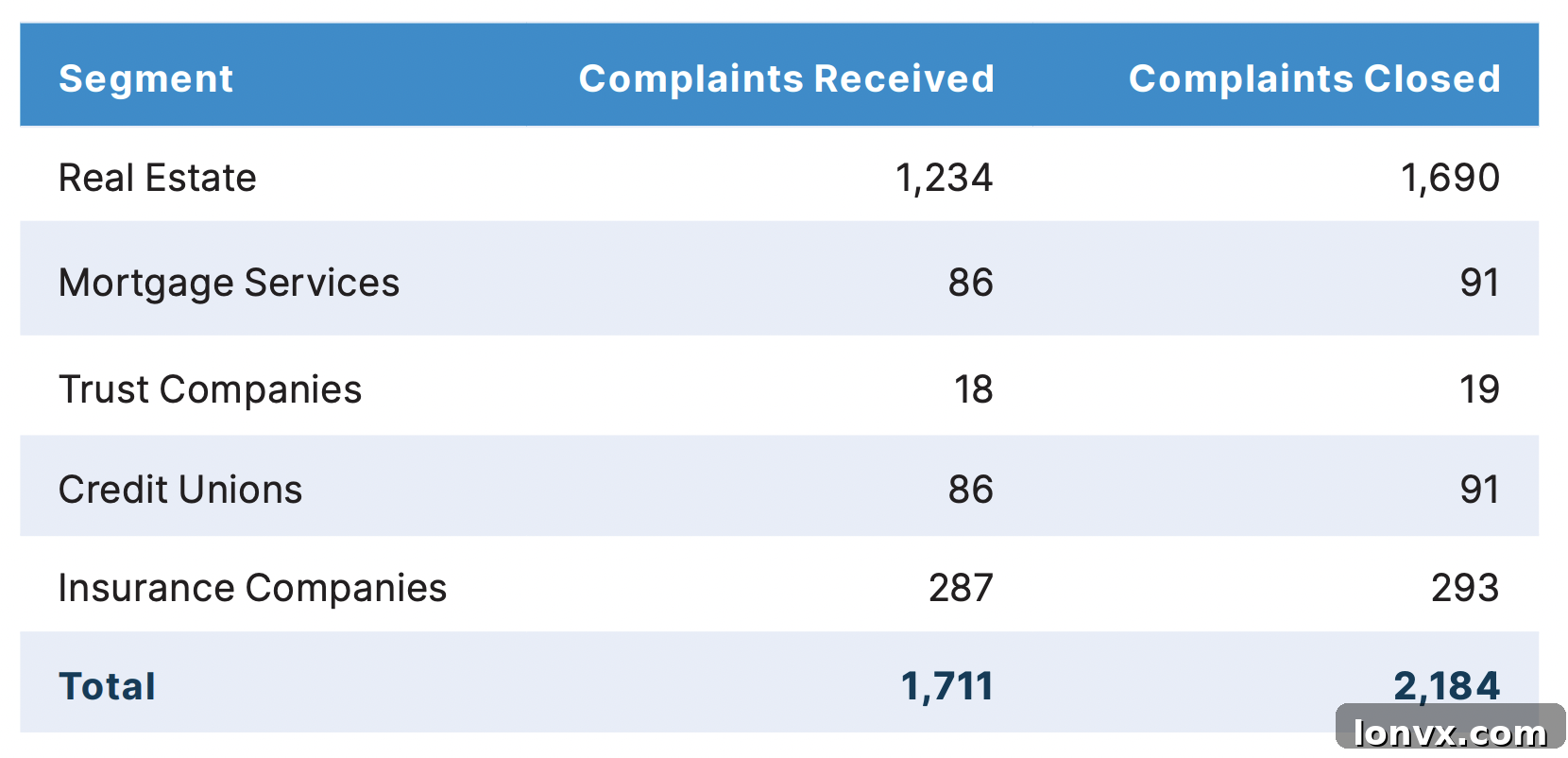
Source: BCFSA Consumer Complaints and Investigations Report
Dissecting the Core Issues: Top Complaint Themes
The BCFSA report delves deeper than mere complaint counts, identifying recurring themes that expose systemic vulnerabilities and areas of professional negligence or misconduct within the real estate industry. Understanding these prevalent issues is crucial for both consumers and real estate professionals alike, guiding efforts toward prevention and better practice.
Misrepresentation: A Leading Cause for Concern (20%)
Misrepresentation stands out as the single largest category of real estate-related complaints, accounting for a significant 20 percent of all grievances. This issue typically involves instances where consumers receive inaccurate or incomplete information about a property, directly influencing their purchasing or renting decisions. Examples highlighted by the BCFSA include incorrect measurements of living space, erroneous zoning details that impact future development potential, or inadequate disclosure regarding tenancy agreements, such as existing leases or disputes with tenants.
- Incorrect Measurements: Buyers relying on advertised square footage that turns out to be significantly different.
- Zoning Details: Properties marketed with potential uses (e.g., commercial, multi-family) that are not permitted by current zoning bylaws.
- Tenancy Disclosures: Failure to inform buyers about existing tenant issues, upcoming lease expirations, or specific tenancy terms that could complicate occupancy.
- Undisclosed Defects: Withholding information about structural problems, water damage, mould, or other significant material defects that affect the property’s value or safety.
Such misrepresentations can have severe financial consequences for consumers, leading to unexpected repair costs, legal disputes, or a depreciation in property value. For real estate professionals, it underscores the paramount importance of thorough due diligence, verification of all property details, and a commitment to transparent communication.
Deceptive or Unbecoming Conduct (17%)
Tied as the second most frequent complaint, “deceptive or unbecoming conduct” speaks to actions by real estate professionals that erode public confidence in the integrity of the industry. This broad category can encompass a range of unethical behaviors, including:
- Pressure Tactics: Aggressive sales techniques that coerce clients into making hasty decisions.
- Conflicts of Interest: Professionals acting in their own best interest rather than their client’s, or failing to disclose relationships that could compromise impartiality.
- Lack of Transparency: Concealing crucial information or engaging in misleading advertising.
- Unprofessional Behavior: Conduct that falls below expected professional standards, impacting the client-agent relationship and the perception of the industry.
These actions not only harm individual consumers but also tarnish the reputation of the entire real estate profession, making it challenging for ethical practitioners to gain trust.
Unlicensed Activity (17%)
Equally concerning is the prevalence of “unlicensed activity,” also accounting for 17 percent of complaints. This refers to individuals or entities conducting real estate transactions—such as buying, selling, or managing properties for others—without the necessary licensing from the BCFSA. The dangers of engaging with unlicensed individuals are manifold:
- Lack of Oversight: Unlicensed practitioners are not subject to the BCFSA’s regulatory framework, professional standards, or disciplinary actions.
- No Consumer Protection: Consumers often lack recourse or access to compensation funds in cases of fraud or negligence when dealing with unlicensed operators.
- Absence of Insurance: Unlicensed individuals typically do not carry professional liability insurance, leaving consumers unprotected against errors or omissions.
- Increased Risk of Fraud: Operating outside the regulated environment creates fertile ground for scams and fraudulent schemes.
The BCFSA actively investigates these cases to protect consumers from individuals who seek to circumvent regulations, emphasizing the importance for consumers to verify the credentials of any real estate professional they engage with.
Failure to Fulfill Duties to Clients (15%)
Rounding out the top themes, “failure to fulfill duties to clients” highlights breaches of the fundamental obligations that real estate professionals owe to those they represent. These duties are rooted in trust and fiduciary responsibility and include:
- Breach of Confidentiality: Disclosing sensitive client information without consent.
- Inadequate Material Disclosure: Failing to disclose all pertinent facts about a property or transaction, even if it could negatively impact a sale.
- Overstepping Authority: Acting beyond the scope of their agreed-upon responsibilities or providing advice that falls outside their professional purview (e.g., legal or financial advice).
- Not Acting in Client’s Best Interest: Prioritizing personal gain or the interests of another party over the client’s explicit objectives.
These complaints underscore the critical role of integrity and professional diligence in the client-agent relationship. Consumers expect their agents to act as trusted advisors and advocates, and any failure to meet these duties can severely undermine that trust.
Resolving Grievances: BCFSA’s Multi-faceted Approach
The BCFSA employs a comprehensive and multi-step approach to managing and resolving complaints, designed to assess each case’s unique circumstances, prioritize potential harm to consumers, and apply appropriate enforcement actions. This structured process ensures that complaints are handled efficiently and effectively, leading to fair outcomes and reinforcing regulatory compliance.
Key to the BCFSA’s methodology is an initial risk assessment, where complaints are evaluated for the severity of potential consumer harm, the systemic nature of the issue, and the likelihood of successful investigation. Cases presenting higher risks or potential widespread impact are often prioritized to protect the broader public interest.
Enforcement Actions and Outcomes (Fiscal 2023-24):
Formal Enforcement Actions:
For more serious breaches or repeated offenses, the BCFSA resorts to formal enforcement actions, which carry significant penalties aimed at deterring future misconduct and punishing serious transgressions. In fiscal 2023-24, these included:
- Monetary Penalties: Imposed in 21 cases, these fines serve as a direct financial consequence for non-compliance, aiming to recover ill-gotten gains or penalize harmful actions.
- License Suspension or Cancellation: One particularly severe case resulted in a license suspension or cancellation, the most stringent penalty. This action effectively removes an individual’s ability to practice in the regulated real estate sector, protecting consumers from proven misconduct and reinforcing professional standards.
Informal Enforcement Actions:
In other instances, where issues may be less severe or involve misunderstandings, the BCFSA utilizes informal enforcement actions focused on education, remediation, and promoting voluntary compliance. These methods aim to correct behavior without necessarily resorting to formal legal proceedings, fostering a culture of continuous improvement within the industry:
- Voluntary Compliance Agreements (27 cases): These agreements outline specific actions that a professional must take to rectify a situation, improve their practices, or complete additional education. They offer a cooperative path to resolution while ensuring accountability.
- Letters of Advisement or Warnings (248 cases): Issued in cases where professional conduct falls short of expectations but does not warrant formal penalties, these letters serve as a formal notification. They educate professionals on their obligations, highlight areas for improvement, and warn against future non-compliance, effectively preventing escalation.
Other Outcomes:
It’s also important to note that not all complaints lead to enforcement actions. In 895 instances, complaints were dismissed. Common reasons for dismissal include insufficient evidence to substantiate the claim, the matter falling outside the BCFSA’s regulatory jurisdiction, or the issue being resolved privately between the parties involved.
The BCFSA’s Broader Mandate: Safeguarding BC’s Real Estate Landscape
The BCFSA’s role extends far beyond merely responding to complaints. As a comprehensive regulator, it plays a pivotal role in establishing and upholding standards across a broad spectrum of real estate activities. The authority is responsible for licensing, regulating, and overseeing the conduct of real estate agents, brokers, property managers, and strata managers across British Columbia.
Crucially, the BCFSA also possesses the investigative powers to identify and take action against unlicensed persons or companies performing real estate activities that legally require a license in B.C. This proactive stance against unauthorized practice is vital for consumer protection, ensuring that all individuals operating within the sector meet specific educational, ethical, and financial criteria.
By enforcing these regulations, the BCFSA aims to foster a real estate market characterized by fairness, transparency, and professional integrity. Their efforts contribute to greater consumer confidence, a more stable market, and a higher standard of practice among professionals. The annual Consumer Complaints and Investigations Report serves as a critical tool for accountability, transparency, and continuous improvement, providing valuable insights to all stakeholders in BC’s real estate ecosystem.
The full report provides extensive details and further analysis for those wishing to delve deeper into the BCFSA’s findings and methodologies.
Read the full report here.
Enjoying this article?
Get the latest REM articles in your inbox 3x week so you stay up to date on the latest in the Canadian real estate industry