
The Calgary real estate market kicked off the new year with remarkable dynamism, as January home sales surged to 1,650 units. This significant uptick not only outpaced figures from the previous year but also far exceeded long-term trends, underscoring a market characterized by persistent high demand and critically limited supply. This imbalance continues to exert upward pressure on home prices across all segments, painting a vivid picture of a robust seller’s market.
A total of 2,137 new listings entered the market during January, with a notable concentration in properties priced above $700,000. While this inflow provided some fresh options for eager buyers, it proved insufficient to significantly alleviate the city’s severe inventory crunch. Calgary’s total inventory for the month stood at a mere 2,150 units, hovering near the record lows last observed in January 2006. This figure represents a staggering 49 percent reduction from the long-term average for the month, indicating a deeply constrained market environment.
Calgary’s Housing Market: A Dance Between Soaring Sales and Stifled Supply
“Supply challenges have been a persistent problem since last year, creating a bottleneck in what is otherwise a vibrant market. This month’s gain in new listings has certainly helped provide options to potential purchasers, supporting the robust sales growth we witnessed. However, the sheer volume of sales prevented any significant adjustments in the overall supply landscape, thereby keeping market conditions exceptionally tight and perpetuating the upward trajectory of home prices,” stated Ann-Marie Lurie, CREB’s chief economist, highlighting the complex interplay of forces at play.
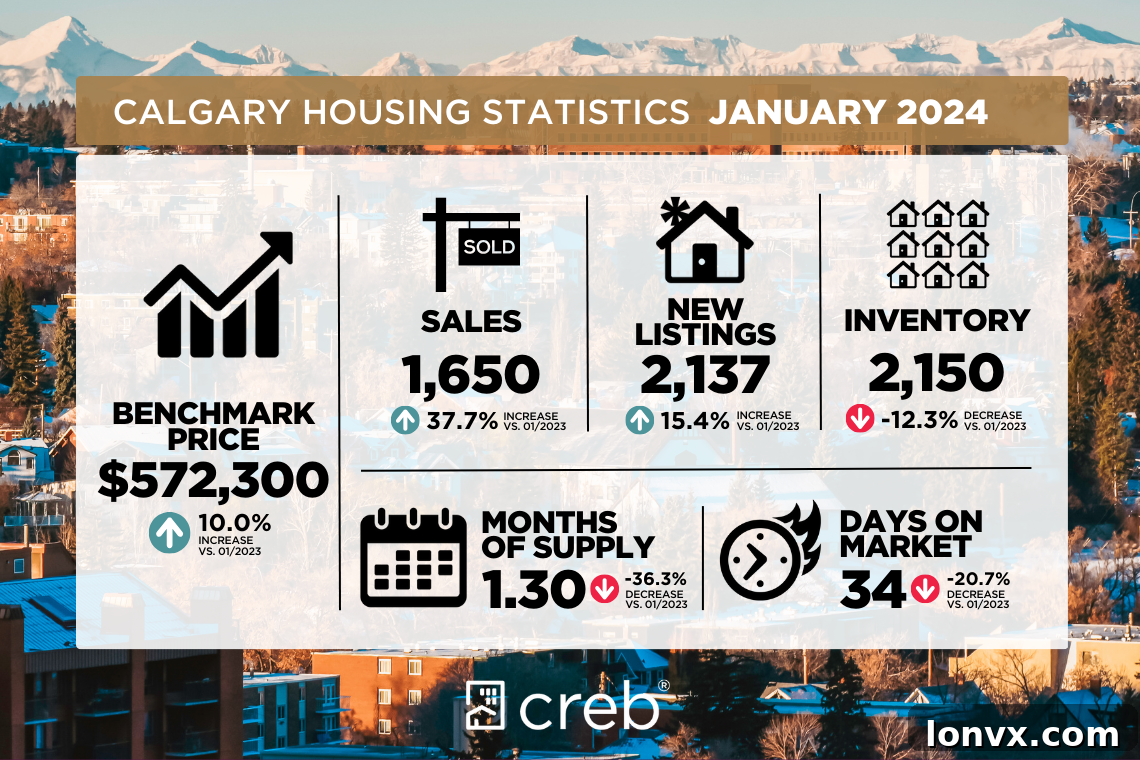
The “months of supply,” a critical metric indicating how long it would take to sell all current inventory at the prevailing sales pace, dwindled further to an alarmingly low 1.3 months in January. This represents a decline from both the preceding month and the previous year’s levels, signaling a highly competitive environment where properties are snapped up quickly. Such sustained tightness in the market inevitably translates into upward pressure on home values. Consequently, the unadjusted benchmark price for Calgary reached $572,300 in January, marking a substantial 10 percent increase compared to January of last year. This consistent appreciation underscores the strength of demand and the persistent scarcity of available homes.
Driving Factors Behind Calgary’s Market Dynamics
Several key factors are contributing to Calgary’s current market conditions. Rapid population growth, fueled by strong interprovincial migration, continues to add significant numbers of new residents seeking housing. Compared to other major Canadian cities, Calgary still offers a relative degree of affordability, making it an attractive destination for homebuyers and investors alike. However, this appeal is rapidly diminishing as prices continue to climb. Furthermore, the pace of new construction, while active, struggles to keep up with the accelerating demand, leading to a structural shortage of housing units. Interest rate fluctuations and buyer sentiment also play a role, with many buyers eager to enter the market or secure better rates before potential further increases.
Segment-Specific Analysis: A Closer Look at Calgary Property Types
Detached Homes: Premium on Scarcity Drives Record Prices
The detached housing sector, often considered the backbone of the residential market, saw a significant increase in new listings during January, which in turn stimulated stronger sales activity. However, despite these new additions, the market remained fiercely competitive. The sales-to-new-listings ratio soared to 77 percent, indicating that nearly eight out of ten new detached homes listed were sold within the month. This intense demand meant that inventory levels remained exceptionally low, particularly within the highly coveted over $700,000 market segment, where affluent buyers continued to compete for limited options.
As a direct consequence of this imbalance, there was no noticeable improvement in the months of supply for detached homes, which further compressed to a mere 1.4 months. This extreme scarcity acted as a powerful catalyst for price growth. In January, the unadjusted benchmark price for detached homes surged to $702,200. This figure not only represents a nearly 1 percent increase from the previous month but also a substantial 13 percent jump compared to January of last year, illustrating the rapid appreciation in this segment. Detached homes remain a prime target for families and those seeking more space, making them particularly vulnerable to inventory shortages.
Semi-Detached and Row Houses: Bridging Affordability Gaps
The semi-detached segment experienced a mixed but generally tightening market. While new listings and sales both saw an increase, the sales-to-new-listings ratio slightly softened to 59 percent. This was the lowest ratio observed since 2020, suggesting a minor easing in the immediate intensity of demand relative to new supply. This resulted in what CREB describes as “slight improvements in inventories,” though the market largely remained in favor of sellers. The unadjusted benchmark price for semi-detached homes in January settled at $625,000. Interestingly, this was slightly lower than the previous month, potentially reflecting a temporary market correction or a shift in the types of homes sold, but still represented a strong over 11 percent increase compared to January last year, indicating robust long-term growth.
Similarly, the row house segment demonstrated significant market vitality. It experienced a healthy rise in both new listings and sales, a trend indicative of its growing appeal. This increased activity contributed to a reduction in overall inventory levels for row houses, further tightening conditions. The resulting scarcity, coupled with strong buyer demand, fueled a substantial surge in prices. The unadjusted benchmark price for row houses reached $426,400 in January, marking an impressive nearly 20 percent increase from the previous year. Row houses and semi-detached properties often serve as crucial entry points for first-time homebuyers or those seeking more affordable options than detached homes, making their market dynamics particularly important for overall housing accessibility.
Apartment Condominiums: Surging Sales Amidst Persistent Scarcity
The apartment-style condominium market was arguably the most dynamic sector in January, witnessing an extraordinary surge in sales activity. A remarkable 488 units were sold, representing a staggering 54 percent increase year-over-year. This explosive growth underscores the increasing appeal of condominiums, likely driven by their relative affordability compared to other housing types and the influx of new residents to Calgary. Despite a corresponding growth in new listings, the inventory levels for apartment condominiums remained alarmingly low, trailing 40 percent below long-term trends. This persistent supply deficit, even with increased listings, created intense competition among buyers and exerted considerable upward pressure on prices.
Consequently, the unadjusted benchmark price for apartment condominiums soared to $324,000 in January, marking a significant 19 percent increase from last year. This impressive price appreciation reflects the dual forces of escalating demand and a severely constrained supply. The condominium market plays a vital role in providing accessible housing solutions, especially for young professionals, single-person households, and investors. The robust performance of this segment suggests that Calgary’s affordability advantage, while shrinking, is still a major draw for many homebuyers, leading them to embrace condominium living.
Key Takeaways and Future Outlook for Calgary Real Estate
January’s real estate data for Calgary paints a clear picture: the market is operating at an accelerated pace, fueled by strong buyer demand and hampered by critically low inventory levels across all property types. While new listings have provided some temporary relief, they have been quickly absorbed by a ravenous market, preventing any meaningful shift in supply dynamics. This imbalance is the primary driver behind the significant price appreciation witnessed year-over-year, making Calgary a challenging market for buyers but a lucrative one for sellers.
Looking ahead, the Calgary real estate market is likely to remain competitive throughout the coming months. Continued population growth and sustained interest in the city will keep demand robust. The key variable will be the ability of new construction and increased listings to alleviate the acute supply shortage. Without a substantial increase in available homes, prices are expected to continue their upward trend, albeit potentially at a more moderate pace as affordability thresholds are tested. Buyers will need to remain agile and well-prepared, while sellers can expect strong interest in their properties. The interplay of economic conditions, interest rate policies, and ongoing migration patterns will largely dictate the market’s trajectory through 2024.
For a deeper dive into these market trends and more detailed statistics, you can access the full city and regional updates provided by the Calgary Real Estate Board (CREB).
Enjoying this article? Stay Informed!
Get the latest real estate market insights and articles delivered directly to your inbox 3x a week. Stay up to date on the Canadian real estate industry.