
Navigating the Tides: Is the Canadian Real Estate Market on the Path to Recovery?
The question of whether the Canadian real estate market is truly entering a recovery phase is on the minds of many homebuyers, sellers, and investors. After a period of significant volatility and market adjustments, 2024 appears to be ushering in a more optimistic outlook. While it’s premature to declare a full-fledged recovery, the initial data suggests a promising start for those hoping for a stabilization and resurgence in housing activity across the nation.
Examining the dollar volume, which represents the total value of all real estate sold, January 2024 marked the third-strongest January on record for Canadian home sales. This impressive start indicates renewed buyer confidence and a thawing of market stagnation that characterized much of the latter half of 2023. However, it’s crucial to contextualize these figures; the market is still operating well below the unprecedented peaks witnessed in 2021 and 2022. Those record-setting years, fueled by historically low interest rates and pandemic-driven demand, established benchmarks that may not be seen again for a considerable time. The current landscape suggests a return to more sustainable, albeit still robust, market conditions rather than a re-escalation to speculative highs. Understanding this distinction is key to interpreting the nuanced dynamics of the evolving Canadian housing market.
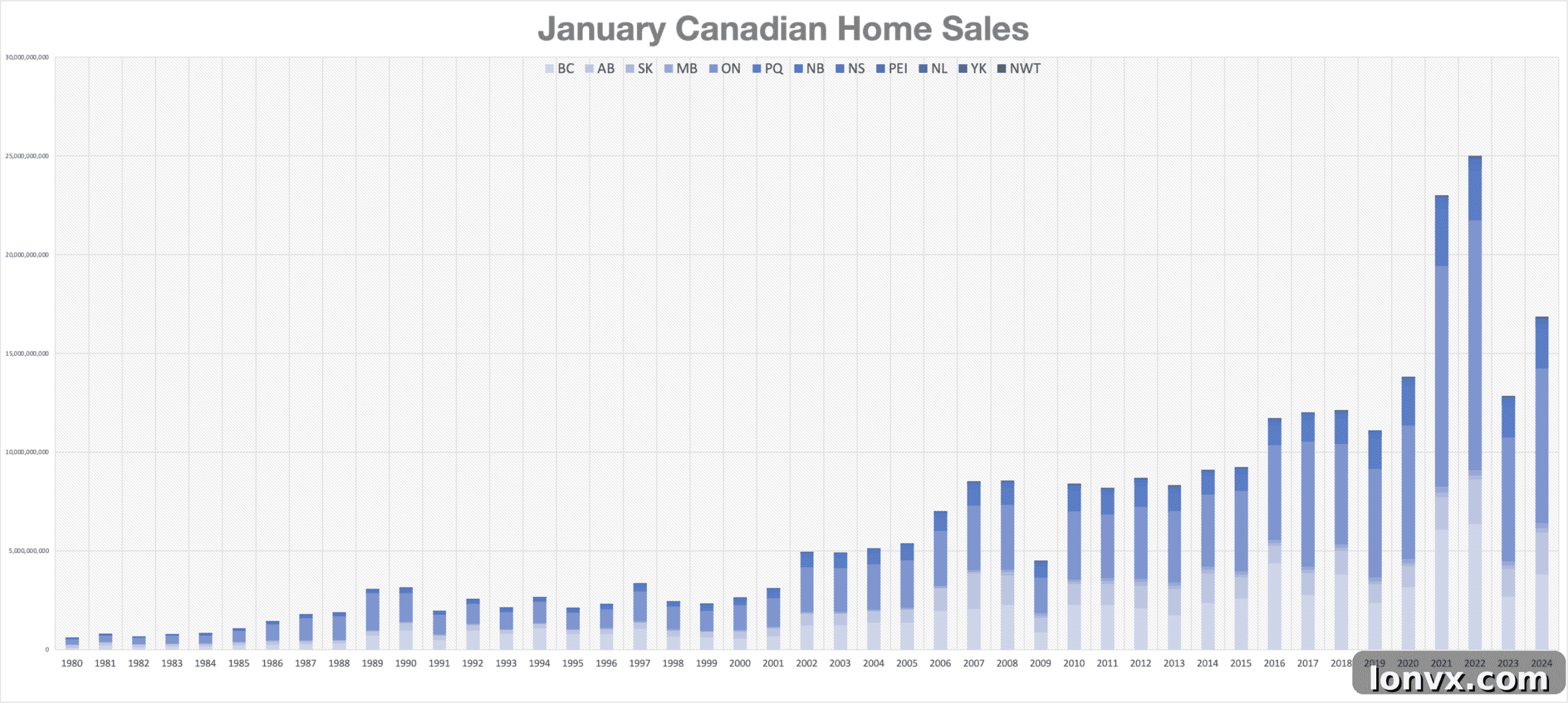
Source: realist.ca, CREA
Emerging from the Slump: Sales Recovery and Long-Term Averages
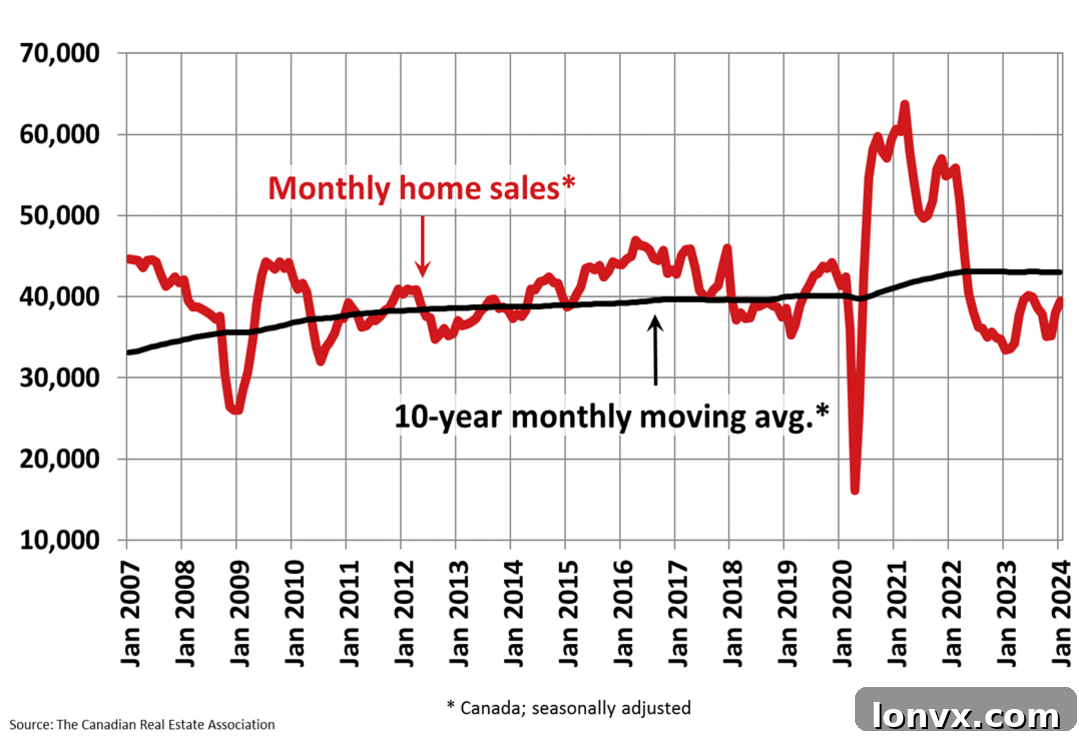
The Canadian Real Estate Association (CREA) has reported encouraging signs of recovery in national home sales as 2024 commenced, a welcome shift following a notably weaker performance in the second half of 2023. January saw a 3.7 percent increase in sales, building on the 7.9 percent rise recorded in December. This back-to-back monthly growth signals a potential turning point, indicating that buyers are gradually re-entering the market, likely prompted by stabilizing interest rate expectations and a clearer economic outlook.
Despite these consecutive gains, it’s important to note that overall sales activity remains approximately 9 percent below the 10-year average for January. This trend is not entirely unexpected; January typically represents one of the quieter months for real estate transactions, with activity usually picking up as spring approaches. However, the current upward trajectory is significant. The market is trending towards that average at a rapid pace, leading many to anticipate that February’s figures could potentially surpass the historical average, breaking the recent streak of underperformance. This sustained momentum, if it continues, would be a strong indicator of growing market confidence and a more balanced environment for both buyers and sellers as we move further into the year.
The Resurgence of First-Time Buyers: Driving Market Growth in Affordable Regions
Across Canada, real estate professionals are observing a tightening market, characterized by increased competition among buyers. This resurgence is particularly noticeable in specific segments, yet CREA’s assessment indicates that prices in these rapidly recovering areas continue to trend lower on average. This seemingly contradictory trend aligns with anecdotal evidence from the market: while buyer demand is increasing, it’s often concentrated in more accessible price points, preventing a widespread surge in overall national average prices.
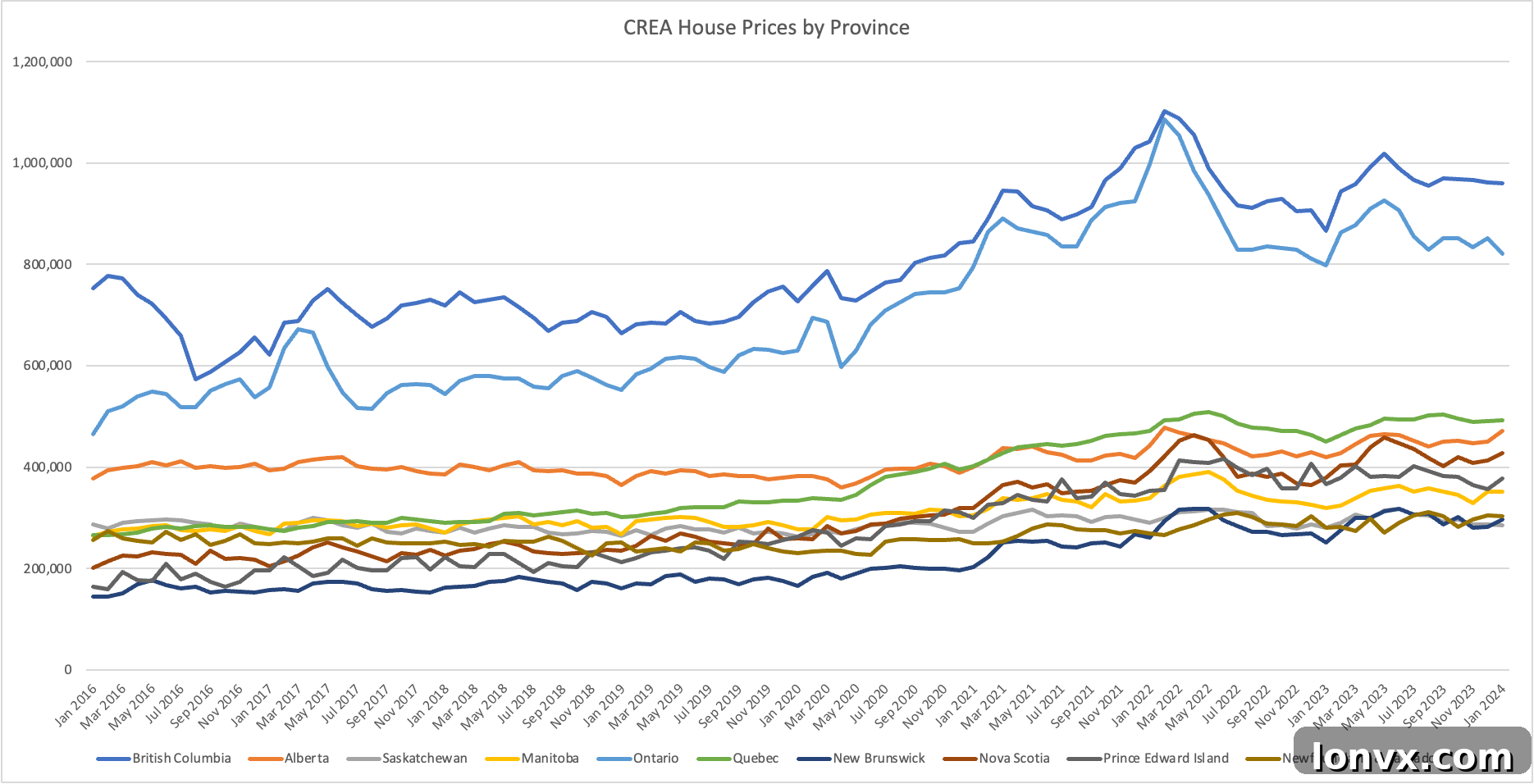
A significant portion of this renewed market vitality is attributed to first-time buyers, many of whom were previously sidelined during the overheated market frenzy of the past few years. These buyers, who may have been priced out or deterred by intense bidding wars, are now finding opportunities as market conditions moderate and affordability becomes a more prominent factor. This shift is leading to an uptick in prices primarily within more affordable regional markets, where entry-level homes are more attainable. The localized nature of these price increases underscores the varying market dynamics across Canada, with some provinces demonstrating robust growth:
- Yukon: + 3 percent price increase
- Nova Scotia: + 4 percent price increase
- Alberta: + 5 percent price increase
- New Brunswick: + 5 percent price increase
- Prince Edward Island: + 6 percent price increase
These regions, often characterized by lower average home prices compared to major metropolitan centers, are benefiting from the influx of first-time buyers and those seeking greater value for their investment. The appeal of these markets is further enhanced by factors such as a strong sense of community, growing employment opportunities, and a more relaxed pace of life, all contributing to their increasing desirability.
Strategic Opportunities for Upsizers in the Spring Market
While some regions are experiencing price increases, the picture isn’t uniform across the country. In Ontario, for instance, prices have seen a decrease of 4 percent, reflecting a market that has adjusted significantly from its pandemic-era highs. Similarly, British Columbia, home to some of Canada’s least affordable housing markets, has seen prices remain stagnant. These regional disparities create unique opportunities, particularly for existing homeowners looking to upgrade their living situation, often referred to as “upsizers,” especially as they approach mortgage renewal periods.
Source: realist.ca, CREA
The upcoming spring market could present a strategically opportune moment for sellers aiming to upsize, for several compelling reasons:
-
Clear Excess Demand for Entry-Level Homes: The property they are selling, often an entry-level home, faces robust demand from first-time homebuyers, many of whom are backed by CMHC (Canada Mortgage and Housing Corporation) insurance. This creates a strong base of willing and able buyers, ensuring a relatively quick sale and a good return on their current property. The CMHC-backed demand effectively establishes a price floor, reducing the risk of significant price depreciation for entry-level homes.
-
Muted Competition in Higher Price Ranges: Conversely, demand for larger, more expensive properties has been tempered by the current higher interest rate environment. This means that while entry-level homes are in high demand, the market for bigger homes, often considered luxury or upgrade purchases, sees less competition. Upsizers can potentially find better deals or face fewer bidding wars when purchasing their next, larger home, effectively leveraging the different demand elasticities across price segments.
-
Reduced Risk Exposure to Market Volatility: Buying and selling within the same market cycle inherently reduces an upsizer’s exposure to overall market volatility. By selling their current home and purchasing their next one in a relatively short timeframe, they lock in prices for both transactions. This strategy minimizes the risk associated with broad upward or downward price movements that could impact them if they were to sell and buy in different market conditions. Their primary risk exposure is limited to the difference in value between the asset they are selling and the asset they are acquiring, rather than the entire value of either property.
-
Favorable Consumer Psychology During Mortgage Renewal: Many upsizers are also facing mortgage renewal, which invariably brings increased capital costs due to higher interest rates. From a consumer psychology perspective, they are already preparing to absorb these increased costs on their existing mortgage. By upsizing, they perceive themselves as primarily paying the increased capital cost only on the additional value of the new, larger home, rather than feeling the full brunt of increased rates on their entire new mortgage. This mental accounting can make the decision to upsize feel more financially palatable, as they are already expecting a payment increase regardless of whether they move.
This dynamic illustrates how robust price-floor support for entry-level homes, often facilitated by CMHC policies, can act as a catalyst for market recovery. As first-time homebuyers secure entry-level properties, existing homeowners (the sellers) realize the inherent demand in that segment. This provides them with the equity and confidence to move up the property ladder, creating a ripple effect throughout the market.
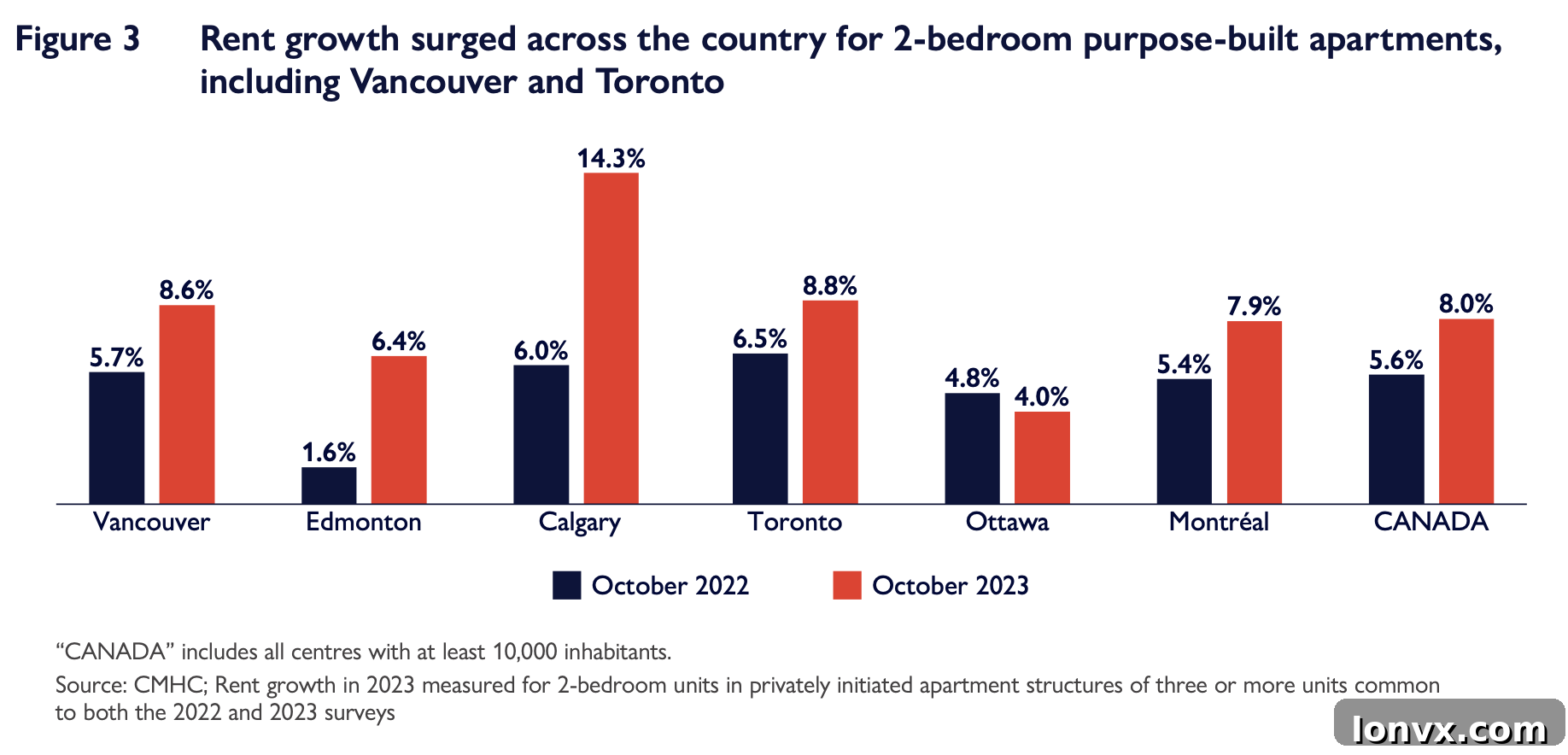
Crucially, non-owners in Canada today are faced with a stark dilemma: navigate a rental market experiencing record-breaking growth and historically low vacancy rates, as highlighted by CMHC’s most recent report, or venture into a housing market that, while showing signs of stability, can still feel volatile and daunting. The extreme pressures in the rental sector are undoubtedly pushing more individuals towards homeownership, even if the path remains challenging. This influx of renters transitioning to homeowners further fuels demand, especially at the entry level, creating a self-reinforcing cycle of activity.
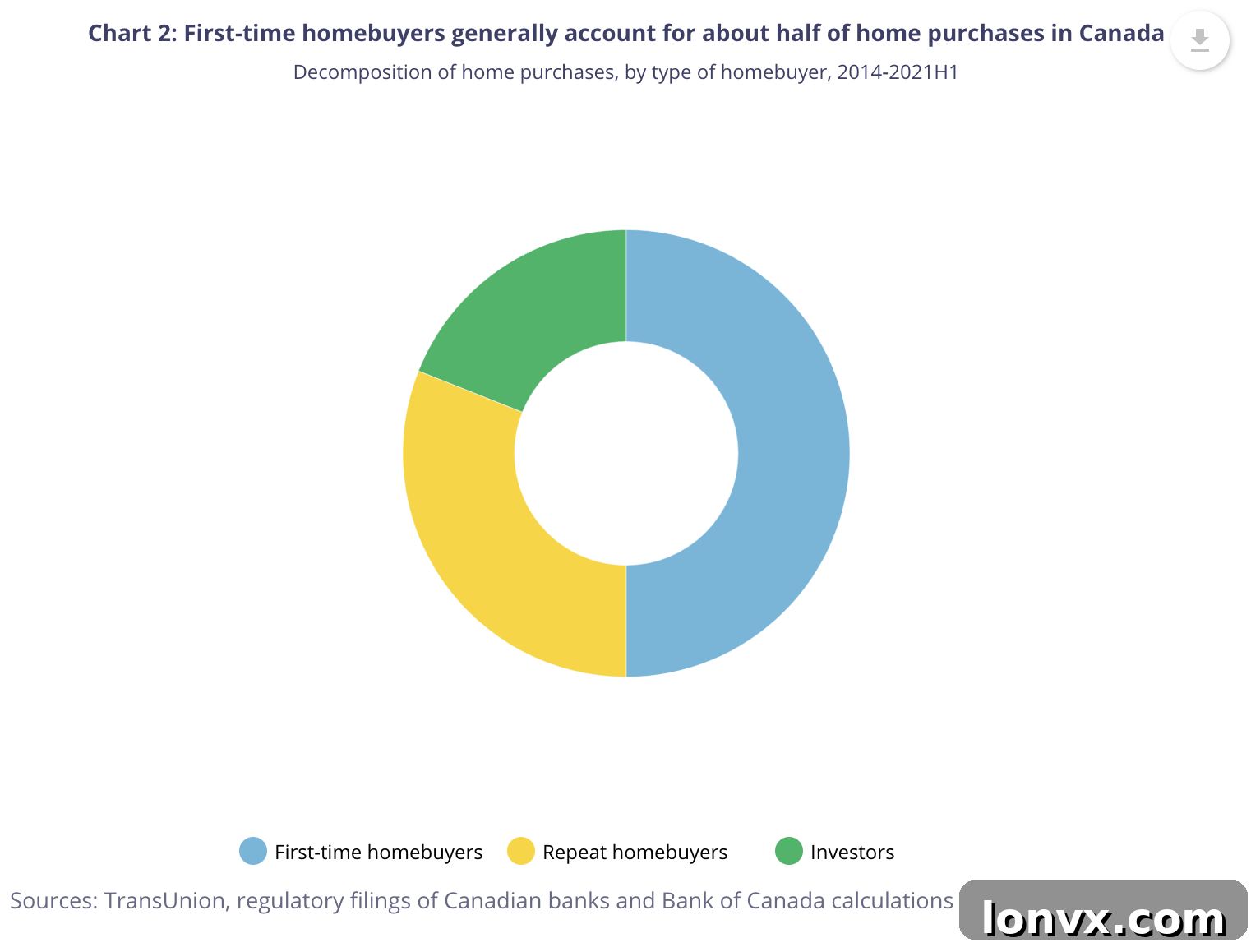
According to statistics from the Bank of Canada, close to half of all homebuyers are first-timers. This significant demographic explains why we are witnessing a noticeable resurrection in sales volume, particularly within the lower end of the housing market. Their re-entry is not just a trend; it’s a fundamental driver of the market’s current trajectory, injecting essential liquidity and activity where it’s most needed. As this segment continues to grow, it will likely shape the market’s performance for the foreseeable future.
Looking Ahead: The Future Trajectory of Canadian Real Estate
The initial months of 2024 have painted a picture of cautious optimism for the Canadian real estate market. While we are still far from the frenetic pace of 2021 and 2022, the discernible recovery in sales volume, particularly driven by the return of first-time buyers, signals a healthier rebalancing. The regional disparities, with affordable markets seeing price upticks and major urban centers experiencing more modest adjustments or even declines, highlight a market that is complex and fragmented, rather than monolithic.
Key factors to watch in the coming months include the trajectory of interest rates, the ongoing challenges in housing supply, and the impact of immigration on demand. Should interest rates stabilize or see moderate cuts, coupled with sustained population growth, the market could see further expansion. However, affordability remains a critical hurdle, especially in high-cost provinces, underscoring the need for continued policy focus on increasing housing stock across all price points.
In conclusion, the Canadian real estate market appears to be on a gradual, yet promising, path towards recovery. This journey is characterized by increased buyer confidence, strategic opportunities for certain segments of sellers, and a pivotal role played by first-time homebuyers. While challenges persist, the early 2024 data suggests a resilience that bodes well for a more stable and potentially growth-oriented market in the years to come.
Enjoying this article?
Get the latest REM articles in your inbox 3x week so you stay up to date on the latest in the Canadian real estate industry