
Navigating the Shifting Tides: A Deep Dive into Canada’s Evolving Real Estate Market
The Canadian real estate market is once again navigating a period of significant recalibration, marked by a continued decline in sales volume. While such shifts often spark concern, this particular downturn was largely anticipated by industry watchers and market analysts. The persistent economic headwinds, coupled with the cumulative effect of rising interest rates, have undeniably influenced consumer confidence and purchasing power across the nation.
Understanding the current trajectory requires a closer look at key indicators that paint a nuanced picture of an industry grappling with a “recessionary hangover” from the unprecedented boom experienced during the pandemic’s era of emergency monetary policies.
The latest monthly statistics from the Canadian Real Estate Association (CREA) reveal a national home sales decline of 4.1 percent month-over-month in August. This contraction, while notable, aligns with historical trends for the summer market, which typically experiences a seasonal trough as prospective buyers and sellers often put their plans on hold during vacation periods. This cyclical slowdown is a predictable feature of the Canadian housing landscape, suggesting that a portion of the recent dip might be attributed to seasonal dynamics rather than solely fundamental weakness.
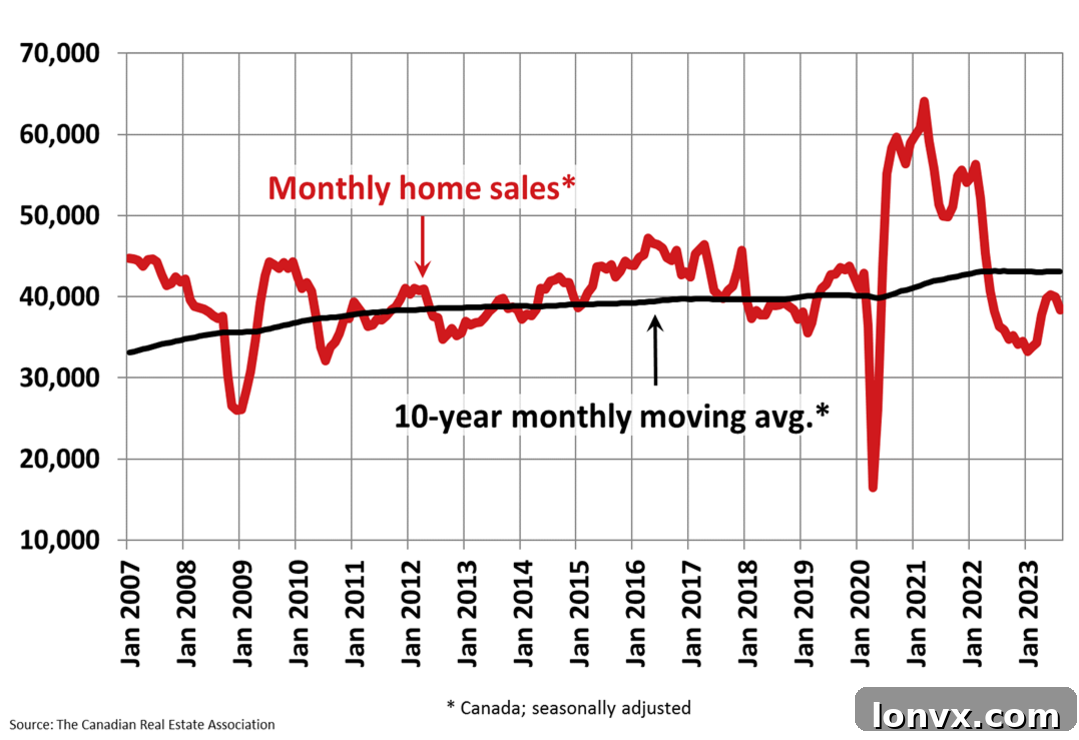
However, a more encouraging data point emerges when we consider actual (not seasonally adjusted) monthly activity, which registered a 5.3 percent increase compared to August 2022. This year-over-year improvement offers a glimmer of resilience, especially when contrasted with the exceptionally challenging summer market of the previous year. In 2022, many Canadian markets witnessed house prices reaching their annual low point around August, making the current comparative growth a sign that the market has, in some respects, moved past its most severe post-pandemic corrections.
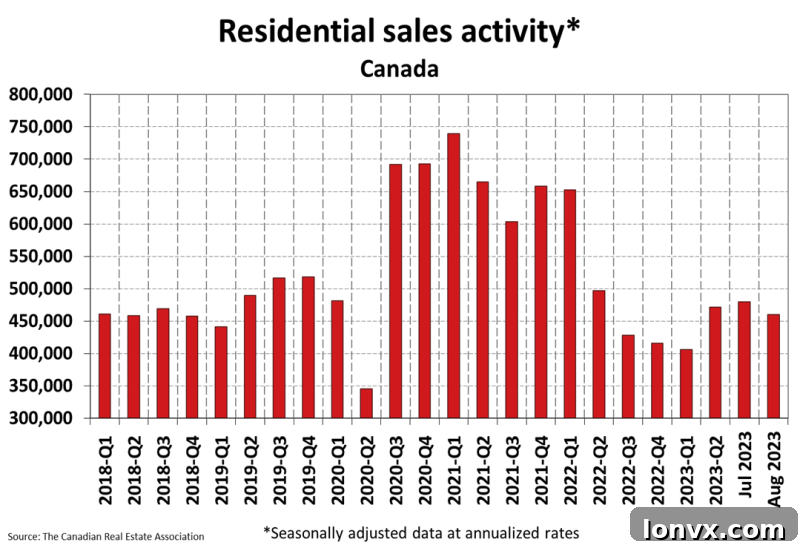
Despite this year-over-year uptick, the broader context remains one of caution. While the market has certainly climbed from the lows observed in Q4 of last year, it remains a considerable distance from the frenzied highs witnessed during the peak of the pandemic housing boom. This current state can best be described as a “recessionary hangover” – a period of adjustment following an extended period of accelerated growth fueled by historically low-interest rates and robust demand. Consequently, national home sales figures are currently tracking well below the 10-year average, reflecting a market that is actively seeking a new equilibrium. Interestingly, current sales numbers bear a striking resemblance to the more sustainable, pre-pandemic market conditions observed in 2018 and 2019, potentially signaling a return to a more balanced and predictable environment after years of volatility.
Supply Dynamics: A Gradual Ascent Towards Balance
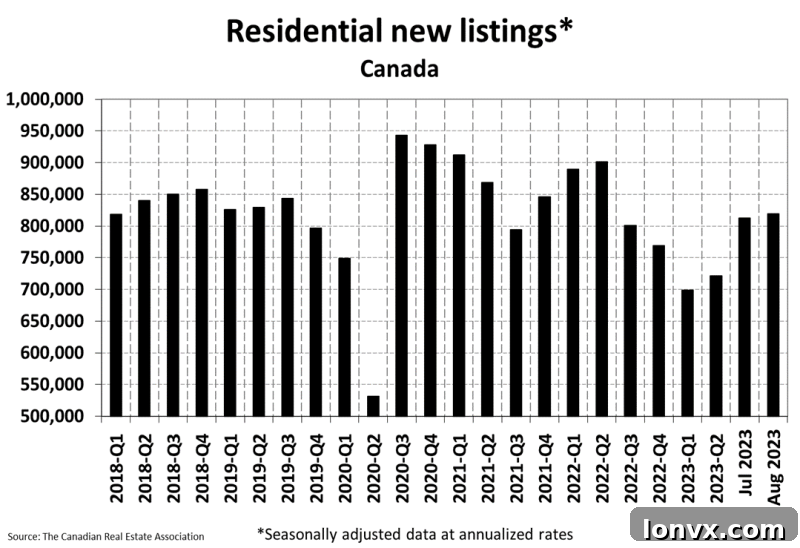
Parallel to the moderation in demand, the Canadian real estate market is also witnessing a gradual, albeit slower, increase in supply. This dynamic interplay between softening demand and growing inventory is a critical factor shaping the market’s trajectory. The number of newly listed properties edged up by 0.8 percent month-over-month, translating to an impressive 9.6 percent annualized growth rate. While this growth rate in new listings indicates a healthier flow of available properties onto the market, its impact is amplified by the simultaneous dip in buyer activity.
Several factors contribute to this rise in supply. Some homeowners, who might have delayed selling during periods of high uncertainty, are now choosing to list their properties. Additionally, a steady trickle of new construction completing across various regions adds to the overall inventory. This increasing availability, juxtaposed with a noticeable decline in buying enthusiasm due to higher borrowing costs and broader economic anxieties, places Canada’s real estate market firmly on a path toward becoming a buyer’s market by the close of the year – a significant shift from the seller-dominated conditions that characterized much of the pandemic era.
A buyer’s market typically offers prospective purchasers more choices, increased negotiating power, and potentially longer decision-making periods. For sellers, it often means a need for more strategic pricing and a longer time on the market. This impending shift underscores the importance of understanding current market conditions for all participants.
Price Evolution: A Story of Stability Amidst Shifting Sands
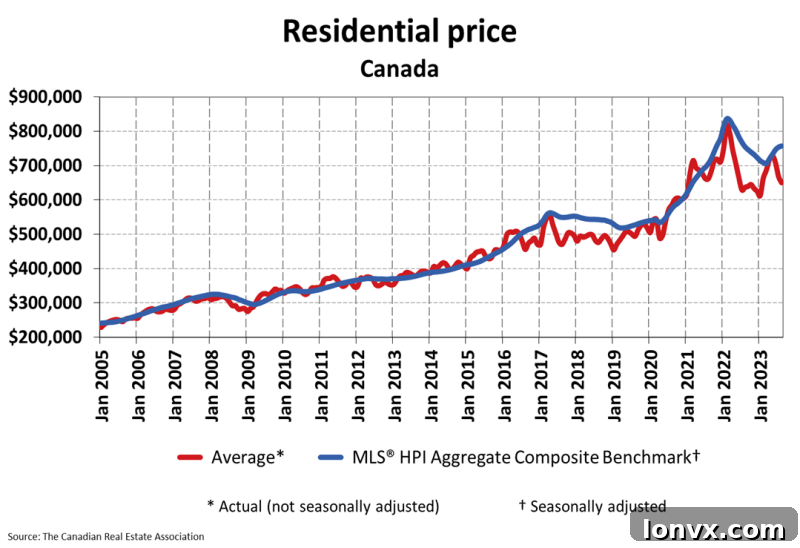
In response to the converging trends of declining sales volume and increasing supply, national home prices have exhibited a remarkable degree of stability. On a year-over-year basis, the Aggregate House Price Index (HPI) registered a modest increase of just 0.4 percent since this time last year. This seemingly small increment holds significant weight as it marks the first year-over-year increase in the HPI since it began its descent in Q1 of 2022. This subtle upturn, though barely perceptible on a chart, represents a psychological milestone, suggesting that the steepest price corrections may be behind us for the national average.
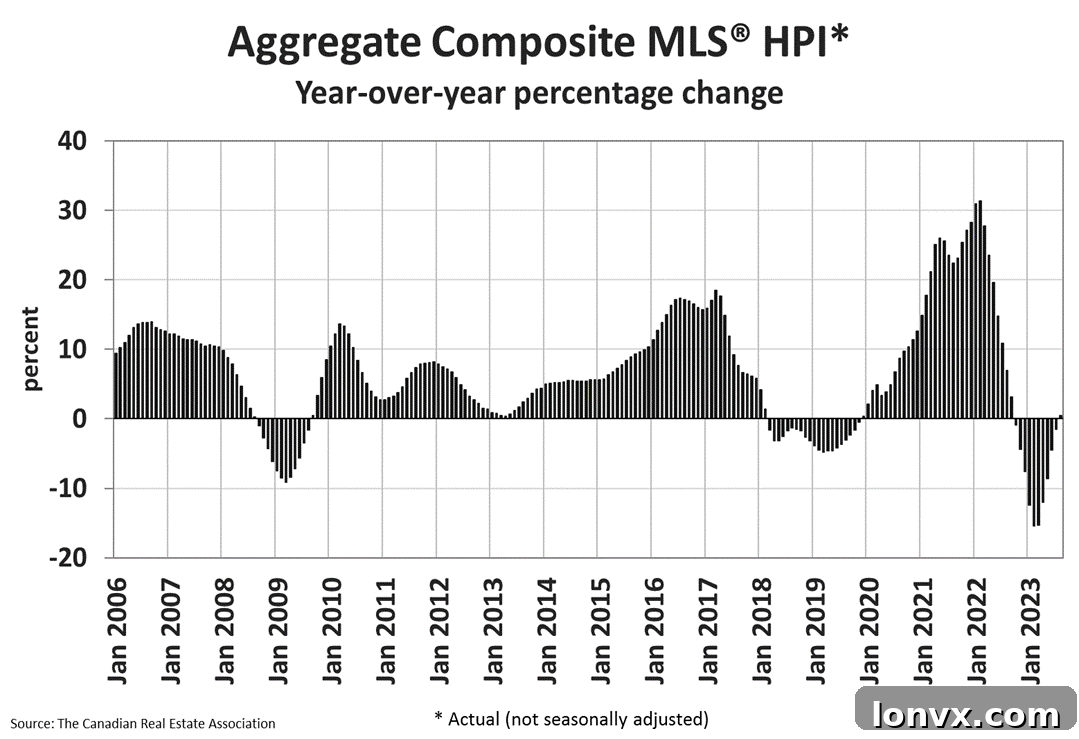
It’s important to note, as some industry experts rightly point out, that the House Price Index can often act as a lagging indicator, reflecting market changes with a slight delay. This characteristic is particularly evident when comparing the HPI’s trajectory with that of the average house price, which continues to show a persistent downtrend. This divergence suggests that while the HPI offers a standardized measure of home value, real-time transaction prices might still be experiencing downward pressure, especially in certain segments or regions. The average price can be more susceptible to shifts in the types of homes being sold (e.g., fewer high-end sales can pull the average down), whereas the HPI adjusts for these compositional changes, providing a more “apples-to-apples” comparison over time.
Geographical Nuances in Price Growth
The overall national stability in prices masks significant geographical variations, with price growth proving to be highly dependent on regional economic conditions and local market dynamics. Many provinces are experiencing price growth within close proximity to the rate of inflation, effectively meaning that real (inflation-adjusted) prices are either stable or experiencing very modest growth. This category includes:
- British Columbia
- Alberta
- Manitoba
- Quebec
- Newfoundland and Labrador
These provinces often benefit from diverse economies, varying levels of affordability, and unique demographic trends that contribute to their relatively stable price environments.
Conversely, some regions have seen little change in prices or even a real decline when adjusted for inflation, indicating that these markets are experiencing more significant headwinds. This includes:
- Saskatchewan
- Ontario
- Prince Edward Island
Ontario, in particular, stands out, having experienced substantial price growth during the pandemic, and is now seeing a more pronounced correction as affordability becomes a major constraint and borrowing costs deter buyers. Saskatchewan and Prince Edward Island, with smaller market sizes, can also be more susceptible to localized economic shifts.
However, the most striking aspect of the current price landscape is the outsized growth observed in New Brunswick and Nova Scotia. These Atlantic provinces have become unexpected hotspots in the national real estate narrative.
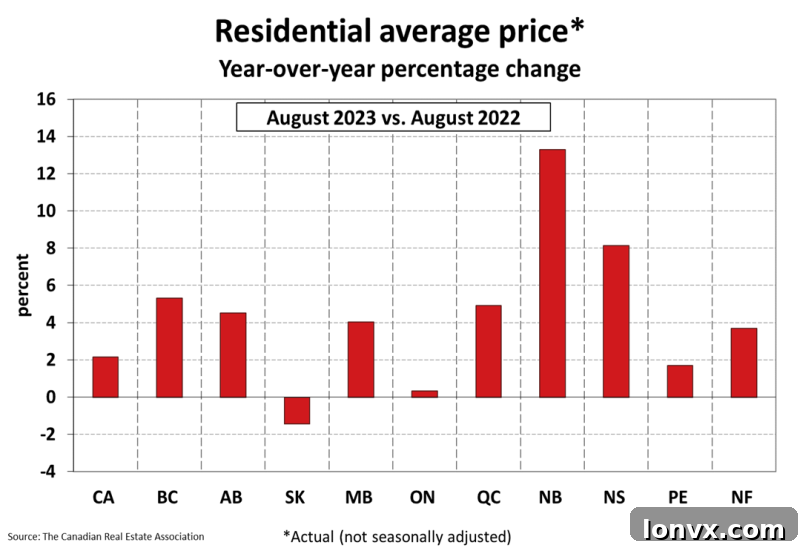
This exceptional growth in Atlantic Canada is primarily attributable to massive interprovincial migration, particularly from higher-cost provinces like Ontario. The phenomenon, recently highlighted by RBC’s insightful report titled “Canadians on the move: will a pandemic shakeup in migration trends hold?”, details how the pandemic accelerated a trend of Canadians seeking greater affordability, remote work opportunities, and a different quality of life in smaller, less congested urban centers. This influx of buyers, often bringing equity from more expensive markets, has significantly fueled demand and subsequently pushed up prices in regions like New Brunswick and Nova Scotia, fundamentally altering their local housing markets.
Market Balance and the Road Ahead: A Shift to a Buyer’s Market?
While the Canadian real estate market might appear balanced at first glance, a deeper analysis of key metrics reveals that both sales-to-new listings ratio and months of inventory are trending in a negative direction, signaling an undeniable shift in power dynamics. The sales-to-new listings ratio, a crucial indicator of market balance, continues its downtrend. This means that the rate at which new properties are being listed is consistently outpacing the rate at which homes are being sold. When listings flood the market faster than buyers can absorb them, it inevitably leads to an accumulation of inventory, putting downward pressure on prices and granting buyers more leverage.
This imbalance directly contributes to the continued growth in “months of inventory.” Months of inventory represents how long it would take to sell all currently listed homes at the present rate of sales. A market with 4 to 6 months of inventory is generally considered balanced. Anything significantly below that favors sellers, and anything above tends to favor buyers. The increasing trend in this metric indicates that the supply pipeline is getting fuller, providing prospective purchasers with more options and reducing the urgency to compete aggressively for available properties.
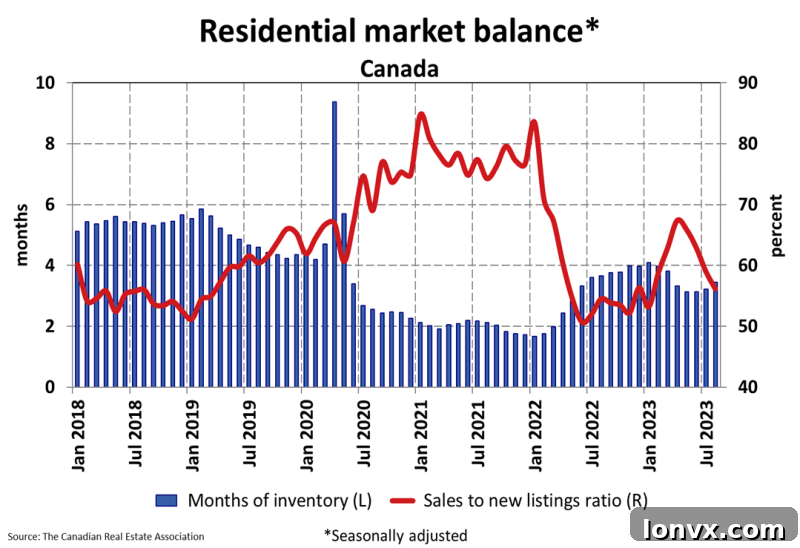
If these trends persist – a continued decline in sales activity coupled with a sustained increase in new listings – the Canadian real estate market is on track to transition into a definitive buyer’s market by the end of the year. This transition would represent a significant inflection point, moving away from the competitive, fast-paced environment that defined the market for much of the past decade. For buyers, this could translate into greater bargaining power, more time to make decisions, and potentially more favorable pricing. Sellers, on the other hand, would need to adjust their expectations, focusing on strategic pricing, effective staging, and patience.
The Canadian real estate market is undeniably in a period of dynamic adjustment. The “recessionary hangover” from the pandemic boom is recalibrating expectations, while a gradual increase in supply and a moderation in demand are reshaping market dynamics. While national average prices have found a degree of stability, regional disparities are pronounced, driven by unique economic factors and demographic shifts, notably interprovincial migration. As the year progresses, all eyes will be on the sales-to-new listings ratio and months of inventory, which strongly suggest that Canada is steadily moving towards a more balanced, if not outright buyer-friendly, housing environment.
This period of recalibration offers both challenges and opportunities, demanding vigilance and adaptability from all participants in the Canadian housing sector.