Unveiling Toronto’s Past: The Jewish Immigrant Builders Who Transformed the City’s Skyline
Long before Toronto became synonymous with gleaming condominium towers, another monumental construction boom laid the very foundations of its modern urban landscape. In the 1950s and 1960s, a remarkable era saw the widespread development of residential apartment buildings, a concept that was, at the time, quite novel and revolutionary for the burgeoning city. This period, often overlooked in contemporary narratives, profoundly shaped Toronto’s character, providing much-needed housing and defining its architectural identity for decades to come.
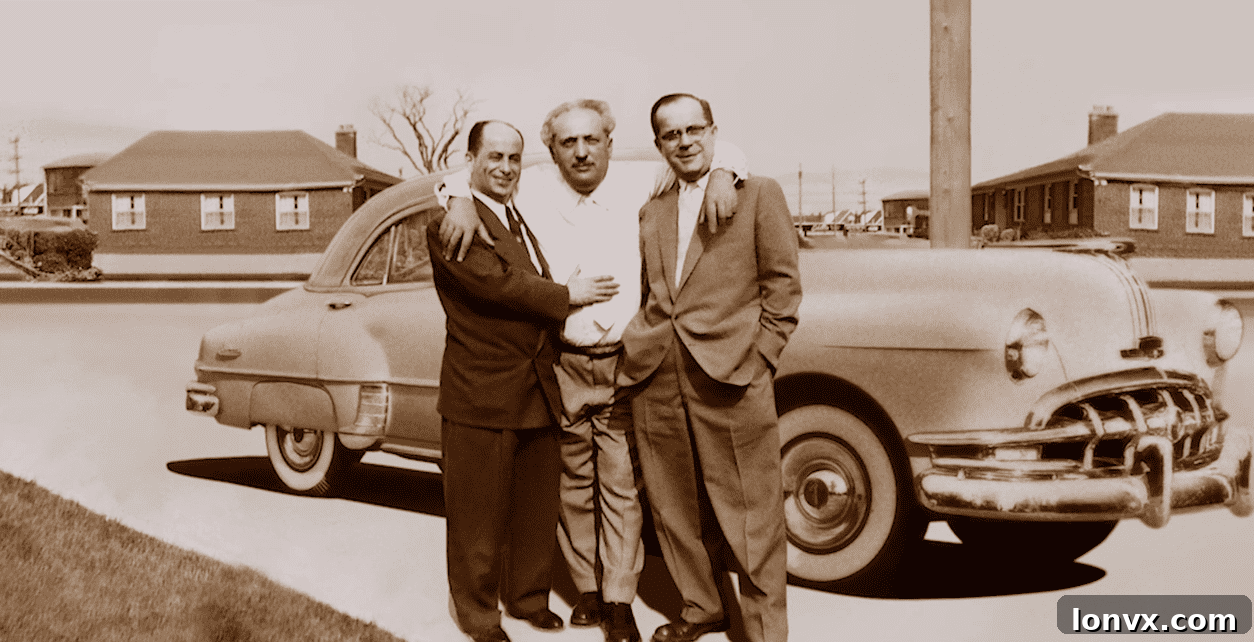
What many might not realize is the extraordinary human story behind this transformation. A significant number of the visionary builders driving this expansion were Jewish immigrants from Eastern Europe. These individuals, who had miraculously escaped the horrors of the Holocaust and arrived in Canada after the Second World War, were not only seeking refuge but also a chance to build a better life for themselves and their families. Their indomitable spirit and entrepreneurial drive would, against all odds, leave an indelible mark on Toronto.
This compelling and often forgotten chapter of Toronto’s history is meticulously brought to light in a powerful new documentary titled Shelter. Directed by the acclaimed Toronto filmmaker Ron Chapman, this film premiered to critical acclaim at the 29th edition of the Toronto Jewish Film Festival in June, captivating audiences with its intricate portrayal of resilience, enterprise, and urban development.
The Genesis of a Building Revolution: Filling Toronto’s Housing Void
According to the compelling revelations of Shelter, these Jewish builders were responsible for the astonishing construction of approximately half a million rental apartment units across Toronto between 1952 and 1975. This monumental output not only addressed a critical need but also fundamentally redefined the urban fabric of Canada’s largest city. The question naturally arises: why did such a large contingent of these particular immigrants gravitate towards the challenging and competitive real estate industry?
The answer lies in a convergence of urgent societal needs and unique entrepreneurial opportunities. Post-war Toronto was experiencing an unprecedented population boom, fueled by both natural growth and waves of new immigration, creating a severe and pressing housing shortage. These astute builders recognized this gaping need, viewing it as an opportunity to not only prosper but also to contribute meaningfully to their new home. Furthermore, as David Green, son of the legendary Al Green of Greenwin Group and Greenrock Property Management, eloquently explains in the film, the real estate sector presented fewer systemic barriers compared to many other established industries of the time. “You didn’t have a guild, you didn’t have a union, you didn’t have to have an education, you didn’t have to contend with an anti-Semitic establishment,” Green recounts, emphasizing that “they could just do it.” This relative freedom from traditional gatekeepers allowed their sheer determination and business acumen to flourish.
The names and companies associated with this transformative period resonate deeply within the industry even today, testifying to their enduring legacy. Families like the Diamonds and Daniels, who founded Cadillac-Fairview Corp., and the Tenenbaums of The Tenen Group, became household names in Toronto’s development scene. Sam Brown’s The Brown Group, along with the aforementioned Greens, were also prominent figures. Behind the scenes, shrewd deal-makers like Eddy Cogan played a pivotal role, connecting these formidable personalities and catalyzing many of the era’s most significant projects. Their collective ambition and drive were instrumental in forging what would become a modern metropolis.
From Hardship to Unprecedented Success: A Story of Resilience
Yet, before their remarkable success, these individuals endured unimaginable hardships. The documentary Shelter powerfully begins by delving into the harrowing early lives and incredible escapes of these builders. Their stories are not merely tales of business acumen but profound testaments to human resilience in the face of unspeakable adversity. Sam Brown, for instance, shares a chilling account from a concentration camp, explaining that “over 600 people went in and in three weeks time it was down to six and I was one of them.” Such poignant narratives are brought to life through skillful use of archival footage, rare photographs, and dramatic recreations, allowing viewers to grasp the sheer scale of their prior suffering and the magnitude of their survival.
Upon their arrival in Toronto, these persecuted immigrants encountered a complex landscape of both immense opportunity and persistent discrimination. Despite finding a new beginning in Canada, they were not entirely immune to the prejudices of the era; the city, for example, once maintained discriminatory laws that banned Jews from certain areas, including parts of Yonge Street. The film brilliantly weaves together the personal memories of several builders and their children, painting a vivid picture of the challenges they faced and the unwavering spirit with which they confronted them. Their experiences underscore the profound courage required to not only rebuild their lives but also to thrive in a new land.
A Community United: The Power of Collaboration and Vision
Allan Weinbaum, son of Anne and Jack Weinbaum of W. J. Realty & Gonte Construction (now the Preston Group), provides valuable insight into the pragmatic approach that fueled their early ventures. “One of the great opportunities for everyone in that era if you wanted to get started in business was real estate,” he recalls. These entrepreneurs weren’t just individual players; they often operated as a collective force, pooling their limited resources. “My parents and their friends would…put together a pool of money, they would buy up a property, a house or farm and they would flip it,” Weinbaum explains. This collaborative strategy allowed them to leverage collective capital and expertise, mitigating individual risk while maximizing potential returns. They possessed “a good intuitive feel for value and where the market was going,” a keen sense that allowed them to consistently make astute investment decisions. This relentless drive and strategic collaboration meant “they just kept going and going, and Toronto was a good place to do that in the ’50s,” offering fertile ground for their ambitious projects.
Reshaping Toronto’s Urban Landscape: A City of Apartments Emerges
The fruits of their labor soon became visible across Toronto. Iconic apartment buildings such as the Village Green on Alexander Street began to dot the cityscape. Clusters of residential developments rapidly sprung up in key urban nodes like Yonge and Davisville, Yonge and Eglinton, and within the charming High Park neighborhood. These newly constructed apartments became much more than mere housing units; they served as the vital first abodes for countless new immigrants arriving in Toronto, providing stability and community in a foreign land. This era truly cemented the apartment building as a cornerstone of Toronto’s identity.
The enduring impact of this building boom is underscored by Graeme Stewart, founding director for the Centre for Urban Growth and Renewal. He notes a fascinating consequence: “Toronto has more older apartment buildings than any city in North America.” This statistic dramatically challenges the conventional perception of Toronto. “We think of ourselves as a city of houses, but we’re really not,” Stewart argues compellingly. “We’re a city of apartments. It’s been the core of rental housing and affordable housing for decades.” During this pivotal era, well over a million people made their homes in these apartments, representing a diverse cross-section of society, from the elderly and young couples to factory workers, all finding stable residences within these newly created communities.
Even in the present day, the legacy of these builders remains profoundly relevant. “Even today, these apartments make up 85 percent of the rental housing in our city,” Stewart emphasizes. “So it is a core housing infrastructure. It was so crucial in forming the city we are today.” This remarkable continuity highlights that the efforts of these immigrant builders weren’t just a fleeting chapter, but a foundational act that continues to support the livelihoods and housing needs of contemporary Torontonians, solidifying the city’s unique urban character.
Ron Chapman
“Shelter”: Bringing a Vital Story to Light for New Generations
Director Ron Chapman himself expressed profound admiration for this little-known, yet incredibly significant, chapter in Toronto’s real estate history. His journey into this story began quite serendipitously when he first learned about the Jewish builders from an unexpected source: Mark Kenney, an “Irish Protestant immigrant.” Kenney, who had gained invaluable industry experience by working alongside some of these very builders, was deeply impressed by their immense contributions to the city and firmly believed that their extraordinary story deserved to be told and remembered. This cross-cultural connection highlights the universal appeal and importance of their achievements.
“While they may be known now as successful and wealthy builders, it’s where they came from and how they got there that makes their story so astounding and compelling,” Chapman eloquently shared with REM. The documentary delves deeper than mere financial success, exploring the incredible courage, resilience, and ingenuity required to overcome the trauma of the Holocaust and build not only new lives but also a significant part of a major North American city. The film, through its rich tapestry of historical footage, intimate photographs, and carefully crafted dramatic recreations, ensures that the sacrifices and triumphs of these remarkable individuals are etched into Toronto’s collective memory, offering a profound lesson in perseverance and urban development.
While the film doesn’t explicitly state whether any of these pioneering builders or their families ever resided in one of their own apartment complexes, one fact remains irrefutably clear. During that prolific 23-year building boom, spanning from 1952 to 1975, the city of Toronto experienced exponential growth, its population surging from one million to a thriving two million people. This period was instrumental in shaping Toronto into what it is today: a vibrant, dynamic metropolis and one of the most successful and celebrated examples of urban multiculturalism in the world. The legacy of these builders is not just in the bricks and mortar they laid, but in the diverse, inclusive city they helped create.
Where to Watch “Shelter”: Broadcast Information
For those eager to discover more about this incredible history, the documentary Shelter is scheduled for broadcast on OMNI at the following times (with re-runs expected to follow):
TV version
- OMNI BC/Pacific – Sunday, June 13 at 9 p.m. PT
- OMNI ALB/Prairies – Sunday, June 13 at 9 p.m. MT
- OMNI 1 – Tuesday, June 15 at 10 p.m. ET
Feature film version
- OMNI BC/Pacific – Wednesday, June 16 at 2 p.m. PT
- OMNI ALB/Prairies – Wednesday, June 16 at 1 p.m. MT
Watch the trailer for Shelter to get a glimpse into this compelling historical narrative.