Navigating Shared Driveways: Understanding Prescriptive Easements in Ontario
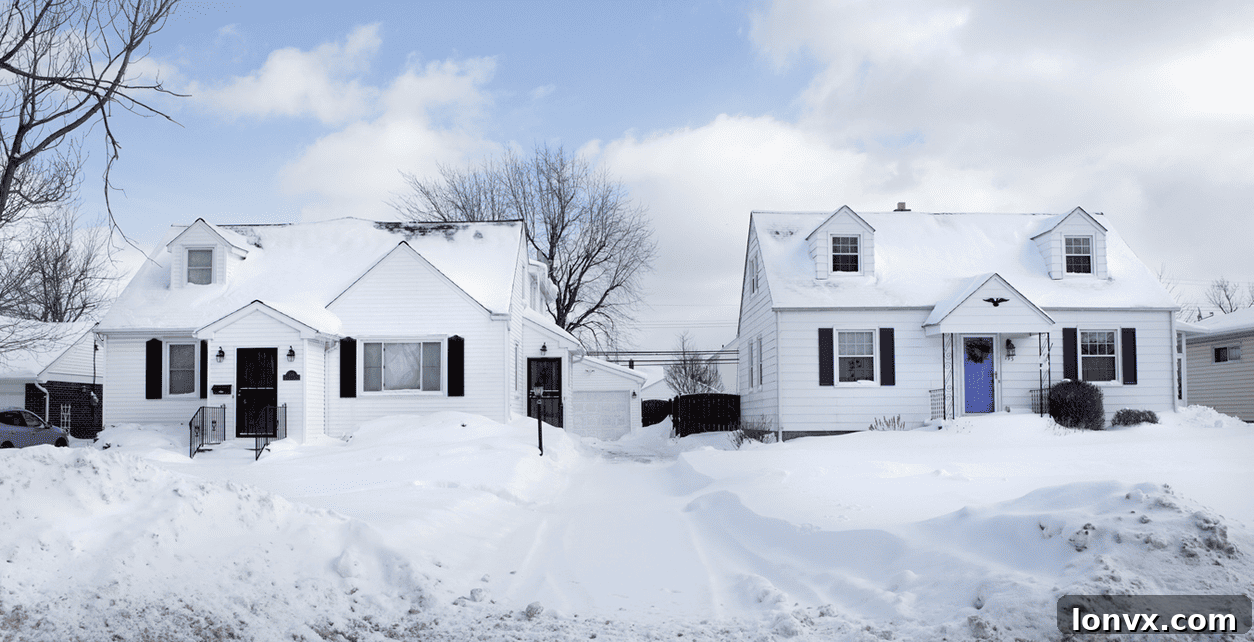
Shared driveways are a pervasive element in the landscape of many residential communities, often presenting a unique challenge in clearly delineating property boundaries. In these scenarios, it can be remarkably difficult to pinpoint the exact demarcation where one person’s property rights conclude and another’s commence. This inherent ambiguity frequently leads to informal, unspoken understandings among neighbours regarding the shared use and access of such spaces. These arrangements, though not always formalized in writing, are vital to daily life, even if they occasionally deviate from strict adherence to surveyed property lines. This longstanding, unwritten agreement governing access and usage is legally recognized as an easement – a fundamental legal right that permits someone other than the original or current property owner to utilize a specific portion of the land for a defined purpose.
What Exactly is an Easement?
At its core, an easement is a non-possessory right to use another person’s land for a specific purpose. It does not grant ownership, but rather a limited privilege. For instance, a common example is an easement allowing utility companies to run power lines or pipelines across private property. In the context of shared driveways, an easement typically grants one neighbour the right to drive over a portion of their adjoining neighbour’s land to access their own property. These legal agreements are crucial for ensuring functionality and preventing disputes, as they formalize rights that might otherwise be ambiguous or contentious. Easements can be created in several ways, including express grants (written agreements), implication (arising from the circumstances of a property division), or, as we will explore, by prescription.
The Complexities of Shared Driveways and Property Disputes
The communal nature of shared driveways, while practical for land optimization, often becomes a fertile ground for neighbourly disagreements. When the boundaries of these shared spaces are not explicitly defined or when established norms are challenged, conflicts can quickly escalate. Some property owners, driven by a desire for clearer demarcation or increased privacy, opt to construct physical barriers like fences along what they perceive to be their property line within a shared driveway. While seemingly a straightforward solution, such actions can inadvertently obstruct a neighbour’s long-established access, leading to significant legal battles. These disputes often underscore the delicate balance between individual property rights and the historical use of shared amenities, making them particularly challenging to resolve without legal intervention. The Ontario courts frequently grapple with such cases, aiming to uphold both statutory law and equitable principles.
Prescriptive Easements: A Historical Right in Modern Ontario Law
The concept of a prescriptive easement is rooted in ancient legal principles, essentially allowing someone to acquire a right to use another’s land by openly and continuously doing so for a long period, typically without permission. It’s akin to “squatter’s rights” for usage, rather than ownership. However, in Ontario, the path to obtaining a prescriptive easement has become considerably more arduous with the widespread adoption of the Land Titles system for property registration. This system, designed to provide a clear and definitive record of ownership and encumbrances, aims to eliminate many of the uncertainties that prescriptive rights inherently introduce. Despite this shift, prescriptive easements remain a viable, though strictly controlled, legal avenue. To successfully claim one today, applicants must navigate the demanding requirements of what is known as the Doctrine of Lost Modern Grant.
The Doctrine of Lost Modern Grant: A Strict Threshold
The Doctrine of Lost Modern Grant is a legal fiction, a presumption that at some point in the distant past, a formal grant of an easement was made and then lost. To invoke this doctrine in Ontario and secure a prescriptive easement, a claimant must demonstrate compelling evidence that such a right existed prior to the property’s conversion from the older Registry system to the more modern Land Titles system. This historical context is critical. Proving this doctrine necessitates showing an uninterrupted, unchallenged, and non-permissive use of the property in question for a continuous period of at least 20 years. This 20-year period must precede the registration of the property under the Land Titles Act.
The burden of proof here is substantial. It often requires extensive research into property records, and more critically, the collection of anecdotal evidence and sworn testimonies from previous property owners who can attest to the historical usage patterns. If there is any evidence whatsoever that the party seeking the easement (or their predecessors) explicitly requested and received permission from the other party (or their predecessors) to use the property, the claim for a prescriptive easement will almost certainly fail. The essence of “use as of right” under this doctrine is that the use occurred without permission, not in secret, and without force, indicating an assertion of right rather than a request for privilege. This distinction is paramount and often the deciding factor in these cases.
The Landmark Case: English v Perras, 2018 ONCA 649
The complexities and rigorous standards for establishing a prescriptive easement were vividly illustrated in the Ontario Court of Appeal’s ruling in English v Perras, 2018 ONCA 649. This particular case provided crucial clarification on the legal hurdles property owners must overcome to assert such a claim, specifically concerning shared driveways.
Background of the Dispute
The heart of the dispute involved two adjacent neighbours, the Englishes and the Perrases, who shared a common 14-foot wide driveway. This driveway was the sole practical means by which both households accessed their respective garages, making its shared nature integral to their daily lives. The property line, as surveyed, ran directly down the middle of this shared thoroughfare. A pivotal moment in the escalating tension occurred when the Perrases decided to construct a fence. This fence was erected just inside their side of the property line, extending along the entire length of the driveway. Unfortunately, due to the pre-existing conditions and the narrowness created by the fence, the Englishes found their access to the driveway, and consequently their garage, severely impeded. On the Englishes’ side, there was also a retaining wall adjacent to their house, further contributing to the limited space. The exact origin and purpose of this retaining wall remained unclear, adding another layer of complexity to the physical constraints of the driveway.
Faced with a practical impossibility of using their own property effectively, the Englishes initiated legal action. Their primary objective was to obtain a prescriptive easement, a legal declaration that would confirm their established rights to the shared space and compel the Perrases to remove the obstructing fence.
The Initial Ruling and Subsequent Appeal
At the initial application stage, the presiding judge sided with the Englishes. The application judge was persuaded by the extensive historical use of the shared driveway by both parties, concluding that the Englishes were indeed entitled to a prescriptive easement. Consequently, an order was issued compelling the Perrases to dismantle their fence. Unsatisfied with this outcome, the Perrases promptly launched an appeal, contending that the conditions for establishing a prescriptive easement had not, in fact, been met.
The Court of Appeal’s Reversal
The Ontario Court of Appeal ultimately agreed with the Perrases, overturning the application judge’s decision. The appellate court’s reasoning was based on two critical grounds, which serve as fundamental pillars for understanding prescriptive easements in Ontario:
Ground 1: The Principle of “Use as of Right”
The Court of Appeal meticulously examined the criterion of “use as of right,” a cornerstone of prescriptive easement claims under the Doctrine of Lost Modern Grant. While it was undisputed that previous owners of both properties had mutually utilized the shared driveway, the historical evidence revealed a crucial detail: these previous owners had entered into a formal agreement. This agreement not only explicitly defined the rights of each property owner regarding the driveway but also granted explicit permission for its mutual use. This distinction proved fatal to the Englishes’ claim.
The Court emphasized that “use as of right” is characterized by an unspoken, unacknowledged, yet continuous use of the shared property for the requisite 20-year period leading up to the Land Titles registry conversion. Such use must not have been with the express permission of the landowner. The existence of a formal agreement granting permission fundamentally contradicted the notion of “use as of right.” By explicitly granting and accepting permission, the use was established as permissive, not as an assertion of an independent legal right. Therefore, the essential condition of “use as of right,” free from permission, could not be satisfied in this instance.
Ground 2: Reasonable Necessity for Enjoyment of the Dominant Tenement
Beyond the question of “use as of right,” the Court of Appeal also scrutinized the four essential characteristics that must be present for any easement to be legally recognized. These elements are:
- There must be a dominant and servient tenement: The dominant tenement is the property that benefits from the easement, while the servient tenement is the property over which the easement runs.
- The dominant and servient owners must be different persons: One cannot have an easement over their own land.
- The easement must be capable of forming the subject matter of a grant: This means the right must be clearly defined, not too vague, and generally recognized as a type of right that can be legally granted.
- The easement must be reasonably necessary for the enjoyment of the dominant tenement: This is perhaps the most nuanced and frequently litigated element.
The onus to prove the existence of all four elements rests squarely on the party seeking the easement. While the first three elements are typically straightforward to establish, the fourth element – reasonable necessity – demands a rigorous, case-by-case assessment. To satisfy this criterion, a clear and demonstrable connection must exist between the requested easement and the normal, reasonable use of the applicant’s property.
In the English v Perras case, the critical factor became the interplay between the Perrases’ new fence and the pre-existing retaining wall on the Englishes’ property. The combined effect of these structures undeniably narrowed the Englishes’ access. However, the application judge had erred in her analysis by reversing the burden of proof for the final element. She incorrectly placed the onus on the Perrases to demonstrate that an easement was *not* necessary, suggesting that the retaining wall could potentially be removed to mitigate the access issues.
The Court of Appeal unequivocally clarified that it was, in fact, the Englishes’ responsibility to prove that the easement was reasonably necessary for their normal use of the driveway, particularly by demonstrating that the retaining wall *could not* be removed. The Englishes failed to provide sufficient evidence on this crucial point. Without a compelling demonstration that the retaining wall was immovable or its removal impractical, the Court could not conclude that the easement was reasonably necessary. The mere inconvenience, while real, was not enough to satisfy the high bar of “reasonable necessity” without evidence exploring all potential solutions on their own property.
Key Takeaways from English v Perras
The English v Perras judgment serves as a pivotal reminder of the stringent requirements for establishing prescriptive easements in Ontario. It underscores that historical use, even if prolonged, is insufficient if it originated from or was maintained by explicit permission. Furthermore, it reinforces that the necessity for an easement must be “reasonable,” not merely convenient, and the claimant bears the burden of proving this necessity, including exploring alternatives on their own property. The case highlights the courts’ commitment to upholding the clarity provided by the Land Titles system, thereby making it significantly more challenging to retroactively assert unregistered property rights based on long-standing practices.
The Evolving Landscape of Prescriptive Easements in Ontario
The journey to obtain a prescriptive easement in Ontario has indeed become markedly more challenging since the comprehensive rollout of the Land Titles registry system. While the foundational principles and requirements for a prescriptive easement might appear relatively clear on paper, the practical standard demanded by courts, particularly when applying the Doctrine of Lost Modern Grant, is exceptionally high. Cases involving shared driveways, parking spaces, and other similar access points might intuitively seem ripe for the establishment of prescriptive easements due to their inherent nature of communal use.
However, the English v Perras decision vividly illustrates that mere longevity of use is not enough. Property owners contemplating such a claim must undertake thorough due diligence, meticulously gathering evidence to demonstrate not only the 20 years of uninterrupted, unchallenged, and non-permissive use but also to conclusively prove why the easement is genuinely and reasonably necessary for the normal enjoyment of their property, especially when alternatives, however inconvenient, might exist on their own land. Without this comprehensive preparation and understanding of the strict legal framework, claims for prescriptive easements are likely to face significant hurdles and potential rejection.
Practical Advice for Shared Driveway Owners
Given the complexities surrounding prescriptive easements and shared driveways in Ontario, property owners with such arrangements should be proactive in safeguarding their interests and preventing potential disputes. The best course of action is always to formalize shared access arrangements through written agreements. These agreements, drafted with the assistance of legal counsel, can clearly define the rights and responsibilities of each party, including maintenance obligations, usage parameters, and dispute resolution mechanisms. Registering such an agreement on title can provide an indisputable record, eliminating future ambiguities that could lead to costly litigation. For properties already utilizing shared driveways under informal understandings, it is advisable to consult with a real estate lawyer to explore options for formalizing these arrangements. This proactive step can prevent unforeseen obstacles, like the construction of a fence that suddenly impedes access, and ensure that both neighbours can enjoy their properties without undue stress or legal battles. Clear communication and legally binding documentation are the strongest defenses against future shared driveway disputes.
Maya Koparkar is a second-year student at the University of Windsor, Faculty of Law. She is currently summering at Boghosian + Allen LLP. In conjunction with her studies, she has worked at Legal Aid of Windsor, and is a mentor as part of the Peer Mentorship Program and a contributing writer to the student newspaper Headnotes. Prior to law school she worked in public affairs in Washington, D.C. She holds Bachelor of Arts from McGill University in International Development Studies, where she graduated with honours.