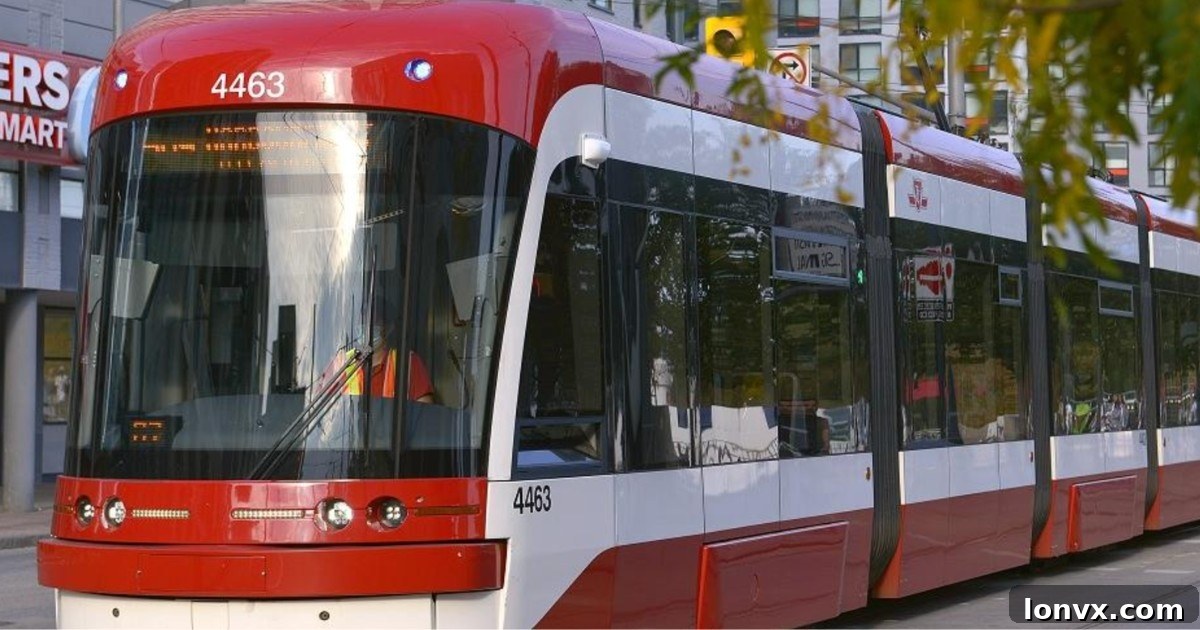
(photo: Waterfront Toronto)
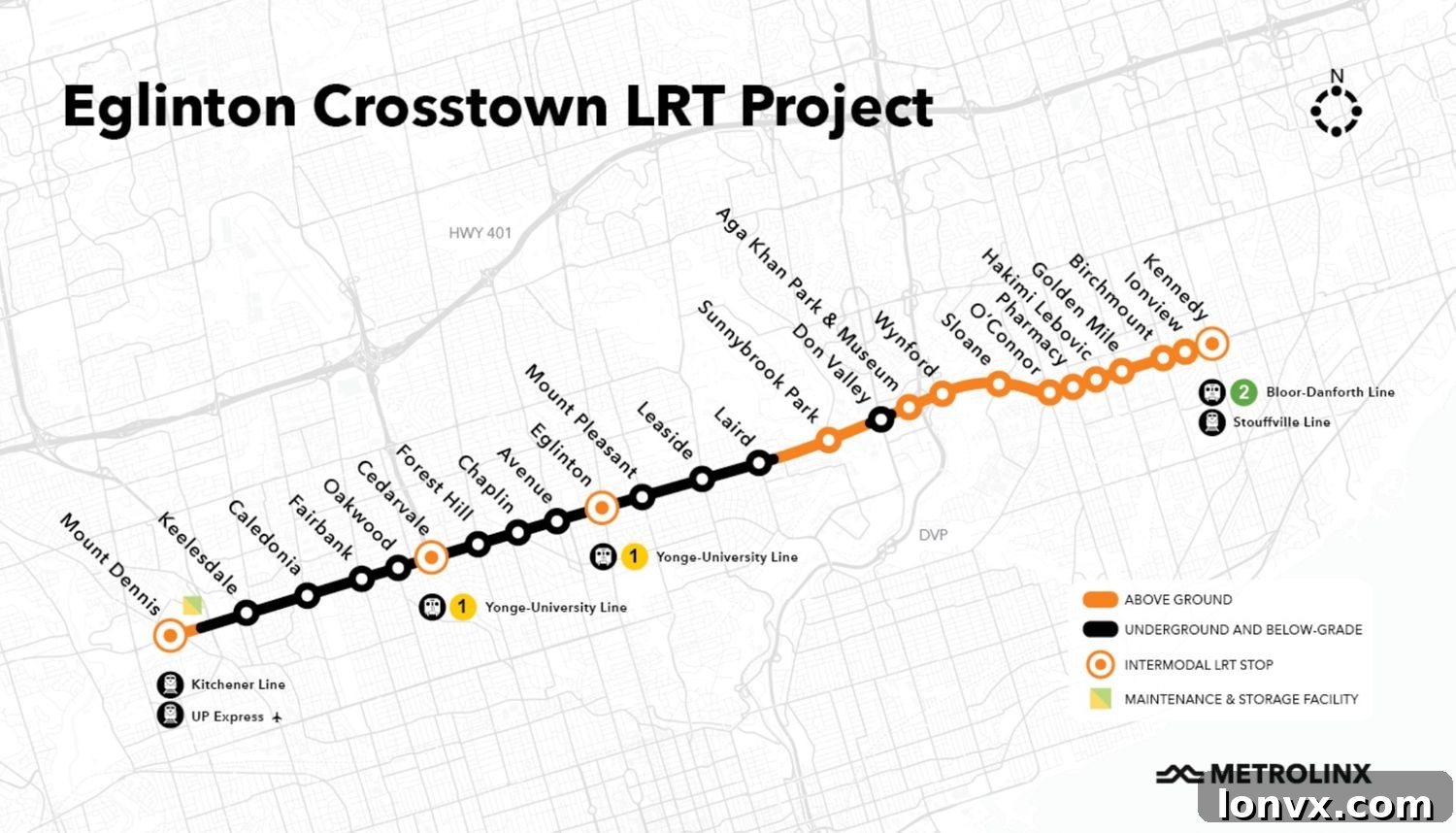
The highly anticipated Eglinton Crosstown Light Rail Transit (LRT) project has finally opened its doors in Toronto, concluding years of construction and eagerly awaited by residents and real estate professionals alike. This monumental infrastructure development promises to reshape the city’s urban landscape, unlocking unprecedented opportunities for real estate growth and community revitalization across its expansive 19-kilometer route.
While numerous significant developments were already in motion or proposed long before the LRT’s inauguration, its operational status introduces a new dynamic. The convenience and connectivity offered by this modern transit line are poised to attract a fresh wave of potential homebuyers and investors to previously underserved or undervalued areas, fundamentally altering Toronto’s residential and commercial fabric.
Transit-Oriented Development: Igniting Community Growth
One of the prime beneficiaries of the Eglinton LRT’s transformative power is Mount Dennis, strategically positioned as the line’s western terminus. This neighbourhood, historically characterized by its mixed industrial and residential character, is now on the cusp of significant change. Anita Merlo, a seasoned real estate agent with four decades of experience in the Weston area, observes that while Toronto residents have long been aware of the LRT’s eventual arrival, Mount Dennis has surprisingly retained a degree of affordability – a characteristic she believes is fleeting.
Merlo anticipates a dramatic shift as the community matures, fueled by an influx of new residents and businesses. She envisions a vibrant Mount Dennis, brimming with appealing restaurants, cozy coffee shops, and essential local amenities, fostering a cohesive and desirable living environment. This impending transformation, she suggests, makes properties in Mount Dennis an exceptional investment opportunity right now, predicting a substantial appreciation in value—potentially 25-30 percent—within the next three to four years.
Drawing parallels to past successes, Merlo recounted to Real Estate Magazine how the launch of the UP Express in 2015, which provided seamless access to Pearson International Airport and Union Station, was a “game changer” for the local real estate market. Despite historical challenges with crime in the area, Merlo exudes optimism, seeing brighter days ahead and projecting that the Eglinton LRT will exert an equally profound and positive influence. She has already facilitated home sales where the proximity to the new LRT line was a decisive factor for buyers, underscoring the undeniable appeal of enhanced transit access.
“Proximity to reliable transit is an absolute game-changer for many individuals and families,” Merlo emphasized. “Navigating the city by car has become an increasingly daunting and frustrating experience.” The convenience of leaving the car behind and enjoying swift, efficient public transportation is a major draw for today’s homebuyers.
Return-to-Office Trends Fuel Demand for Transit-Friendly Real Estate
The shifting dynamics of the post-pandemic workforce, particularly the widespread mandate for employees to return to physical office spaces, are significantly impacting housing preferences. Remax Wealth Builders agent Alex Wilson forecasts that while immediate market shifts might be tempered, it could take three to five years for property values to truly accelerate in areas directly served by the Eglinton LRT. However, the foundational demand is already building.
As commuters increasingly face the daily grind of city traffic, homes located near efficient transit lines like the Eglinton LRT become exponentially more attractive. Wilson highlights that ease of commute consistently ranks as the number one consideration for homebuyers at the outset of their property search. The prospect of a stress-free journey to work, free from traffic congestion and parking woes, is a powerful motivator in real estate decisions.
“When you have a transit line that offers uninterrupted service and reliable connectivity, it inherently draws people towards that corridor,” Wilson explained to REM. He cautions, however, that the full effects of such a significant infrastructure project are not instantaneous. “None of this transformation happens overnight; new habits and community dynamics take time to fully develop and establish themselves.” This gradual evolution means that while early investors may see significant gains, the broader market uplift will unfold over several years.
The Golden Mile: A Scarborough Renaissance on the Horizon
Another area poised for a monumental transformation, largely driven by the Eglinton LRT, is the Golden Mile in Scarborough. Once a sprawling retail and light industrial hub dominated by strip malls dating back to the 1950s, this east-end neighbourhood is slated for an ambitious revival. Currently, there are approximately 15 major developments proposed for the Golden Mile, envisioning a dramatic overhaul that includes around 75 mid and high-rise buildings. These projects are projected to accommodate an impressive 43,000 new residents, fundamentally reshaping the area’s demographics and urban landscape.
David Markle, a Remax agent specializing in Scarborough, draws a compelling comparison between the ambitious plans for the Golden Mile and the successful master-planned community of Liberty Village. He asserts that the sheer scale and scope of these developments are unequivocally a direct consequence of the Eglinton LRT’s presence. The LRT’s role in providing crucial transportation infrastructure is the catalyst for unlocking the Golden Mile’s latent potential, allowing it to transition from a “sleepy area” to a vibrant, mixed-use urban centre.
However, Markle also offers a pragmatic perspective on the current market conditions. He predicts that, given the prevailing economic climate, many of the developments currently planned might not reach completion until closer to 2030, effectively putting the area’s full renaissance on a temporary hold. Despite this extended timeline, the long-term vision remains robust. The City of Toronto’s secondary plan for the area includes the provision for a new school, indicating a commitment to developing comprehensive community infrastructure. Furthermore, Markle anticipates a significant influx of new retail establishments, which will not only serve the burgeoning residential population but also create numerous local job opportunities, fostering a self-sustaining local economy within the Golden Mile.
“I believe the Golden Mile will become a significant employment hub, creating a wealth of job opportunities for residents in the area and beyond,” Markle stated, highlighting the multi-faceted benefits of this extensive redevelopment.
Intensification vs. Character: The Leaside Dilemma
While the Eglinton LRT generally heralds progress and improved connectivity, not every community along its route embraces the changes with unbridled enthusiasm. Patrick Rocca, a prominent real estate agent in Leaside, voices a common sentiment among residents: while improved access to the broader Toronto area is undeniably beneficial, the LRT has also become a magnet for large-scale developments that fundamentally threaten Leaside’s cherished quaint and quiet character.
Among the most contentious proposals is a 39-storey mixed-use tower planned near the LRT station, symbolizing the kind of intensification that many long-time Leaside residents fear will erode their neighbourhood’s unique identity. Rocca articulates a deep concern about the impending disruption. “It’s probably going to be the next 10 years of hell when it comes to condos and all this development that’s going to take place,” Rocca lamented, expressing anxieties about prolonged construction, increased traffic, and the sheer scale of new buildings.
He firmly believes that the introduction of such dense, high-rise developments “takes away the character of the community,” transforming it from a tranquil, family-friendly area into something far less appealing. Rocca draws a stark comparison to the transformation of Yonge and Sheppard, an intersection that evolved from a quiet residential area into a bustling, often chaotic “gong show” characterized by relentless traffic and high-density living. He is particularly concerned about the already problematic traffic congestion in Leaside, which could be exacerbated by delays in construction of the proposed condos, given the current market conditions.
Despite these concerns about character and quality of life, Rocca does not foresee a decline in property values in Leaside. He notes that many of the existing, well-established homes are situated away from the immediate vicinity of the proposed high-rise developments, maintaining their distinct appeal. “A lot of the value of Leaside has been built in already, deeply rooted in its established infrastructure, schools, and green spaces,” Rocca affirmed. “The LRT, while bringing development, will ultimately only help to stabilize and preserve the long-term value of the community by enhancing its accessibility and desirability in the broader urban context.” The challenge, for communities like Leaside, lies in striking a delicate balance between leveraging the benefits of new transit infrastructure and safeguarding the cherished attributes that define their unique appeal.