
Navigating the Toronto Real Estate Market: A Deep Dive into Current Trends and Future Outlook
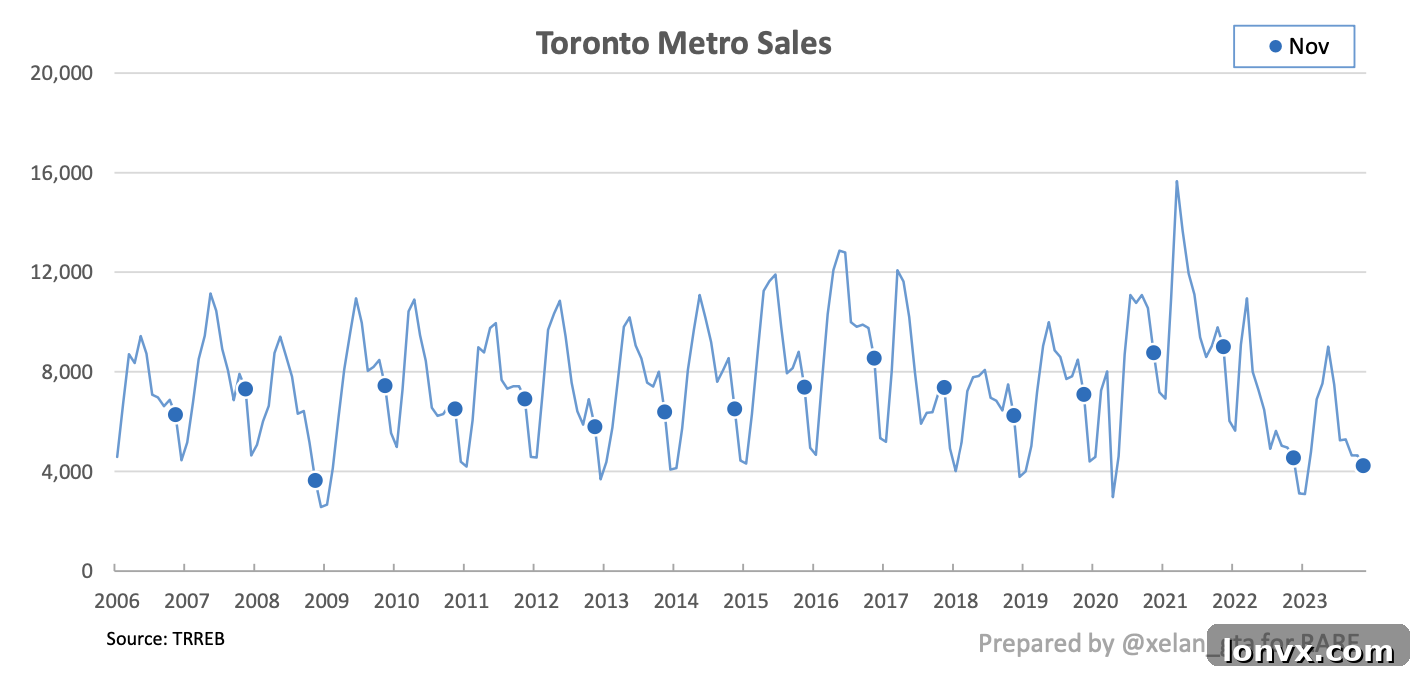
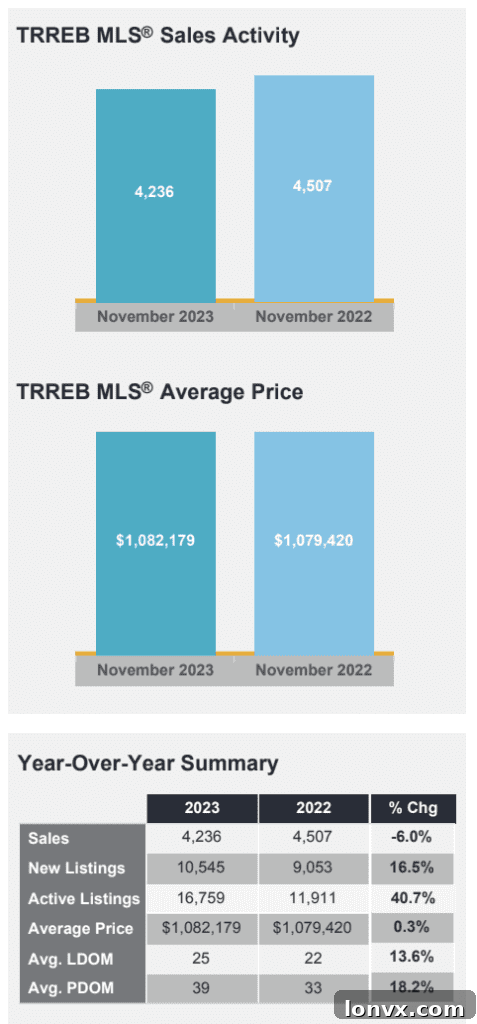
The Greater Toronto Area (GTA) real estate market continued its challenging trajectory in November, recording sales figures reminiscent of the downturn experienced in 2008. With just 4,236 properties exchanging hands last month, the market activity underscores a prolonged period of cautious buyer sentiment and strategic re-evaluation for sellers. This November’s performance, while seemingly 16% higher than the 3,640 sales recorded in November 2008, reveals a more concerning trend when adjusted for population growth. The GTA’s population has expanded by approximately 20% since 2008, growing from 5.309 million to an estimated 6.372 million today. When considering this demographic shift, the per capita sales volume in November 2023 actually stands worse than one of the lowest months during the 2008 recession, signaling a profound deceleration in market velocity.
Anticipating the Cyclical Bottom: A Look Ahead for Toronto Housing
Historically, the Toronto real estate market typically experiences its lowest sales volumes in December and January, influenced by holiday seasonality and winter slowdowns. Given the current momentum, it is highly probable that the market will plumb depths comparable to, or even exceeding, the lows of 2008 over the next couple of months. This period could mark a significant cyclical bottom in sales volume, a crucial phase for any market rebalancing. While a full price recovery often takes several years to materialize, a rebound in sales volume usually follows reaching such a bottom. This suggests that the real estate sector might anticipate a much-needed uptick in transaction activity and, consequently, growth in earnings, once this phase concludes.
Projecting to the end of 2023, the annual sales figures for the Toronto housing market are on track to resemble those last seen in 2001. When factoring in the substantial population increase over the past two decades, there is a strong likelihood that 2023 will set a new record for the lowest number of homes sold per capita in recent history. This metric offers a more accurate reflection of market health relative to the region’s expanding demand base and underscores the severity of the current market conditions. Understanding these historical parallels is essential for both prospective buyers and sellers in the GTA, as it provides context for current market dynamics and potential future trajectories.
Supply Dynamics: Easing But Still Favorable to Buyers in the GTA
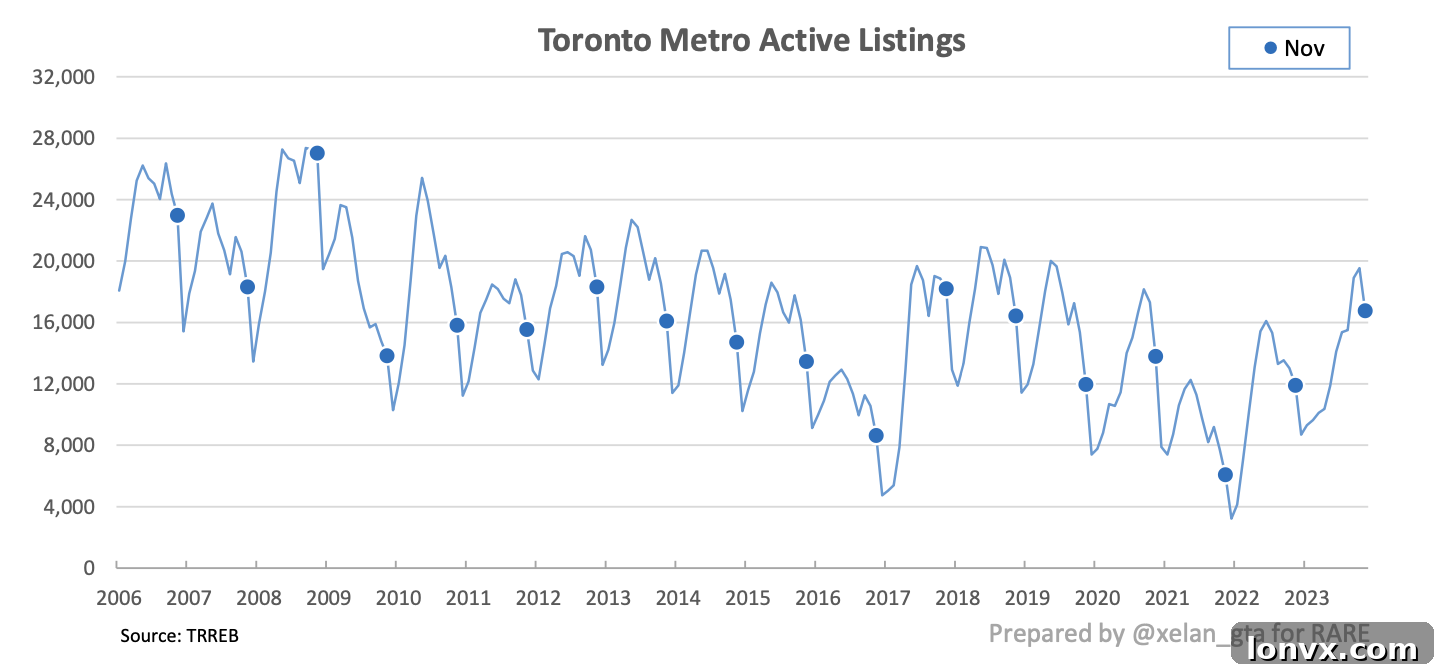
For an extended period, the Toronto real estate market has grappled with an oversupply of listings, providing buyers with ample choice and negotiation leverage. However, as the market transitions into the slower winter months, both new listings and active listings have begun to exhibit their typical seasonal downtrend. This natural cooling off period usually sees fewer properties entering the market and a slight reduction in the overall inventory.
Despite this seasonal easing, the reduction in supply has not been significant enough to tilt the market balance back towards a seller’s advantage. Consequently, the GTA housing market largely remains a buyer’s market as we head into what are traditionally the slowest months of the year for real estate transactions. With new listings and active inventory typically reaching their lowest points in December and January, the true direction for 2024 will likely remain ambiguous until the spring market blossoms. The spring season often brings renewed activity and clearer indications of whether demand will rebound strongly enough to absorb available inventory, thus shaping whether the market firmly entrenches itself as a buyer’s or seller’s domain in the coming year. Key factors to watch will include prevailing interest rates, economic stability, and consumer confidence, all of which will play a pivotal role in influencing market sentiment and transaction volumes.
Sustained Price Pressure: Impact on Toronto Property Values
The prolonged negative sentiment and reduced sales activity across the Greater Toronto Area housing market have, predictably, exerted considerable downward pressure on property prices. November saw a decline across all key metrics for house prices, reflecting the challenging environment for sellers. The average price of a home in the GTA now sits approximately 20% below its peak values recorded in early 2022. This significant correction offers a stark reminder of how rapidly market conditions can shift, particularly in response to aggressive interest rate hikes and broader economic uncertainties.
This sustained price depreciation presents a complex landscape. For potential homebuyers who have been priced out of the market during its previous peaks, the current environment might offer a window of opportunity to enter or upgrade, provided they can navigate higher borrowing costs. Conversely, existing homeowners, especially those who purchased near the market’s zenith, may be facing reduced equity and a more challenging selling proposition. The interplay of high interest rates, tightened lending standards, and cautious buyer behavior continues to shape a market where affordability, though still a concern, is now being recalibrated by falling values. The resilience and long-term potential of the GTA market, however, remain underpinned by strong demographic growth and its status as a global economic hub, suggesting that while the current period is challenging, it is part of a larger cyclical pattern.
Source: Toronto Regional Real Estate Board
Strategic Considerations for Buyers and Sellers in the Evolving Toronto Market
For prospective buyers, the current market dynamics, characterized by reduced competition and declining prices, present a unique opportunity. With more inventory available and less frenzied bidding, buyers have increased leverage to negotiate on price, terms, and conditions. However, the higher interest rate environment means that while purchase prices may be lower, the overall cost of borrowing has increased. Strategic buyers should focus on pre-approval to understand their true purchasing power and remain patient, as further price adjustments may occur, especially as the market seeks its ultimate bottom.
Sellers, on the other hand, must adjust their expectations to the realities of a buyer’s market. Overpricing can lead to prolonged listing periods and eventual price reductions that might be steeper than initial market adjustments. Realistic pricing, excellent presentation, and effective marketing are paramount. Understanding comparable sales from recent months, rather than peak-market data, is crucial for setting an appropriate list price. Engaging with a knowledgeable real estate agent who understands the current nuances of the GTA market can provide invaluable guidance during these challenging times.
The Greater Toronto Area’s real estate market is undeniably in a state of flux, navigating a significant cyclical correction. While the immediate outlook suggests continued challenges, particularly through the winter months, the underlying fundamentals of the region – strong population growth, robust economic activity, and its status as a desirable place to live – indicate long-term resilience. The current period, though difficult, is an integral part of the market’s natural cycle, paving the way for eventual stabilization and future growth. Both buyers and sellers are urged to approach the market with informed strategies, patience, and a keen eye on evolving economic indicators and interest rate policies.
Enjoying this article?
Get the latest REM articles in your inbox 3x week so you stay up to date on the latest in the Canadian real estate industry